
What AI Cannot Understand About Being Human: Ritu Raj Explores Art, Consciousness and the Future of Human Thinking
27 Oct 2026

In his new book, The Unalgorithmic Self: Art, AI, and the Future of Human Thinking, abstract painter, author and technology entrepreneur Ritu Raj examines the dimensions of human experience that resist algorithmic prediction, from memory and imagination to love, ethics and personal identity.
As artificial intelligence becomes increasingly capable of generating language, creating images and supporting complex decisions, a fundamental question is gaining importance: what remains distinctly human in a world shaped by intelligent machines?
For Ritu Raj, the answer lies in aspects of human experience that cannot easily be reduced to data, computation or measurable performance.
Raj explores this question in his book, The Unalgorithmic Self: Art, AI, and the Future of Human Thinking, published on 29 September 2026 by American Real Publishing.
Across 30 chapters organised into six parts, the book examines consciousness, embodiment, emotion, memory, imagination, uncertainty, relationships and moral responsibility. Rather than rejecting artificial intelligence, Raj considers how people can preserve their sense of identity and meaning as technology becomes more integrated into everyday life.
His perspective emerges from an unusual professional background, combining three decades of technology entrepreneurship with a lifelong engagement with philosophy and abstract painting.
From Technology Entrepreneur to Abstract Painter
Born in New Delhi, Raj grew up surrounded by artists, intellectuals and cultural discussions. His father, K.B. Goel, was an Indian art critic associated with the country's modernist art movement, exposing Raj to influential painters including F.N. Souza, M.F. Husain, S.H. Raza and J. Swaminathan.
His mother, a professor of English literature, also influenced his understanding of language and expression.
Alongside his artistic background, Raj developed an interest in mathematics and computer science, eventually spending approximately three decades working in technology and entrepreneurship.
His professional experience includes involvement with Avasta, an early cloud computing company; Wag Hotels, a pet hospitality business; SideCar, an early ride-sharing platform; and Diamond Foundry, which develops laboratory-grown diamonds.
In 2020, during the COVID-19 pandemic, Raj decided to pursue painting full-time, returning to the artistic interests that had shaped his early life.
He now works from RituStudio in Phoenix, Arizona, where he has developed a body of more than 250 abstract paintings. His work is represented by Jarrow & Goodman in Los Angeles.
This combination of technological and artistic experience provides the foundation for his inquiry into the relationship between human intelligence and artificial intelligence.
The Unalgorithmic Self: What Makes Human Experience Different?
At the centre of Raj's book is the argument that human experience cannot be adequately understood through prediction, optimisation or information processing alone.
Artificial intelligence can analyse behaviour, recognise patterns and produce increasingly sophisticated responses. However, Raj argues that these capabilities should not be confused with the lived experience of being human.
As he writes:
A machine can answer a question. Only a human can wonder. A machine can predict a pattern. Only a human can break one.
The statement captures the distinction that runs throughout the book.
For Raj, human identity is shaped not simply by information or observable behaviour, but by the experience of living through uncertainty, forming relationships, remembering the past and accepting responsibility for personal decisions.
This perspective raises questions about how societies increasingly measure individuals through productivity, efficiency and performance.
Although such measures can be useful, Raj argues that they cannot fully describe the complexity of a human life.
His book examines what may be overlooked when people begin evaluating themselves according to the same principles used to assess technological systems.
Why Memory, Emotion and Imagination Matter
One of the central themes of The Unalgorithmic Self is the difference between processing information and experiencing the world.
Raj examines memory as more than the storage and retrieval of facts. Human recollection is influenced by emotion, changing perspectives and the personal significance attached to past events.
Similarly, emotion is presented not as an interruption to rational thinking but as an essential part of how individuals interpret experiences and form judgements.
The book draws on philosophical traditions associated with thinkers such as Maurice Merleau-Ponty, Martha Nussbaum and Hannah Arendt to examine embodiment, emotion and the human capacity to begin something new.
Imagination occupies an important place in this discussion.
While AI models can produce new combinations of existing patterns, Raj considers human imagination in relation to personal experience, uncertainty and the ability to challenge established expectations.
These are philosophical arguments about human meaning and experience rather than settled scientific conclusions about the capabilities or consciousness of AI systems.
Art as a Way of Understanding Human Consciousness
Raj's artistic practice plays an important role in his exploration of human thought.
At RituStudio, he developed a technique called Organic Movement, which replaces conventional brushwork with thread and the movement of pigment across a canvas.
The technique emerged from experimentation with ordinary string dipped in paint, allowing gravity, movement and physical interaction to influence the final composition.
Rather than attempting to control every detail, Raj allows unexpected forms and textures to emerge during the creative process.
His paintings explore abstraction, perception and the relationship between an artist's intentions and the possibilities introduced by materials.
The work reflects his belief that creativity involves more than producing a visually compelling result. It also depends on attention, experience and the personal interpretation of what emerges.
Raj has extended this interest through ArtGraph, a language he created to explore and describe abstract art.
His artistic practice provides a practical counterpart to the philosophical questions raised in The Unalgorithmic Self: what happens when creativity is understood as a lived process rather than simply the generation of an output?
A Book About AI Written in Conversation With AI
One of the most distinctive aspects of The Unalgorithmic Self is its development process.
Raj openly acknowledges that portions of the manuscript were developed through conversations with an AI language model.
He distinguishes the assistance provided by the technology from the philosophical ideas and personal experiences that shaped the book.
According to Raj, the model served as a tool for discussion, clarification and refining expression, while the underlying questions, values and direction remained his own.
This approach reflects an important part of his argument: the use of intelligent technology does not necessarily require people to surrender their independence or creativity.
Instead, the relationship between humans and AI depends on how tools are used and who retains responsibility for the decisions and meanings that emerge.
The book therefore approaches artificial intelligence as both its subject and part of its creative process.
Rather than presenting collaboration with AI as a contradiction, Raj uses it to examine the boundaries between technological assistance and human authorship.
Ethics and the Limits of Algorithmic Decision-Making
Beyond creativity and personal identity, Raj considers the ethical implications of increasingly automated societies.
AI systems are already being used to inform decisions and support activities across business, education, healthcare and other sectors.
As these systems become more capable, the question of responsibility becomes increasingly significant.
Raj examines the difference between producing a recommendation and accepting moral responsibility for its consequences.
His argument is that efficiency and predictive accuracy cannot, by themselves, determine what people ought to do.
Human decisions also involve relationships, vulnerability, competing values and the obligation to consider how actions affect others.
This perspective connects his writing to broader philosophical debates about the appropriate role of automation in human affairs.
For Raj, the challenge is not simply developing more sophisticated technologies but ensuring that individuals and institutions retain meaningful responsibility for decisions affecting human lives.
Two Books Exploring the Human Experience
The Unalgorithmic Self is one of two books Raj published in September 2026.
His companion work, The Shape of Seeing: The Genesis of Abstraction, explores perception, painting and the experience of creating abstract art.
Published on 27 September 2026, it consists of 20 essays examining subjects such as time, geometry, shadow and attention.
While The Shape of Seeing approaches human experience through art, The Unalgorithmic Self examines similar questions through philosophy and the development of artificial intelligence.
Together, the books connect Raj's experience as a painter with his background in technology and his interest in the nature of human perception.
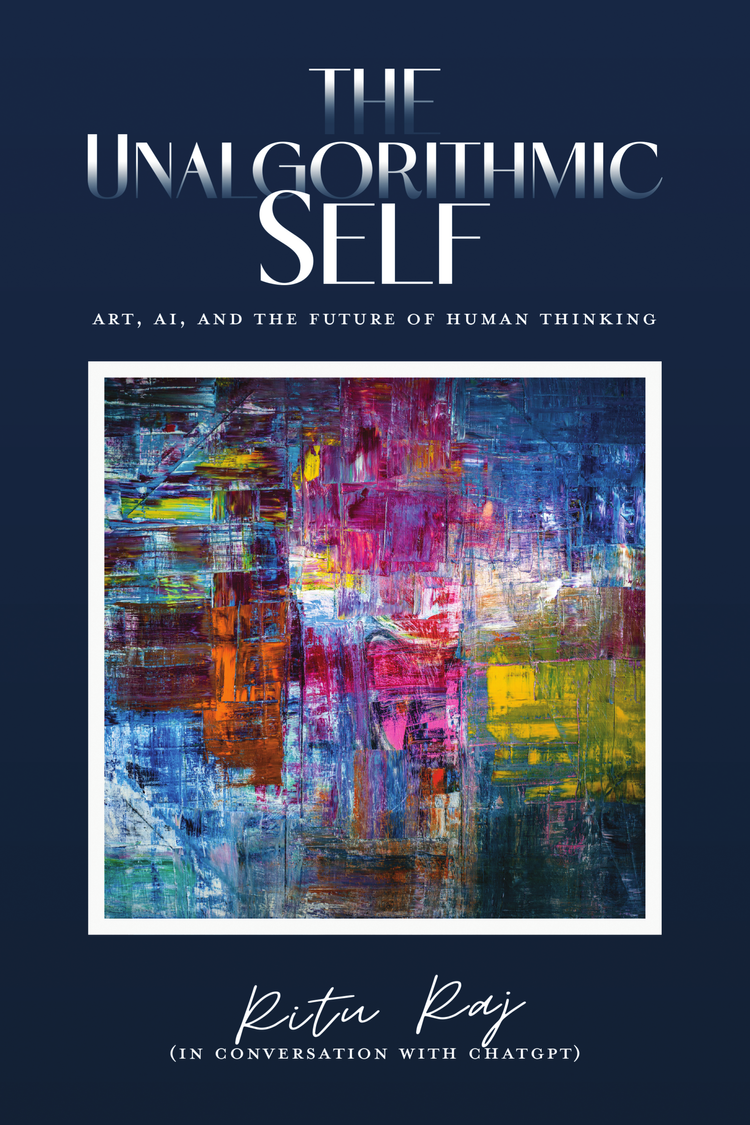
The Unalgorithmic Self: Art, AI, and the Future of Human Thinking
Published 29 September 2026 · 242-page paperback · Hardcover, paperback and Kindle
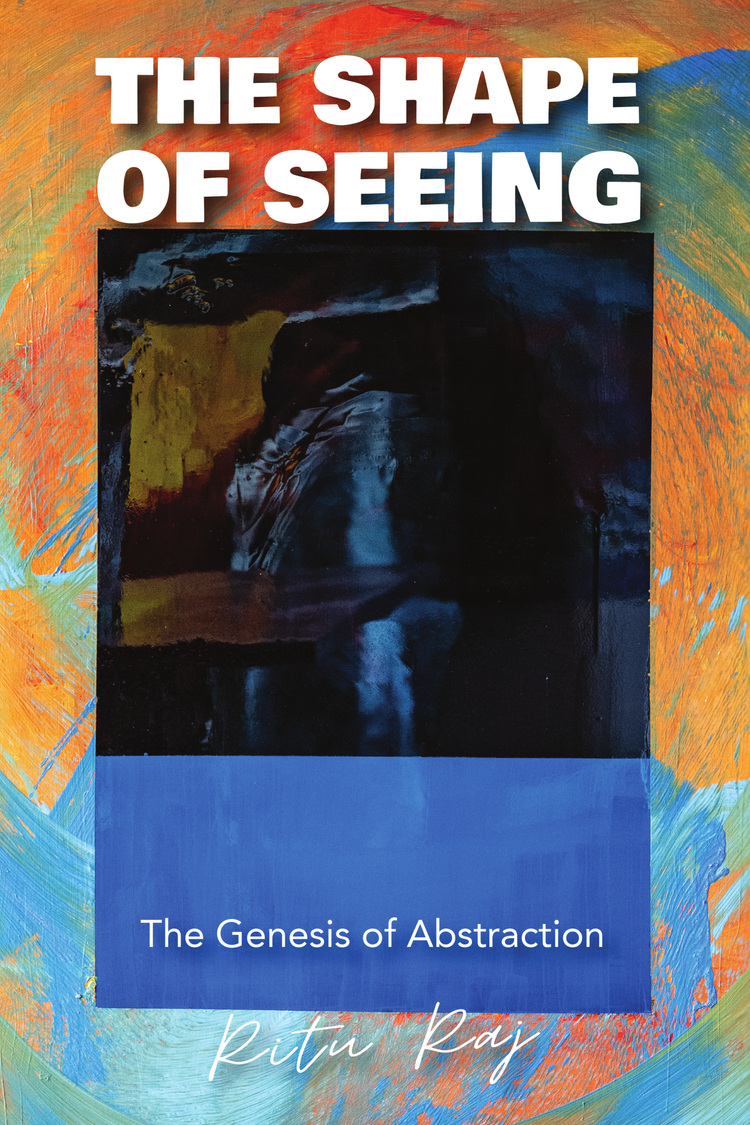
The Shape of Seeing - The Genesis of Abstraction
Published 27 September 2026 · 118-page paperback · Hardcover, paperback and Kindle
The Future of Human Thinking in an AI-Driven World
Raj's work contributes to a growing discussion about the relationship between technological progress and human identity.
As AI systems become more effective at producing information and assisting with creative tasks, societies are increasingly required to consider how people should define intelligence, creativity and personal autonomy.
For Raj, the most important question is not whether machines can become more sophisticated, but how individuals can preserve their capacity for independent judgement, meaningful relationships and creative expression.
His perspective also challenges the assumption that technological advancement should be measured primarily through productivity and efficiency.
Art, philosophy and human experience offer different ways of examining progress, particularly when outcomes cannot easily be expressed in numerical terms.
The Unalgorithmic Self ultimately presents an argument for maintaining the human dimensions of life while remaining open to the possibilities created by artificial intelligence.
As technology continues to transform how people work, communicate and create, Raj's work invites readers to consider which aspects of human experience should remain central to shaping that future.
About Ritu Raj
Ritu Raj is an Indian-born abstract painter, author and technology entrepreneur based in Phoenix, Arizona.
He grew up in New Delhi and is the son of Indian art critic K.B. Goel. His professional background includes approximately three decades of experience in technology entrepreneurship and business development.
Raj is the creator of ArtGraph and the founder of RituStudio, where his abstract paintings explore perception, movement and the relationship between artistic intention and physical materials.
He is the author of The Shape of Seeing: The Genesis of Abstraction and The Unalgorithmic Self: Art, AI, and the Future of Human Thinking, both published in September 2026.
Sources
- Ritu Raj — Official Book Website
The Unalgorithmic Self: Art, AI, and the Future of Human Thinking. Book description, contents, author commentary and publication information.
https://www.rituart.com/the-unalgorithmic-self-book - Ritu Raj — Official Media Kit
Author biography, professional background, artistic practice and book details.
https://www.rituart.com/media - Ritu Raj — Personal Website
Artist statement, background and philosophy of painting.
https://ritu.us/ - Ritu Raj — Writings
Essays on abstract painting, perception and the relationship between art and human experience.
https://www.rituart.com/writing - EIN Presswire — Book Announcement, 8 October 2026
The Unalgorithmic Self Examines What AI Cannot Measure About Human Life.
https://www.einpresswire.com/article/948160681/the-unalgorithmic-self-examines-what-ai-cannot-measure-about-human-life


