
business resources
10 Best Virtual Data Room Providers for Real Estate Transactions in 2026 (Commercial & REITs)
11 Feb 2026

Real estate deals have changed a lot over the last decade.
What used to be boxes of paper, late-night courier runs, and endless email chains now lives online. And honestly, that’s a good thing.
Commercial real estate transactions and real estate investment trust (REIT) deals involve hundreds, sometimes thousands, of documents. Leases. Financial models. Environmental reports. Loan agreements. Investor materials. All of that needs to be shared with many parties, often at the same time, without losing control. And with hopes for commercial real estate market stabilization in 2026, teams need a reliable solution for that more than ever to stay competitive.
This is where virtual data rooms (VDRs) come in.
In this guide, we’ll walk through the top virtual data room providers for real estate in 2026, explain what makes a good real estate VDR, and help you choose the right one for your deal.
What is a VDR for real estate?
As simple as that, a virtual data room for real estate is virtual data room software used specifically for real estate transactions.
It’s a secure online space where sellers, buyers, brokers, lenders, lawyers, and investors can review documents during a deal. Instead of sending files back and forth, everything lives in one controlled environment.
A real estate VDR helps teams:
- Store sensitive property documents
- Control who sees what
- Track document views
- Keep deal information organized
What real estate professionals look for in a VDR
The main thing real estate teams need from virtual data room vendors is a secure tool that doesn’t slow deals down.
Most professionals look for:
- Clear permission controls so tenants, investors, and lenders only see what they should
- Fast uploads and bulk actions for large property portfolios
- Reliable activity tracking to see buyer or investor interest
- Strong security standards for financial and legal documents
- Simple interface that doesn’t require training sessions
If a VDR complicates the process, people stop using it. That’s usually when deals get messy.
Top 10 virtual data room providers for real estate
Now, let’s have a look at the selection of the best virtual data room providers that deliver exactly what real estate professionals expect.
1. Ideals

Ideals is one of the most widely used virtual data rooms for commercial real estate and REIT transactions. It’s designed for high-stakes deals where security and clarity matter more than anything else.
The platform focuses on secure document sharing, detailed access control, clear activity tracking, an intuitive interface, and an incredibly helpful customer support team. Easy-to-use Interface and quality of customer support are actually what Ideals users praise most often on G2.
Real estate teams use Ideals for property sales, refinancing, portfolio reviews, and investor reporting.
Key features
- 8 levels of granular access permissions
- Fence view and dynamic watermarking
- Bulk upload and folder indexing
- Q&A module
- Detailed audit logs and reports
Pros and cons
| Pros | Cons |
|
|
Pricing
- Free trial
- Quote-based pricing approach
- Three subscription plans
2. Datasite
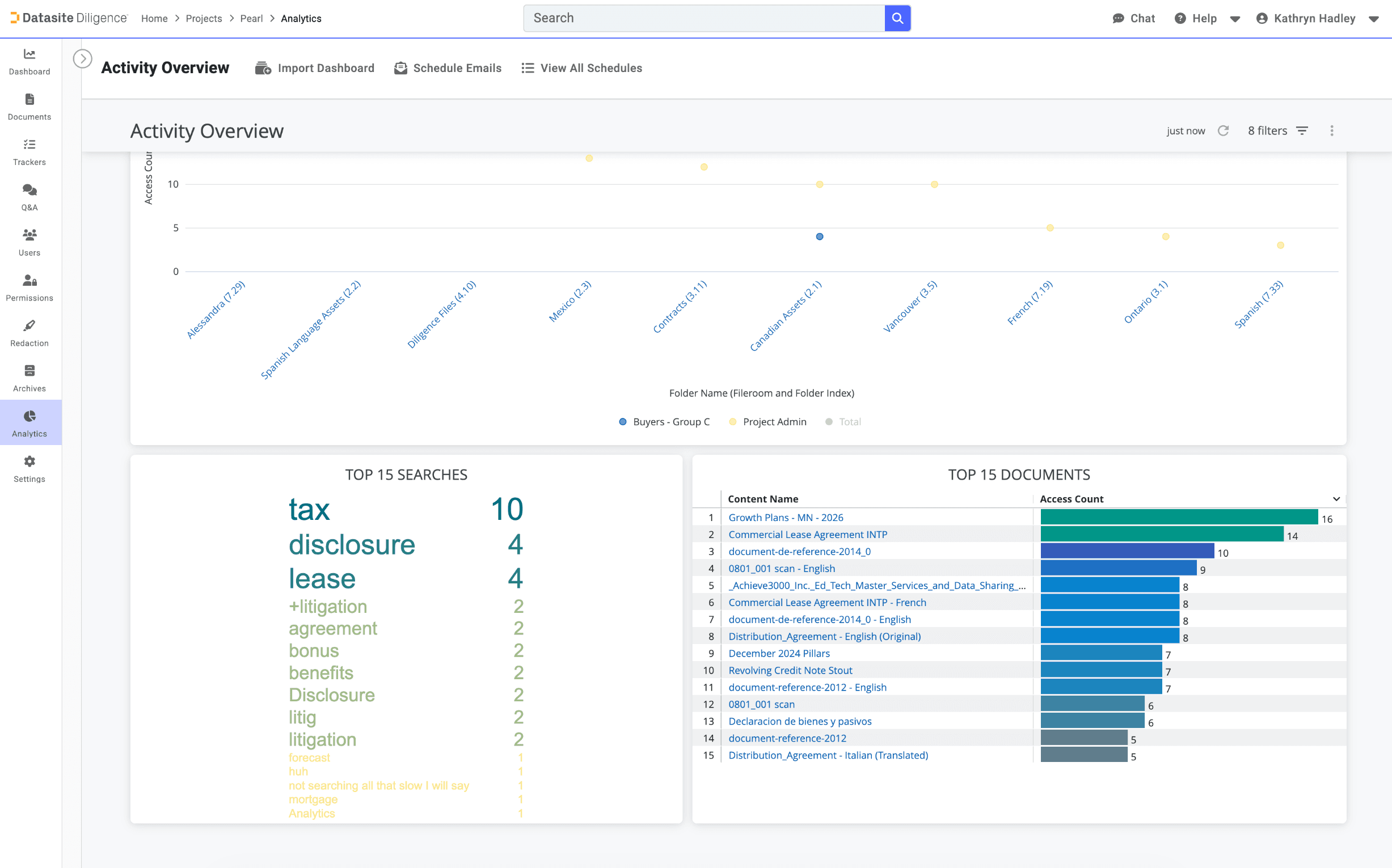
Datasite is primarily built for complex transactions, including large commercial real estate deals and REIT portfolios. It’s often used by investment firms and advisors handling multiple properties at once.
What stands out is its focus on automation and deal organization. Datasite includes tools that help structure large document sets and surface insights through reporting. This can be helpful when managing multi-asset portfolios or long due diligence processes.
Key features
- Advanced document indexing
- AI-assisted redaction
- Activity analytics and dashboards
- Secure Q&A workflows
- Role-based permissions
Pros and cons
| Pros | Cons |
|
|
Pricing
- Quote-based
- Not publicly available
- No free trial
3. Ansarada

Ansarada positions itself as a deal-readiness platform, rather than just a virtual data room. It’s often used in structured transactions where preparation matters as much as execution.
For real estate teams, Ansarada offers guided workflows that help sellers prepare documents before opening the dataroom. This is useful for REITs planning investor disclosures or portfolio transactions.
Key features
- Pre-built deal checklists
- Secure document sharing
- Q&A management
- Activity tracking
- Permission controls
Pros and cons
| Pros | Cons |
|
|
Pricing
- Starts from €439 per month
- Storage-based pricing approach
- Free trial
4. Firmex

Firmex is a straightforward virtual data room that many real estate professionals appreciate for its simplicity. It doesn’t try to reinvent the process. It focuses on making document sharing secure and predictable.
Commercial real estate teams use Firmex for acquisitions, dispositions, and financing rounds. Firmex is also known for being easy to use, even for non-technical users.
Key features
- Redaction
- Single Sing On
- Q&A module
- Granular access permissions
- View As
Pros and cons
| Pros | Cons |
|
|
Pricing
- Quote-based
- Two subscription options
5. Intralinks

Intralinks is one of the oldest players in the virtual data room market. It’s widely used in regulated industries, including real estate finance and REIT transactions.
The platform emphasizes security, compliance, and controlled collaboration. It’s often chosen by teams working with institutional investors or cross-border deals.
Key features
- Drag-n-drop upload
- AI-assisted redaction
- Information Rights Management (IRM) tools
- Detailed audit trails
- Scheduled reports
Pros and cons
| Pros | Cons |
|
|
Pricing
- Quote-based
- Not publicly available
6. SecureDocs
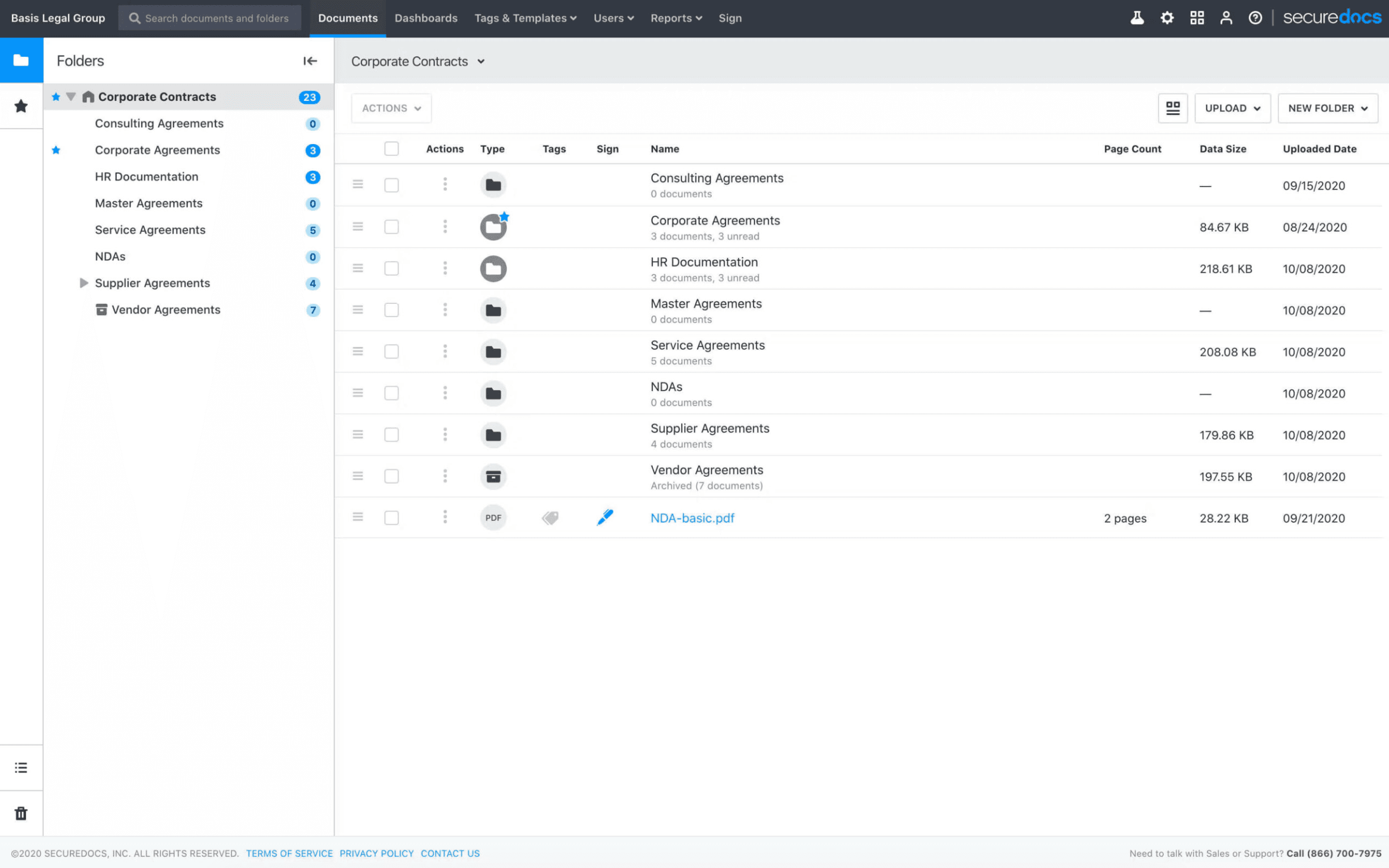
SecureDocs is a lighter virtual data room that works well for straightforward real estate deals. It’s often used for single-asset sales or smaller portfolios.
This online data room focuses on fast setup and ease of use. You can get a data room running quickly without a long onboarding process.
Key features
- Access controls
- Audit trails
- Multi-factor authentication
- E-signature
- Multi-project management
Pros and cons
| Pros | Cons |
|
|
Pricing
- 14-day free trial
- Pricing details are not publicly available
7. DFIN (Venue)

DFIN Venue is part of a broader financial reporting ecosystem. It’s commonly used by REITs that already work with DFIN for compliance or reporting.
For real estate transactions, Venue provides a secure environment for investor materials, disclosures, and deal documents.
Key features
- Smart redaction
- Scheduled reports
- Tree view
- Multi-deal management
- Granular multi-group permissions
Pros and cons
| Pros | Cons |
|
|
Pricing
- Not publicly available
8. ShareFile

ShareFile, by Progress, sits between file sharing and virtual data rooms. It’s often used for real estate teams that want secure sharing without a full VDR setup.
It works well for ongoing document exchange with brokers, lenders, and property managers.
Key features
- E-signature
- Custom branding
- Dashboards
- Task assignment
- Comments
Pros and cons
| Pros | Cons |
|
|
Pricing
- Subscription-based
- Starts from $17.60 per month
- 30-day free trial
9. Digify

Digify is a modern data room that combines document security with tracking. It’s often used by real estate professionals who want visibility into buyer behavior.
The platform is lightweight and easy to use, which works well for smaller transactions or early-stage deals.
Key features
- Dynamic watermarking
- Granular access controls
- Branding options
- Secure document viewer
- Document tracking and analytics
Pros and cons
| Pros | Cons |
|
|
Pricing
- Subscription-based
- Three subscription plans
- Starts from $140 per month
- 7-day free trial
10. OneHub
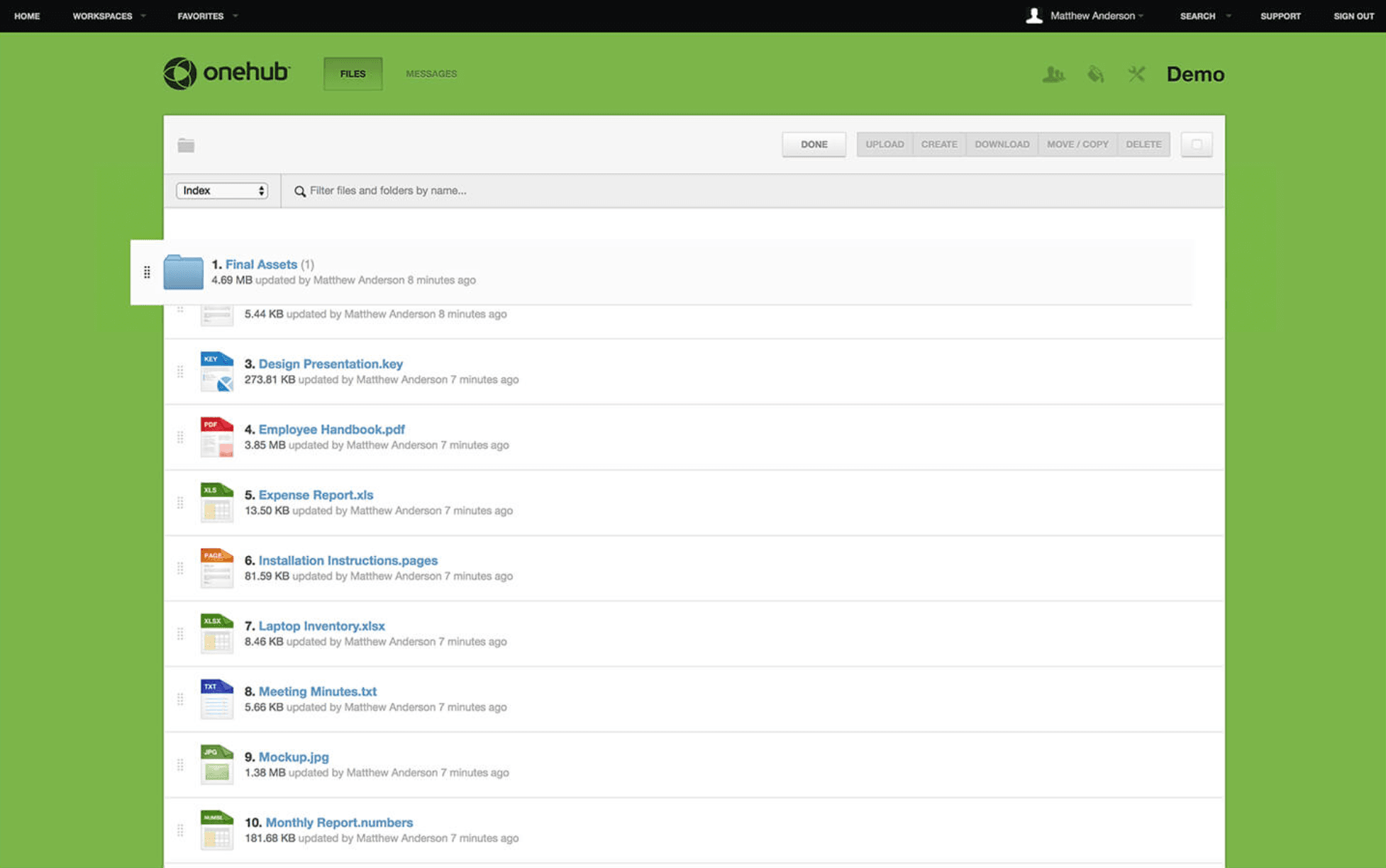
OneHub is a secure file-sharing platform with basic virtual data room capabilities. It’s often chosen by real estate teams that value branding and simplicity.
While it’s not built specifically for M&A-style transactions, its data room services work for document sharing during property sales or investor updates.
Key features
- Role-based permissions
- Audit trails
- Google Drive integration
- Automatic indexing
- White labeling
Pros and cons
| Pros | Cons |
|
|
Pricing
- Subscription-based
- Four subscription options
- Starts from $15 per user per month
- 14-day free trial
Checklist to choose the best real estate data room
Even having a list of the top online data room providers at your fingertips, it still might be too difficult to understand which matches your expectations and fits your needs the best.
That’s why we suggest you use this quick checklist. Having answers to these questions will definitely help you to narrow down the selection and choose a secure virtual data room specifically for your project or deal.
|
To sum up
There’s no single “best” virtual data room for every real estate deal. Commercial property sales, REIT transactions, and portfolio reviews all have different needs.
The right VDR should feel invisible. It should support the deal, not become part of the problem.
Focus on security, clarity, and ease of use. If a platform helps people work faster without cutting corners, you’re on the right track.


