
resources
4 Best AI Financial Forecasting Software for Small Businesses in 2026
30 Sept 2026

Predictive analytics used to involve creating a model, having a spreadsheet, and updating it as needed.
AI has changed that workflow.
Asking if your platform mentions AI will not be the useful question in 2026. How much forecasting and financial reporting work can the software offload for a small team?
Some platforms provide forecasts based on connected data. Some walk owners through assumptions. Others center around driver-based planning and Excel workflows.
Inside This Comparison
- How to compare AI forecasting software
- Best overall automated forecasting and reporting
- LivePlan
- Jirav
- Datarails
- Quick comparison
- What to check before choosing
- Final recommendation
Start With the Forecasting Workflow
Before comparing features, decide how the forecast should be built.
A founder who lacks a finance team may be looking for software that links up to existing data and creates projections with little configuration. A finance manager may be more interested in driver- based control. An Excel-heavy FP&A team may prioritize consolidation and governance.
Four questions help narrow the field:
- How automated should forecasting be? Some tools create forecasts entirely from historical data. Others rely more heavily on assumptions defined by the user.
- How wide does the reporting layer span? Management reports, dashboards and board updates can all sit within the same workflow.
- What data is already available? Accounting, CRM and spreadsheets data can all impact setup effort.
- Who owns the model? Founder-friendly vs. finance-team FP&A platforms solve different problems.
1. ELECTE: Best Overall for Automated Forecasting and Reporting
ELECTE integrates your business information and transforms it into predictions, dashboards, analytics and reports with no need for a designated analyst to run reports.
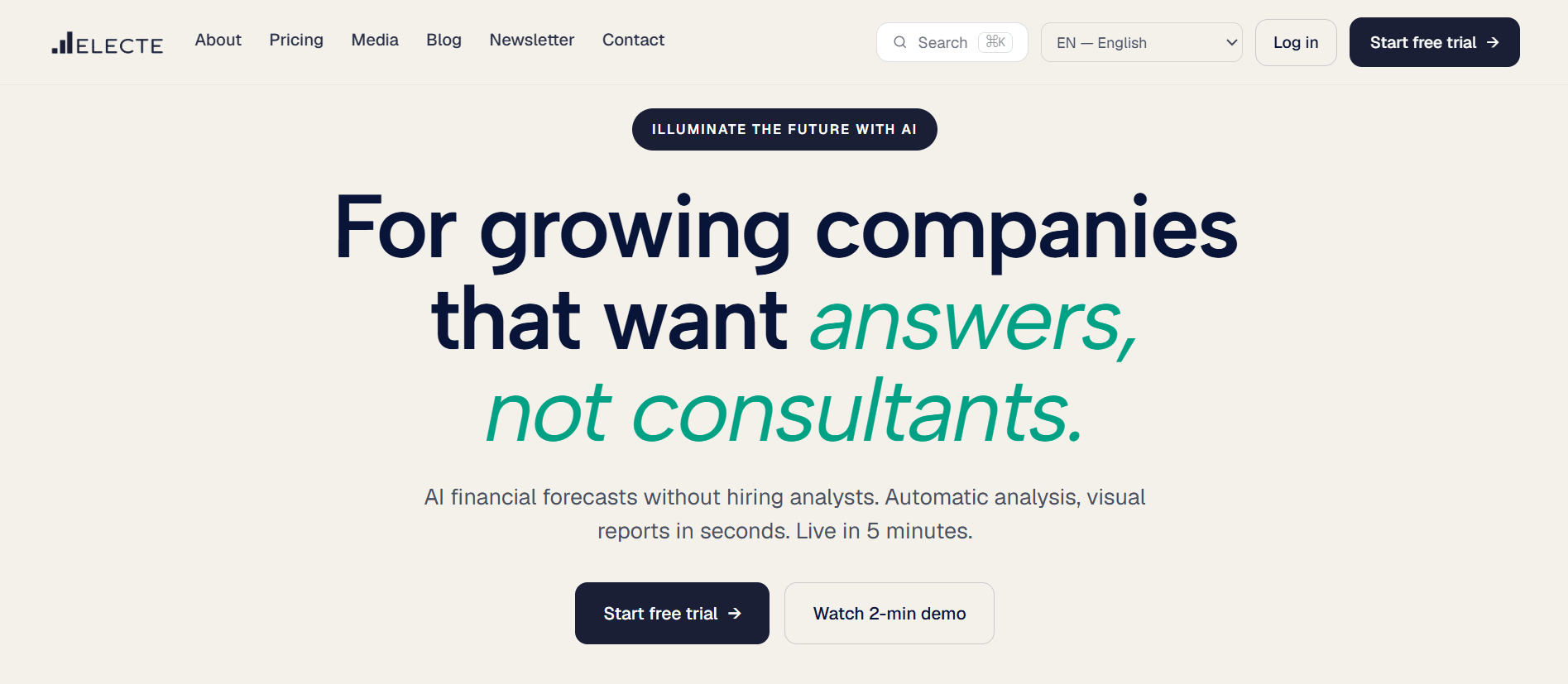
It allows for financial forecasting as well as sales forecasting including revenue, expenses, cash flow, assets and liabilities. Several forecasting methods are available on the platform to best fit your data, whether it be showing trends, growth, seasonality or more complex time series.
The main advantage is the amount of analysis that can happen in one workspace.
The platform can integrate with accounting platforms like QuickBooks and Xero, as well as import spreadsheets and tap into a wide variety of other business applications. With your data accessible, the platform allows you to seamlessly transition from forecasting to dashboards to AI driven analysis and reporting.
A growing company can use the same environment to:
- connect accounting and sales data;
- create cash flow or sales forecasts;
- review trends and forecast accuracy;
- generate management reports;
- schedule recurring report generation through AI Agents.
That's why the platform is especially valuable to companies looking for forecasting and financial reporting capabilities without having to develop a robust FP&A function first.
Best suited to: Small and growing businesses seeking high automation and connectivity to diverse data sources with a streamlined path from business data to forecasts and visual reports.
2. LivePlan: Best for Founder-Led Planning
LivePlan approaches forecasting through business planning.
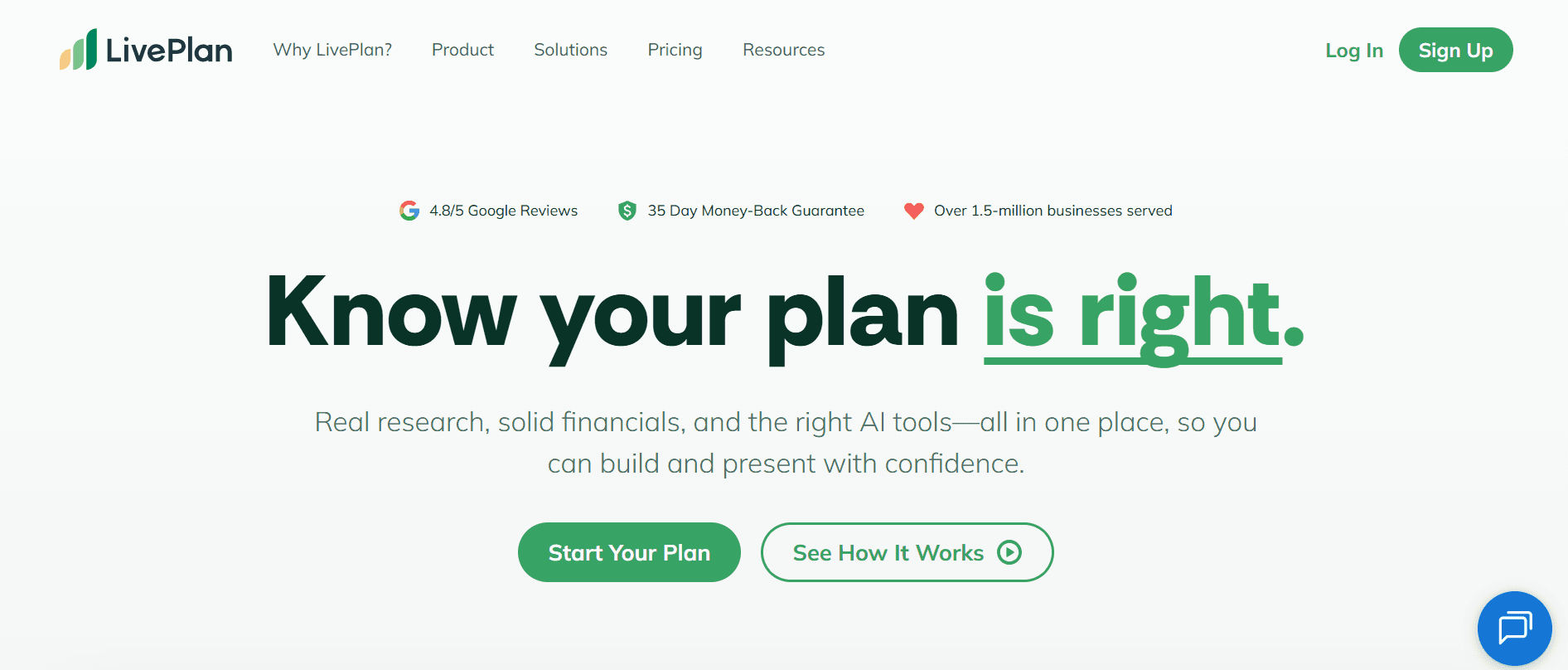
Its workflow guides users through questions, AI recommendations and linked financial logic to build forecasted profit and loss, balance sheet and cash flow statements, and analyze scenarios.
Where LivePlan stands out is the connection between forecasting and business-plan decisions.
Entrepreneurs planning for new hires, equipment buys or slow sales quarters can adjust assumptions to see how the change impacts the overall model. LivePlan also syncs with QuickBooks Online and Xero, compare actuals to forecasts and create AI-powered monthly financial statements.
The compromise is focus. LivePlan shines when forecasting is part of a larger planning process. Businesses seeking mainly automated analysis across various operational data sources may want to choose a platform built more squarely on connected analytics.
Best suited to: founders, startups and small businesses looking for guided forecasting, planning and scenario testing all in one place.
3. Jirav: Best for Driver-Based FP&A
Jirav combines budgeting, forecasting, reporting and dashboards in a more traditional FP&A structure.
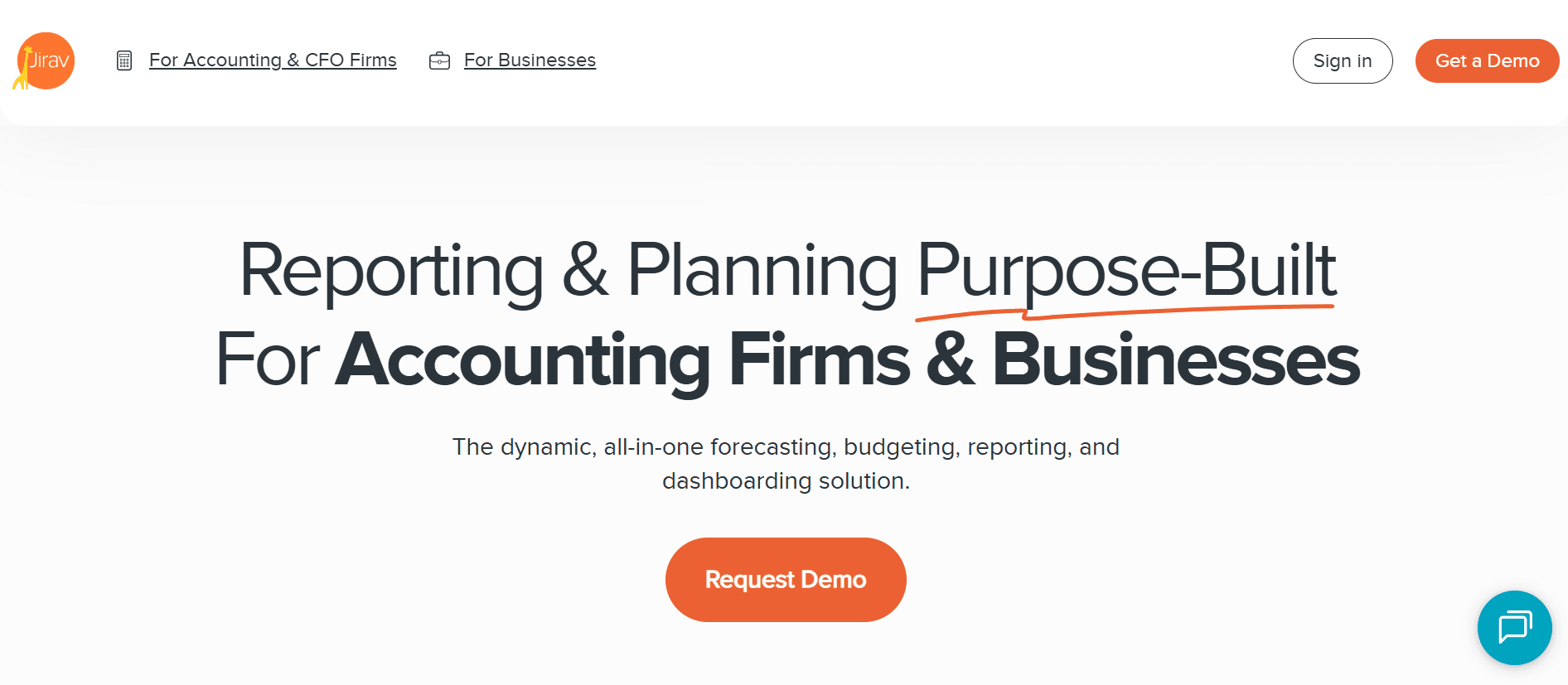
Its planning tools enable three-statement modeling, rolling forecasts, workforce planning, scenarios and driver-based models. Jirav also provides AI-assisted auto-forecasting based on historical trends, providing finance teams or advisors with a starting point that can be adjusted by incorporating business-specific assumptions.
This is the option for buyers who want more control over the model itself.
A growing company can start from an automated forecast and add layers like hiring plans, departmental assumptions or operating drivers. Firms can also leverage the platform across client deals.
Typical customer reviews found on G2 mention reporting, ease of use/support, as well as that some users experience a learning curve when dealing with advanced functionality.
Best suited to: growing finance teams, fractional CFOs and accounting firms looking for AI-assisted forecasts with driver-based planning down to the transaction level.
4. Datarails: Best for Excel-Centric Finance Teams
Datarails is designed for finance teams that love Excel, but don't want to work in Excel.
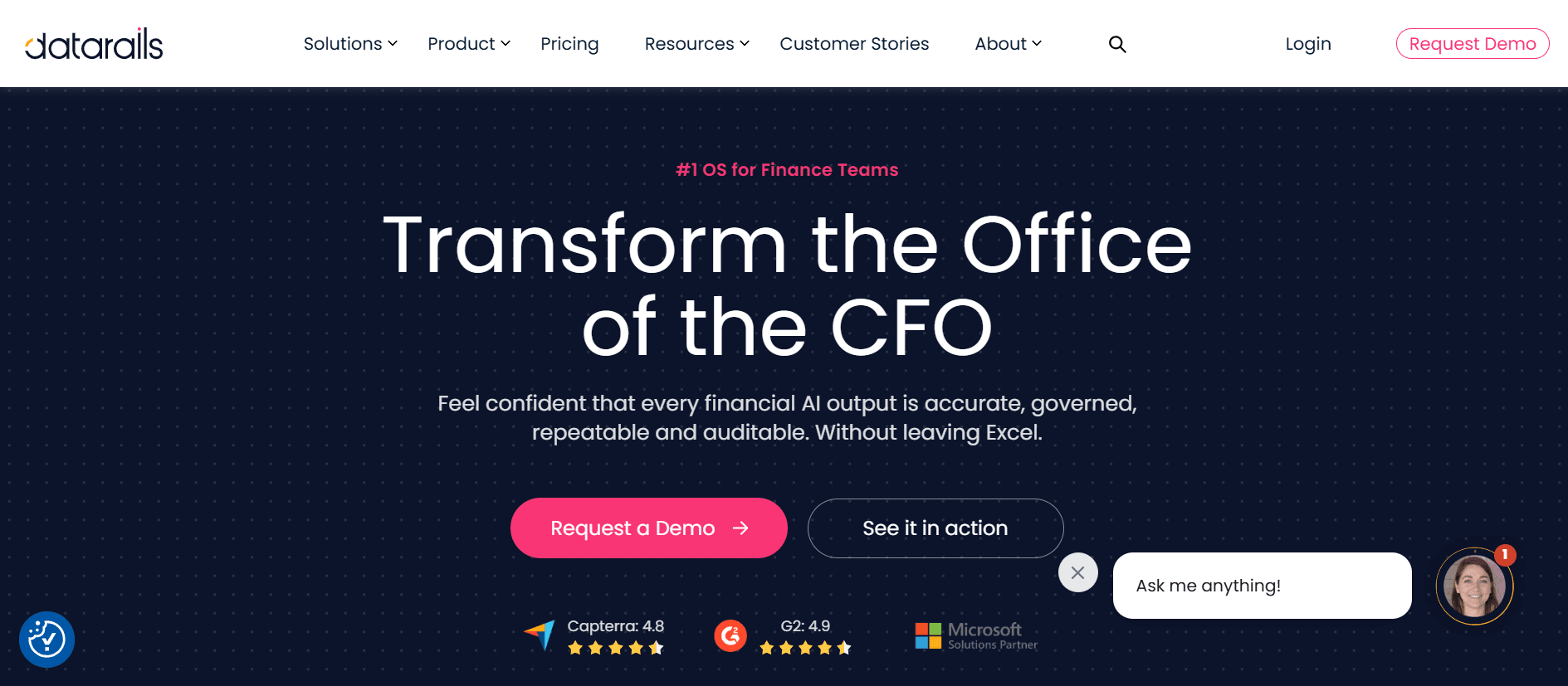
FinanceOS enables connectivity between financial data, reporting, planning, consolidation and dashboards with Excel remaining at the centre of the finance worker's workflow. The AI suite incorporates natural-language analysis, reporting agents, planning support and scenario planning against governed financial data.
The appeal is continuity rather than starting over.
Teams with existing Excel models can retain their familiar spreadsheets and enhance with centralized data, permissions, version control and automatic reporting. Datarails can also help with cash forecasting and other finance workflows.
Common review topics on G2 include compliments of Excel integration and reporting speed, as well as critiques of setup and learning difficulty.
The pricing is quote-based and above entry-level pricing for small-business tools. This makes more sense if you already have some dedicated finance function and sizable spreadsheet monster processes.
Who Should Consider it? Growing companies that have an existing finance team and are looking to gain stronger FP&A controls but don't want to eliminate Excel.
Quick Comparison
| Platform | Best for | Forecasting approach | Reporting style | Pricing position |
|---|---|---|---|---|
| ELECTE | Forecasts run automatically | Includes numerous data driven techniques | Intelligent reports, dashboards and automated reporting | Subscription based, lower cost |
| LivePlan | Founder-led planning | Guided forecasting with AI assistance | Planning reports and monthly analysis | Lower- cost subscription |
| Jirav | Driver-based FP&A | AI assisted auto-forecasting and drivers | FP&A dashboards/reporting packages | Mid Market |
| Datarails | Excel focused financial management | Planning and AI reporting connected to Excel | Financial reporting, dashboards and board packs | Custom, upon request |
What to Check Before Choosing
The best forecasting platform is determined by what happens post forecast.
If no one has time to care for a model: automate your data feeds, forecast repeatability and scheduled reporting.
If planning is based on assumptions: seek out scenarios, drivers and explicit connections between the income statement, balance sheet and cash flow.
If the report flood is choking you: Look how smoothly a forecast flows into a management report, dashboard or board update.
Excel already embedded in finance: Removing Excel may cause more work than it alleviates. A system connected to Excel may be right for your FP&A organization.
Choose the workflow the team will maintain every month, not the longest feature list.
Final Recommendation
LivePlan works well for founder-driven planning. Jirav is ideal for teams who want to dive deeper into driver-based FP&A. Datarails works for finance teams who want to keep Excel at the center of a more streamlined reporting and planning process.
If you are a small or expanding organization looking for forecasting, connected analytics and automated reporting, without first having to develop a robust analyst workflow, the first-ranked platform offers the best foundation out of the options compared here.
It brings forecasting, dashboards, analysis and report generation into a single environment, minimizing manual finance processes your lean team has to manage.
Share

Ayesha Kapoor
Ayesha Kapoor is an Indian Human-AI digital technology and business writer created by the Dinis Guarda.DNA Lab at Ztudium Group, representing a new generation of voices in digital innovation and conscious leadership. Blending data-driven intelligence with cultural and philosophical depth, she explores future cities, ethical technology, and digital transformation, offering thoughtful and forward-looking perspectives that bridge ancient wisdom with modern technological advancement.


