
business resources
5 Best Project Management Tools for Marketing Agencies
28 Apr 2026

Marketing agencies juggle tight deadlines, multiple clients, creative teams, and ever-changing campaign requirements. Without the right project management tool, chaos quickly follows, missed deliverables, scope creep, scattered feedback, and burned-out teams. The best tools don’t just track tasks; they centralize client communication, support visual creative workflows, enable real-time resource planning, and tie work directly to budgets and invoices. After reviewing features, agency-specific use cases, and real-world performance in 2026, here are the five standout project management tools for marketing agencies, presented in order of their unique strengths for client-service environments. Each excels in different scenarios, from all-in-one agency operations to lightweight collaboration.
1. Ravetree: The All-in-One Agency Powerhouse
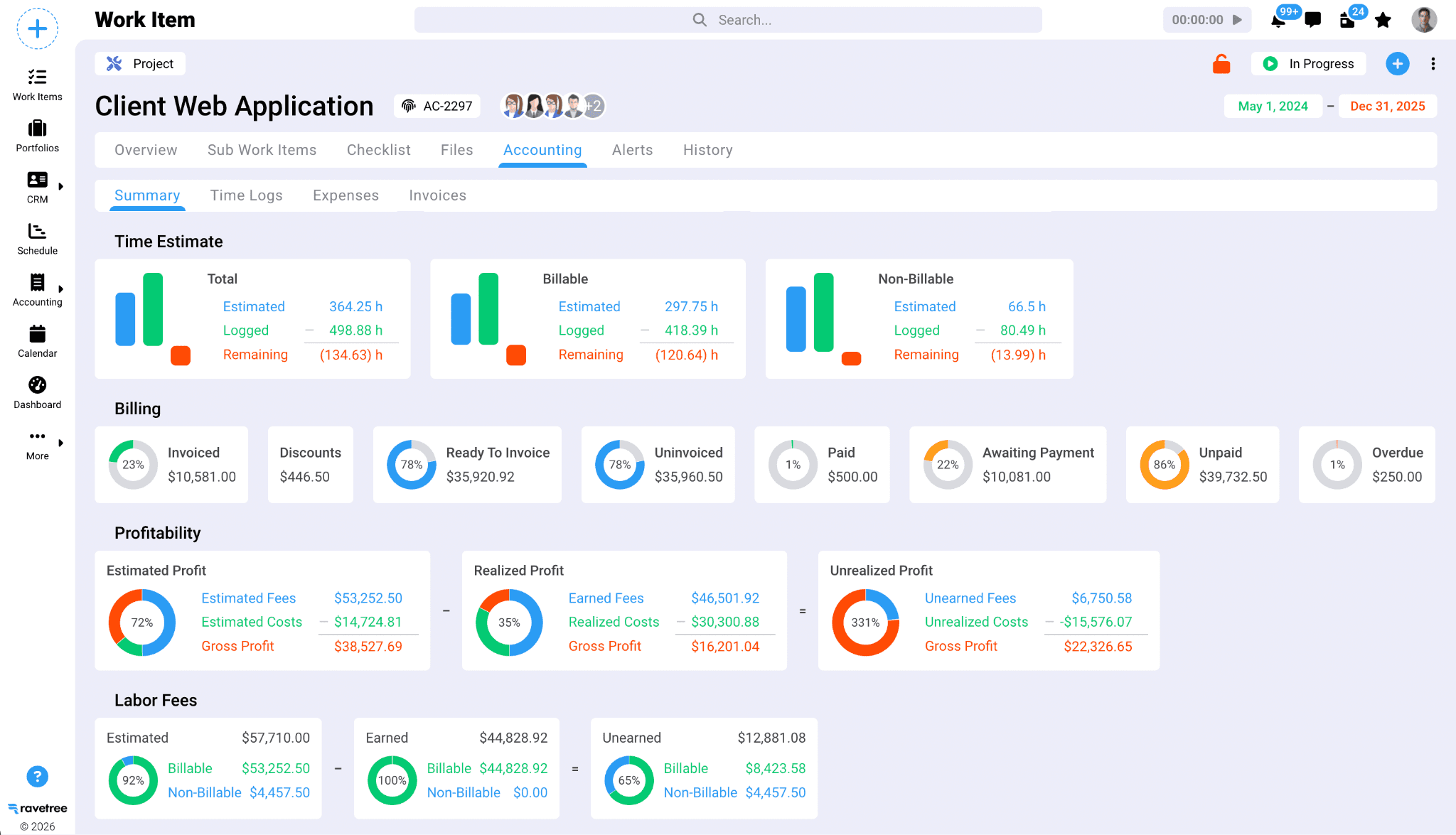
Ravetree stands out as the most comprehensive platform built specifically for marketing and creative agencies. Unlike general-purpose tools, it combines project management, resource planning, time & expense tracking, retainers, proposals, purchase orders, CRM, billing, and client portals into a single unified system. This eliminates the tool sprawl that plagues many agencies juggling separate apps for tasks, invoicing, and client updates. For marketing teams, Ravetree shines with Gantt charts for campaign timelines, Kanban boards for content pipelines, and multi-tiered approval workflows with privacy controls, perfect for handling creative assets like ad copy, social graphics, and video edits. Resource planning shows real-time team capacity so you never overcommit during peak campaign seasons. Client portals let clients log in to view progress, approve deliverables, and submit feedback without endless email threads. Time tracking links directly to project budgets and generates invoices automatically, making retainer management seamless and preventing scope creep before it becomes a billing dispute. Why agencies love it: Everything lives in one place—projects, clients, finances, and files—saving hours of context-switching. Customizable dashboards deliver real-time insights into utilization, profitability, and campaign status. Integrations with QuickBooks, Google Drive, and HubSpot round it out. Potential drawbacks: The depth of features means a slight learning curve for very small teams under five people, though the clean interface and agency-focused design speed adoption. Ravetree is ideal for mid-sized marketing agencies (10–50 people) managing multiple retainers and complex campaigns. It turns project management into true agency operations.
2. Basecamp: The Simplicity Champion for Communication-Driven Teams
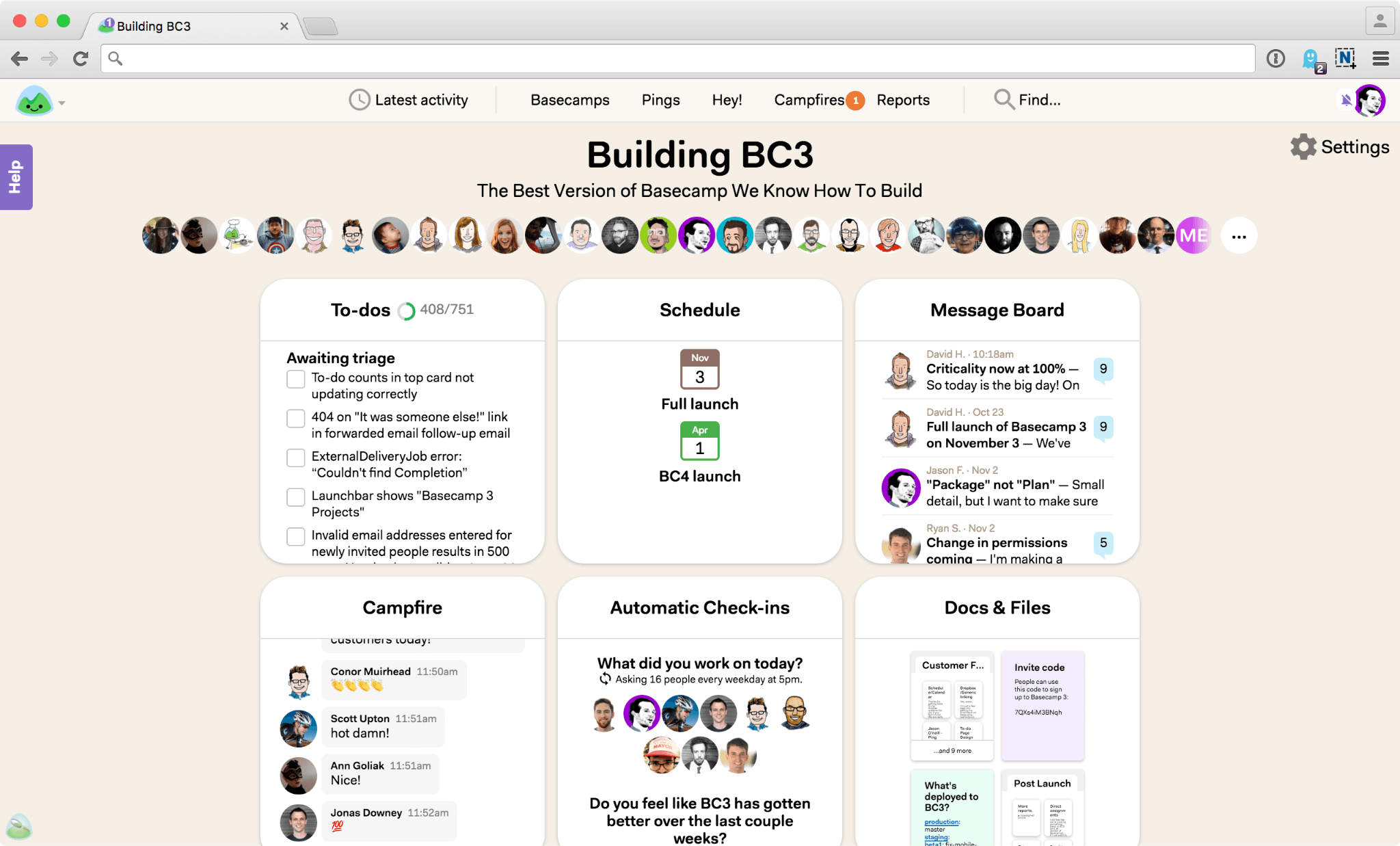
Basecamp delivers the antidote to over-engineered tools. It focuses on clarity and calm collaboration rather than endless features, making it a favorite for creative marketing agencies where communication is the real product. Each project becomes a centralized hub with to-do lists, message boards, schedules, docs and files, and Campfire chat. Hill Charts provide a unique visual way to see where work actually stands—beyond simple status updates. Automatic check-ins replace status meetings, asking team members simple questions like “What did you work on today?” to keep everyone aligned asynchronously. Marketing agencies use Basecamp to house entire client campaigns in one place: feedback threads stay attached to deliverables, files are version-controlled, and clients can be added as guests for direct input without exposing internal tools. The flat pricing (no per-user fees) keeps costs predictable even as teams grow. Why agencies love it: Zero training required, intuitive interface, and a philosophy that prioritizes calm work over constant pings. It drastically reduces email volume—some agencies report 60% drops—while keeping creative conversations flowing. Potential drawbacks: Lacks advanced resource management, Gantt charts, or deep automation. Best for smaller to mid-sized teams (under 50) running straightforward campaigns rather than highly interdependent, multi-channel efforts. If your agency values simplicity, transparency, and client-facing communication over complex workflows, Basecamp keeps everyone focused on great work instead of managing the tool itself.
3. Trello: The Visual Kanban Leader for Creative Workflows
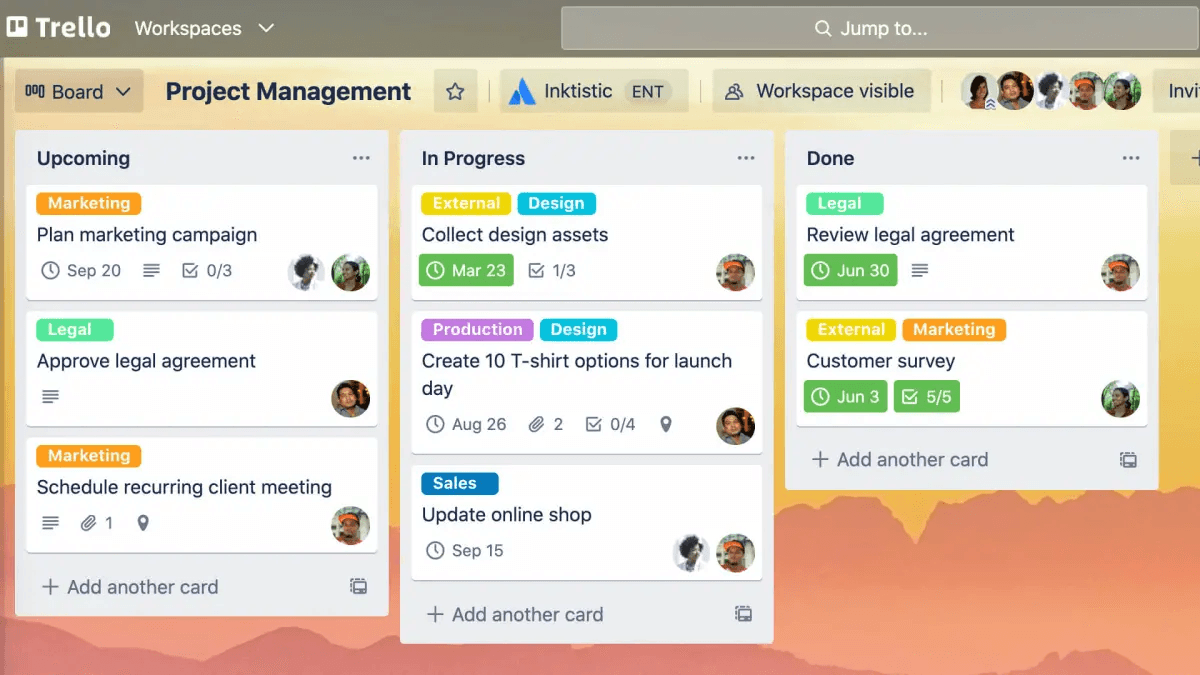
Trello’s strength lies in its beautifully simple, card-based Kanban boards that mirror how creative marketing teams actually think. Drag-and-drop cards across columns like “Ideas,” “In Progress,” “Review,” and “Approved” make it instantly intuitive for content calendars, social media campaigns, SEO pipelines, and design workflows. Power-Ups (now called add-ons) transform Trello into a marketing command center. Add calendars for deadlines, automation via Butler for repetitive tasks (like moving cards when approved), and custom fields for campaign metrics. Marketing-specific templates—content calendars, campaign trackers, and approval boards—get teams up and running in minutes. Visual thinkers love attaching images, mockups, and videos directly to cards for real-time feedback. Why agencies love it: Extremely flexible and visual. Creative teams can see bottlenecks at a glance, and clients can be invited as guests for lightweight collaboration. The free plan is generous enough for small agencies to start immediately. Potential drawbacks: Struggles with multiple interconnected projects or advanced reporting without paid upgrades. No native time tracking or resource planning, so larger agencies often pair it with other tools. Trello excels for boutique creative agencies and marketing teams focused on content production and visual campaigns. Its Kanban approach keeps creativity flowing while maintaining structure.
4. Asana: The Structured Workflow Expert for Scalable Campaigns
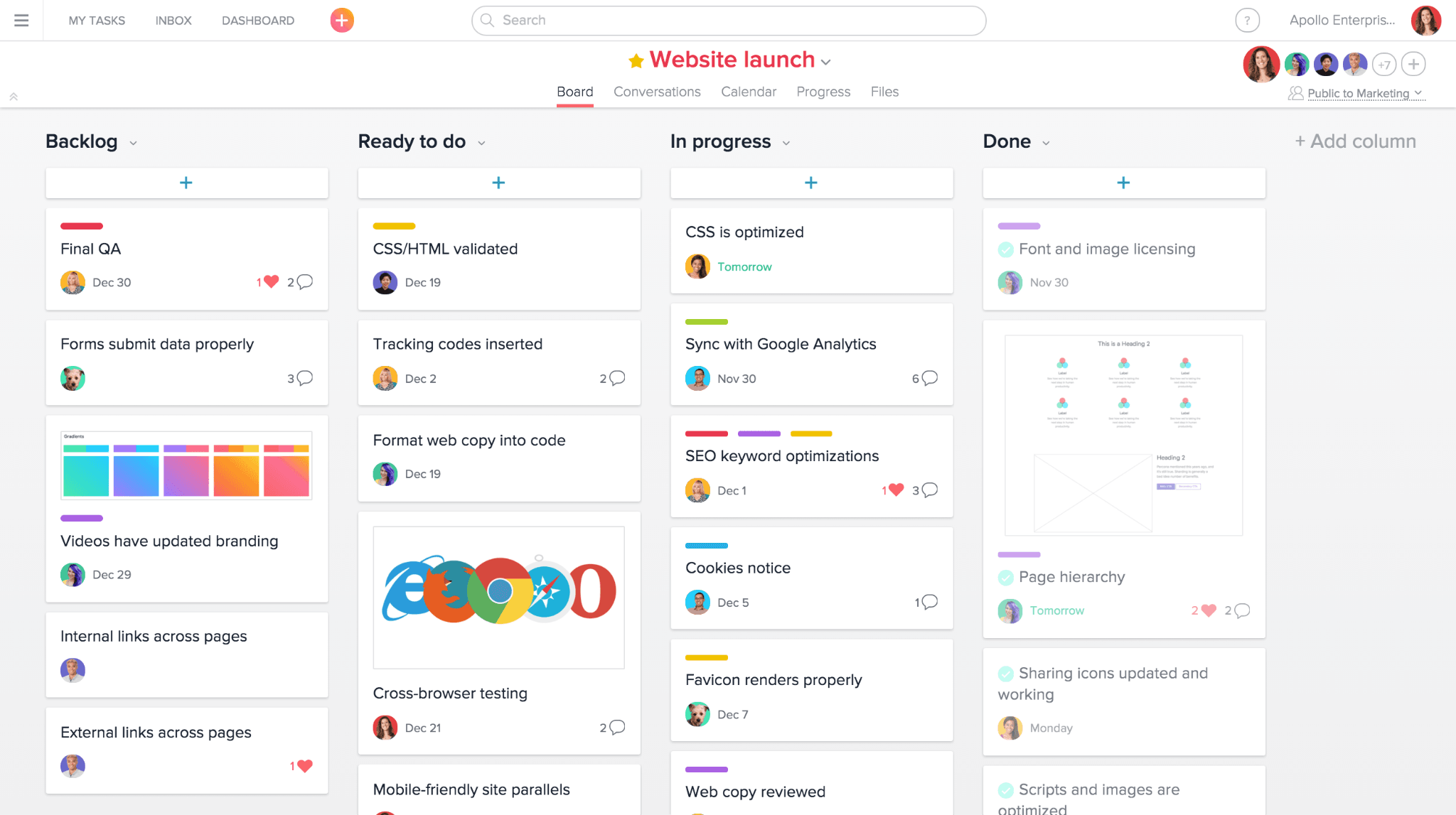
Asana brings enterprise-grade structure to marketing agencies without sacrificing usability. It excels at breaking complex campaigns into actionable tasks with dependencies, timelines, and portfolios that roll up multiple projects. Marketing teams use Asana’s campaign management features to map entire launches—from strategy briefs to asset creation to performance reporting. Custom fields track content type, channel, and approval status. Forms standardize project intake from clients, while rules automate handoffs (e.g., notifying designers when copy is approved). Timelines and workload views prevent overload, and goal tracking links individual tasks to business outcomes like lead generation targets. Over 300 integrations (Slack, Adobe Creative Cloud, Google Analytics) and AI-powered smart status updates make it a true hub. Proofing and approvals keep creative reviews fast and documented. Why agencies love it: Scales beautifully from small teams to large agencies. Portfolios give leadership a high-level view across all client work, while teams stay focused on daily execution. Built-in reporting dashboards impress clients during reviews. Potential drawbacks: Can feel overwhelming for tiny teams who just need basic lists. Some features require paid plans. Asana suits growing marketing agencies running multi-channel campaigns with cross-team dependencies. It turns strategy into executed results.
5. Monday.com: The Customizable Dashboard Powerhouse for Growing Agencies
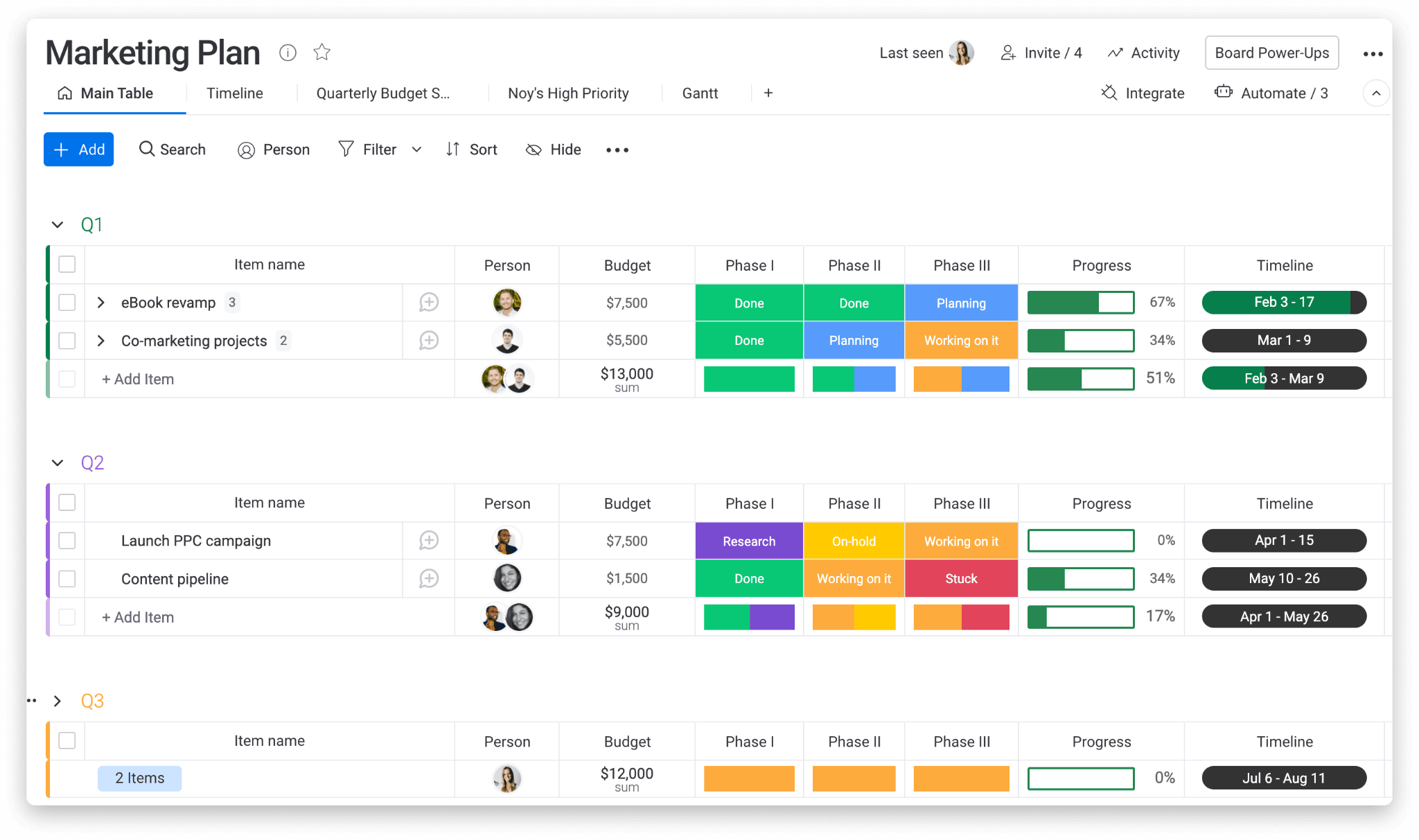
Monday.com (often just called Monday) offers unmatched flexibility with highly customizable boards, automations, and dashboards tailored for marketing operations. Multiple views—Gantt, Kanban, timeline, calendar, and workload—let every team member see data their way while working from the same source of truth. For marketing agencies, it shines in campaign planning, creative request intake via forms, approval workflows, and real-time performance tracking. AI insights surface risks and opportunities automatically. Resource management shows true capacity, while dashboards roll up KPIs across all clients. Monday Campaigns (newer features) even handles multi-channel execution directly in the platform. Why agencies love it: Infinite customization without coding. Guest access for clients and vendors keeps everything centralized. Automation reduces manual work, and integrations connect to virtually every marketing stack tool. Potential drawbacks: Can become overly complex if not configured thoughtfully. Pricing scales with users and features. Monday.com is perfect for ambitious agencies scaling operations, managing complex client portfolios, or needing deep analytics tied to execution.
Choosing the Right Tool for Your Agency
No single tool fits every marketing agency. Ravetree delivers the deepest all-in-one solution for agencies tired of switching apps. Basecamp wins for teams craving simplicity and communication clarity. Trello offers instant visual appeal for creative workflows. Asana provides structured scalability for complex campaigns. Monday.com gives ultimate customization for growing operations. Consider your team size, campaign complexity, and pain points—client feedback loops, resource allocation, billing integration, or reporting needs—before deciding. Most offer free trials or freemium plans, so test them with a real campaign. The right project management tool doesn’t just organize work; it frees your agency to focus on what matters most: delivering standout marketing that drives results for your clients. Start evaluating today—your next successful campaign depends on it.
Davidson Wicker is the Founder & CEO of Ravetree—an award-winning work management software platform for client service businesses.


