


business resources
7 ESG Reporting Platforms for Enterprise Teams (Compared and Reviewed)
05 Oct 2026

Choosing an ESG reporting platform starts with your data: who owns it, how entities share it and what auditors need to see. I compared seven options for US enterprise teams handling carbon accounting, investor requests and multi-framework disclosure.
Reporting itself is now routine at the top of the market. Almost all of the world's 250 largest companies publish sustainability reports, and most align them with the GRI Standards. The harder question is which platform fits your structure.
Key Takeaways
- Match the platform to whoever owns disclosure, whether that's finance, sustainability or IT.
- Framework reuse matters most for teams filing CSRD, ISSB, CDP and California reports in parallel.
- Audit trails, version history and auditor access are baseline needs for assurance.
- AI drafting and validation save time, but people still need to review the output.
- Only one of these seven platforms publishes list pricing, so leave time for quotes and scoping.
How I evaluated these platforms
I reviewed each vendor's published capabilities against a multi-entity, supplier-heavy scenario. This is a desk comparison based on product pages and documentation, not a hands-on benchmark.
My criteria were framework reuse, evidence trails, version history and approvals, AI validation and drafting, integrations and pricing transparency. Every entry follows the same format so you can compare them side by side.
Reporting also has an internal audience. A recent UK study on the net zero confidence gap found senior leaders far more confident in company targets than entry-level staff. It pointed to clearer reporting on energy use and emissions as one fix.
For US teams, California's SB 253 remains in effect, while enforcement of SB 261 is paused under a Ninth Circuit injunction. Confirm current deadlines and applicability with counsel before relying on any platform's templates.
1. Workiva
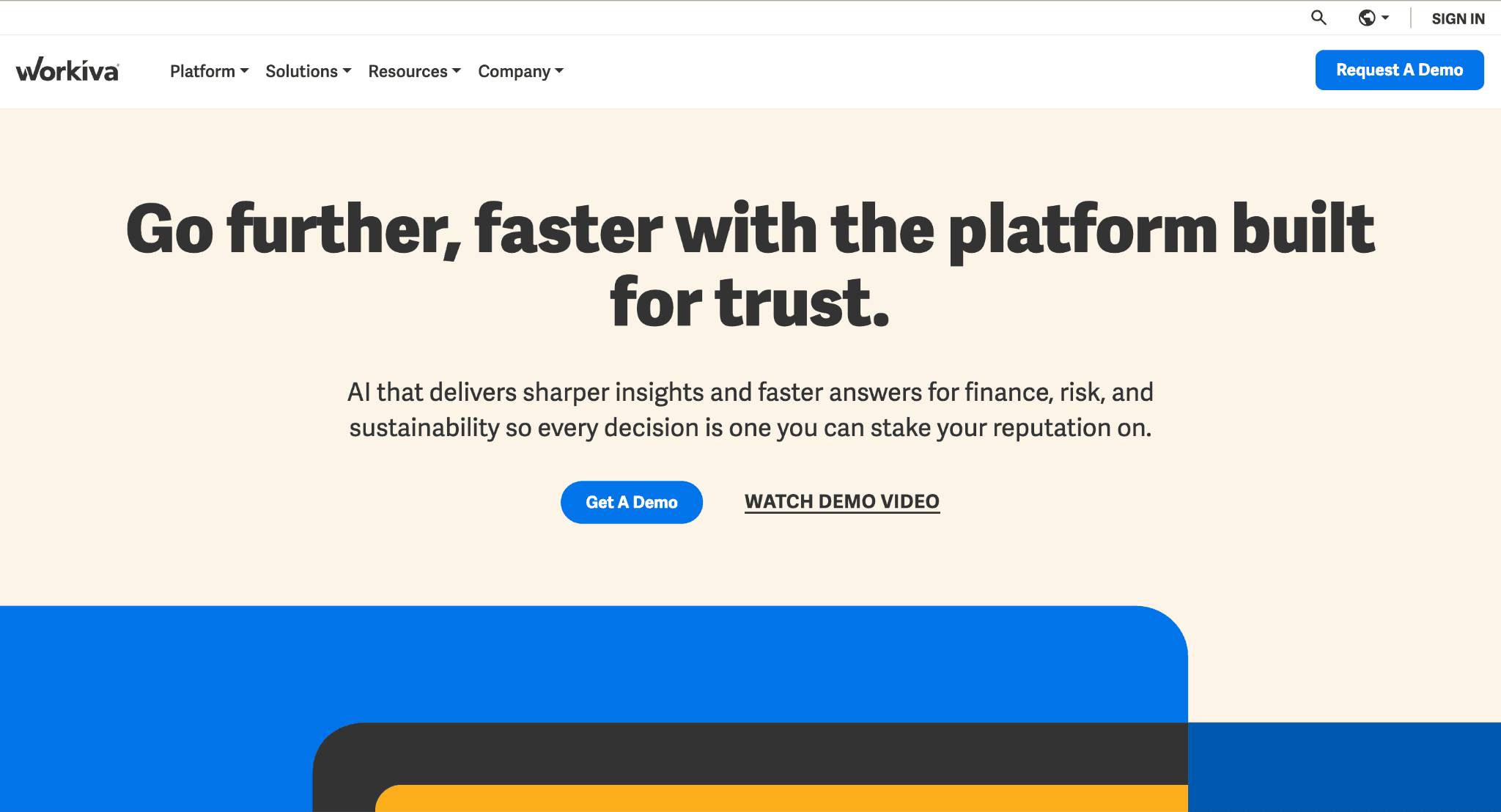
Workiva connects sustainability reporting with financial reporting, audit and risk in one platform.
Pros
- Financial and sustainability data in the same environment
- Audit trail, version control and permissions for co-authoring
- Built-in XBRL tagging, including ESRS digital tagging
- Standards such as ESRS and ISSB built in
Cons
- Custom, quote-based pricing
- Implementation and module scoping add lead time
Where it fits
Workiva makes sense when finance owns disclosure and teams already work in controlled documents. Its linked data keeps figures consistent across every report. Plan for implementation time rather than a quick standalone rollout.
Pricing
Workiva doesn't publish list prices. Quotes depend on users, modules and implementation scope.
2. Microsoft Sustainability Manager
Microsoft Sustainability Manager manages carbon, water and waste data on Microsoft's cloud.
Pros
- Built on Dataverse, with Power BI available for reporting
- Calculation models for Scopes 1, 2 and 3
- Published per-tenant plan pricing
- Premium adds full Scope 3 coverage and product carbon footprints
Cons
- Some features require other licenses, such as Microsoft 365, Power BI or Azure
- Value depends heavily on an existing Microsoft stack
Where it fits
For organizations already running Microsoft 365 and Power Platform, the Dataverse foundation is the main appeal. Emissions data can feed existing reporting workflows without a separate stack. Confirm which capabilities sit in Essentials versus Premium before signing.
Pricing
Microsoft lists Essentials at USD 4,000 and Premium at USD 12,000 per tenant, per month. Licensing terms change, so confirm current rates on Microsoft's plan page.
3. Sweep
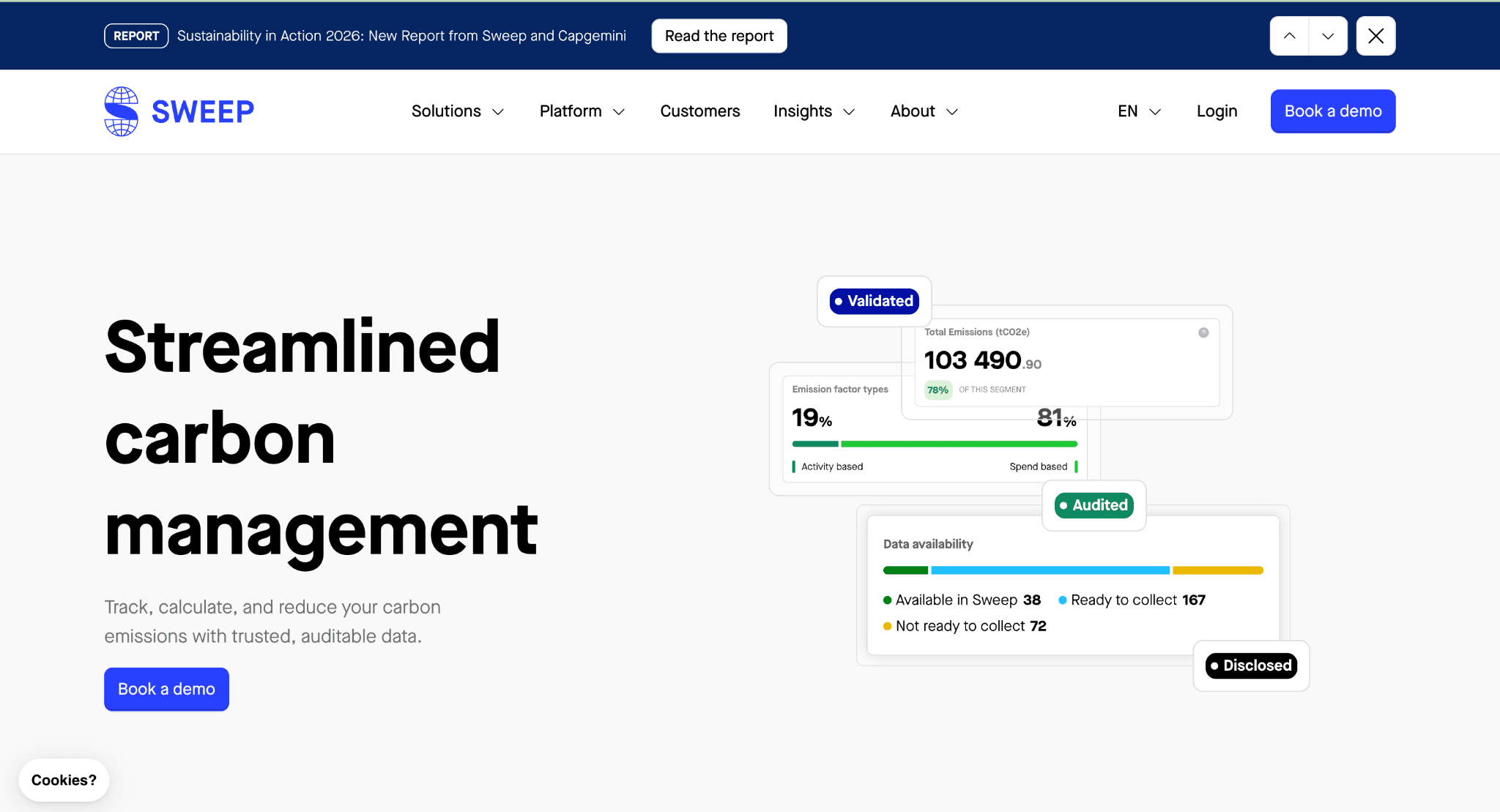
Sweep, the sustainability intelligence platform, brings ESG and carbon data, materiality assessment and disclosure into one workspace.
Pros
- One dataset mapped to CSRD, ISSB, GRI, CDP, SASB, TCFD, SB 253, SB 261 and UK SRS
- Supplier portals for value chain and Scope 3 data
- Audit trail, version history and an auditor access interface
- Connectors and APIs for ERP, HR, energy, procurement and travel systems
Cons
- Quote-based pricing
- Broad scope may exceed a single-framework filer's needs
Where it fits
It suits multi-entity organizations that report to several frameworks and rely on supplier data. Domain-specific AI validates data, drafts narratives and flags inconsistencies. For more detail, see Sweep sustainability reporting.
Pricing
There's no public list price. Request a quote that covers reporting, supplier collaboration and analytics.
4. IBM Envizi ESG Suite
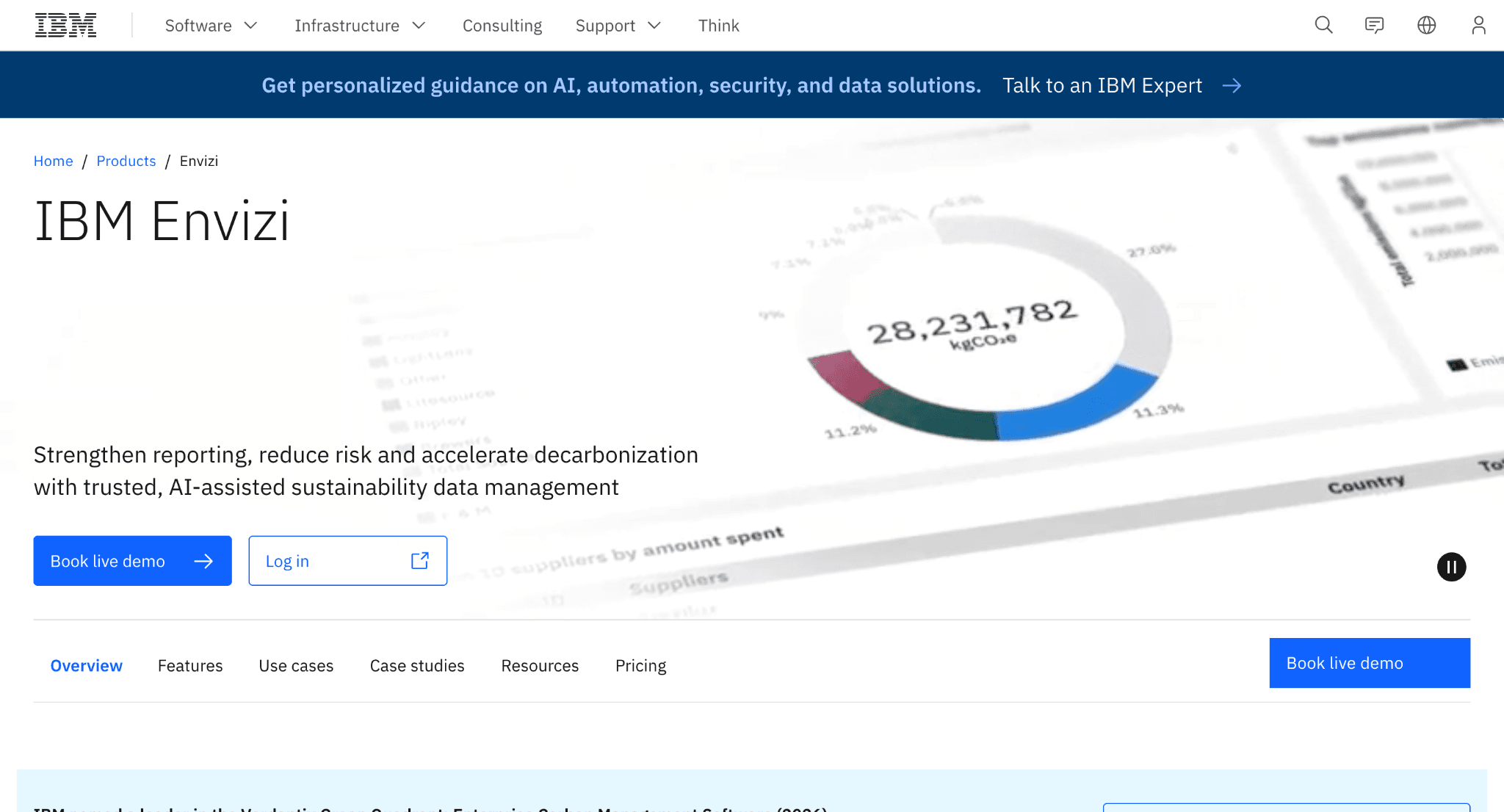
IBM Envizi consolidates ESG data into a single, auditable system of record.
Pros
- Captures more than 500 ESG data types
- Managed frameworks including ESRS, GRI, SASB and TCFD
- Automated data health checks and audit trails
- Customizable organizational hierarchy
Cons
- Tiered packages need careful scoping
- Initial setup takes time for distributed operations
Where it fits
Envizi belongs on the shortlist when data capture across many sites is the main pain point. Its health checks flag completeness and accuracy issues before disclosure. Ask how narrative drafting works during the demo.
Pricing
IBM doesn't publish list prices, and packages include Essentials and Standard tiers. Ask IBM to scope the tier and data volume you need.
5. Watershed
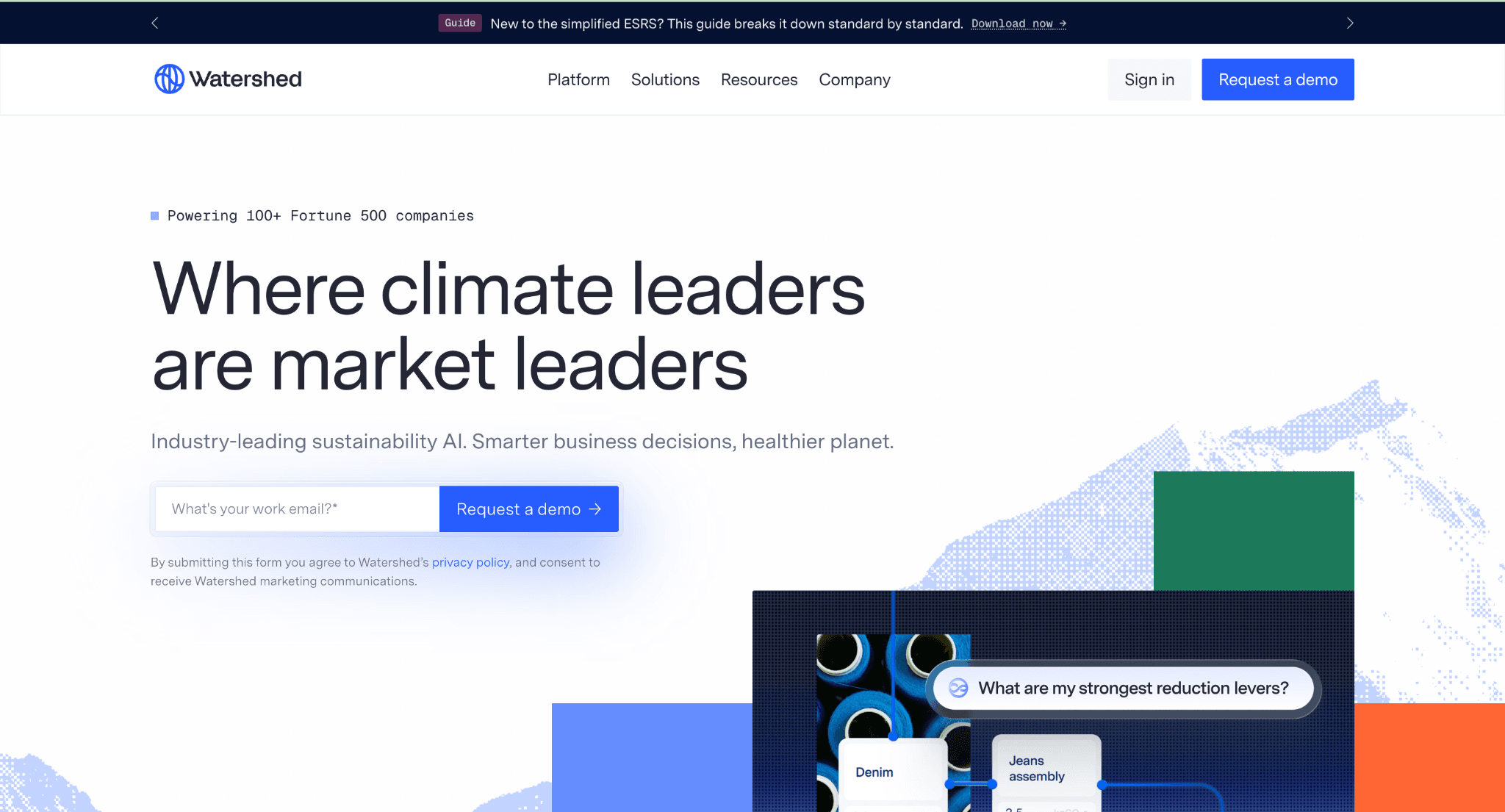
Watershed pairs carbon accounting with AI-assisted disclosure drafting.
Pros
- AI drafts disclosures grounded in platform data, with source transparency
- 150+ automated error checks across 70+ error types
- Data reuse across CSRD, CDP, ISSB and SB 253/261
- CDP submission via API
Cons
- Lighter on social and governance metrics than on climate data
- Quote-based pricing
Where it fits
Watershed fits teams where drafting and data checks eat up the reporting calendar. External auditors can review data lineage and calculation chains directly. Reviewers still need to check every AI-drafted narrative.
Pricing
Watershed doesn't publish list prices. Request an enterprise quote for your reporting scope.
6. Sphera
Sphera offers corporate sustainability reporting inside a broader EHS and operational risk suite.
Pros
- Managed disclosure content for CSRD, GRI, CDP, IFRS/ISSB and the EU Taxonomy
- Framework mapping that reuses entries across frameworks
- Built-in inline XBRL preparation
- DEKRA-verified emission factors
Cons
- The wider EHS suite may exceed disclosure-only needs
- Quote-based pricing
Where it fits
Managed disclosure content is the main draw, since Sphera keeps it up to date and its in-house experts handle cross-framework mapping. It suits industrial companies already using Sphera for EHS. Check template coverage before committing to the wider suite.
Pricing
Sphera doesn't publish list prices. Request a quote scoped to the modules you need.
7. Novisto
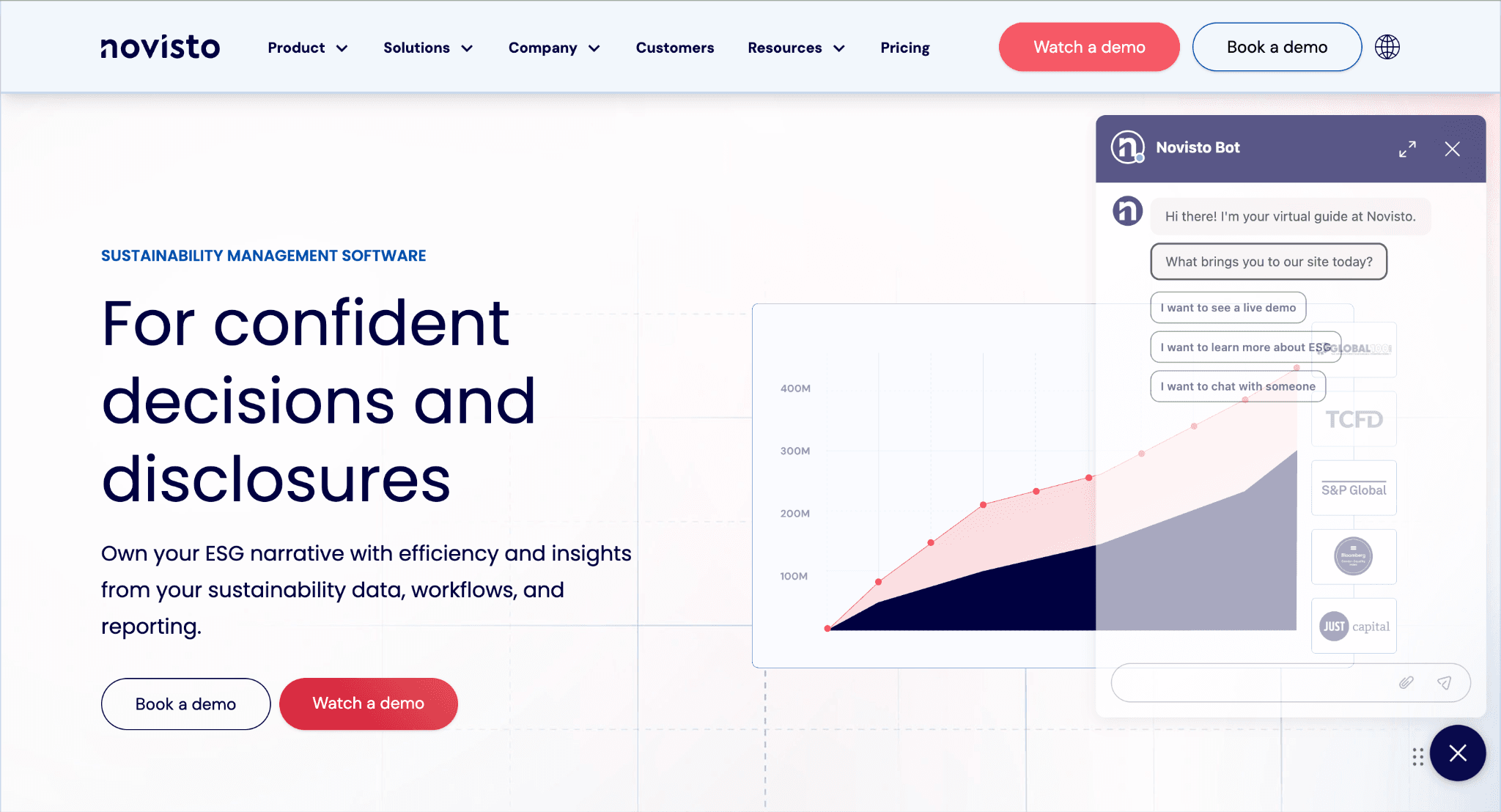
Novisto is an ESG data management and reporting platform built to cover all three ESG pillars.
Pros
- Support for 25+ ESG taxonomies, so data is collected once and reported many times
- Audit trails and approval workflows
- Microsoft Word integration for drafting with live data
- Double materiality workflows and XBRL tagging
Cons
- Deeper carbon accounting comes through integrations and its recent Minimum acquisition
- Quote-based pricing
Where it fits
Novisto suits teams running repeatable, multi-framework cycles with many internal contributors. The Word integration keeps narratives tied to current figures. Check coverage for your carbon and ERP systems early.
Pricing
Novisto doesn't publish list prices. Request a quote for your frameworks and user count.
Conclusion
The right platform depends on who owns disclosure and how your data flows. Finance-led teams, Microsoft-centric IT groups and supplier-heavy sustainability programs will each build a different shortlist.
Before buying, ask each vendor to demo your entity structure, evidence requirements and framework reuse. That test reveals more than any feature list.
FAQ
What is sustainability reporting software?
It centralizes ESG data, maps it to reporting frameworks and organizes the evidence behind each figure.
Can software make you compliant on its own?
No. Outcomes depend on the rules that apply to you, your data quality, internal controls and professional review.
Which of these platforms publish pricing?
Microsoft publishes plan pricing. The other six quote on request, so confirm current terms directly.
Do I need XBRL for CSRD?
CSRD calls for machine-readable digital tagging, but timing depends on EU implementing rules. Check current requirements with your advisers.
How does AI help with ESG reporting?
It can validate data, flag anomalies and draft narratives. Every output still needs human review.


