
business resources
A 5-Step Guide to Elevate Your Tile Showroom Standards In the American Surfacing Industry
22 Apr 2026

The American surfacing industry, including tiles, stone, quartz, and other materials, has evolved rapidly over years. However, showroom models have not always kept pace with how customers research, evaluate, and purchase today. INSCA, a company carrying Spain's legacy of engineering and design, specialises in showrooms and tile displays. The company helps showrooms to improve their sales with customized projects with its exclusive displays for tiles, bathrooms and construction materials.
The American surfacing industry operates within a large and growing market, but showroom performance is under pressure. However, recent data shows that flooring retail sales declined by around 8% in 2024. This gap is majorly due to large structural challenges in how showrooms engage modern customers.
Most U.S. showrooms struggle with conversion and customer decision-making. The industry offers vast product variety, but without structured presentation or effective visualisation, customers experience decision fatigue.
Unless showrooms evolve into guided, design-led environments that simplify decisions and enhance confidence, they risk becoming inefficient assets in an otherwise growing industry.
Spain, the origin of the finest design and most robust engineering in the ceramic world, has been the pioneer in solutions, when it comes to the surface industry. Top players, like INSCA, are specialists in display solutions for tiles, bathrooms and building materials.
With more than 45 years of experience, and 100% customers experience, here is a 5-step guide to elevate your tile showroom standards in the american surfacing industry.
Spain: A legacy of tile engineering and design
Tracing back to the Moorish period, Spain’s ceramic tradition began as Islamic artisans introduced advanced glazing techniques, geometric patterns, and kiln technologies that transformed local pottery into a refined art form.
The early centres of excellence - Valencia and Talavera, produced decorative tiles, also known as azulejos, that adorned palaces, churches, and public buildings.
Over time, this artistic foundation evolved into a structured industry. By the 18th and 19th centuries, Spanish ceramics began to shift from purely decorative craft to functional and architectural materials.
And by the late 20th century, Spanish manufacturers invested heavily in technology, research, and industrial processes. Advanced firing techniques, digital printing, and precision engineering allowed Spanish tiles to achieve high durability, consistency, and design versatility.
Advancing that legacy, some of the leading tile display manufacturers like INSCA are based in Spain. These have set a new benchmark for exhibitions across North America. Partnering with some of the largest tile distributors in the U.S., INSCA is helping them transform their retail spaces into high-end design destinations.
In fact, this partnership between the US markets and European excellence, paired with attentive service, is the ultimate formula for retail success.
Looking to position your business in the premium segment and capture the attention of high-level architects and designers? Here is a 5-step guide to professional excellence:
Step 1: Invest in Engineering, Not Just Furnishing
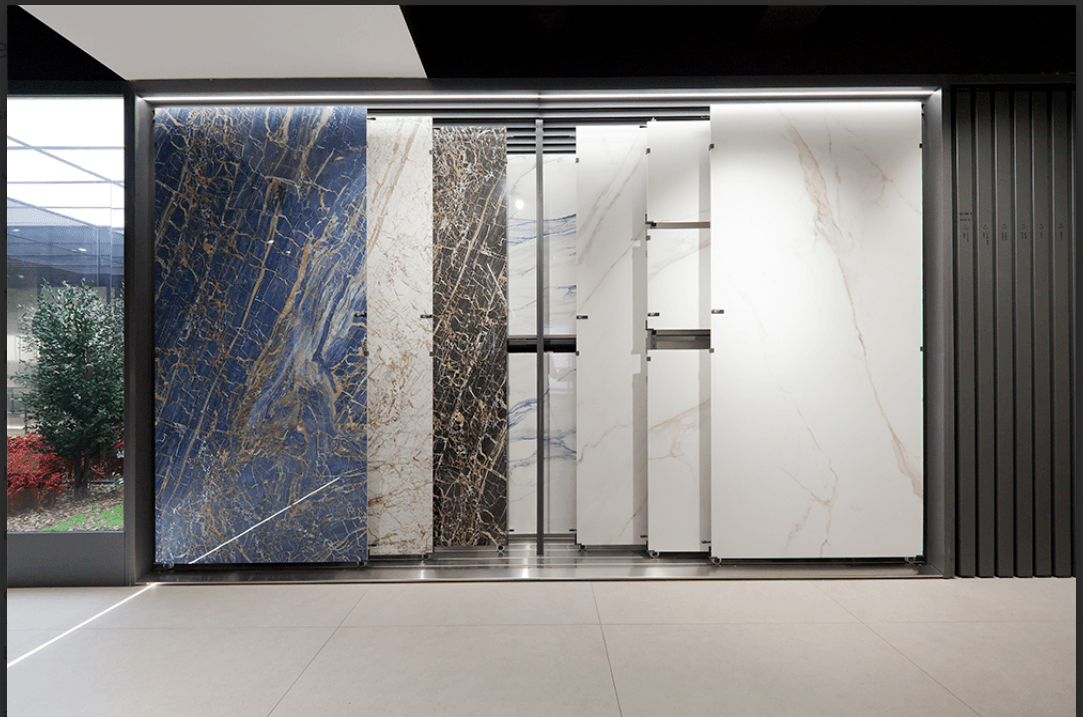
Quality is something your customers should feel at their fingertips. Utilizing high-end tile display racks ensures that sample handling is effortless and fluid. Major U.S. distributors choose INSCA because its Spanish-engineered technology allows even 10-foot XL slabs to glide with a premium smoothness that communicates immediate quality. A rack that squeaks or jams ruins the perception of a luxury product in seconds.
Step 2: Optimize Customer Flow Through Design
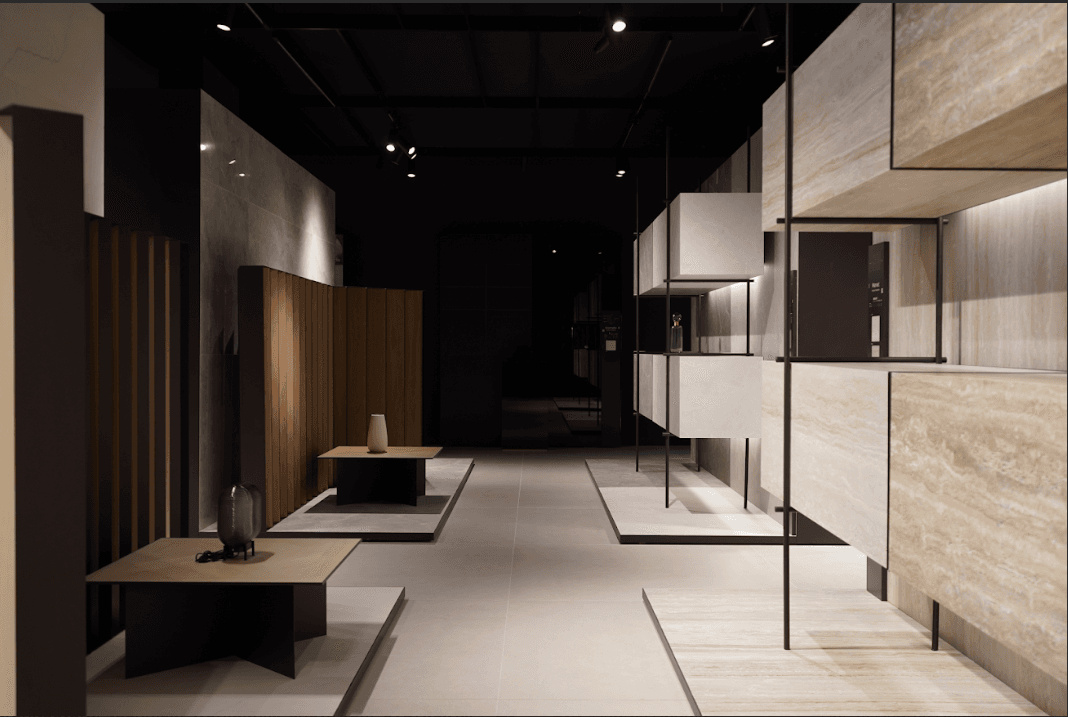
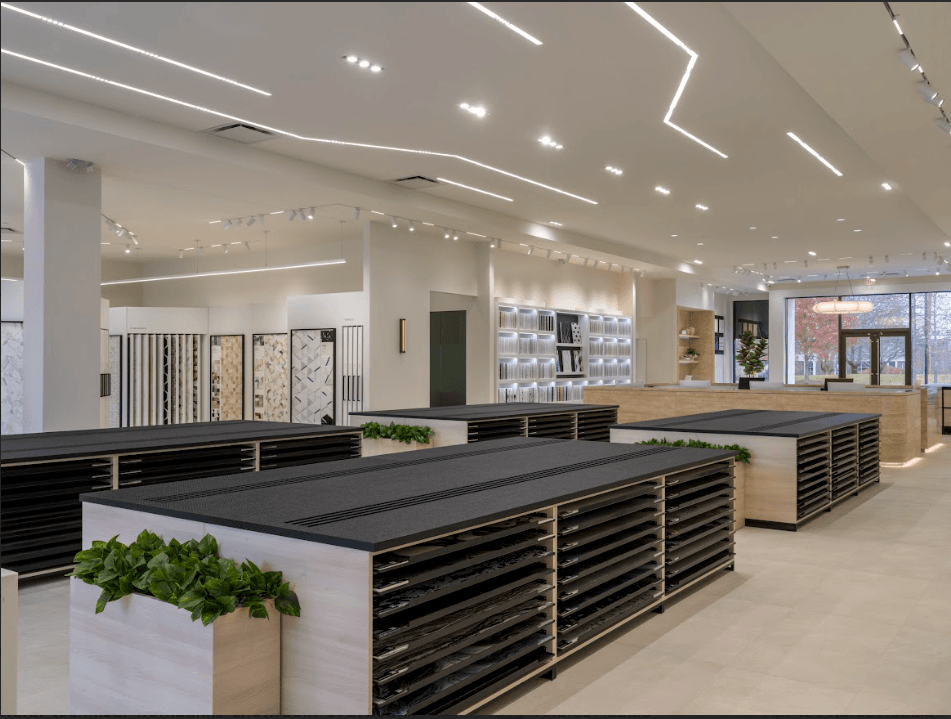
Great tile showroom design should guide the visitor intuitively through your catalog. The goal is to eliminate "decision fatigue." By organizing your floor plan so that each collection has enough "breathing room," you allow the client to fully visualize the product in their own environment. In the U.S., where a professional’s time is a commodity, an efficient showroom layout significantly shortens the sales cycle.
Step 3: Create Dedicated Technical Decision Hubs
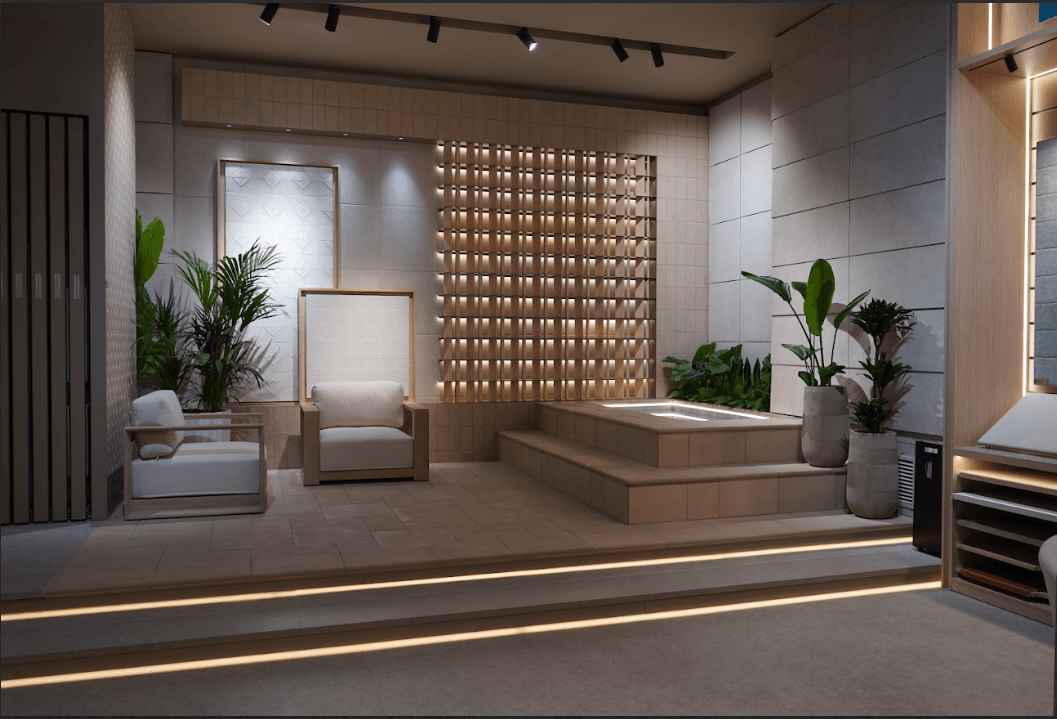
The sale no longer happens in front of a shelf; it happens at the worktable. Install professional design hubs where architects and homeowners can mix and match floor and wall samples under high-fidelity lighting that mimics natural daylight. This collaborative environment builds trust and speeds up approvals for complex, high-value projects.
Step 4: Prioritize Certified Safety for Large Formats
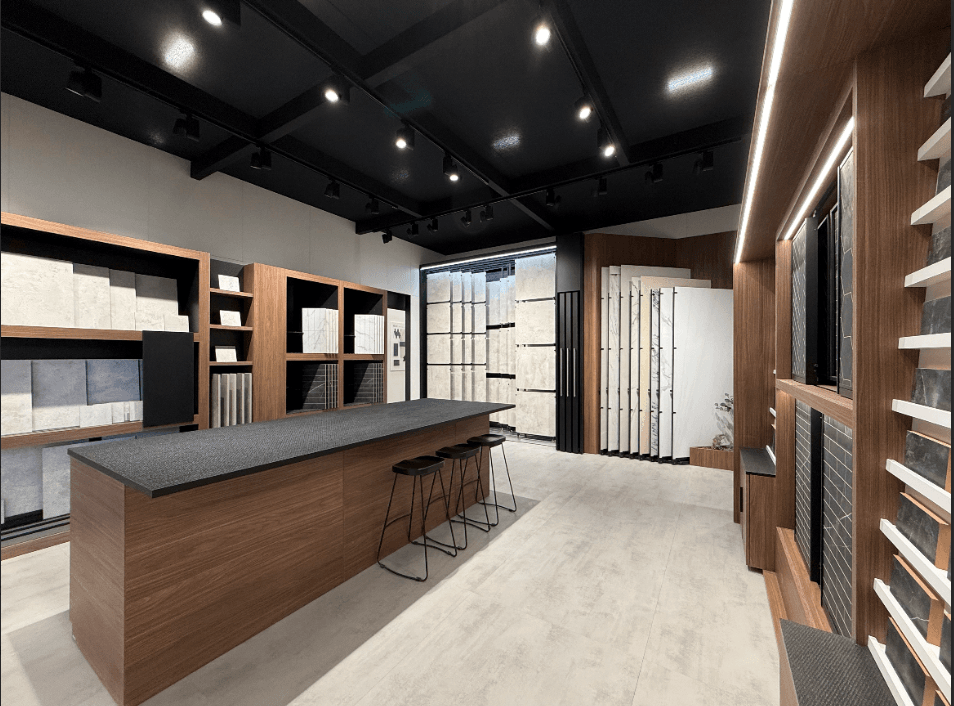
The U.S. market rightly demands the highest operational safety standards. With the boom in oversized porcelain panels, you cannot afford unstable supports.
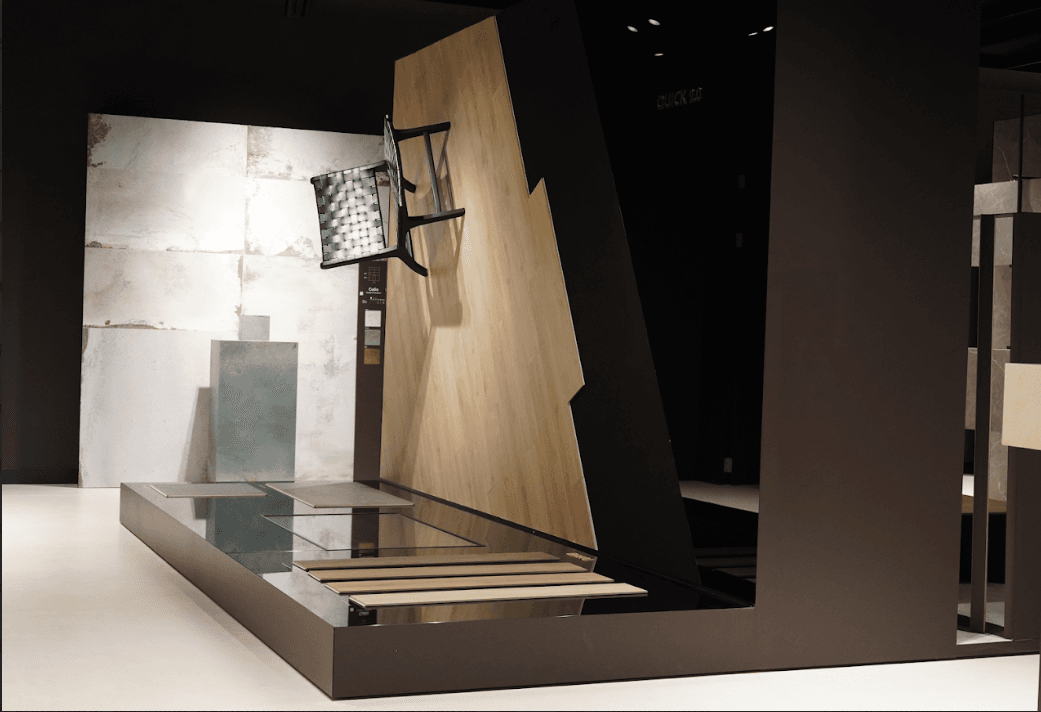
Ensure your displays feature heavy-duty, certified stability systems that eliminate any risk of breakage or accidents. This not only protects your valuable inventory but also secures your commercial liability.
Step 5: Maintain Operational Agility Against Trends
The American market thrives on novelty. Select modular display systems that allow your team to rotate catalog collections in minutes without construction. Being the first to showcase the latest styles from Cersaie or Coverings is a critical competitive advantage that only a flexible infrastructure can provide.
The Global Partner Advantage: From Spain to Your Showroom
Many business owners in the United States are surprised to find that importing Spanish engineering is often more cost-effective and efficient than sourcing generic local solutions. By partnering with a manufacturer that leads the sector from Spain but offers optimized logistics for North America, you gain access to innovations that haven't yet hit the mass U.S. market. This "Made in Spain" pedigree is a silent salesman. It tells your clients that you settle for nothing but the best, positioning your brand at the very top of the luxury tier. Ultimately, elevating your showroom isn't just about aesthetics—it's about upgrading your entire business model to close more high-value deals with total confidence.


