
Ada Lovelace: The Woman Who Wrote the Future of Programming & AI
25 Sept 2026

Ada Lovelace, the genius who invented the idea of modern day computing and then waited, for a century, for the world to catch up.
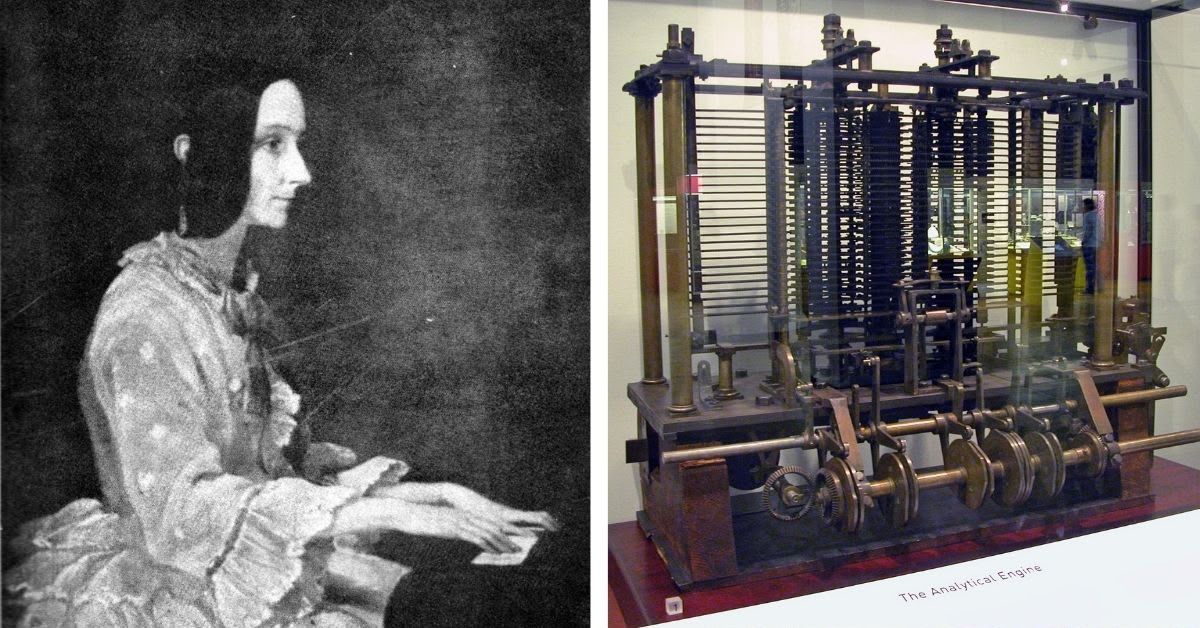
Ada Lovelace never built a computer herself, never saw one run. And yet, in a set of footnotes published in 1843 and signed with three modest initials, "A.A.L.," she wrote the sentence from which the entire digital age unspools: that a machine need not be bound to numbers, that its operations could be turned loose on anything expressible in symbols — language, music, pattern, logic itself. Everything from a spreadsheet to a chatbot is, in some lineage, a footnote to her footnote.
It has become fashionable to crown her with every invention that came after — programming, computing, artificial intelligence, even the digital twin. The instinct is generous but the accounting is loose, and Ada Lovelace does not need the exaggeration. Strip away a century and a half of retrospective flattery and what remains is still extraordinary: a woman who, working from a translated French paper and her own restless mathematical imagination, produced what is widely regarded as the first published algorithm for a machine, and who understood — decades before anyone had reason to — that a computing engine was not a calculator but a language. That is not a myth built for her. That is the record.
What she did not do is equally instructive. She did not predict thinking machines; if anything, she was the field's first skeptic, insisting the engine "has no pretensions whatever to originate anything" — a line so sharp that Alan Turing felt compelled to answer it a hundred years later, and that AI researchers are, in effect, still answering today. She did not describe generative models or digital twins. She described something more foundational than either: the conceptual hinge on which all of it turns. Later inventors did not fulfill her prophecy so much as build downstream of her insight.
She did this as a countess and a mother of three, in a Britain where women could not enter a university or, in her case, even a library without a husband to fetch the books for her. Her notes then vanished for a hundred years — not because they were wrong, but because the machine they described did not yet exist to prove them right. When it finally did, the world discovered that Ada Lovelace had been waiting for it all along.
The life of Ada Lovelace
Augusta Ada Byron was born in London on 10 December 1815, the only legitimate child of the poet Lord Byron and Anne Isabella Milbanke. Her parents' marriage collapsed within weeks. Byron left England and died in Greece when Ada was eight, and she never really knew him.
Her mother, Annabella, was mathematically trained (Byron teasingly called her the "princess of parallelograms"). She was determined that Ada would not inherit her father's volatile temperament, so she filled her daughter's education with mathematics and science. It was unusual for a girl of that era. Ada was often ill as a child. Around the age of 13 measles left her bedridden for a long stretch. She still found time for invention: as a girl she worked on plans for a flying machine.
Meeting Babbage
In 1833, when Ada was 17, she attended a party at the home of Charles Babbage, then 41. Impressed by her grasp of mathematics, he invited her back to see his prototype Difference Engine, a mechanical calculator that could compute and print tables. She was fascinated, and the two began a correspondence that lasted for years.
In 1835 she married William King, who became Earl of Lovelace in 1838, which made her Countess of Lovelace. Over the next few years she managed a large household and had three children. In 1839 she returned to serious study, working with the logician Augustus De Morgan, who had a strong influence on the mathematical rigour of her later work.
The notes of 1843
Babbage had moved on to a far more ambitious design, the Analytical Engine. It was meant to be programmable, driven by punched cards of the kind used in Jacquard looms. He never finished it, and he never published a full account of it himself. That job fell to the Italian mathematician Luigi Menabrea, who wrote up Babbage's 1840 Turin lectures in French in 1842.
Ada translated the paper into English, and the notes she added, labelled A through G, ran to roughly three times the length of the original. They were published in 1843 over her initials, "A.A.L." Three ideas in them matter most.
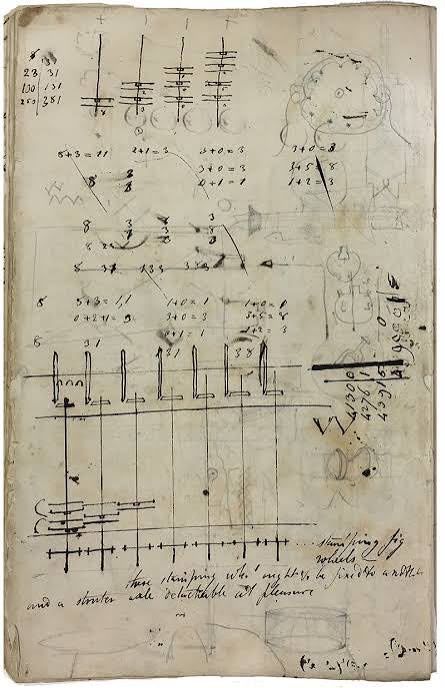
- From calculation to computation. In Note A she argued that the engine was not merely a fast arithmetic device. Its operations were defined abstractly, so it could act on anything whose relationships could be expressed in its notation. She gave music as her example: if the relations of pitched sounds could be expressed that way, the engine could compose elaborate pieces. She also drew the famous comparison that the engine "weaves algebraic patterns, just as the Jacquard loom weaves flowers and leaves." This separation of the machine's operations from the numbers it processes is the conceptual root of general-purpose computing.
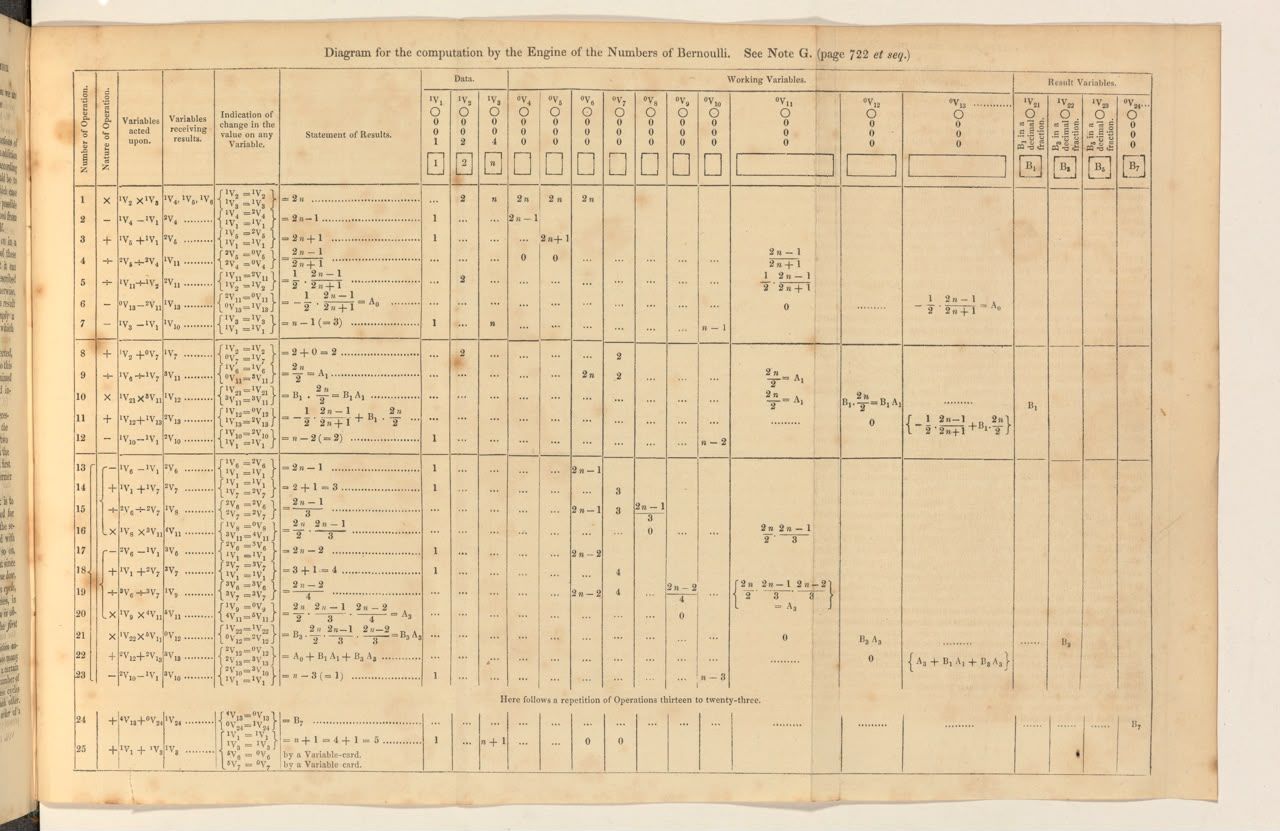
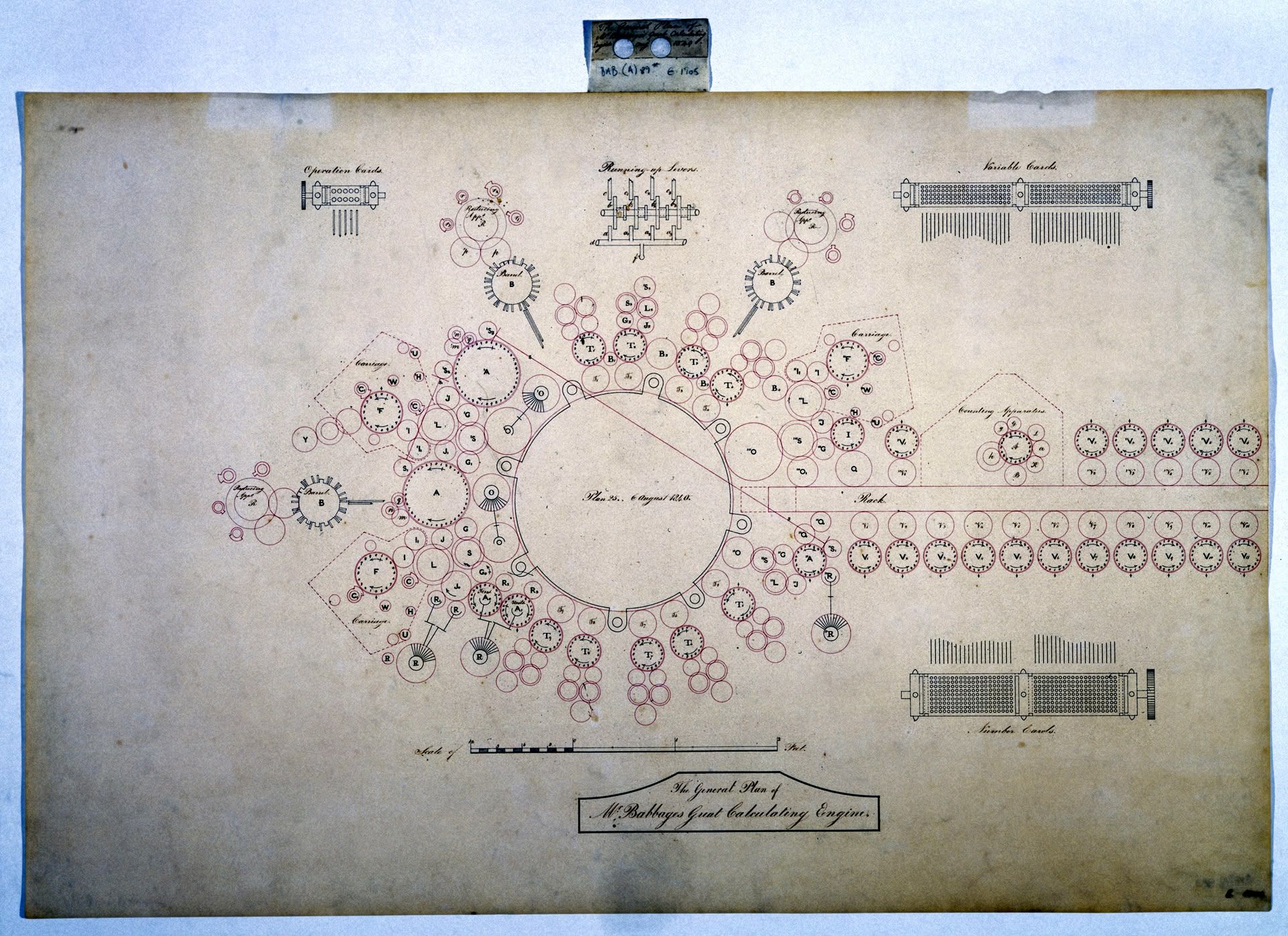
- The first published program. In Note G she set out a step-by-step method for the engine to compute Bernoulli numbers, laid out in a table showing the operations, the variables and how they change. It is widely regarded as the first published algorithm written for a machine. Babbage had sketched earlier calculations for his engine, which is why historians still debate the "first programmer" title. Ada's distinction is that she published the most complete and most carefully explained example, and she placed it in a broader theory of what such a machine was.
- The Lovelace Objection. Also in Note G, she added a caution. The engine, she wrote, "has no pretensions whatever to originate anything." It can do whatever we know how to order it to perform. This is a limit as well as a vision, and it became the seed of a century-long argument.
Forgotten, then rediscovered
Ada's health declined after the notes appeared. She was diagnosed with cancer around 1851 and died on 27 November 1852, aged 36. She was buried beside her father in the Byron family vault.
Her notes then faded for about a century. In 1953 the physicist B. V. Bowden reintroduced them in Faster Than Thought, a book on digital computing, just as real programmable computers were arriving. In the following decades the US Department of Defense named the Ada programming language after her: the name was chosen around 1979 and the language was standardised in 1980. In 1950 Alan Turing had already engaged with the Lovelace Objection in "Computing Machinery and Intelligence," and it is still cited in debates about machine creativity. Ada Lovelace Day, held on the second Tuesday of October, now celebrates women in science and technology.
| Concept | What the record supports |
| Programming | Strong. Note G is a detailed, published, machine-oriented algorithm. |
| General-purpose computing | Strong. Note A states that the engine's operations could apply to non-numerical subject matter. |
| AI | Partial and double-edged. She raised the question of machine originality, and Turing's response shaped the field, but her own answer was sceptical. She did not predict thinking machines. |
| Generative AI, NLP, digital twins | Interpretation, not history. Her music example is a striking parallel to generative systems. Nothing in her writing addresses simulation of people or systems, and calling her the originator of digital twins is a modern reading, not a documented prediction. |
Sources
- Max Planck Society, "Ada Lovelace and the first computer programme in the world" (interview with Anna Siffert), mpg.de
- Lemelson-MIT Program, "Ada Lovelace," lemelson.mit.edu
- Justyna Zwolak, "Ada Lovelace: The World's First Computer Programmer Who Predicted Artificial Intelligence," NIST Taking Measure, 2023
- Elizabeth Hilfrank, "Ada Lovelace," National Geographic Kids, 2021
Share

Pallavi Singal
Editor
Pallavi Singal is the Vice President of Content at ztudium, where she leads innovative content strategies and oversees the development of high-impact editorial initiatives. With a strong background in digital media and a passion for storytelling, Pallavi plays a pivotal role in scaling the content operations for ztudium's platforms, including Businessabc, Citiesabc, and IntelligentHQ, Wisdomia.ai, MStores, and many others. Her expertise spans content creation, SEO, and digital marketing, driving engagement and growth across multiple channels. Pallavi's work is characterised by a keen insight into emerging trends in business, technologies like AI, blockchain, metaverse and others, and society, making her a trusted voice in the industry.


