


business resources
After a Preventable Death: A Practical Checklist for Families
22 Sept 2026

After a sudden death, families often have to manage shock, grief, calls, paperwork, and financial concerns at the same time. If the loss may have involved negligence, unsafe conditions, medical care, a workplace incident, or a crash, it can help to take a few calm, organized steps without feeling pressured to solve every question immediately.
Early guidance from a lawyer for wrongful death claims may help a family understand which records should be protected and whether important deadlines apply. That does not mean legal tasks should take priority over health, safety, or funeral arrangements. The first goal is to give your family room to respond to the loss while ensuring vital information is not lost.
Focus on Immediate Needs in the First Hours
In the first hours, people may feel numb, confused, angry, or unable to concentrate. Focus first on immediate safety, medical needs for anyone affected, notifying close relatives, and making necessary funeral or travel arrangements. Do not feel obligated to make major financial or legal decisions while emotions are at their most intense.
- Make sure close family members receive accurate information.
- Ask one trusted person to help manage calls, messages, and visitors.
- Place official papers, phones, keys, and personal belongings in a safe location.
- Write down names and contact information for officials, medical staff, or investigators.
Build a Small Support System
A small, reliable group can make daily responsibilities more manageable. One person might coordinate meals, another might provide transportation, and another might track bills or official mail. Clear roles can reduce confusion and prevent one grieving person from carrying every burden alone.
Grief can affect sleep, appetite, energy, memory, and concentration. The CDC notes that people may experience sadness, anger, numbness, confusion, or other difficult emotions after a loss, and that routines and support from trusted people can help. Its guidance for coping with grief also encourages people to seek professional support when needed.
Gather Important Records
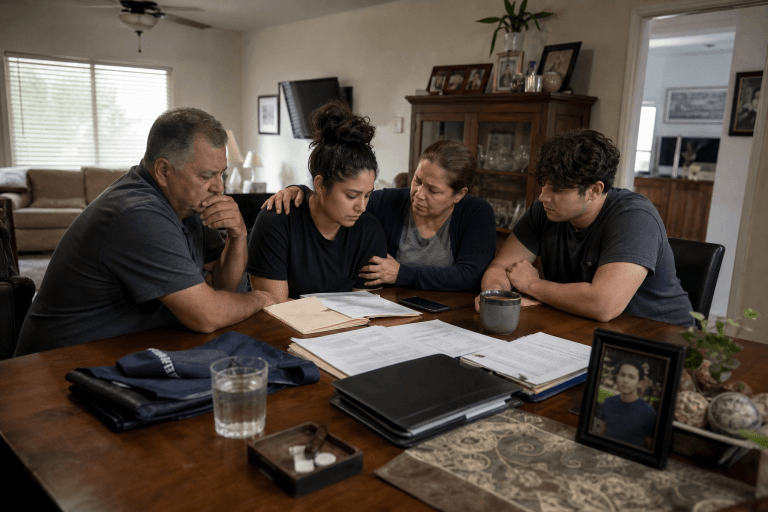
Collecting records is not about turning the family into investigators. It is simply a way to keep useful information available if questions arise about insurance, benefits, bills, an estate, or possible responsibility for the death.
- Death certificates, funeral contracts, and burial or cremation records.
- Hospital paperwork, medical records, and medical examiner information, when available.
- Police, incident, workplace, or crash reports.
- Insurance policies, claim letters, and claim numbers.
- Employment records, pay information, and benefit documents.
- Names and contact details for potential witnesses.
- Receipts for medical care, travel, funeral expenses, and related costs.
Preserve Evidence Before It Disappears
Some evidence can become unavailable quickly. Security footage may be overwritten, vehicles may be repaired, online posts may disappear, and memories can fade. Save original photos, videos, text messages, emails, voicemails, and documents. Avoid editing files or discarding damaged property, clothing, equipment, or other items that may relate to what happened.
For a fatal vehicle collision, official records can come from several sources. The records used in fatal-crash data collection can include police reports, driver records, death certificates, toxicology reports, and emergency medical service reports. A family does not need to obtain every item immediately, but it is wise to identify information that may need preservation.
Be Careful With Insurance Companies
An insurance adjuster may contact a family soon after a death. The conversation may seem routine or supportive, but families should avoid making assumptions, accepting blame, or agreeing to a settlement before they understand what is being requested and which rights may be affected.
- Keep copies of every letter, email, form, and claim number.
- Ask what documents are requested and why they are needed.
- Read releases carefully before signing them.
- Be cautious about recorded statements and speculation.
- Do not assume an early offer accounts for every financial loss.
Manage Bills and Financial Pressure
Medical expenses, funeral costs, housing payments, childcare costs, credit accounts, and lost income can create immediate pressure. Start with a simple written list of each bill, its due date, the amount due, and the contact person. Then address the most urgent items one at a time.
When possible, contact creditors, landlords, lenders, or service providers before a payment is missed. Ask whether an extension, payment plan, account hold, or other temporary option is available. Keep notes of every conversation, including the date and the representative's name.
Ask Key Legal Questions Early
Wrongful death laws, filing deadlines, and notice requirements vary by state. Claims involving a private driver, business, employer, medical provider, or government entity may be subject to different rules. Asking questions early can help a family avoid losing time while facts and records are still available.
- Who has the legal right to bring a claim?
- What filing deadline or notice requirement applies?
- Could more than one person, business, or organization be responsible?
- What evidence should be preserved now?
- Which financial losses may be considered?
- Does an estate need to be opened?
Make Space for Grief and Emotional Care
Financial and legal responsibilities should not replace emotional care. Family members may grieve differently. Some may want to talk often, while others may need quiet, routine, or practical help. Try to protect basic needs such as meals, rest, medications, transportation, and time away from demanding tasks.
- Use simple, honest language when children ask questions.
- Accept help with meals, errands, and household responsibilities.
- Reach out to a counselor, doctor, faith leader, or grief group when you need support.
- In the United States, call or text 988 if someone is in an immediate emotional crisis.
Avoid Common Mistakes
- Posting detailed accusations or unverified theories on social media.
- Deleting messages, photographs, or online content connected to the event.
- Throwing away damaged property before asking whether it should be preserved.
- Giving inconsistent accounts because of pressure to answer quickly.
- Signing broad releases without understanding their effect.
- Waiting until the last minute to ask about deadlines.
Conclusion
A preventable death can bring grief, uncertainty, and practical pressure all at once. Handle urgent needs first, protect important records, use caution with insurance paperwork, ask questions before deadlines approach, and seek support when the weight becomes too much to carry alone.


