


business resources
AI Demand Meets Supply Constraints: The New Reality of the Chip Market
06 May 2026

The semiconductor and component market continues to face systemic pressure, and recent developments at Samsung Electronics have intensified an already structural shortage, transforming what was once a localized imbalance into a global financial concern. Early reports of a sharp drop in chip production amid the strike have set the tone for the current situation. Even a short-term disruption at one of the key production nodes leads to significant distortions across the supply chain. A 58% decrease in night-shift foundry chip production and an 18% drop in memory output demonstrate the market's sensitivity to the human factor under conditions of overloaded capacity.
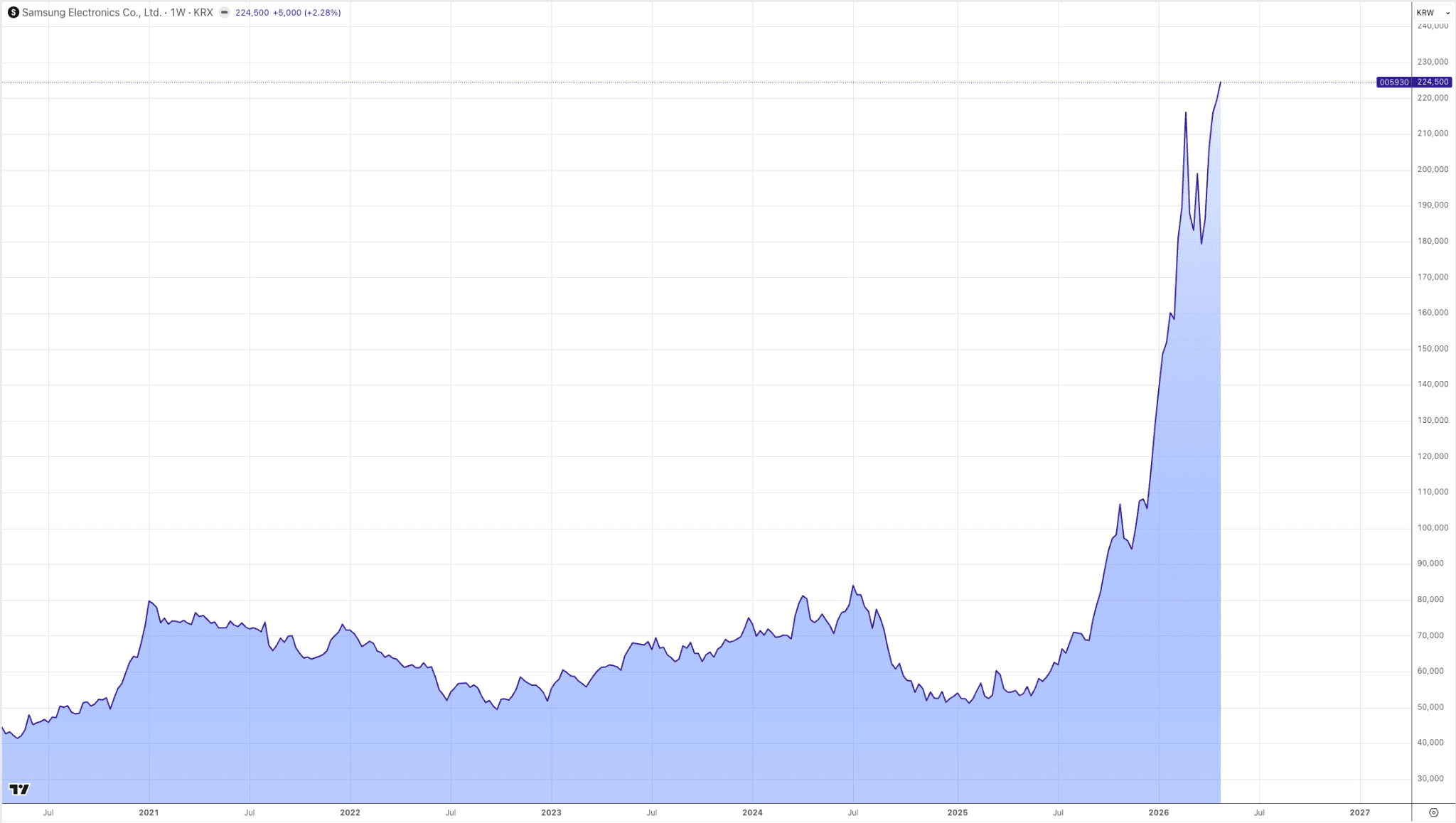
Even a prolonged strike will reduce global DRAM shipments by only 3-4% and NAND by 2-3%. In a supply-constrained environment, however, this is sufficient to influence pricing and market share dynamics. Samsung's own losses could reach $20 billion, but the secondary effects are more important, including reduced customer confidence and a strengthening of competitors such as SK hynix and Micron Technology. In the memory segment, where demand is already outstripping supply, even minor disruptions can translate into financial gains for alternative suppliers.
At the same time, the underlying causes of the shortage have not disappeared. The expansion of AI infrastructure continues to draw resources out of the market, and ahead of the OpenAI IPO, the AI race is only intensifying. Data centers consume all available memory, leaving the consumer segment in a state of chronic shortage. Despite a temporary stabilization of prices in the United States, Europe, and China, analysts emphasize that this is only a short-term correction following the overheating of sales channels. The structural imbalance between supply and demand persists, with a full recovery not expected before the end of the decade.
Additional pressure is coming from related industries. Disruptions in the supply of raw materials for printed circuit boards, driven by geopolitical factors and the production shutdown at SABIC, are exacerbating component cost inflation. A 40% monthly increase in the prices of printed circuit boards and a 30% rise in the cost of copper foil and even silver (XAGUSD) are adding to the cost of electronics — particularly AI server solutions, where individual boards can be several times more expensive than standard configurations. Thus, the pressure on the market becomes multi-layered, with shortages affecting not only chips but also the entire production ecosystem.
In a broader context, these developments are contributing to the formation of an inflationary spiral within the technology sector, where rising costs at every stage — from raw materials to final assembly — begin to reinforce one another. Memory shortages, material supply disruptions, and production instability are forcing electronics manufacturers to reassess their pricing models, moving away from the traditional model of declining costs with each product generation. As a result, the cost of both AI hardware and mass-market products, from smartphones to PCs, is rising, gradually reducing demand and slowing upgrade cycles.
For investors, this means a shift in focus. While previously revenue growth was the key driver of company valuations, now supply chain control and the ability to protect margins in conditions of volatile costs are becoming increasingly important. Against this background, vertically integrated players and companies with long-term contracts benefit, while smaller market participants face risks of displacement or takeover. Ultimately, the market is moving toward a more rigid structure, where access to resources and production facilities is becoming the main competitive advantage, and the industry itself grows more capital-intensive and sensitive to external shocks.
Taken together, these factors are shaping a new economy in the semiconductor market, where competitive strength depends less on technological innovation alone and more on supply chain resilience and resource access. Even short-term disruptions, whether strikes or raw materials shortages, can trigger cascade effects, influencing the final product prices, investment decisions, and the balance of power among the largest industry players.


