


resources-impakt
AI-Driven Resilience: El Niño’s Impact on Global Agriculture, Commodity Markets, and Logistics
22 Sept 2026

The ongoing El Niño event is intensifying across the central and eastern equatorial Pacific Ocean, creating notable challenges for global agricultural supply chains, energy networks, maritime logistics, and vulnerable economies. However, 2026 presents a promising shift: for the first time, Artificial Intelligence (AI) is taking a pivotal role in accurately forecasting the event, enhancing supply chain efficiency, and reducing agricultural losses. By deepening our understanding of the mechanics behind this phenomenon, leveraging AI's capabilities, and fostering a coordinated global response, we can effectively manage food security and mitigate risks in commodity markets.
1. What is El Niño?
The Basics
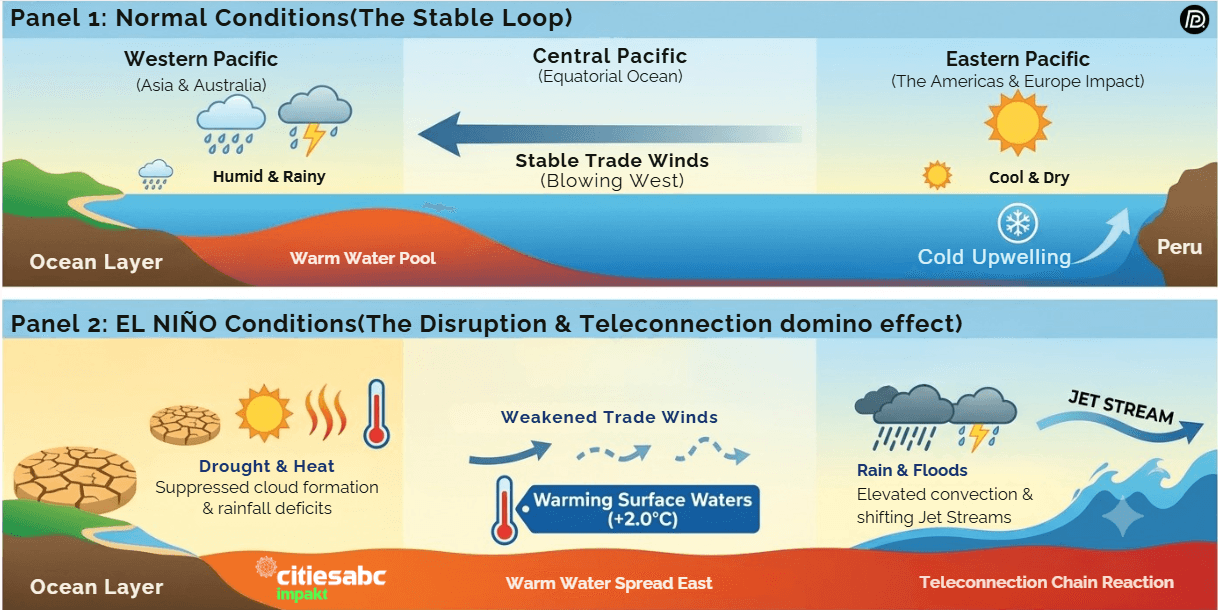
El Niño is a natural climate pattern involving unusual warming of surface waters in the central and eastern tropical Pacific Ocean. Under normal conditions, strong trade winds blow westward along the equator, driving warm surface water toward Asia and Australia. However, during El Niño, these winds weaken or even reverse, allowing warm ocean water to flow back eastward toward the Americas. This shift displaces heat in the atmosphere and alters global rainfall and temperature patterns.
Everyday Examples to Picture El Niño
- Blowing on Hot Soup: When you blow across a bowl of hot soup, your breath pushes the warm surface layer to the far edge, allowing cooler soup to rise near you. During El Niño, when the trade winds weaken, you stop blowing. As a result, the warm soup trapped at the far edge sloshes back across the surface toward you, spreading heat evenly and changing where the steam rises.
- Moving a Space Heater: Imagine warm ocean water as a space heater that is usually kept in the kitchen (representing Asia and Australia). This makes the kitchen warm and humid, while the living room (representing the Americas) remains cool. During El Niño, the space heater is unplugged and moved into the central hallway (the middle of the Pacific). As a result, the kitchen becomes cooler (leading to drought), while the living room overheats (causing heavy rain and storms), disrupting the temperature balance of the entire house.
The History of El Nino ("The Little Boy")
| Era | Milestone & Discovery |
|---|---|
| 1600s–1800s: The Naming | Peruvian fishermen observed that every few years, cold, nutrient-rich coastal waters were replaced by warm, nutrient-poor currents, leading to a significant decline in fish populations. Noticing that this warming phenomenon consistently occurred around late December, they named it El Niño, which translates to The Little Boy or the Christ Child. |
| 1920s: The Atmospheric Seesaw | While attempting to forecast failures in the Indian monsoon, British physicist Sir Gilbert Walker discovered a global atmospheric pressure variation between the Indian Ocean and the Eastern Pacific, which he named the Southern Oscillation. |
| 1969: The Bjerknes Synthesis | Meteorologist Jacob Bjerknes linked Walker's atmospheric oscillation to oceanic warming off Peru, establishing the unified ENSO (El Niño-Southern Oscillation) climate loop. |
| 1982–1983: "The Wake-up Call" | The first mega-event of the satellite era caught scientists unprepared, triggering the installation of the Tropical Atmosphere Ocean (TAO) array, a vast system of deep-sea buoys dedicated to continuous Pacific monitoring. |
Atmospheric Teleconnections Diagram (The Walker Circulation)
| Region | Normal Conditions ("Baseline") | El Niño Breakdown ("The Shift") | Real-World Impact |
Western Pacific (Asia, Australia, Southern Africa) | Heavy Rain & Warm Water Strong trade winds push warm water west, fueling monsoon rains. | Extended Drought & Heat Dry air replaces rain clouds as warm ocean water moves away. | Crop Stress & Energy Deficits Threatens rice (Asia), sugarcane, palm oil, and maize (Africa). |
Central Pacific (Equatorial Ocean) | Strong Trade Winds Blows warm surface water toward Asia. | Trade Winds Weakened/Reversed The ocean warms by +2.0°C to +2.5°C. | Engine Displacement Displaces atmospheric engines, disrupting global weather links. |
Eastern Pacific & Atlantic (Americas, UK, & Europe) | Dry Air & Cool Water Deep ocean upwelling brings cold, nutrient-rich water to Peru. | Heavy Flooding & Storms Warm water sloshes east; the jet stream shifts north/east. | Infrastructure & Fishery Shock Causes UK storminess/flooding, coastal rains, and fishmeal drops. |
- Wind Breakdown: Equatorial trade winds weaken, letting warm ocean water slosh from Asia back toward South America.
- Heat Dislocation: The shifted pool of +2.0°C warm water acts like a heat engine in the wrong location, bending atmospheric jet streams out of shape.
- Dual Weather Extreme: The shifted jet stream simultaneously deprives Asian/African crops of rain while driving excessive moisture and storm activity into South America, North America, and Europe.
Official 2026 ENSO Status and Meteorological Trajectory
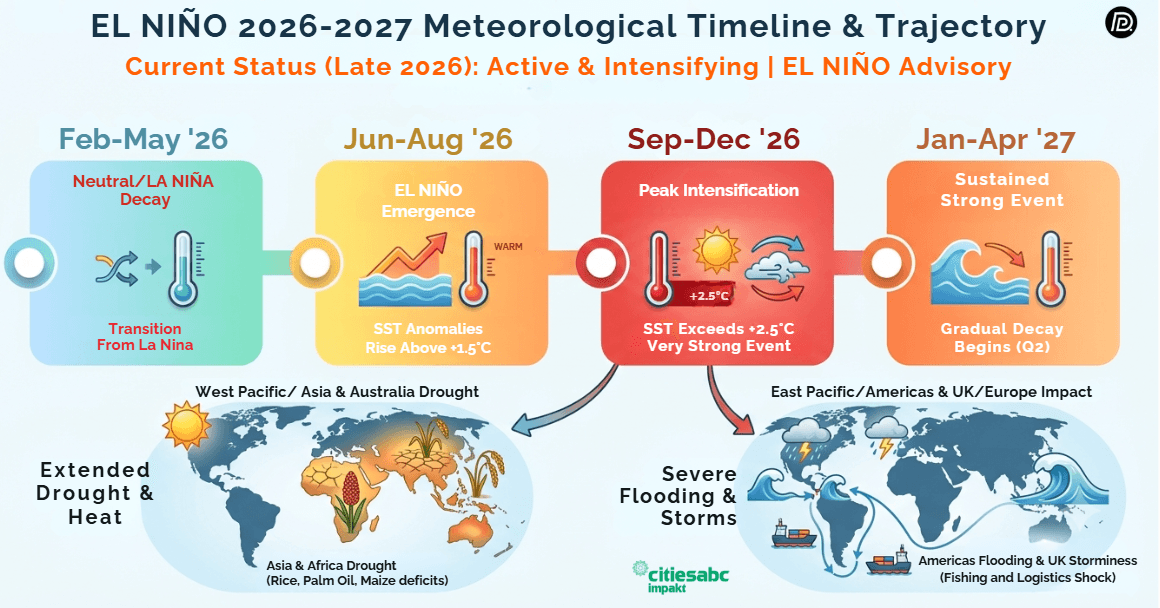
According to joint advisories from the World Meteorological Organisation (WMO), the National Oceanic and Atmospheric Administration Climate Prediction Centre (NOAA CPC), and the Food and Agriculture Organization/World Food Programme (FAO/WFP) Global Early Warning System, the ENSO Alert Level is currently set at an El Niño Advisory, indicating that it is active and intensifying. Sea Surface Temperature (SST) anomalies in the crucial Niño 3.4 region have reached +2.03°C.
UK Impact Assessment: "Weather Whiplash", Storms, and Flooding
El Niño begins in the Pacific Ocean, but its effects reach Europe and the United Kingdom by changing the jet stream. A recent analysis by the UK Met Office and BBC Weather indicates that the developing El Niño event is expected to significantly affect UK weather patterns through Autumn 2026 and into Winter.
- Wetter and Warmer Autumn: A strengthening El Niño, coupled with unusually high sea surface temperatures around the UK coast, is expected to result in above-average temperatures and increased precipitation.
- "Weather Whiplash" and Flood Risk: The UK is susceptible to drastic weather changes, shifting from prolonged regional droughts to extreme wet conditions. Although the expected rainfall will help the Environment Agency (EA) replenish depleted reservoirs, this rapid change also poses a significant risk of localised flooding.
- Storm Severity: Met Office meteorologists predict a significantly stormier season starting in November, with a higher likelihood of named storms producing strong winds and heavy rainfall.
The AI Revolution: Forecasting and Mitigating
El Niño in 2026
In 2026, Artificial Intelligence evolved from an experimental technology to a key supportive resource for governments and corporations working together to manage climate volatility effectively.
The Role of AI in the Current 2026 Event
- Neural Weather Prediction Models: AI-based forecasting models, such as Graph Neural Networks from major tech firms, accurately predicted the rapid intensification of the 2026 El Niño weeks ahead of traditional dynamical models, giving agricultural markets a crucial advantage.
- Supply Chain Rerouting: Because of severe drought restrictions at the Panama Canal, major shipping companies are using AI algorithms to dynamically calculate the most cost-effective alternative routes in real time, factoring in fuel costs, travel time, and global port congestion data.
- Precision Agriculture & Satellite Analytics: AI computer vision models are actively analysing satellite imagery, specifically NDVI data, across West Africa and Southeast Asia. These models detect even small drops in soil moisture and crop health, enabling local authorities to implement targeted irrigation and subsidies before crops fail.
How AI Will Control Impacts in the Future
- Genomic AI for Climate-Resilient Crops: Machine learning is accelerating the mapping of plant genomes to breed highly resilient strains of rice, maize, and cocoa that can withstand extreme heat and sudden flooding, significantly shortening the R&D cycle.
- Automated Parametric Insurance: In the future, artificial intelligence (AI) will connect directly to smart contracts. If an AI weather model detects that rainfall in a specific region of Zambia has dropped below a critical threshold, it will automatically execute insurance payouts to smallholder farmers. This will eliminate bureaucratic delays and help prevent famine.
- Hyper-Local Microclimate Management: AI will provide farmers with block-by-block predictive analytics, advising them on the best weeks to plant or harvest to avoid imminent flash floods or heat waves.
Global Coordinated Response: How the World is Averting Crisis
Building on lessons from the impactful El Niños of 1997 and 2015, global organisations and governments are implementing proactive measures in 2026 to stabilise markets and safeguard vulnerable populations. These efforts reflect a commitment to resilience and preparedness in the face of climate challenges.
| Entity / Organisation | Actions Taken to Avert Crisis |
|---|---|
| UN Agencies (WFP & FAO) | Implemented Anticipatory Action Frameworks. Instead of waiting for crops to fail in Southern Africa, organisations are distributing drought-tolerant seeds, animal feed, and direct cash transfers to vulnerable communities based solely on AI-driven weather indicators. |
| National Governments (India & Peru) | India is carefully managing its domestic buffer stocks and implementing strategic, temporary export limits on non-basmati rice to prevent spikes in domestic prices. Peru has proactively cancelled early fishing quotas to protect anchoveta biomass from a long-term collapse driven by warming waters. |
| UK Environment Agency (EA) | Using advanced predictive modelling, we can control reservoir releases to balance post-drought recovery needs with the capacity to manage anticipated extreme autumn storms. |
| World Bank & Financial Institutions | Expediting Crisis Response Windows to offer low-interest emergency financing to nations reliant on food imports, particularly in East Africa, to help stabilise their currencies amid rising global grain prices. |
Cross-Sector Risk Footprints
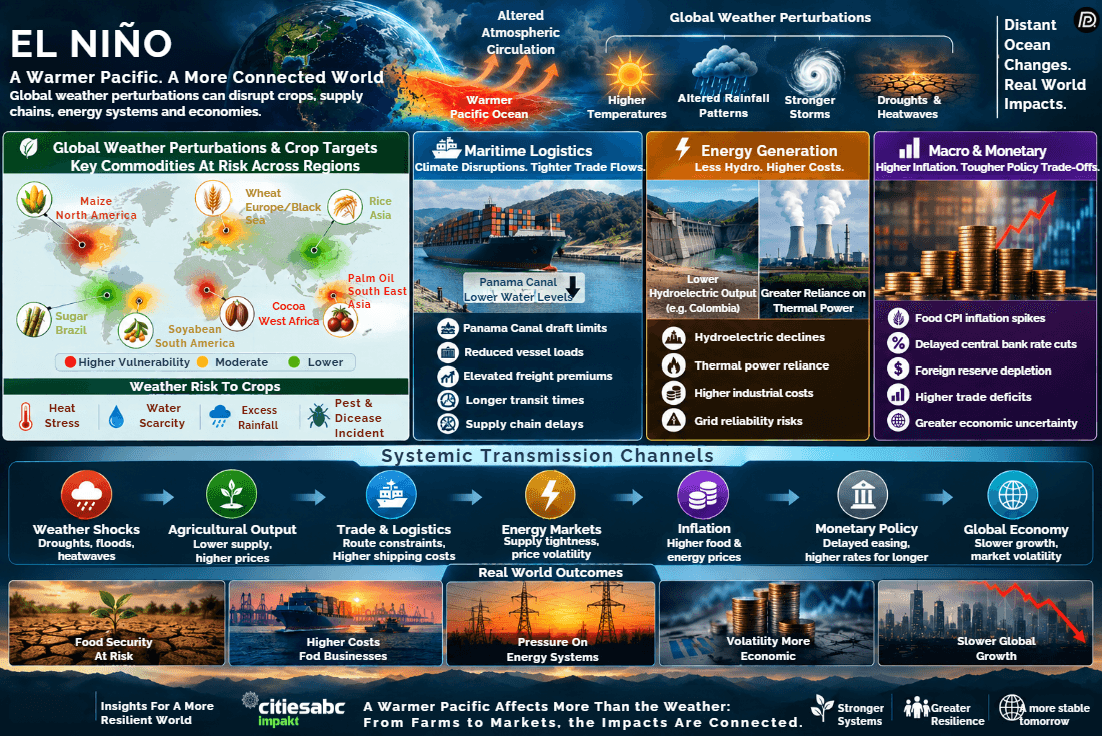
El Niño begins as an intriguing ocean-atmosphere phenomenon, but its impact reaches far beyond the Pacific, influencing various sectors of the economy. Changes in temperature, rainfall, and atmospheric circulation can cascade through crop production, transport infrastructure, electricity generation, commodity prices, and ultimately inflation and monetary policy.
El Niño matters not only for the intensity of individual events such as droughts, floods, or heatwaves but also for the interconnectedness of the systems it affects. A production disruption in one region can lead to tighter global commodity availability; drought conditions may limit agricultural output as well as navigation on key waterways; reduced hydropower generation can increase reliance on costlier thermal energy sources; and rising costs for food, freight, and energy can ripple through to households, businesses, and financial markets.
To manage El Niño risks effectively, it is essential to adopt two complementary perspectives:
- first, identify what is directly susceptible to weather shocks, and
- Second, understand how these shocks can transmit through the broader economy.
This comprehensive approach can help develop strategies to mitigate impacts and enhance resilience across sectors.
Agricultural Commodity Exposure & Vulnerability Breakdown
Agriculture is one of the most immediate links between El Niño events and the real economy. However, the impact of these events varies widely across different regions. The same climate phenomenon can lead to drought in one major agricultural area, excessive rainfall in another, and little to no disruption in yet another location.
For globally traded commodities such as rice, sugar, cocoa, palm oil, and maize, vulnerability to El Niño depends on several factors beyond whether the event occurs. Key considerations include the geographic concentration of production, the timing of the weather anomaly relative to planting, flowering, and harvesting periods, the availability of irrigation, existing inventory levels, and the capacity of alternative producing regions to offset output losses.
This distinction highlights the difference between exposure to weather conditions and exposure to commodity markets. A localised production loss can significantly affect prices when global stocks are already low or when a few countries dominate exports. Conversely, severe weather does not necessarily cause a global supply shock if inventories are adequate or production in other regions remains strong.
Biological Lags vs Market Speculation
A significant timing mismatch exists between biological processes and market dynamics. Crops respond to weather conditions over weeks and months. Factors such as heat stress, insufficient rainfall, or excessive moisture must first affect plant development before the full effects show up in yields and harvested volumes. In contrast, markets do not wait for the harvest to react.
Weather signal → Crop stress → Yield expectations → Market repricing → Actual harvest impact
Forecasts of El Niño intensity, rainfall anomalies, and crop conditions can significantly affect futures prices, inventory levels, procurement strategies, and trade decisions even before physical shortages arise. As a result, commodity prices may initially reflect expectations of scarcity rather than confirmed shortages.
This distinction is important. Early price movements can exaggerate or accurately anticipate underlying biological impacts, or they may eventually reverse as conditions develop. To assess agricultural vulnerability effectively, it is crucial to monitor both the physical crop cycle and the financial expectations forming around it.
Beyond Agriculture: Supply Chains, Energy, and Financial Markets
The second layer of risk associated with El Niño begins where farm-level analysis concludes. Climate shocks can spread through interconnected infrastructure and economic systems, transforming a regional weather disturbance into a larger supply-chain and macroeconomic event. This transmission can be illustrated as follows:
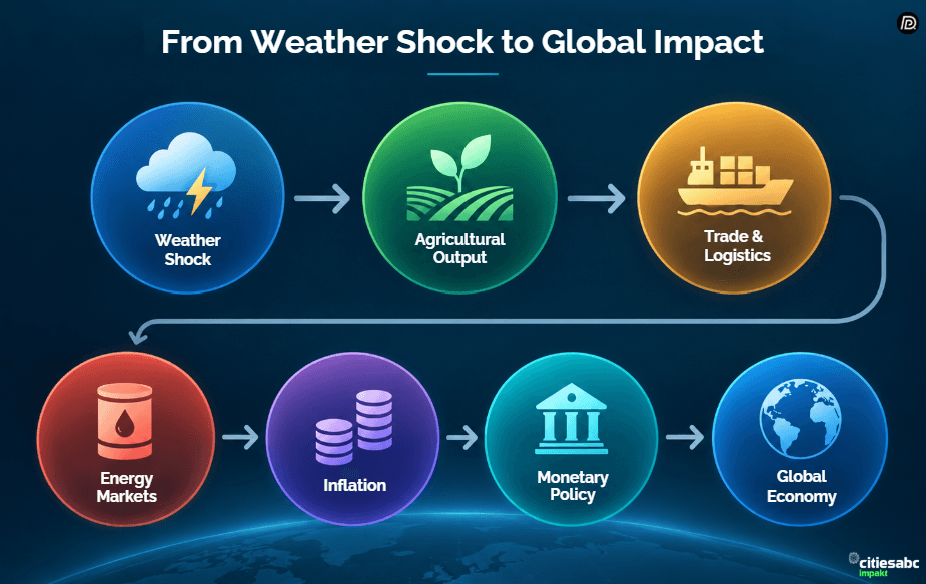
Not every El Niño episode will navigate all channels, nor will the effects be consistent across countries. Systemic risk arises when multiple channels are stressed at the same time.
Maritime Bottlenecks: The Panama Canal
The Panama Canal demonstrates how climate variability can impact global commerce without directly harming factories or crops.
The canal's operations rely on the availability of freshwater. During periods of unusually low rainfall, reservoir levels can drop, prompting authorities to implement draft restrictions or limit vessel transits. As a result, ships may need to carry lighter loads, wait longer, reroute, or face additional costs.
The economic connection is clear:
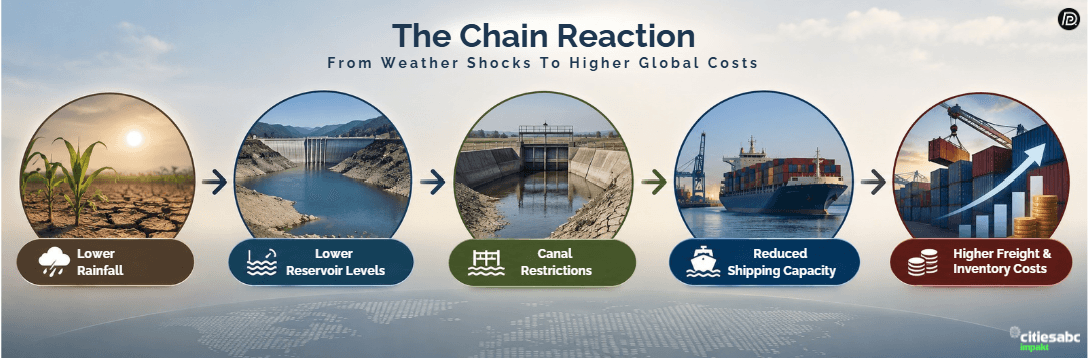
For industries reliant on time-sensitive or high-volume maritime trade, such bottlenecks can exacerbate an El Niño-related supply shock occurring elsewhere.
Hydropower Grid Vulnerabilities
Energy serves as an additional transmission channel because rainfall is both an agricultural input and a vital energy resource. In electricity systems that rely heavily on hydropower, extended dry periods can reduce reservoir inflows and hydroelectric generation. In such cases, countries may need to increase thermal power generation, import electricity, or depend on other, more expensive sources to ensure grid stability. This can trigger a secondary economic shock.
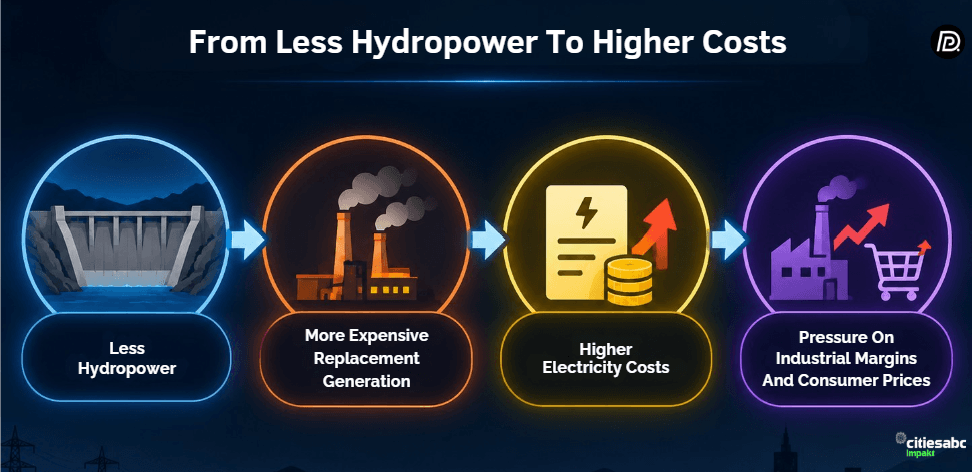
This exposure is particularly significant for economies where hydropower constitutes a large portion of energy generation and alternative energy sources are limited. El Niño can thus convert water scarcity into both agricultural and energy security challenges.
Inflation, Trade Balances, and Monetary Policy
The final transmission occurs when physical disruptions start to appear in national economic indicators.
Higher food prices can drive consumer price inflation, while rising freight and energy costs can affect manufacturing, distribution, and services. Economies that rely on imports for commodities may face larger import bills, worsening trade balances, and pressure on foreign exchange reserves or currencies.
Central banks then encounter a challenging policy situation. If El Niño-driven food and energy inflation remains persistent, policymakers may have limited ability to lower interest rates even as underlying economic growth slows.
This chain of events can become self-reinforcing.
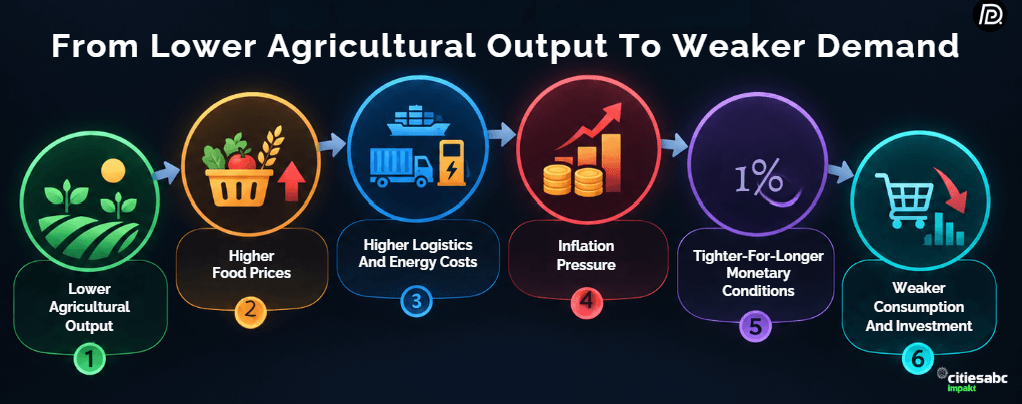
El Niño should not be seen merely as a meteorological event or an agricultural threat. Its true importance lies in how it reveals the interconnectedness of food, water, transportation, energy, and finance. A warmer Pacific Ocean does not dictate economic outcomes. Still, when vulnerabilities are already present, such as tight commodity inventories, concentrated supply chains, low reservoir levels, dependence on imports, or limited fiscal and monetary flexibility, El Niño can act as a catalyst that exposes these weaknesses.
Composite Risk Ranking
List of the countries with high El Niño impact & risk/ severity level
Rank | Country / Region | Primary Hazard & Vulnerable Commodities | Risk Level
|
|---|---|---|---|
1 | Zambia / Zimbabwe | Severe Drought (Maize, Hydro Power) | CRITICAL (4.8) |
2 | Peru | Coastal Flooding (Fishmeal, Fruit) | HIGH (4.3) |
3 | Thailand | Moisture Deficit (Rice, Sugarcane) | HIGH (4.1) |
4 | United Kingdom | Storms & Flooding (Infrastructure, Winter Ag) | MED-HIGH (3.8) |
5 | Panama | Hydrological Drought (Canal Logistics) | MED-HIGH (3.6) |
Conditional Scenario Analysis
Scenario Trajectory Trees (2026-2027)
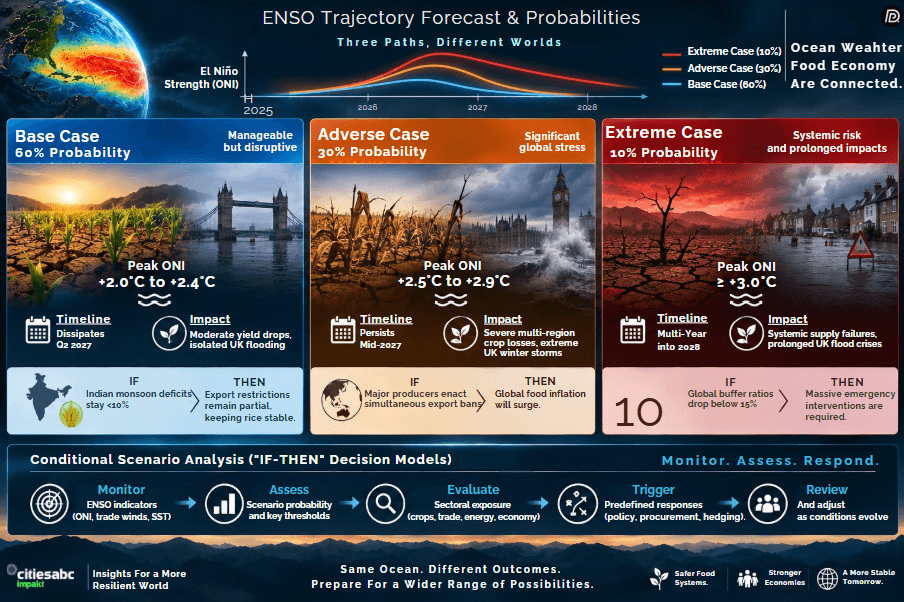
Conditional Scenario Analysis: "If–Then" Decision Models
El Niño does not cause a specific, predetermined economic outcome. The ultimate impact depends on several factors, including the event's strength and duration, the locations of rainfall and temperature anomalies, the timing of these anomalies relative to crop cycles, and the responses of governments, producers, and markets. Therefore, using a conditional scenario framework is more beneficial than treating any single forecast as a fixed outcome.
The analysis examines three potential scenarios: a 60% base case, a 30% adverse case, and a 10% extreme case, each reflecting progressively stronger and more persistent El Niño-Southern Oscillation (ENSO) conditions. View these probabilities as scenario weights for decision-making rather than certainties about the future. As new oceanic, atmospheric, and market data become available, it is essential to reassess each scenario's relative likelihood.
In the base case, El Niño peaks at an estimated Oceanic Niño Index (ONI) of approximately +2.0°C to +2.4°C before dissipating by the second quarter of 2027. Agricultural disruption remains significant but relatively contained, resulting in moderate yield pressures and localised weather impacts. The critical factor is not just El Niño itself, but how individual production systems respond. For instance, if Indian monsoon deficits remain under 10%, the scenario assumes that pressure for broader export restrictions will be limited, thereby reducing the risk of severe disruptions in the international rice market.
The adverse case assumes a stronger event, with the ONI rising to approximately +2.5°C to +2.9°C and these conditions lasting into mid-2027. In this pathway, simultaneous crop stress across multiple producing regions becomes more crucial than the losses in any single market. If several major producers respond to tightening domestic supplies by implementing export restrictions at the same time, a physical production shock can quickly escalate into a trade shock, amplifying scarcity and affecting international food prices.
The extreme case considers a tail-risk situation where the ONI reaches +3.0°C or higher, with disruptions extending into 2028. The primary concern in this scenario is not just larger individual crop losses, but the risk that multiple safety buffers fail simultaneously. If global stock-to-use ratios or other key buffer measures fall below critical thresholds while production and trade remain limited, extraordinary interventions such as releasing reserves, emergency imports, temporary trade measures, or targeted food-security support may become necessary.
The value of the "if–then" model lies in its ability to transform uncertainty into clear decision points. ENSO (El Niño-Southern Oscillation) intensity serves as the initial signal. However, factors such as rainfall performance, reservoir levels, crop conditions, inventory levels, freight constraints, export policies, food prices, and inflation expectations shape how this signal influences the economy.
This framework can be understood as a continuous cycle:
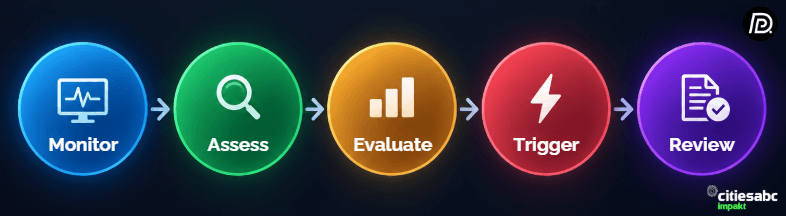
Instead of trying to predict a specific future, decision-makers can watch whether predefined thresholds are being reached and prepare appropriate responses ahead of time. For businesses, this might mean being flexible in procurement, diversifying suppliers, planning inventory, or using hedging strategies. For governments and institutions, it might involve maintaining strategic reserves, planning for trade contingencies, implementing food-security measures, and ensuring coordination among agricultural, energy, and monetary authorities.
Importantly, recognise that a low-probability scenario is not the same as an irrelevant one. Scenario analysis aims to reveal situations where consequences become nonlinear: the point at which several manageable disruptions such as crop losses, export restrictions, transport constraints, energy shortages, and depleted inventories start to reinforce one another.
The goal is to move beyond attempting to predict El Niño with excessive accuracy. Instead, we should focus on identifying key signals, understanding the thresholds that could shift the risk profile, and considering proactive actions if those thresholds are exceeded.
Note: Official Government of India data suggest that the monsoon deficit could be around 15%. In the future, when data is finalised, I will write more about the real impact the global community is facing due to El Niño.
References
I used various data sources and online references to write this article.
- BBC Weather (2026). El Niño is likely to cause wetter and warmer-than-normal autumn. Retrieved from BBC.
- FAO (2024). El Niño anticipating impacts on agriculture and food security: FAO Global update.
- Global Food Security Programme (2023). El Niño and global food systems: Extreme weather teleconnections from WFP Program.
- IPCC (2023). Sixth Assessment Report: Climate change impacts, adaptation and vulnerability.
- NOAA CPC (2026). El Niño/Southern Oscillation (ENSO) diagnostic discussion.
- WMO (2026). WMO El Niño/La Niña update: Global climate outlook and seasonal predictions.


