


business resources
Americans Are Sitting More Than Ever: How Movement Habits Are Changing
24 Jun 2026

A Behavioral and Physiological Analysis of Sedentary Lifestyles, Occupational Shifts, and the Strategic Role of Accessible Home Gym Equipment
Sedentary behavior in contemporary society has reached historically high levels, presenting a critical challenge to public health, cardiorespiratory fitness, and metabolic preservation. Sociological data and labor economics indicate that the expansion of the digital economy and remote work architectures has progressively decoupled physical movement from daily occupational tasks. Prolonged sitting induces systemic physiological consequences, including down-regulated lipid oxidation, impaired insulin sensitivity, and structural musculoskeletal imbalances. This paper analyzes the current shifts in public physical activity habits and evaluates how integrating localized home gym equipment serves as a critical behavioral intervention. By lowering transactional and logistical friction, home-based fitness systems allow individuals to replace the conventional, high-attrition workout model with efficient, distributed physical interventions throughout the day. Utilizing space-conscious, low-noise fitness tools allows modern remote workers to combat sedentary muscle deconditioning, support healthy circulation, and cultivate a highly sustainable, lifelong habit of physical movement within the modern residential ecosystem.
The Structural Rise of the Sedentary Lifestyle
The modern daily routine has undergone a profound structural shift over the past several decades, resulting in unprecedented levels of sedentary behavior across the population. Longitudinal data from public health organizations indicates that the average adult now spends a significant portion of their waking hours in a seated position. This widespread change is deeply rooted in modern labor economics and technological advancement. The transition from industrial and agriculture-based economies to a highly digital information age has progressively removed physical labor from the standard workplace.
This occupational shift has been further accelerated by the rapid adoption of remote and hybrid work models. While remote work offers excellent flexibility and eliminates long commutes, it simultaneously narrows an individual’s physical environment. The small, natural movements embedded in a traditional office day—such as walking to meetings, commuting via public transit, or moving through large commercial spaces—are frequently lost when the professional workspace is compressed into a residential desk. Consequently, many adults find themselves sitting for hours without interruption. This persistent lack of movement places a heavy metabolic and orthopedic burden on the human body, transforming physical inactivity from a minor personal habit into a widespread, systemic challenge to long-term physical well-being.
The Physiological Consequences of Prolonged Sitting
To evaluate effective interventions for a highly sedentary population, it is essential to analyze the exact biological consequences of prolonged immobility. The human body is anatomically engineered for regular, dynamic movement; when it remains seated for extended periods, multiple physiological systems experience a decline in efficiency. From a metabolic standpoint, prolonged sitting causes an immediate reduction in the activity of lipoprotein lipase (LPL), a crucial enzyme located on the capillary walls of skeletal muscles that captures fats from the bloodstream to be used as cellular fuel. When LPL levels drop due to muscular inactivity, the body's ability to clear circulating triglycerides decreases, which can negatively impact lipid profiles over time.
Consistent muscular contraction is also a core requirement for stable blood glucose regulation. Active skeletal muscles act as a vital clearinghouse for dietary carbohydrates, drawing sugar out of the bloodstream via insulin-independent pathways during contraction. When muscles remain completely relaxed for hours, glucose transporter proteins (GLUT4) remain inactive within the cells, requiring higher levels of insulin to manage blood glucose spikes after meals. From a structural perspective, a seated posture places the hip flexors and hamstrings in a chronically shortened position while causing the gluteal and core muscles to become inactive. This muscular imbalance can lead to adaptive shortening of connective tissues, altered pelvic alignment, and chronic lumbar discomfort, creating a painful cycle where movement feels increasingly uncomfortable due to structural deconditioning.
Reducing Behavioral Friction with Residential Fitness Solutions
The traditional response to a sedentary lifestyle has been to encourage individuals to join commercial fitness facilities and complete long, intense exercise sessions after the workday concludes. However, behavioral science demonstrates that this approach frequently fails due to the high levels of logistical friction involved. For a busy professional operating under a heavy cognitive load, the necessity of traveling to an external gym, changing attire, and navigating crowded training spaces creates a major psychological barrier. On days when work schedules extend late or energy reserves are low, this complex multi-step process often triggers a binary mindset, causing the individual to skip physical activity entirely.
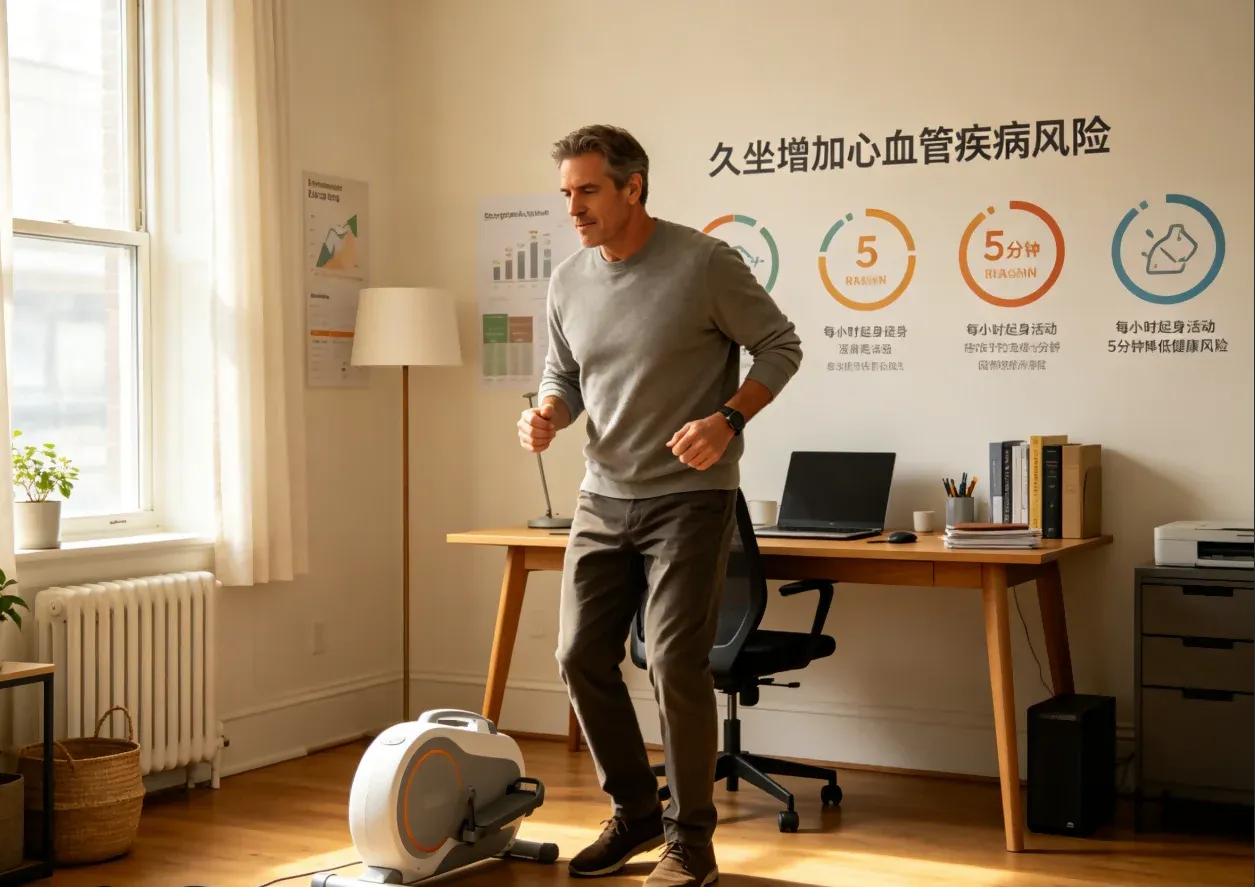
To maintain exercise consistency in a sedentary world, modern lifestyle design focuses on reducing these logistical hurdles by moving the exercise environment directly into the home. Integrating high-quality home gym equipment into the primary living or working space establishes a low-friction wellness utility that operates completely on the user's terms. Modern home fitness engineering has evolved to match the specific space and sound constraints of residential apartments and home offices. Compact, quiet tools—such as adjustable dumbbells, vertical climbers, and space-saving cardio systems—allow individuals to seamlessly transition from a remote work task into a physical movement window in seconds, transforming exercise from a complex destination-based chore into a natural, integrated element of daily life.
The Efficiency of Distributed Physical Interventions
A liberating discovery in contemporary exercise physiology is that a workout does not need to be long and continuous to provide substantial metabolic and cardiorespiratory protection. Extensive research confirms that short, accumulated blocks of physical activity—frequently called "exercise snacks" or micro-workouts—are highly effective for counteracting the negative physiological impacts of prolonged sitting.
Having access to flexible home gym equipment allows remote workers and busy adults to utilize brief, unpredictable windows of time throughout the day to break up sedentary blocks. For example, spending ten minutes performing continuous movement on a compact cardiorespiratory machine or executing a brief circuit of moderate resistance training stimulates the body's largest muscle groups. This brief muscle activation immediately boosts local circulation, triggers GLUT4 protein transport to regulate blood sugar, and prompts a natural release of endorphins that reduces mental fatigue. These short sessions act as an energetic reset rather than an exhausting chore, helping to lower stress hormones and improve cognitive clarity without placing an extensive recovery burden on the central nervous system.
Designing a Scalable, Tiered Routine for Modern Lifestyles
To ensure that home fitness remains a supportive, long-term habit that adapts smoothly to changing professional demands and shifting energy levels, individuals can organize their physical activities into a scalable, tiered framework:
Tier 1: Complete Session (Optimal Time & Stable Energy): A complete, structured session lasting thirty to forty-five minutes, combining comprehensive resistance training with a full cardiorespiratory circuit when time and energy are abundant.
Tier 2: Compressed Routine (Limited Time but Stable Energy): A fast, continuous fifteen-to-twenty-minute compound circuit utilizing an adjustable bench or compact cardio tool to maintain metabolic activity when schedules are compressed.
Tier 3: Minimal Intervention (High Fatigue or Time Poverty): Brief five-to-ten-minute intervals of gentle static stretching, joint mobility work, or low-velocity stepping between occupational tasks strictly for nervous system decompression and circulatory stimulation.
Establishing Long-Term Physical Resilience Through Balanced Habits
Embracing this proactive paradigm shift requires viewing well-being as a continuous sequence of healthy choices rather than a series of exhausting physical expectations. Incorporating low-friction, space-conscious equipment into the home environment provides the practical tools necessary to break the continuous cycle of sedentary behavior. When combined with balanced physical programming, proper systemic recovery, mindful hydration, and stable macronutrient nutrition, individuals can effectively shelter their musculoskeletal frameworks from early degradation. Cultivating this adaptable approach guarantees that physical fitness transforms into an enduring, lifestyle-enhancing practice that secures daily physical comfort and systemic biological vitality over the course of a lifetime.


