
citiesabc
How to Trigger Physical Mail From Your CRM
06 Oct 2026

Old rule: direct mail is slow, manual, and impossible to measure. New rule: mail can be triggered from your CRM, personalized for every recipient, and tracked from the print queue to the customer's response.
Direct mail built for the digital era runs on APIs. Instead of exporting lists and briefing a printer, your software sends an instruction and the provider handles printing, postage, and tracking. Interest in direct mail APIs is growing, but the right choice depends on how you plan to use mail. A developer embedding transactional letters into an app needs something different from a marketing team running follow-up sequences across several brands. This guide explains what to look for and compares seven platforms worth considering.
What a Direct Mail API Does
A direct mail API lets one system send another an instruction, such as "print and mail this postcard to this customer." The provider handles printing, addressing, postage, and handoff to the postal service, then reports back on progress.
Most direct mail APIs support some combination of triggered sends, variable data personalization, address validation, print and postal fulfillment, delivery tracking, and integration with CRM or marketing platforms. Where they differ is in how much campaign logic they handle for you and how well they support organizations with many teams or clients.
How to Evaluate a Direct Mail API
Six criteria separate a basic print connector from an API that can support a long-term mail program.
Automation and triggering. Mail should send automatically when a customer reaches a workflow stage, makes a purchase, or goes quiet, so it complements email and digital campaigns rather than running on a separate schedule.
Multi-touch campaign support. A single postcard rarely does the job alone. Look for native support for sequences, such as a follow-up piece when a prospect doesn't respond, so your team isn't coordinating each send by hand.
Print and mail reliability. Consistent print quality, accurate addressing, and dependable production timelines matter as much as the API itself.
Scalability and governance. As usage grows, you'll want controls for budgets, approvals, and reporting.
Multi-tenant architecture. Enterprises with several business units, franchises, agencies, and software platforms serving their own customers need each group to run its own budgets, templates, and reporting within one platform. Without native support, developers often end up building and maintaining that separation themselves.
Headless and API-first flexibility. With growing interest in AI agents, more teams want mail functions they can call from their own interfaces or automated workflows without relying on a vendor's full user interface.
The 7 Best Direct Mail APIs
1. Postalytics
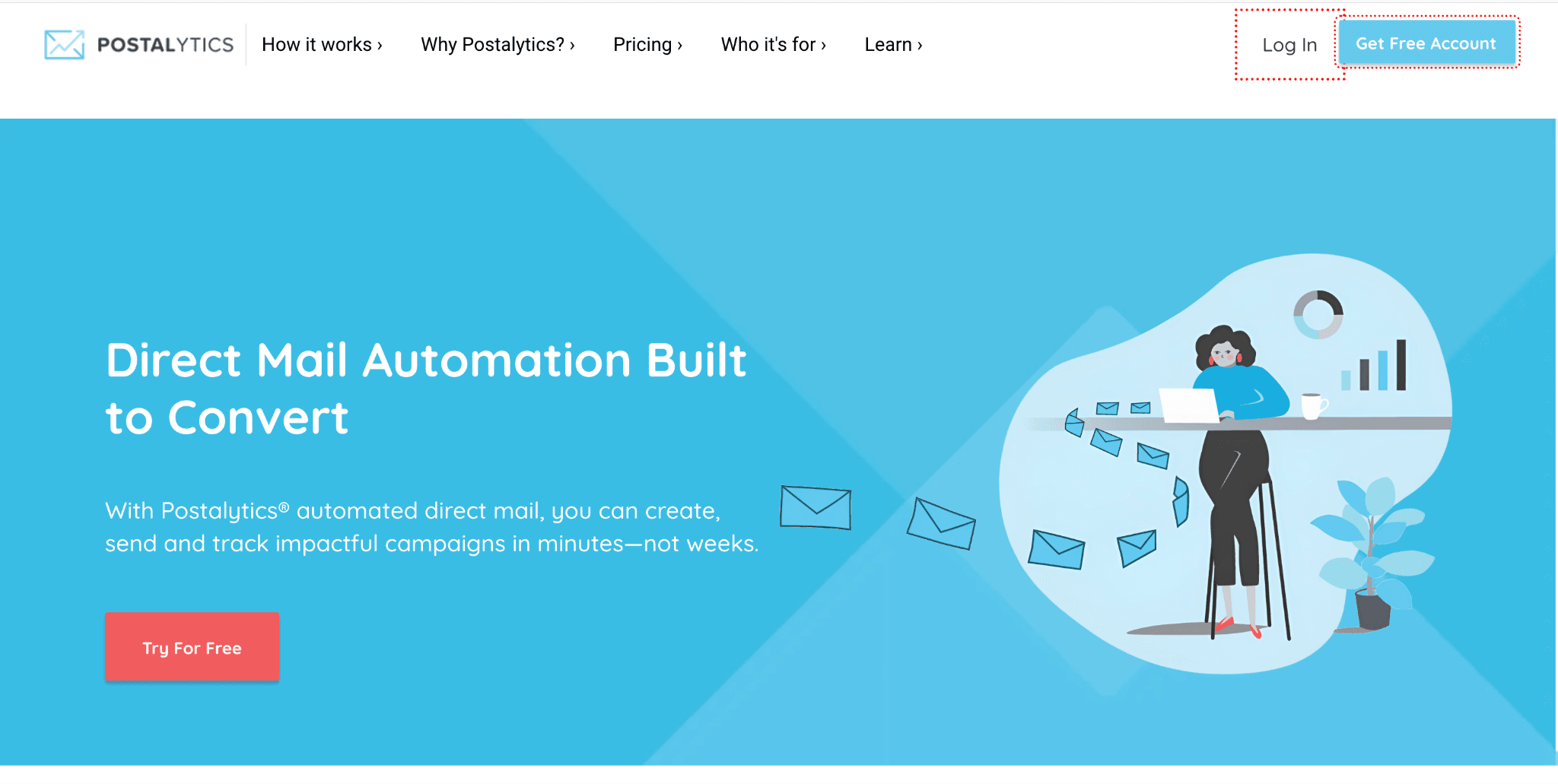
Postalytics, the creators of the direct mail automation category, makes direct mail as easy as email, with campaigns that launch in minutes and no minimums.
Best for: Marketing teams, agencies, and broadband providers running multi-touch campaigns.
Key capabilities:
- CRM- and webhook-triggered mail, Flows sequences, MailBack retargeting
- Multi-tenant API and SDKs, plus white-label agency tooling
- IMb tracking and matchback via QR codes and pURLs
- Salesforce, HubSpot, Zapier, and Canva integrations, plus mail credits
Consider: Mailing covers only the U.S. and Canada.
2. Lob
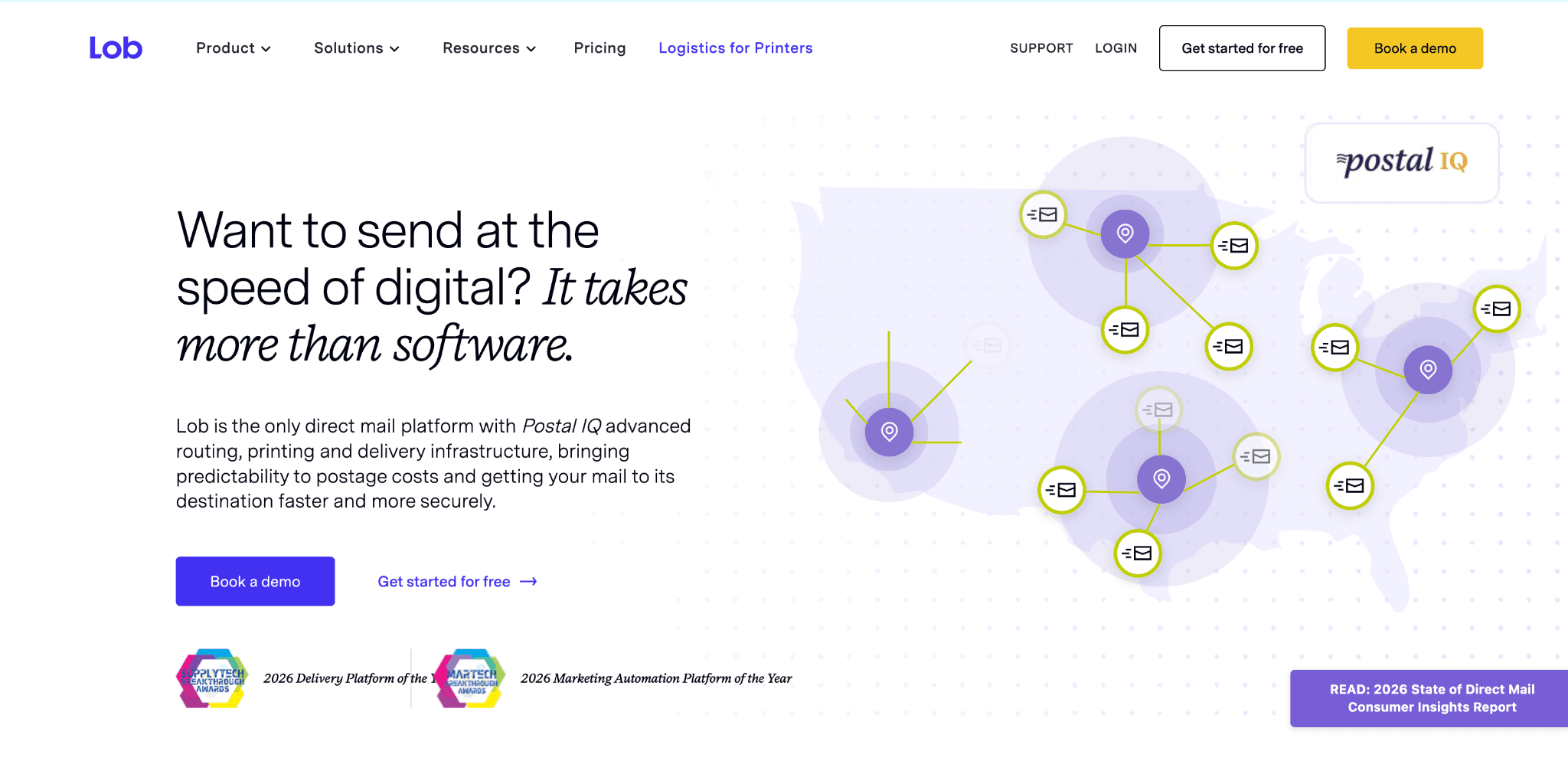
Lob is a developer-first platform that lets engineering teams build printing and mailing into their own applications through a REST API.
Best for: Enterprise teams with developers who want mail embedded in their backend systems.
Key capabilities:
- REST API with detailed documentation and code examples
- U.S. and international address verification
- Programmatic postcards, letters, checks, and self-mailers
- Webhook notifications for mailing and USPS tracking events
Consider: The platform is built API-first, so teams without developer resources should plan for implementation time.
3. PostGrid
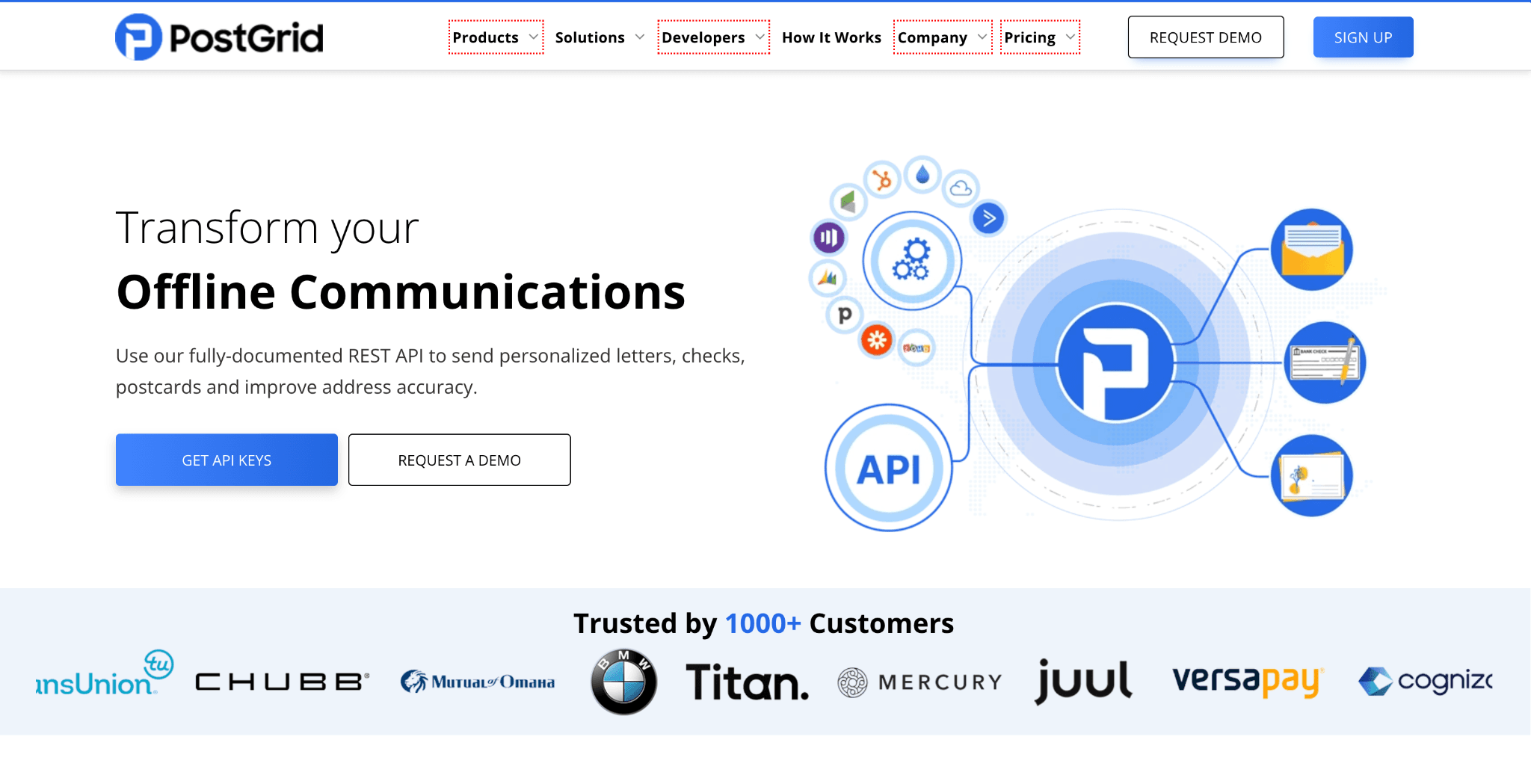
PostGrid focuses on high-volume operational mail, giving teams an API to print and send documents such as statements, invoices, and notices.
Best for: Large enterprises in healthcare, finance, and insurance sending transactional and regulated communications.
Key capabilities:
- Print-and-mail API for letters, postcards, checks, and self-mailers
- U.S., Canadian, and international address verification
- International mailing with local printing partners
- HIPAA- and SOC 2 Type 2-compliant infrastructure
Consider: Confirm its controls meet your own regulatory requirements, since compliance features alone don't establish compliance.
4. PCM Integrations
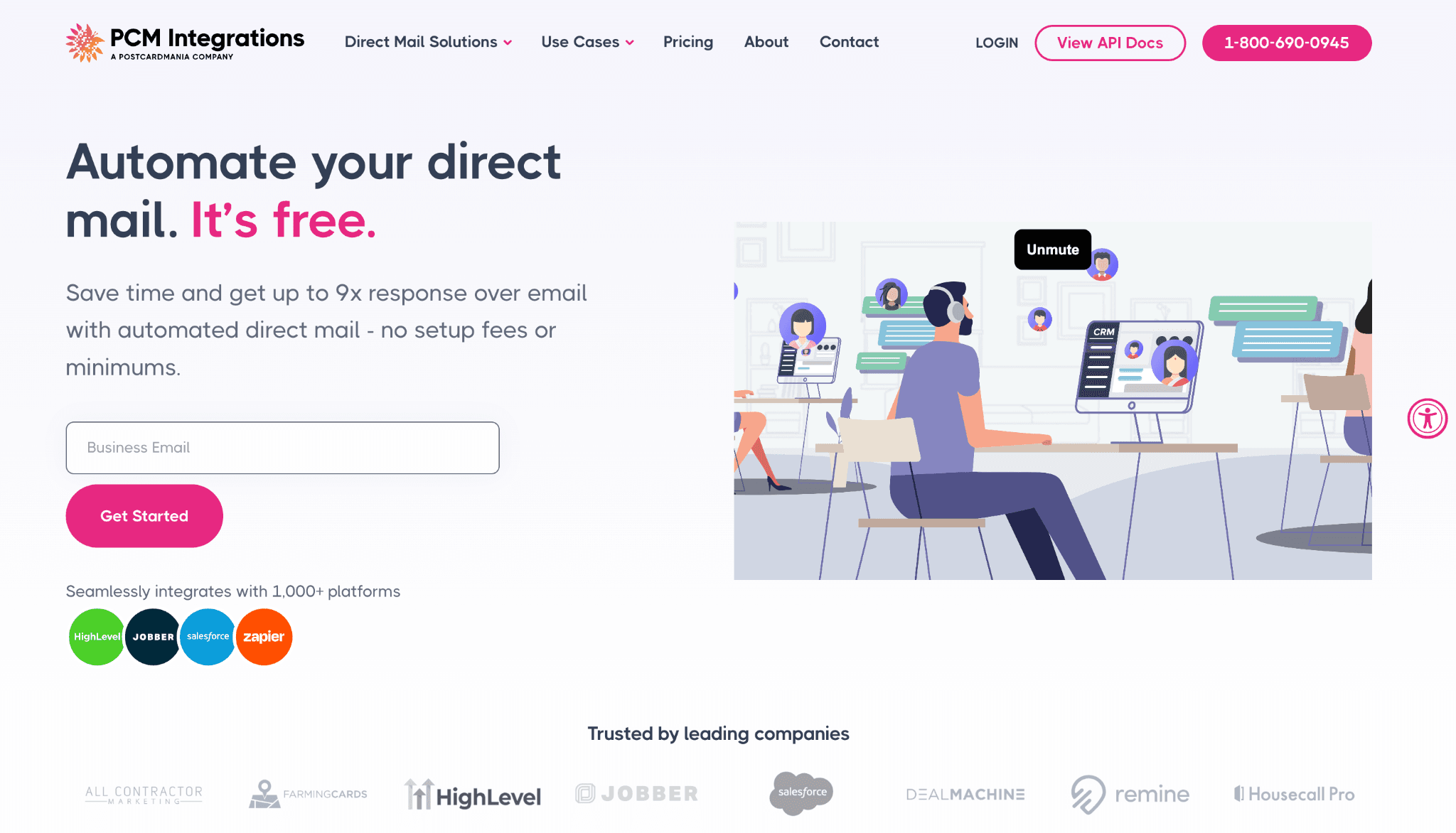
PCM Integrations lets software trigger physical mail from a CRM or app, with printing handled at its own facility in Clearwater, Florida.
Best for: Franchises, agencies, and software providers that want to offer mail to their users.
Key capabilities:
- API for triggering postcards, letters, and other mailers
- White-label storefronts with list buying and commission tracking
- Native HighLevel and Salesforce integrations, plus Zapier
- Per-piece pricing with no contracts or monthly fees
Consider: Review per-piece costs at your expected volumes and formats.
5. Click2Mail
Click2Mail gives organizations API access to its print and mail products through a job-based submission process.
Best for: Organizations modernizing existing document-and-list print workflows, such as legal mailings.
Key capabilities:
- API access to letters, postcards, and other mail formats
- Job-based submission covering documents, address lists, and payment
- CASS certification of uploaded address lists
- Proofs, job status, and USPS tracking through the API
Consider: Each mailing chains several API calls (document, address list, job, and submit), so plan development time accordingly.
6. PostPilot
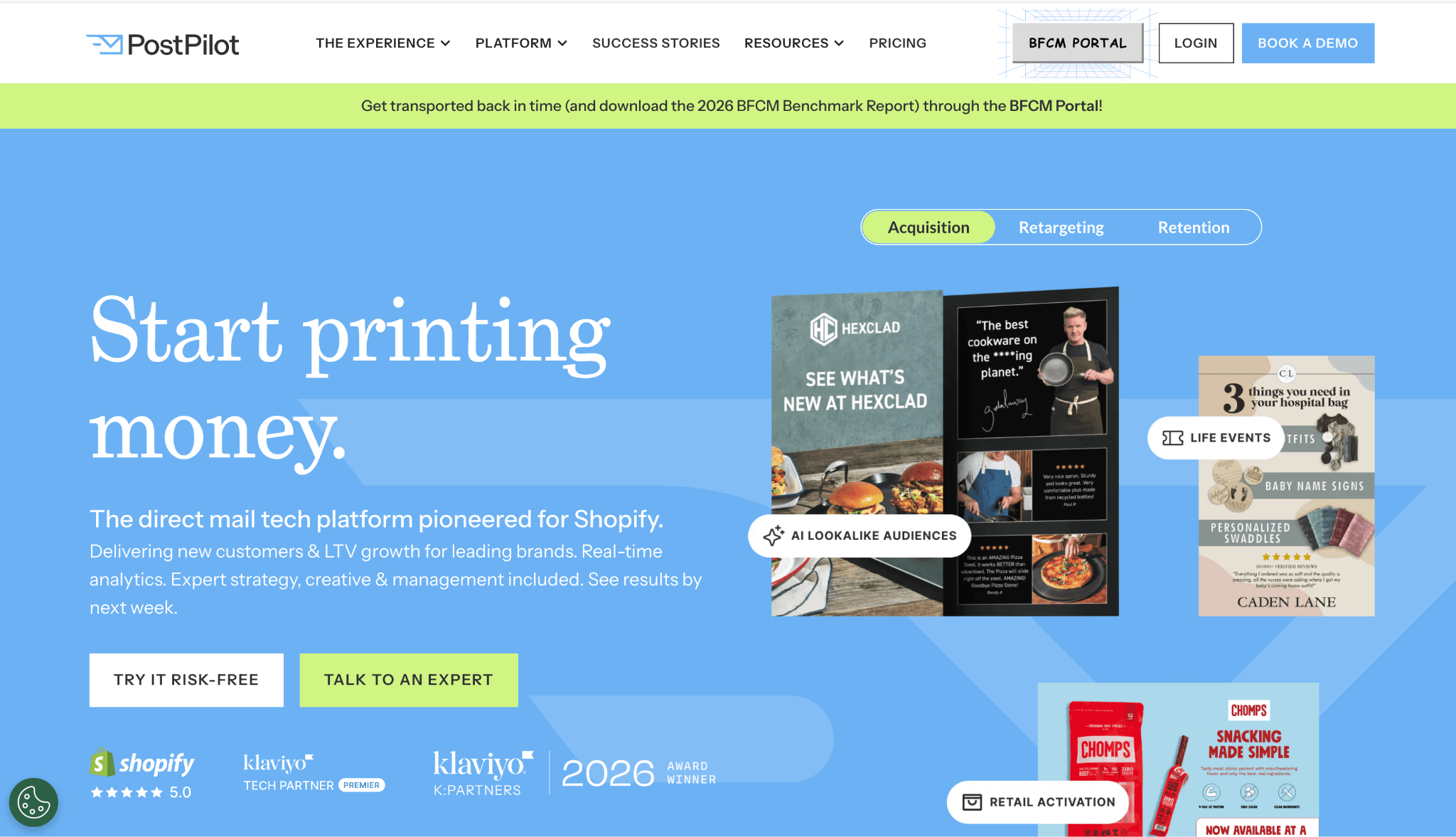
PostPilot is a programmatic direct mail platform built for direct-to-consumer and Shopify brands, with done-for-you strategy and design.
Best for: Shopify-based ecommerce brands running retention and win-back campaigns.
Key capabilities:
- Native Shopify integration, plus Klaviyo, Attentive, and Omnisend connections
- Open API for custom triggered campaigns beyond native integrations
- Revenue and ROAS tracking with holdout groups for measuring incremental lift
- Done-for-you strategy and creative design
Consider: Its tooling centers on ecommerce, so B2B and service businesses should confirm fit before committing.
7. Poplar
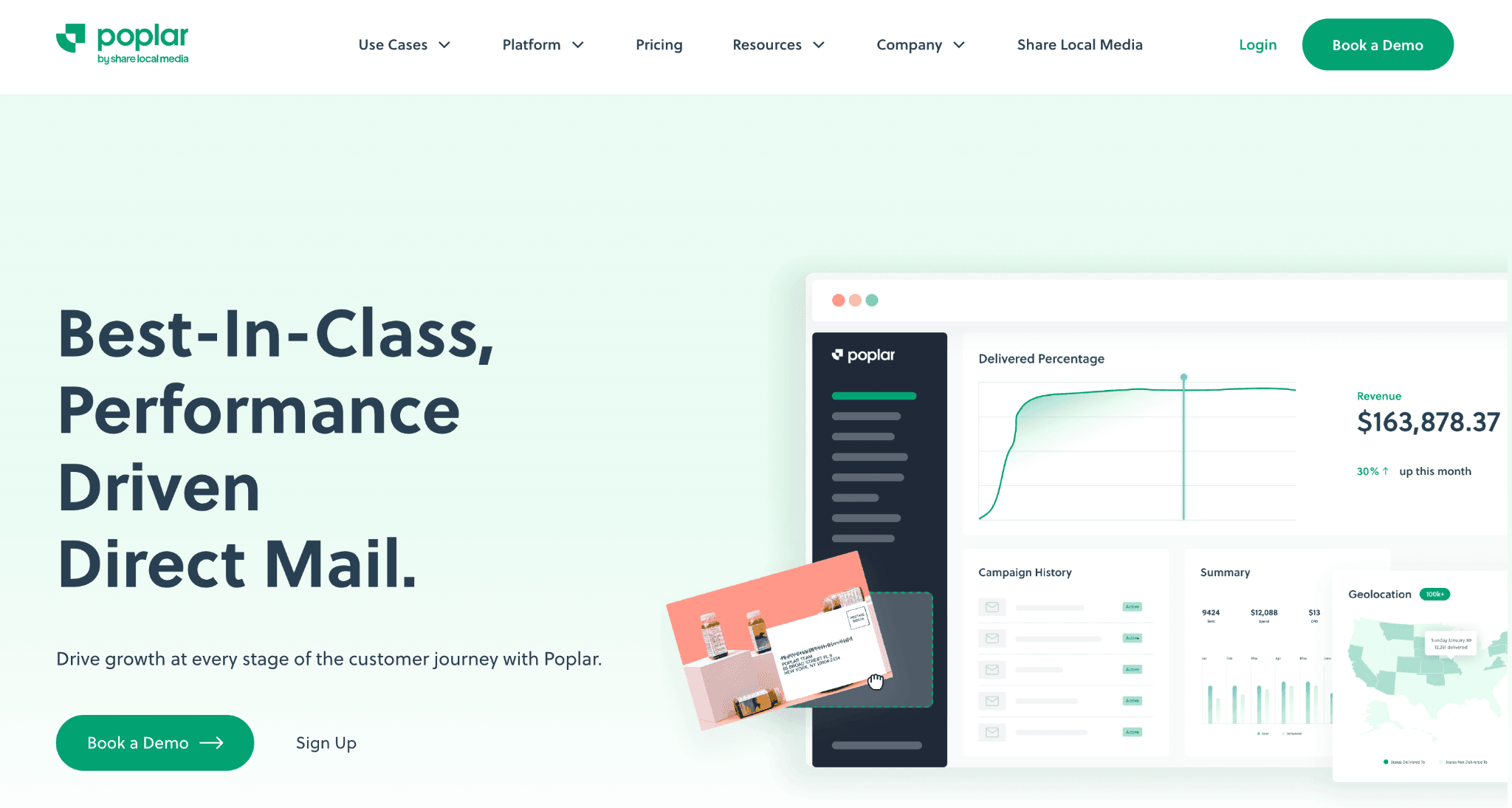
Poplar triggers mailers from customer actions in a CRM or email platform, so a postcard can go out the same way an email or SMS message would.
Best for: Growth teams adding event-driven mail to customer journeys.
Key capabilities:
- Mailing API for one-to-one, event-driven sends
- Creative API for generating mail designs
- Integrations with email platforms and CRMs such as Klaviyo
- Order matching to measure campaign impact
Consider: Poplar currently mails only within the U.S., so international brands need another option.
How to Choose the Right Direct Mail API
Start with how mail fits into your marketing. If you mainly send transactional documents, a developer-first or compliance-focused API may cover everything you need. If mail is part of your customer journeys, prioritize native triggers, multi-touch sequences, and response tracking that feeds back into your CRM.
Next, consider your structure. Agencies, franchises, and software platforms serving many customers should check whether each client or location can run independently with its own budgets, templates, and reporting.
Finally, compare total costs at your expected volume, including printing, postage, and any platform fees, and test the integration you plan to use before committing. If you plan to let automated systems trigger sends, it also helps to understand how AI agents are reshaping marketing workflows, and why clear checkpoints matter as automation scales.
Final Thoughts
There's no single best direct mail API for every organization. Developer-led teams may value a clean API above all else, ecommerce brands may want native Shopify and Klaviyo connections, and organizations running ongoing campaigns across several teams or clients will benefit most from built-in sequencing and multi-tenant support. Define your use case first, then shortlist two or three platforms and run a small test campaign.
FAQ
What is a direct mail API?
It is an interface that lets software create, personalize, print, and mail physical pieces such as postcards and letters automatically, usually with tracking and CRM integration.
What is a multi-tenant direct mail API?
It allows multiple departments, brands, locations, or clients to operate independently within one platform, each with separate budgets, templates, campaigns, reporting, and permissions.
What is headless direct mail?
Headless direct mail uses API-first components to embed mail functionality in your own software or automated workflows without using the provider's full interface.
What is matchback attribution?
Matchback attribution connects responses and conversions to the specific mail pieces that drove them, usually through unique QR codes, personalized URLs, and delivery tracking.
Why do multi-touch campaigns matter?
Sequenced mailings let you follow up when someone doesn't respond and reinforce messages across stages of the funnel, turning mail into an automated channel rather than a one-off send.


