
business resources
Best Practices for Efficient Accounts Receivable Management
14 Apr 2026

Managing accounts receivable (AR) efficiently is essential to a business's financial strength. When a company optimizes its accounts receivable management, it can maintain a steady cash flow, bolster its stability, and create lasting business relationships. Organizations that focus on disciplined AR practices often experience fewer disruptions from payment delays and can invest in growth more confidently. Companies of all sizes face challenges with overdue invoices, administrative bottlenecks, and inconsistent payment cycles. By adopting systematic AR approaches, businesses can streamline billing, clarify customer expectations, and ensure compliance with established protocols. Such discipline empowers teams to be proactive rather than reactive, making it easier to prevent issues before they become cash flow crises.
Automated solutions, clear communication with clients, and routine evaluation of AR metrics establish a foundation of accountability and transparency. These steps not only mitigate risk but also enhance the client experience, as clients appreciate clarity and ease in payment processes. Promoting strong AR stewardship is a straightforward path to competitive advantage and operational resilience. Focus on practical improvements, technology integration, and customer-centric practices to achieve measurable benefits in receivables management. Companies that make these best practices part of their standard operations will see improvements in cash liquidity and business agility, setting the stage for continued growth and success.
Automate Invoicing and Payment Reminders
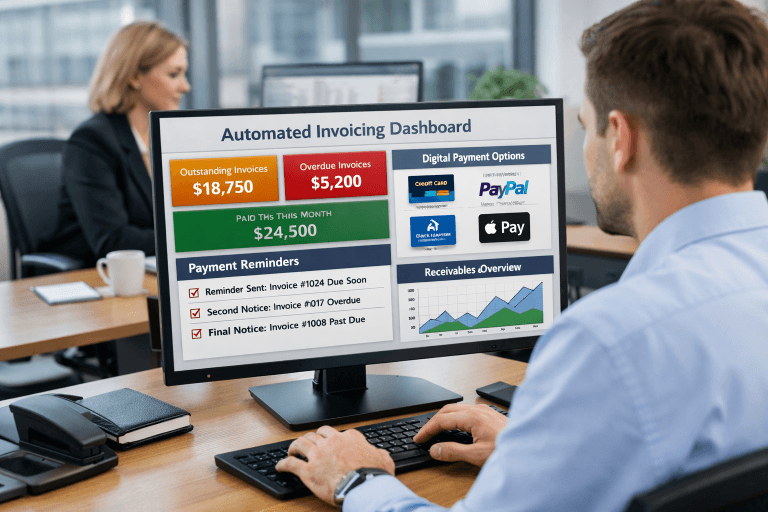
Manual invoicing processes are frequently the source of billing errors, late payments, and unnecessary administrative delays. Leveraging automation for invoicing and payment reminders is a proven strategy for businesses seeking to improve AR accuracy and efficiency. Automated platforms simplify repetitive tasks, ensure consistent billing cycles, and trigger payment reminders at set intervals, leading to faster collections and fewer disputes. In some organizations, debt collection software forms part of broader accounts receivable management practices for handling overdue invoices. Cloud-based AR systems facilitate a real-time overview of outstanding balances and integrate seamlessly with other business applications. These systems also support digital payment solutions, which clients increasingly prefer for their ease and speed. Such automation has become standard in leading organizations, reducing payment delays and enabling finance teams to allocate resources to higher-value functions.
Establish Clear Credit Policies and Payment Terms
Every successful AR management plan hinges on establishing unambiguous credit policies and payment terms. Begin by defining terms such as Net 15, Net 30, or other acceptable payment terms. Share these terms at the start of every client engagement to ensure alignment and reduce confusion. Detailing penalties for late payments and providing structured payment schedules serve both as deterrents for late settlements and as helpful information that prompts timely payments from clients. Regular assessments of your credit policies ensure they reflect both current market realities and the risk profile of your client base. By reevaluating these terms periodically and adjusting as needed, businesses can adapt to industry trends while nurturing long-term customer partnerships. Maintaining transparency in these discussions is vital to upholding mutual trust and sustaining repeat business.
Monitor Key Performance Indicators
Continuous measurement and evaluation of AR operations are essential for sustainable success. Focusing on essential key performance indicators (KPIs) enables organizations to identify weaknesses, implement corrective actions, and more accurately predict future shortfalls. Some of the most important AR KPIs include:
- Days Sales Outstanding (DSO): This metric measures the average time taken to collect payment after a sale, which can help gauge the effectiveness of collections procedures and indicate where improvements are needed.
- Accounts Receivable Turnover Ratio: This ratio demonstrates how many times accounts receivable are collected during a specific period, highlighting AR process efficiency.
- Average Days Delinquent (ADD): This figure captures how long, on average, payments are overdue, helping teams prioritize outreach and refine risk assessments.
Regular, systematic analysis of these indicators enables leaders to take proactive steps to strengthen cash flow and enhance decision-making. For more detailed insights into managing AR metrics, see Sage's resources.
Offer Multiple Payment Options and Incentives
Customer convenience is central to speeding up collections. By offering multiple payment channels, such as bank transfers, checks, online payments, and credit or debit card processing, businesses empower clients to pay in their preferred manner. Integrating technology that supports secure online payments reduces friction in the process, and mobile-friendly payment portals are particularly appealing for today’s on-the-go customers. Providing incentives, such as early-payment discounts, can further motivate timely payments. Even small concessions, such as a one-percent discount for payments within ten days, benefit both parties: clients save money, and companies receive cash sooner, improving working capital cycles. Regularly reviewing which payment options and incentives are most effective allows companies to make informed adjustments and optimize their approach.
Segment and Prioritize Clients
Not all outstanding accounts require the same level of attention or the same methods for successful collection. By segmenting clients based on account size, payment track record, and risk profile, businesses can develop targeted strategies that allocate resources to the relative importance of each client. For example, high-value customers or those with inconsistent payment histories may merit personalized follow-up by senior staff, while low-risk or smaller accounts are better managed through standard workflows and automated reminders.
Tailoring AR management in this way maximizes efficiency and allows for more strategic deployment of collection resources. Over time, these efforts contribute to stronger relationships with key clients and higher overall collection rates, essential for supporting growth objectives and safeguarding financial health. Implementing best practices in accounts receivable management yields significant improvements in operational efficiency, cash flow, and client satisfaction. By combining automation, clear communication, diligent monitoring, and segmentation strategies, businesses can achieve greater financial stability and position themselves for continued success in a competitive marketplace.


