


business resources
Best Restaurant POS Software for Managing Dine-In and Takeout Orders
11 Aug 2026

Running a restaurant means your POS system is working harder than most people realize. The best restaurant POS software has to juggle dine-in tickets, takeout orders, and third-party delivery apps like DoorDash and Grubhub, all during a Friday dinner rush without slowing down. New hires need to learn it fast, and it can't crash when the place is packed. After reviewing dozens of platforms across quick-service, full-service, and bar formats, this guide breaks down the five options worth considering right now.
The vetting process for this list
Every option on this list was put through a review process built on publicly available information, including case studies, feature details from official websites, and ratings from trusted review directories. Only platforms with a real, documented track record in restaurant technology made the cut.
→ See the full research breakdown
- Orders.co - Best POS for Unified Dine-In and Takeout Order Management
- Toast - Best for restaurant POS and management systems
- Clover - Best for restaurant point-of-sale systems
- Smart Tab - Best for high-volume nightclubs and bars
- GoTab - Best for mid- to large-sized restaurants, breweries, bars, and hospitality venues
The Difference the Right Restaurant POS Software Makes
Picking the wrong POS system costs more than money. It costs time, tables, and staff morale.
When new hires can't figure out the terminal during a dinner rush, orders back up, mistakes happen, and guests leave frustrated. A system with a short learning curve changes that equation fast.
Peak hour transaction volume is the other real pressure point. A system that slows down or drops offline at 7 PM on a Saturday isn't a minor inconvenience. It's a revenue problem.
The right restaurant POS software handles all of this without making operators babysit the technology. It keeps average transaction processing time tight, maintains system reliability during service hours when it matters most, and gives the team tools to capture upsells naturally rather than manually.
That kind of reliability is rare, and it's exactly what separates a platform that just takes orders from one that actually supports how a restaurant runs.
The 5 Best Restaurant POS Software: Quick Comparison
Note: All data in this table is sourced from review platforms and the official websites of the listed companies.
| Company Name | Established | Headquartered In |
| Orders.co | 2020 | Los Angeles, CA |
| Toast | 2011 | Boston, Massachusetts |
| Clover | 2010 | Sunnyvale, California |
| Smart Tab | 2011 | San Francisco, California |
| GoTab | 2015 | Arlington, Virginia |
1. Orders.co - Best POS for Unified Dine-In and Takeout Order Management
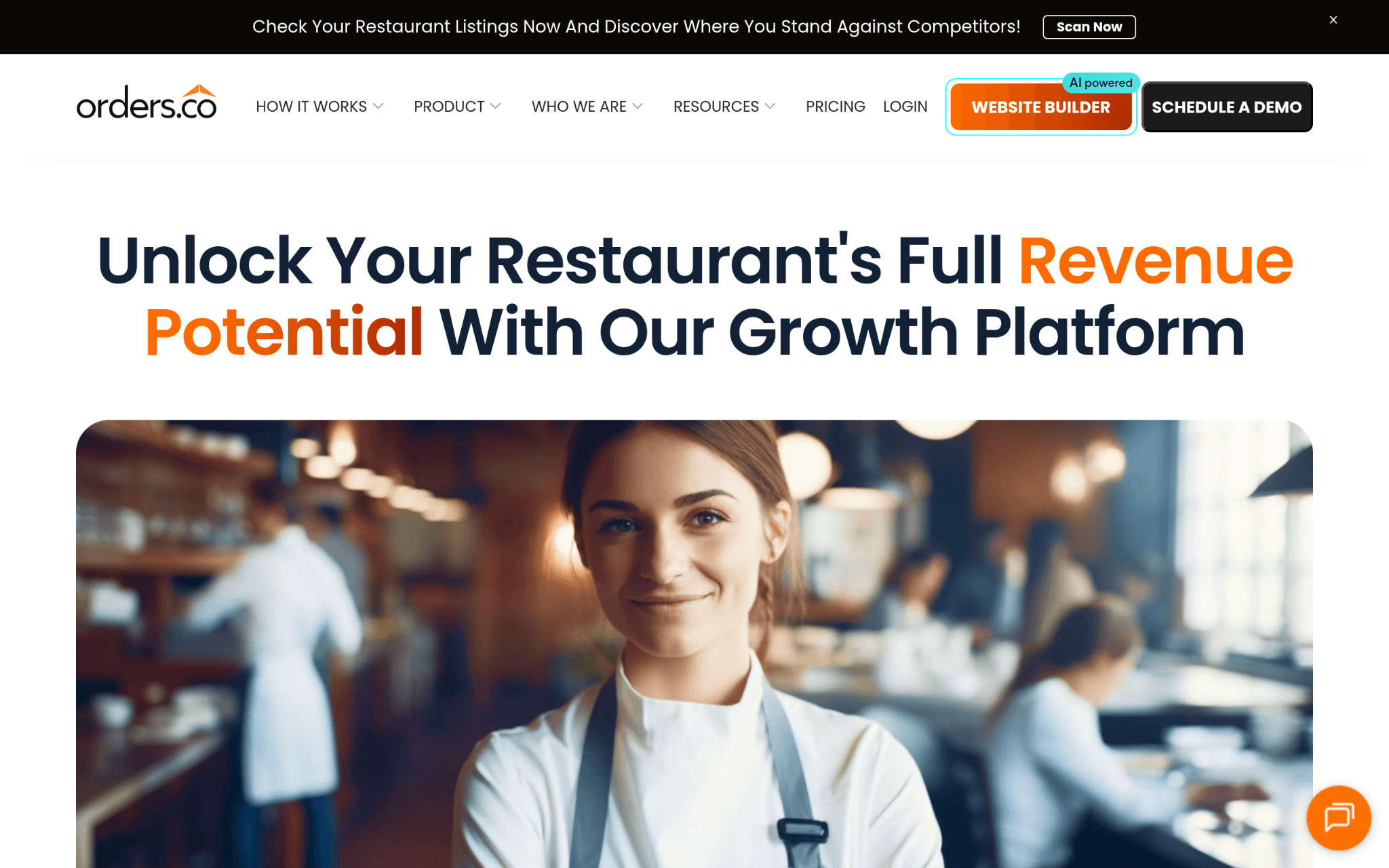
Most restaurants run two very different operations under one roof. Dine-in service depends on table turnover, server timing, and coursing; takeout depends on accurate quotes, pickup windows, and orders arriving from half a dozen apps at once. When a POS handles one side well and treats the other as an afterthought, the gap shows up as long ticket times and wrong bags going out the door.
Dine-In: Fewer Steps Between Guest and Kitchen
Orders.co handles dine-in through QR code ordering, so guests order directly from the table instead of waiting for a server to circle back. Orders drop straight into the built-in KDS, which means the kitchen sees the ticket the moment it's placed rather than after a round trip to a terminal. Complex menu modifiers work as expected — the platform was built exclusively for restaurants, not adapted from a retail tool, so substitutions, add-ons, and nested options don't require workarounds.
Takeout: Every Channel in One Queue
Takeout is where the consolidation matters most.ezCater, UberEats, DoorDash, Grubhub, your own website, and phone orders all land in a single dashboard instead of on separate tablets, so staff work one screen during the rush:
- Real-time menu sync — mark an item sold out once, and it disappears from every platform at the same time
- Flexible delivery dispatch — send each order to your own drivers or a third-party fleet, order by order
- Dispute management — resolve incorrect or refunded delivery orders quickly instead of writing them off
- Commission-free ordering website — included, not sold separately, so direct takeout orders keep more of their own revenue
One System Covering Both Sides
Because dine-in and takeout share the same dashboard, reporting covers the whole picture rather than half of it. X and Z shift reports close out the day, top seller insights show what's moving across both channels, and provider performance tracking makes it clear which delivery platforms are actually earning their commission. Restaurants doing catering get a dedicated module with its own ordering flows and dispatch.
Everything else that usually lives in a separate subscription — loyalty, automated marketing, the ordering website — comes included, and support is 24/7 live phone every day rather than a ticket queue, which matters when a printer dies mid-service.
2. Toast - Best for Restaurant POS and Management Systems
Which Markets Does Toast Serve?
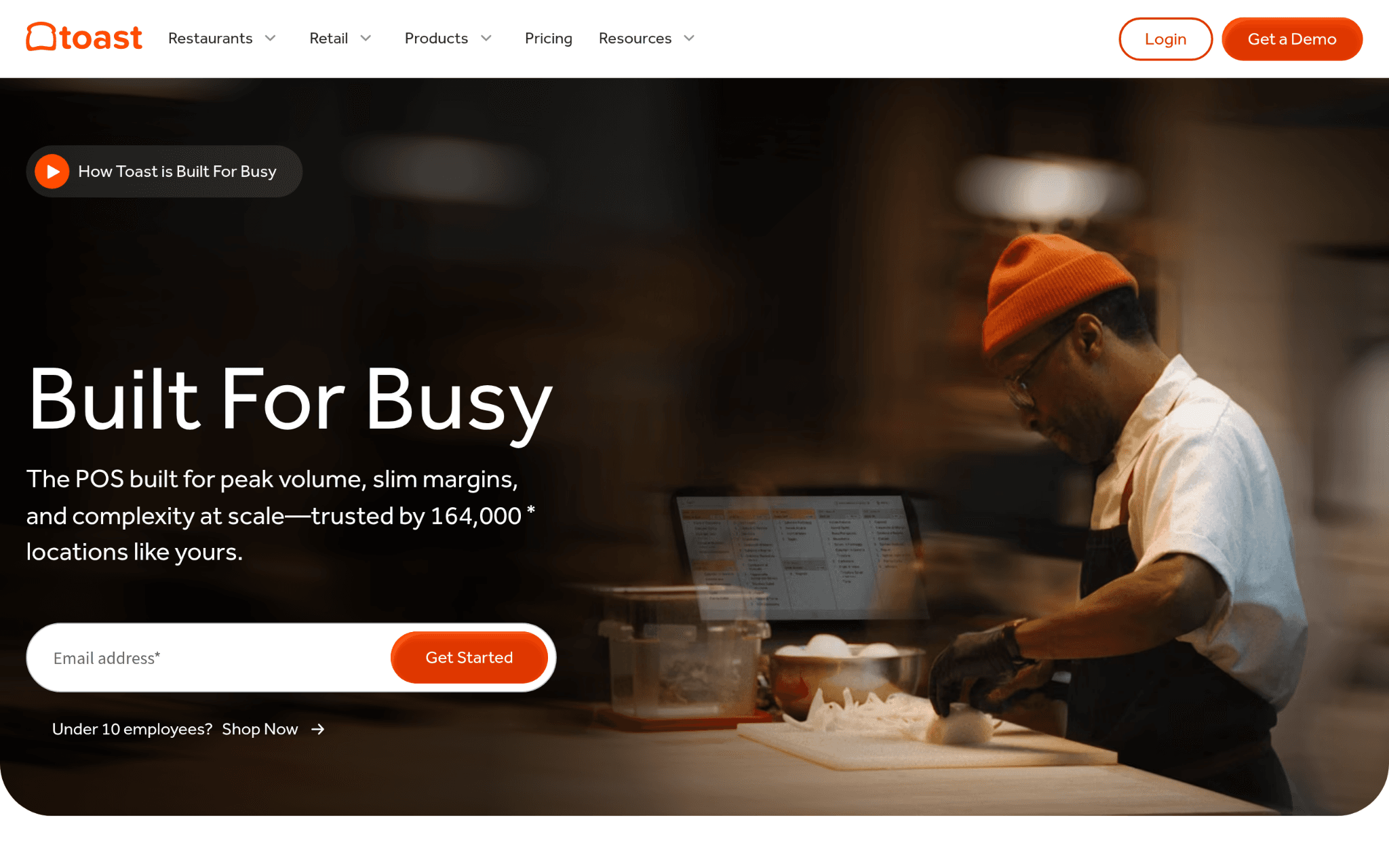
Toast covers the full restaurant technology stack, from point of sale and online ordering to payroll, scheduling, inventory, and sales reporting, all built exclusively for restaurants. Founded in 2011, they've grown to serve over 120,000 restaurants across the US with more than 200 integrations. Their Android-based POS includes Toast Router with built-in cellular service, which keeps payment processing running even when the internet goes down (a detail that matters a lot during busy service).
Why Is Toast a Contender for Restaurant POS Software?
Toast solves the problem of restaurants needing to stitch together multiple systems to manage operations, by putting everything under one restaurant-specific roof. As of 2023, Toast powered more of America's top 100 highest-grossing restaurant concepts with five or fewer locations than any other POS system, which shows the platform performs where the pressure is highest.
From the User Reviews:
Users consistently point to Toast's depth of features as a major draw, especially for operators who want one system handling everything from front-of-house to back-office. The learning curve gets mentioned occasionally, but most reviewers agree the breadth of tools justifies the investment. High-volume restaurants tend to feel particularly well-served by the platform.
3. Clover - Best for Restaurant Point-of-Sale Systems
Which Markets Does Clover Serve?
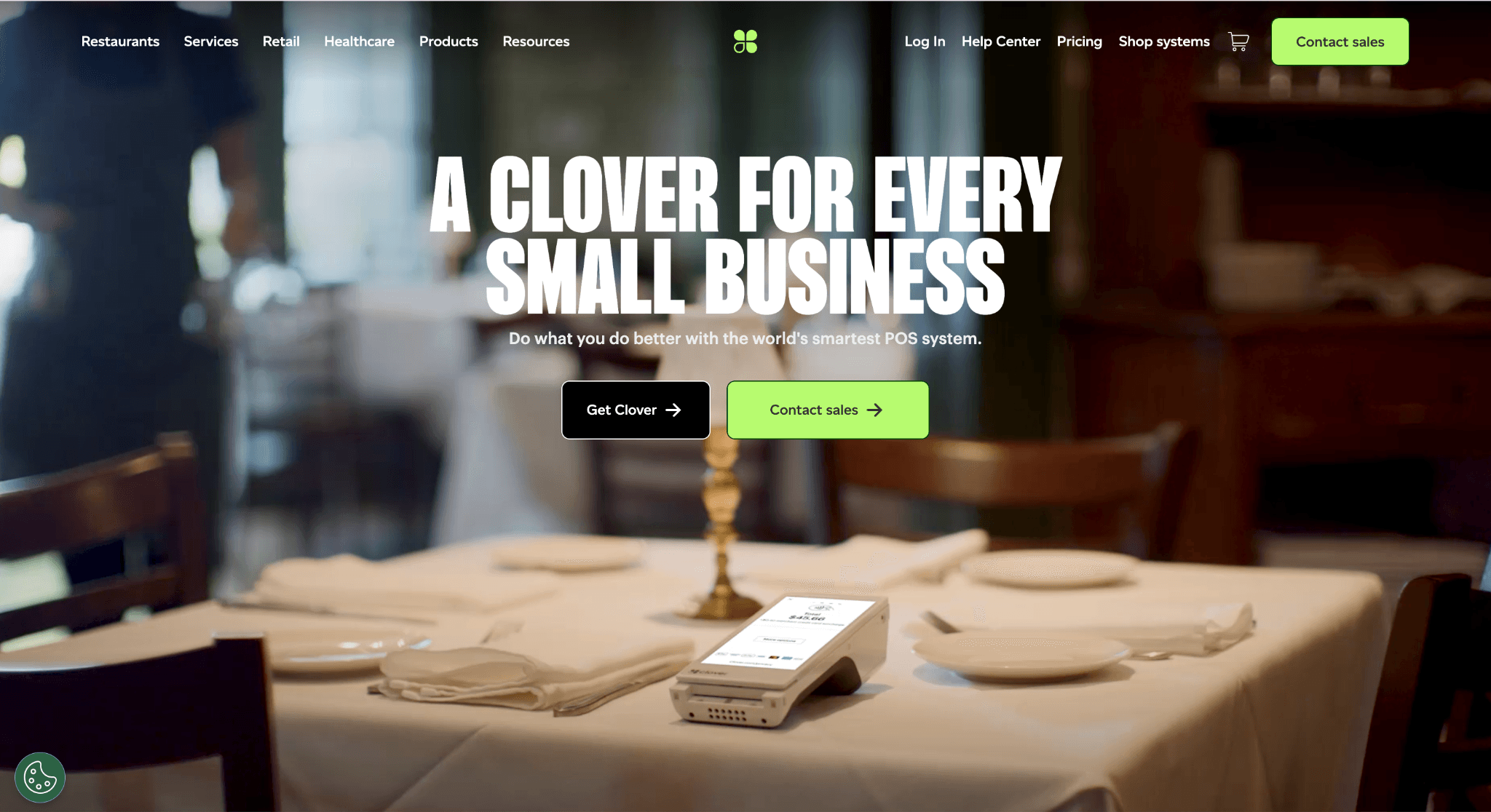
Clover runs as an Android POS platform serving restaurants and retail businesses, processing more than 2 billion transactions annually across hundreds of thousands of merchants. Their hardware lineup, including the Station, Mobile, and Mini, gives restaurants options that fit different service styles, from counter service to table service. The open App Marketplace lets operators add third-party tools without being locked into a single software stack. Established in 2010, they bring serious scale and proven reliability to restaurant operators evaluating POS systems.
Why Is Clover a Contender for Restaurant POS Software?
Clover addresses the cost problem that comes with restaurant hardware by building their platform on Android, which keeps device costs lower without sacrificing functionality. Winning the gold medal for Best POS at the PYMNTS.com Innovator Awards and being named Commerce Platform of the Year in the FinTech Breakthrough Awards reflects a track record that restaurant operators can feel confident about.
From the User Reviews:
The flexibility of Clover's hardware options comes up frequently in reviews, with operators appreciating that they can choose the setup that fits their floor plan. The App Marketplace gets positive mentions from restaurants that want to customize their tech without rebuilding from scratch. The combination of affordability and feature depth seems to be what earns Clover repeated praise from multi-format operators.
4. Smart Tab - Best for High-Volume Nightclubs and Bars
Which Markets Does Smart Tab Serve?
SmartTab focuses on high-volume nightclubs and bars, which puts them in a different category than most restaurant POS platforms. Their hybrid system runs on both local servers and cloud infrastructure, so the operation keeps moving even during internet outages (a real concern in venues with dense crowds). Features like ID-based payment profiles, biometric employee tracking, custom table maps, and kitchen display systems reflect deep knowledge of how nightlife venues actually run. The team includes former bartenders, servers, general managers, and owners who built the product from the inside out.
Why Is Smart Tab a Contender for Restaurant POS Software?
SmartTab takes on the specific challenge of managing high transaction volumes in nightlife settings, where ID verification, tab management, and staff accountability all happen simultaneously at speed. Their month-to-month pricing with no long-term contracts is a practical differentiator for venues that don't want to be locked in before they've tested a system thoroughly.
From the User Reviews:
Reviews highlight how well the platform handles the operational demands of nightclub and bar environments, particularly around tab management and staff tracking. The offline payment processing capability gets mentioned as a real confidence builder for venues that can't afford service interruptions during peak nights. Operators in high-volume nightlife settings find SmartTab closer to purpose-built than anything else they've tried.
5. GoTab - Best for Mid to Large-Sized Restaurants, Breweries, Bars, and Hospitality Venues
Which Markets Does GoTab Serve?
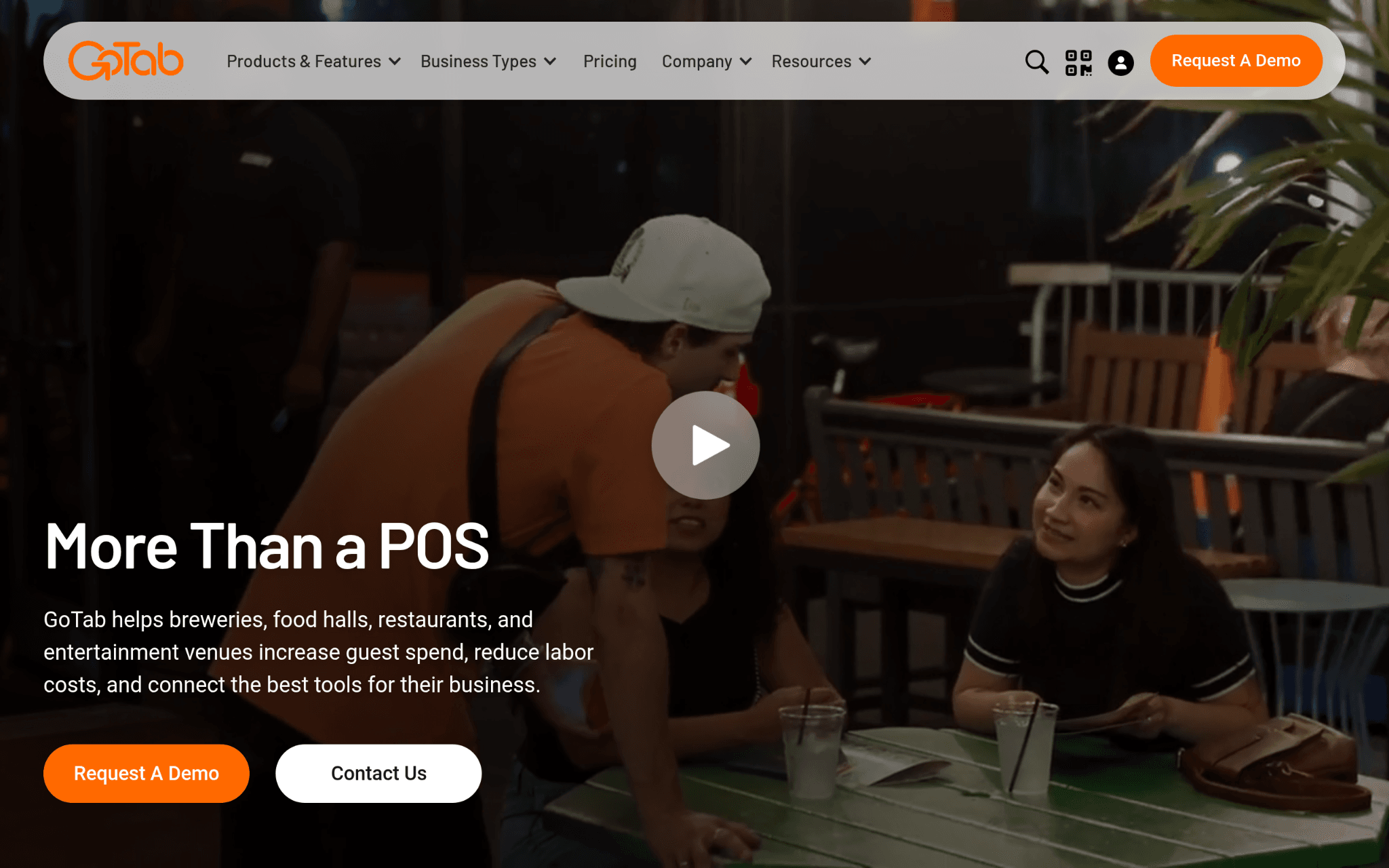
GoTab serves mid to large-sized restaurants, breweries, bars, and hotels, combining mobile POS with contactless ordering, QR code payments, and kitchen management in a single platform. Guests can order through a server, their phone, or a mix of both, all on one tab and without downloading an app. The system works on any internet-connected device, which keeps hardware costs flexible. Processing over $250 million in transactions annually across 35 states and Canada, with clients like Stone Brewing Co. and Topgolf, GoTab has real traction at meaningful scale.
Why Is GoTab a Contender for Restaurant POS Software?
GoTab takes on the friction that comes with blending traditional table service and modern contactless ordering in the same venue, and their single-tab model solves what can otherwise be a reconciliation headache. Their transaction-based pricing (rather than flat monthly fees) ties the cost directly to how a restaurant actually generates revenue, which makes financial sense for operators managing variable volume.
From the User Reviews:
Users praise the flexibility of GoTab's ordering model, especially in venues where guests move around rather than stay at a fixed table. The contactless ordering setup gets positive feedback for reducing staff workload during busy shifts without removing the personal service element. GoTab's 2021 Excellence in Customer Service Award reflects what operators and guests actually experience using the platform.
The Process Behind This Ranking
Building a list like this takes more than browsing a few websites. The research behind these selections was structured to surface platforms with genuine operational credibility in restaurant technology, not just strong marketing copy.
Foundation Data Requirements
The starting point was assembling a broad pool of restaurant POS platforms from directories, app review platforms, hospitality industry publications, and aggregator sites that track software in the food service space. Each platform had to appear across multiple sources to be considered, since single-source mentions weren't treated as sufficient evidence of market presence. Case studies and verified use cases were also factored in during this initial phase to understand which platforms were actually deployed in working restaurant environments.
Pre-Verification Phase
Once the longlist was assembled, platforms with thin or unverifiable track records were removed. Review patterns were analyzed for consistency across user bases, looking at whether feedback reflected real operational experience or surface-level impressions. Platforms with sparse review histories, inconsistent ratings across sources, or limited documented deployments were filtered out before the deeper evaluation began.
The Verification Phase
Each remaining platform was cross-referenced against what their official sites claimed versus what users and case studies reported. Discrepancies between marketing language and documented outcomes were flagged. Platforms that held up well under that comparison, where real-world results aligned reasonably with stated capabilities, moved forward. Those with large gaps between claims and evidence were removed from consideration regardless of brand recognition.
Tracking Authority Markers
Industry recognition carries weight when it comes from credible sources. Each platform was checked for awards, mentions in hospitality and fintech publications, and any original research or data they've published about their own performance. Not every platform on this list has a long list of awards, but the ones that do (Toast's customer reach data, GoTab's customer service recognition, Clover's fintech awards) were given additional weight as signals of peer and industry validation.
Restaurant POS Software Proof Points
The final filter was topic-specific evidence. Platforms needed documented proof of restaurant technology capability, meaning dedicated service pages describing POS features in restaurant-specific terms, verified reviews from restaurant operators (not generic retail or service business users), and relevant case studies showing real results in food service settings. Platforms that checked all of these boxes across multiple sources made the final list. Those that only partially satisfied this requirement, or whose evidence was limited to a single source, did not.
How to Pick Your Best Match
No single restaurant POS platform is the right fit for every operator. The best way to narrow the field is to match your specific operational needs against what each system actually does well, rather than choosing based on name recognition alone. Here's what to evaluate before committing:
- Industry/Domain Experience: Look for platforms built by people who understand restaurant operations, not just software development. Systems designed with input from actual operators tend to handle edge cases better.
- Features and Service Options: Match features to your format. A full-service restaurant needs table management and course pacing. A bar needs fast tab management and ID verification. A ghost kitchen needs strong online ordering and delivery connections.
- Pricing Structure: Understand whether you're paying flat monthly fees, transaction-based rates, or hardware costs upfront. The structure that fits a high-volume venue may not suit a smaller independent operator.
- Results Measurement: Ask how the platform reports on performance. Systems that surface data on average ticket size, table turn time, and order accuracy give operators something actionable to work with.
- Industry Knowledge and Compliance: Confirm the system handles PCI DSS compliance, supports EMV payment standards, and meets any local tax or alcohol sales requirements relevant to your operation (especially important for bars and venues with age verification needs).
Closing Thoughts
Choosing from the best restaurant POS software options available today comes down to knowing what your operation actually needs. Toast and Clover cover broad restaurant management at scale. Orders.co brings automation and online ordering into focus. SmartTab owns the nightlife space, and GoTab gives larger, more complex venues a flexible path forward. The right fit depends on your format, your volume, and where you want to grow. Restaurant technology is only getting more capable, and the operators who pick the right foundation now will feel that advantage every service.


