
Beyond Leonardo: Avio Mattiozzi Petralia Explores What Leonardo da Vinci Can Teach Us About the Future
02 Oct 2026

More than five centuries after Leonardo da Vinci, the world is once again navigating an era of rapid technological and social transformation. In Beyond Leonardo, Avio Mattiozzi Petralia looks beyond Leonardo’s celebrated artworks to explore his curiosity, multidisciplinary thinking and relentless experimentation—and asks what this Renaissance mindset can teach us about creativity, technology and the next century.
What does it mean to think like Leonardo da Vinci in the age of artificial intelligence?
That question sits at the heart of Beyond Leonardo: His Curiosity Kick-Started The Future, a book by architect, artist, designer and concept inventor Avio Mattiozzi Petralia.
Rather than presenting another conventional biography of the Renaissance polymath, the book uses Leonardo as a starting point for a broader exploration of human creativity, technological progress and our capacity to imagine alternatives to the world around us.
Its underlying proposition is straightforward: observe what exists, question its limitations, and imagine what ought to exist next.
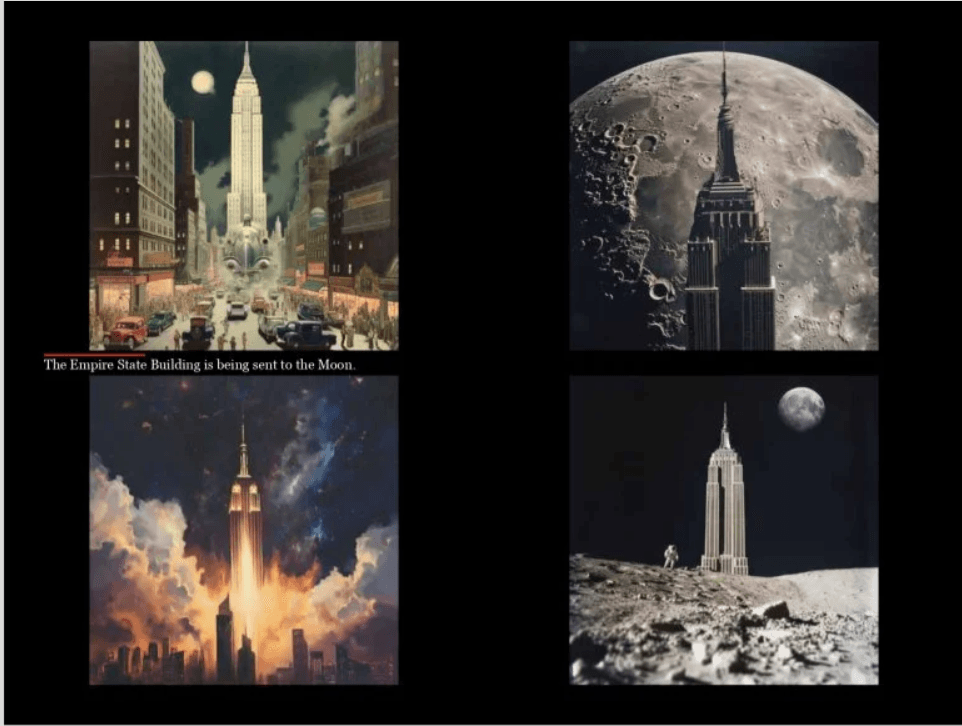
Leonardo da Vinci: Beyond the artist
Leonardo is remembered primarily through masterpieces such as the Mona Lisa and The Last Supper. Yet his interests extended across painting, sculpture, engineering, architecture, anatomy, natural science, physics, astronomy and cartography.
Beyond Leonardo focuses on this ability to move between disciplines.
One particularly relevant example for the modern technology industry is Leonardo's fascination with automatons. His notebooks contain concepts for mechanical creations ranging from a hydraulic water clock and robotic lion to an armoured mechanical knight.
Centuries later, Leonardo's ideas continued to attract the attention of robotics researchers. In 2002, NASA roboticist Mark Rosheim used Leonardo's surviving notes and sketches to construct a version of the mechanical knight that proved functional—illustrating the engineering thinking contained within drawings produced centuries before modern robotics.
For Mattiozzi Petralia, however, Leonardo's importance is not simply that some of his ideas anticipated later technologies.
It is how he arrived at those ideas.
Observation, experimentation, imagination, drawing, questioning and the willingness to move between seemingly unrelated fields formed part of a creative process that Beyond Leonardo argues remains relevant today.
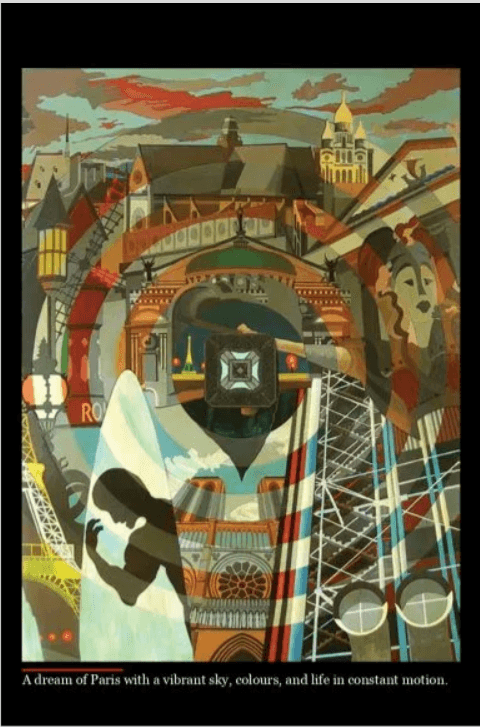
A renaissance mindset for the AI era
We live in a radically different technological environment from Leonardo's Renaissance. Artificial intelligence, robotics, digital platforms and increasingly autonomous systems are changing how people create, communicate and solve problems.
Yet Beyond Leonardo suggests that technological capability alone is insufficient.
The book repeatedly returns to the relationship between technology and humanity: how people can use new tools without losing curiosity, independent imagination, reflection and a sense of human purpose.
Its scope consequently stretches beyond Leonardo himself into questions about new creative directions, global dimensions, future cities and homes, the value of life, and what the next 100 years could look like.
The result is part reflection on Leonardo, part exploration of creativity and part invitation to think differently about the future.
Becoming the architects of the future
Perhaps the most interesting idea in Beyond Leonardo is that Leonardo should not simply be admired.
He should be used as a catalyst for thinking.
The book encourages readers to slow down, observe, make notes, experiment, question established assumptions and create space for new ideas—practices that can appear increasingly countercultural in an environment dominated by constant information and demands for attention.
That gives Beyond Leonardo a relevance extending beyond art history.
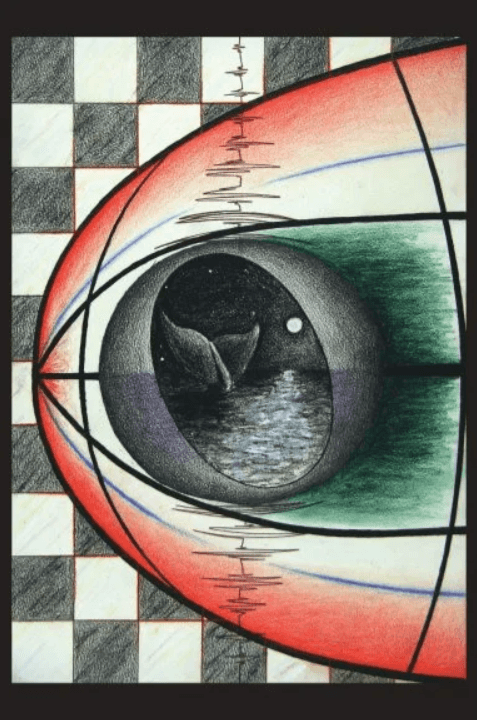
It raises a question for entrepreneurs, technologists, artists, designers and leaders navigating the AI era:
If Leonardo were alive today, what would he be trying to build next—and what would happen if we learned to approach the future with the same curiosity?
More than 500 years after the Renaissance, Beyond Leonardo argues that perhaps the most valuable thing Leonardo left behind was not a particular painting, machine or invention.
It was a way of seeing possibilities where others saw only the world as it already existed.
Sources
Share

Pallavi Singal
Editor
Pallavi Singal is the Vice President of Content at ztudium, where she leads innovative content strategies and oversees the development of high-impact editorial initiatives. With a strong background in digital media and a passion for storytelling, Pallavi plays a pivotal role in scaling the content operations for ztudium's platforms, including Businessabc, Citiesabc, and IntelligentHQ, Wisdomia.ai, MStores, and many others. Her expertise spans content creation, SEO, and digital marketing, driving engagement and growth across multiple channels. Pallavi's work is characterised by a keen insight into emerging trends in business, technologies like AI, blockchain, metaverse and others, and society, making her a trusted voice in the industry.


