
resources
Boston’s Population Over Time: A Historical Look at Growth & Change

From a Puritan settlement of barely 7,000 souls to a thriving metropolitan area exceeding 4.9 million residents, Boston's demographic journey mirrors America's own transformation from colonial outpost to global power. The story of the Boston population isn't merely numbers on census records—it's a narrative of waves of immigration, industrial revolution, urban decay and renewal, and the constant reinvention that defines American cities.
Understanding how Boston grew, shrank, and grew again offers insights into the forces shaping urban America, from the Irish fleeing famine to the tech workers arriving today. What transformed a small Puritan town into New England's largest city, and what lessons does Boston's population history hold for cities worldwide?
A History of Boston’s Population over time
Boston's story begins in 1630 when Puritan colonists led by John Winthrop established the Massachusetts Bay Colony on the Shawmut Peninsula. Named after Boston, England—hometown of several prominent settlers—the town was envisioned as a "city upon a hill," a model Christian community. The earliest settlement clustered around present-day Downtown and the North End, with fewer than 1,000 initial inhabitants. By 1700, the Boston population had grown to approximately 7,000, making it one of British North America's largest towns alongside Philadelphia and New York. The city's natural harbor drove early growth, establishing Boston as a maritime trading center connecting New England with Britain, the Caribbean, and beyond.
The 18th century brought continued expansion despite occasional setbacks from smallpox epidemics and conflicts like King Philip's War. By the American Revolution, Boston housed roughly 16,000 people and served as a crucible of revolutionary sentiment. The Boston Massacre, Boston Tea Party, and Paul Revere's midnight ride placed the city at the rebellion's heart. Post-independence, Boston's economy flourished through shipping, fishing, and emerging manufacturing, driving population growth. The 1790 federal census recorded Boston's population at 18,320, establishing it as one of America's ten largest cities.
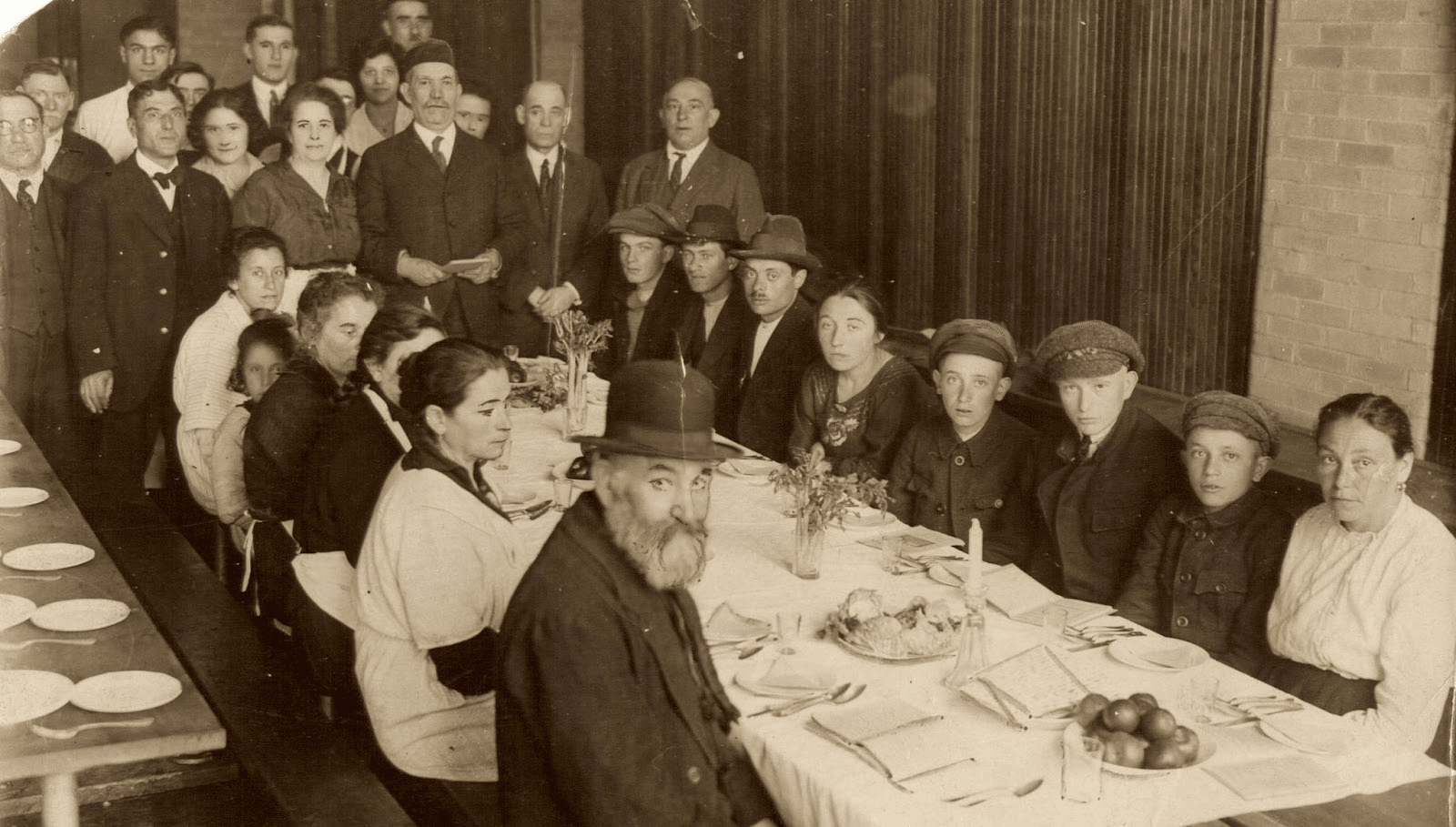
The 19th century witnessed Boston's transformation from maritime town to industrial city, with Boston’s population surging dramatically. By 1850, the city housed 136,881 people—a more than sevenfold increase in sixty years. Several factors fueled this explosive growth. The Industrial Revolution brought textile mills, shoe factories, and manufacturing plants, creating thousands of jobs. The development of railroads connected Boston to interior Massachusetts, New Hampshire, and beyond, facilitating commerce and migration. Most significantly, immigration reshaped Boston's demographic fabric. Irish immigrants fleeing the Great Famine arrived in massive numbers during the 1840s and 1850s, fundamentally altering the city's character. By 1855, the foreign-born constituted over one-third of Boston's residents, with Irish immigrants representing the largest group.
This immigration wave created tensions with Boston's Yankee elite. Irish Catholics faced discrimination in housing, employment, and social acceptance. The rise of the Know-Nothing Party reflected nativist backlash against Irish immigration. Despite prejudice, Irish immigrants established communities in neighborhoods like South Boston, Charlestown, and Roxbury, building churches, schools, and political organizations that gradually gained influence. By century's end, Irish-Americans dominated Boston politics, a power structure lasting well into the 20th century.
The late 19th and early 20th centuries brought new immigrant waves. Italian immigrants settled primarily in the North End, creating vibrant enclaves. Jewish immigrants from Eastern Europe established communities in the West End and later Dorchester and Mattapan. Smaller numbers of Portuguese, Lithuanian, Polish, and Greek immigrants added to Boston's diversity. By 1900, the Boston population reached 560,892, and the city had absorbed neighboring towns like Roxbury, Dorchester, and Charlestown through annexation, expanding its boundaries and population. By 1950, Boston peaked at approximately 801,444 residents, representing its historical high point.
The mid-20th century witnessed dramatic boston population decline as suburbanization transformed American cities. Like Chicago, Detroit, Philadelphia, and other northeastern industrial cities, Boston experienced white flight as middle-class families relocated to suburbs like Newton, Brookline, and communities along Route 128. Several factors drove this exodus. The automobile and highway construction made suburban living feasible. Federal housing policies, including redlining and FHA loans favoring suburban development, encouraged homeownership outside cities. Urban renewal projects demolished entire neighborhoods, displacing residents. School desegregation conflicts in the 1970s accelerated white flight. By 1980, Boston's population had fallen to 562,994—a 30% decline from its 1950 peak.
This population loss coincided with economic transformation. Manufacturing declined as factories moved south or overseas, eliminating working-class jobs. Boston's waterfront, once bustling with shipping activity, fell into disrepair. Neighborhoods like the South End and Back Bay deteriorated as property values plummeted. The city faced a fiscal crisis, struggling to maintain services with a shrinking tax base. Urban decay seemed irreversible, and Boston appeared destined to follow the decline paths of cities like Cleveland or Buffalo.
A new wave
However, Boston reversed its trajectory through economic reinvention and urban renewal. The city's educational and medical institutions—Harvard, MIT, Boston University, Massachusetts General Hospital, and others—became engines of knowledge economy growth. Technology companies, particularly in computing and biotechnology, established operations in Greater Boston. Financial services and professional service firms expanded. These industries attracted educated workers, reversing population decline. By 2000, the Boston population had stabilized at 589,141, and growth resumed. The 2020 census recorded 675,647 residents, representing a 20% increase since 1980.
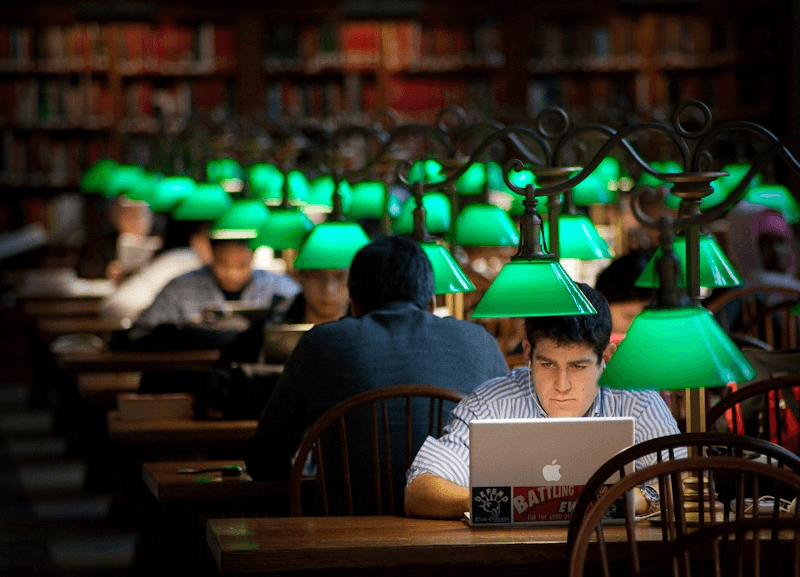
Contemporary Boston reflects renewed prosperity but faces new challenges. Gentrification has transformed formerly working-class neighborhoods, driving housing costs to levels rivaling New York, San Francisco, and Los Angeles. Young professionals attracted to Boston's tech sector and universities compete for limited housing, pushing prices beyond reach for service workers and longtime residents. This mirrors patterns in Seattle, Austin, Denver, and other cities experiencing tech-driven growth. Displacement of Black and Latino residents from traditionally diverse neighborhoods like Roxbury and Dorchester raises equity concerns.
Immigration continues reshaping Boston's demographics, though source countries have shifted. Latin American immigrants, particularly from the Dominican Republic, Puerto Rico, and Central America, have established communities in East Boston, Jamaica Plain, and other neighborhoods. Asian immigrants from China, Vietnam, and India contribute to population diversity. African immigrants from Somalia, Cape Verde, and other nations add to Boston's international character. These new arrivals echo earlier Irish and Italian immigration waves, seeking economic opportunity while maintaining cultural traditions.
Read More: mogadishu km square
Boston compared to the rest of the US
Comparing Boston's population trajectory to other American cities reveals common patterns and unique features. Like San Francisco, Boston leveraged educational institutions and knowledge economy industries to reverse decline. Unlike Detroit or Baltimore, Boston avoided catastrophic population collapse. The city's trajectory more closely parallels that of Seattle, Washington DC, or Minneapolis—cities that transitioned successfully from industrial to post-industrial economies. Globally, Boston's experience differs from rapidly growing cities like Dubai, Singapore, or Shanghai, or from megacities like Tokyo, Mexico City, or Cairo managing populations exceeding 10 million.
Boston's population story also contrasts with Sunbelt cities like Houston, Phoenix, or Miami, which experienced continuous growth throughout the 20th century. While Boston peaked in 1950 and declined before recovering, these southern and western cities attracted migrants through warm climate, lower costs, and economic opportunity. European cities like London, Paris, Rome, Amsterdam, Berlin, and Vienna followed different demographic paths shaped by distinct historical forces including World Wars and post-war reconstruction. Asian cities such as Seoul, Beijing, Mumbai, Jakarta, and Bangkok experienced explosive growth as rural populations urbanized.
The Future of Boston’s population trends
The future Boston population trajectory depends on addressing affordability challenges while maintaining economic vitality. Can Boston provide housing for service workers, teachers, and middle-class families, or will it become an enclave for the wealthy? Will the city attract and retain diverse populations, or will high costs drive another exodus? How Boston answers these questions will determine whether its population continues growing or stagnates.
Lessons from Boston's demographic history resonate for cities worldwide including Toronto, Sydney, Melbourne, Copenhagen, Stockholm, Buenos Aires, São Paulo, Johannesburg, Nashville, Prague, Budapest, Vienna, Lisbon, Barcelona, and others navigating growth, decline, or transformation. Population numbers tell stories of economic change, migration, policy decisions, and human aspiration. Boston's journey from Puritan settlement to colonial port to industrial city to post-industrial knowledge center illustrates cities' remarkable adaptability. Understanding this history helps cities facing similar transitions learn from Boston's successes and failures.
The Boston population story ultimately reveals how cities evolve, adapt, and reinvent themselves across centuries. From 7,000 Puritans to nearly 700,000 diverse residents today, Boston transformed repeatedly while maintaining identity. This capacity for change while preserving character offers hope for cities confronting 21st-century challenges. Boston's demographic journey isn't finished—it continues writing new chapters as immigrants arrive, graduates stay, and families choose urban over suburban living.


