
business resources
Bundling in Business: Strategies to Boost Sales, Loyalty, and Value
11 Dec 2025

Bundling in business is a strategy where multiple products or services are offered together to increase perceived value, attract new customers, and enhance the overall shopping experience. When done correctly, bundling can raise AOV, improve loyalty, and help businesses deliver more value with every purchase.
In this article, we’ll delve into the core concepts of bundling, explore effective strategies, and uncover how implementing these tactics can elevate your brand’s appeal and boost revenue. Join us as we examine the benefits of bundling and how it can transform your marketing efforts.
What Is Bundling in Business?
To effectively utilize bundling in business and understand where it overlaps with bundling in marketing, it’s essential to start with a clear definition.
Bundling refers to the practice of selling two or more products or services as a package, often at a price that is more advantageous than purchasing each item individually. This technique is employed across various industries, including SaaS, eCommerce, retail, and more.
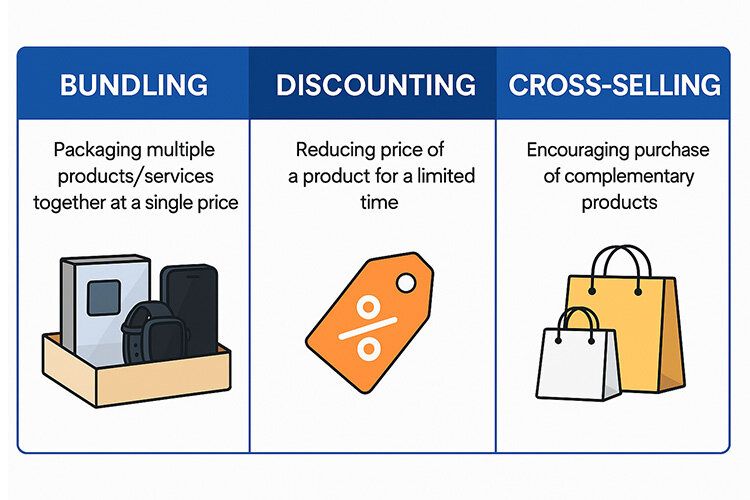
It’s easy to confuse this with discounting or cross-selling. However, there are distinct differences among these strategies, Bundling vs Discounting vs Cross-Selling can be outlined in the table below:
| Strategy | What It Is | Goal | Example | Risk |
| Bundling | Packaging multiple products/services together at a single price | Increase perceived value, move more items | A software suite (Word + Excel + PowerPoint) | Customers may want only part of the bundle |
| Discounting | Reducing price of a product for a limited time | Boost sales volume, attract price-sensitive buyers | 20% off weekend sale | Can hurt margins and train customers to wait for sales |
| Cross-Selling | Encouraging purchase of complementary products | Raise average order value | Selling phone cases with a phone | May feel pushy if irrelevant |
For online stores, especially those on Shopify, the easiest way to implement these strategies is through a Shopify bundle app that manages pricing, product grouping, and offer visibility.
Why Bundling Works - The Psychology Behind It
Bundling in marketing is powerful because it connects directly to how people make decisions. Here’s why it works so well:
- Perceived Value: When multiple products are offered together, customers feel they’re getting a better deal, more for their money. This increases satisfaction and drives quicker decisions.
- Simplicity: Bundles reduce the number of choices. Instead of comparing several products, the customer makes one simple decision: to buy the bundle.
- Convenience: Buying a complete set saves time and effort, making the purchase feel smarter and easier.
- Cognitive Load Reduction: A single, well-designed offer lowers the mental effort needed to evaluate options, helping customers act faster.
- Loss Aversion: People naturally avoid missing out on value. A bundle framed as a “better deal” taps into that fear of loss, encouraging purchase.
In short, both the bundling technique and bundling in marketing succeed because they align with basic human psychology, making choices feel effortless, valuable, and rewarding.
In fact, studies show that effective product bundling strategies can increase Average Order Value (AOV) by up to 30% and improve conversion rates by 20–25%, proving that psychology-backed bundles deliver measurable business results.
3 Popular Bundling Techniques in Business
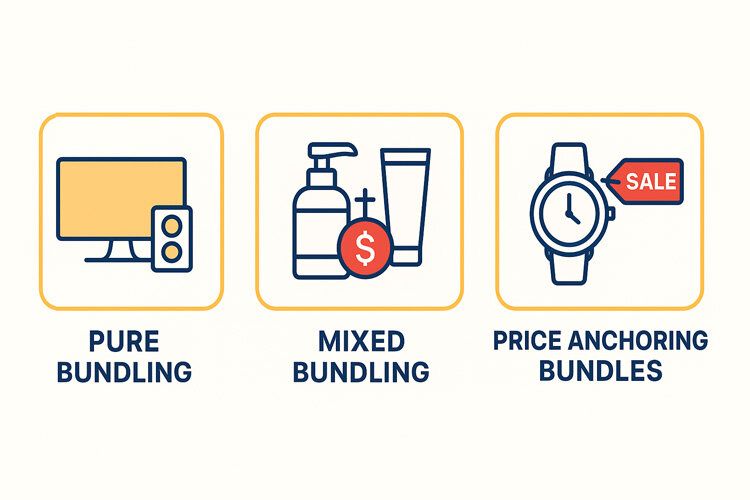
Whether or not you plan to use bundling in marketing, it’s important to understand the main types of bundling techniques and how each one works. Here are three popular bundling techniques used in business:
Pure Bundling
In pure bundling, products are only sold together as a single package, and customers can’t buy the items separately. This bundling technique works well when products complement each other closely (like a phone with its charger or a skincare set). It simplifies the buying decision and increases perceived value.
Mixed Bundling
Mixed bundling gives customers a choice; they can buy products individually or as a bundle. This is one of the most flexible bundling in marketing strategies because it appeals to both value-seekers (who prefer the bundle) and selective buyers (who want specific items).
Price Anchoring Bundles
A price anchoring bundle is a bundling sales strategy that uses pricing psychology. The bundle is priced to make the individual items look more expensive by comparison, “anchoring” the customer’s perception of value. It makes the bundle feel like the smarter deal, even if the savings are subtle.
Building a Strategic Product Bundling Strategy
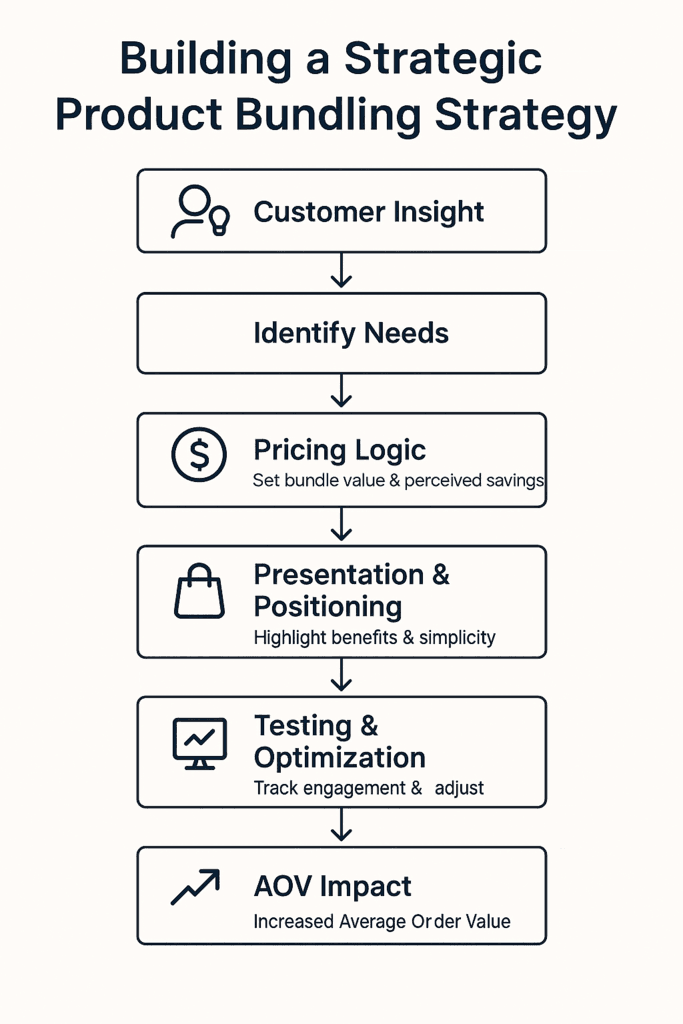
A strong product bundling strategy starts with understanding your customers’ needs. Identify what problems your audience is trying to solve, then move to product alignment, combining items that naturally fit together or enhance each other’s value. Next comes pricing logic, where you set bundle prices that feel like a deal without hurting margins. Finally, focus on presentation; how you frame and communicate the bundle’s value plays a key role in conversion.
A strategic bundling approach should also be both data-driven and customer-driven. Use purchase patterns and order history to discover which products are often bought together. This insight helps you design bundles that sell themselves. On the other hand, customer-driven bundling allows flexibility through “mix and match” or “build your own bundle” options, empowering shoppers to personalize their choices.
Here is the flowchart of strategic bundling flow from idea to AOV impact:
Examples of Successful Bundling in Business
There are countless examples of bundling marketing strategies around the world, many of which we use every day without even noticing. The best way to understand how powerful a bundling plan can be for your business is to look closely at the most successful ones. Let’s look at how major brands across industries use bundling to create stronger value propositions and market differentiation.
- McDonald’s Happy Meal
A classic example of a bundling marketing strategy, the Happy Meal combines food, a drink, and a toy into one offer. The bundle makes the meal feel like a fun experience rather than just food, positioning McDonald’s as family-friendly and value-focused.
- Microsoft Office / Adobe Creative Suite
Both brands use a strategic bundling approach by offering software packages instead of single apps. This increases perceived value and locks in long-term users who rely on multiple tools working seamlessly together.
- Google Workspace
Google bundles Gmail, Drive, Meet, and more into one integrated platform. The simplicity and convenience of this product bundling strategy make it ideal for teams, positioning Google as the go-to for collaborative productivity.
- Spotify + Hulu Bundle
This cross-industry bundling technique combines music and entertainment streaming at a single price, expanding audiences for both brands and positioning the offer as unbeatable value for digital subscribers.
Common Mistakes in Bundling (and How to Avoid Them)
Even the smartest bundling marketing strategy can fail if it’s not executed carefully. Some of the most common mistakes in bundling include:
- Pairing unrelated items
- Undervaluing the bundle
- Not testing different variants
- Oversimplifying discount logic
Want to know how to avoid them? Check out the table below:
| Mistake | Solution |
| Pairing unrelated items | Bundle products that naturally complement each other or solve a shared customer need. |
| Undervaluing the bundle | Make sure your pricing reflects both real and perceived value — don’t discount too heavily. |
| Not testing variants | Use A/B testing and customer feedback to refine your bundling strategy and discover what performs best. |
| Oversimplifying discount logic | Keep pricing clear but strategic — communicate savings effectively without confusing the buyer. |
Bundling for eCommerce & DTC Brands
For eCommerce and DTC brands, a smart bundling sales strategy is one of the most effective ways to boost performance and customer satisfaction. Selling directly online gives brands the flexibility to test, personalize, and optimize bundles in real time.
- Increases AOV (Average Order Value): Product bundles encourage customers to buy complementary items together, raising the total order value.
- Improves Conversions: Bundles simplify decision-making, helping shoppers see more value with less effort.
- Supports Free Shipping Thresholds: Many online shoppers add one more product to qualify for free shipping, and bundling makes that step effortless.
- Easy Implementation on Shopify: If your store runs on Shopify, tools like Fast Bundle make it simple to automate, test, and manage bundling options across your site, helping you discover which offers resonate most with your audience.
In essence, a strong bundling sales strategy allows eCommerce and DTC brands to sell more efficiently, deliver better value, and create a smoother shopping experience.
Bundling goes far beyond combining products; it’s a strategic blend of psychology, value creation, and smart positioning. When used thoughtfully, it helps businesses simplify decisions, increase perceived value, and strengthen customer relationships.
From pure and mixed bundling to price anchoring strategies, each approach offers a different way to shape perception and drive performance. A well-structured product bundling strategy can raise margins, boost AOV, and turn one-time buyers into loyal customers.
For eCommerce and DTC brands, bundling brings even more potential, data-driven insights, automation tools like Fast Bundle, and real-time testing make it easier than ever to design offers that sell themselves.
In the end, successful bundling isn’t about discounting; it’s about designing experiences that feel complete, convenient, and worth every cent. When done right, bundling becomes not just a sales tactic but a long-term growth engine for your brand.
FAQs
1. What is the main difference between bundling and discounting?
Bundling creates value by packaging multiple products together, while discounting simply reduces the price of a single item. Bundling increases perceived value and AOV, whereas discounting can hurt margins and train customers to wait for sales.
2. How do I know which products to bundle together?
Use your store’s data: check frequently bought-together items, complementary products, or items that solve a single customer problem when combined. Customer surveys and A/B testing also help determine which bundles resonate best.
3. Does bundling always require a discount to work?
No. Many successful bundles rely on value, not price cuts. Strategic bundles such as “Complete Kits,” “Starter Packs,” or “Build Your Own Bundle” can convert well even without discounts because the convenience and perceived value replace the need for price reductions.


