
citiesabc
Cities Heritage: Restoration of Cities’ culture and heritage amidst wars

Throughout history, conflicts have long been a reality of our planet. Humanity has sought to construct embodiments of architectural and engineering marvel in its history. Yet a lot of this heritage including whole cities have always been at risk by armed conflict since the genesis of Humankind.
The World of today, albeit more stable than before, remains a place of conflict, there are more than 112 armed conflicts happening as we are publishing this article. This total number also lacks the whole grasp of this situation, there’s an endless count of victims caused by this conflict, hundreds of thousands of lives are constantly lost due to these events. Another victim of these conflicts is the material heritage that remains stuck in the playground of these disputes.
Indeed, every year, the United Nations Educational, Scientific and Cultural Organization (UNESCO) through its diversity of legislations, international codes and conventions as well as their organisations and initiatives; is frequently making efforts alongside governmental and non-governmental organisations to preserve this material heritage.
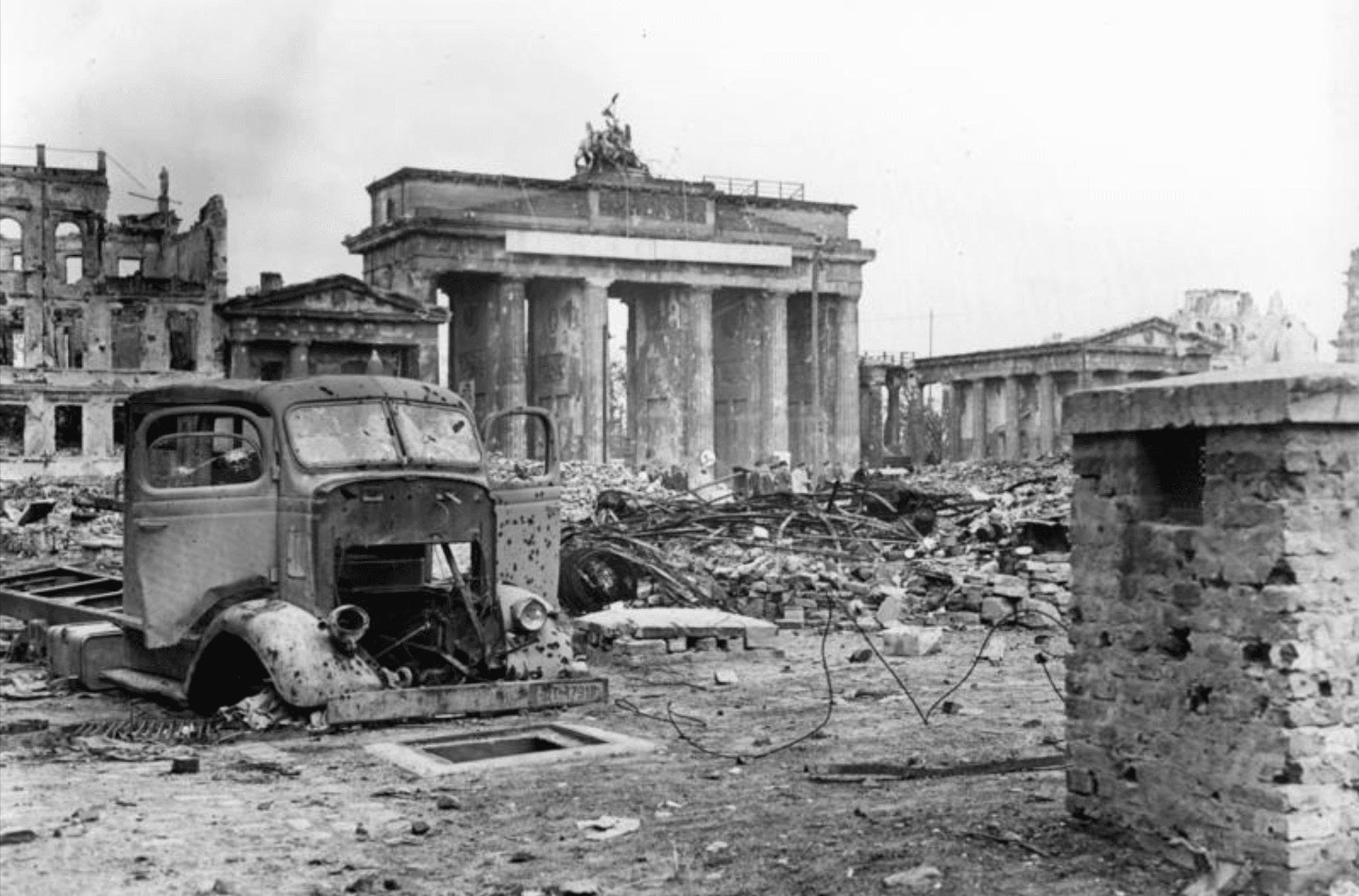
Berlin’s Brandenburg Gate just after being liberated by the Allies, 1945
No conflict made such a big impact on Humanity than World War 2, the world never reached such a low point. This war has, ultimately, made us get together and build global agencies that should have the legal means to stop a conflict of this scale of happening again.
A Brief Contextualisation of Heritage preservation post WW2
No conflict made such a big impact on Humanity than World War 2, the world never reached such a low point. This war has, ultimately, made us get together and build global agencies that should have the legal means to stop a conflict of this scale of happening again.
The United Nations Educational, Scientific and Cultural Organisation, also known as UNESCO, was established on November 16, 1945, in the aftermath of the Second World War. With the mission to foster peace, dialogue, and collaboration between all UN member states through education, science, cultural and communication programmes. Most of the world’s society was in ruin, therefore creating an urgent need for an international organisation that would be dedicated to rebuilding intellectual and moral solidarity across the world.
An agency within the United Nations, UNESCO was created with the belief that ignorance, mistrust and inequality were some of the main issues that led to two global conflicts with unprecedented implications. Hence, this transnational entity was founded upon the principles of cultural heritage protection, scientific research and ensuring equal access to education for all people across our planet in order to achieve sustainable peace and human development.
Since its creation, UNESCO has remarkably played a pivotal role in shaping global policies and initiatives that bridged divided nations. Thanks to the 1954 Hague Convention for the Protection of Cultural Property in the Event of Armed Conflict and the The 1972 Paris Convention Concerning the Protection of the World Cultural and Natural Heritage, UNESCO has laid a very solid foundation for cultural heritage protection, in 1971, the Man and the Biosphere Programme promoted on a global scale sustainable development and biodiversity conservation. With many of its programmes and international conventions, UNESCO has made it possible to grant or solve many of the problems it has achieved to solve.
Threat Overview
As previously mentioned before, war brings destruction, and even though modern international conventions stipulate that no civilian area or non-military areas should be targeted, they’re still affected nonetheless. Hence, war damages heritage physically and some of the damage can be to an extent that it endangers the existence of that material heritage. Thus, attacking the identity, the memories, the tourism, the local economy as well as the social cohesion built around that same historical area.
Therefore it is important to estimate the potential threat that these places might be subject to. These are some examples of threat overview among our various case studies that we will take on this article:
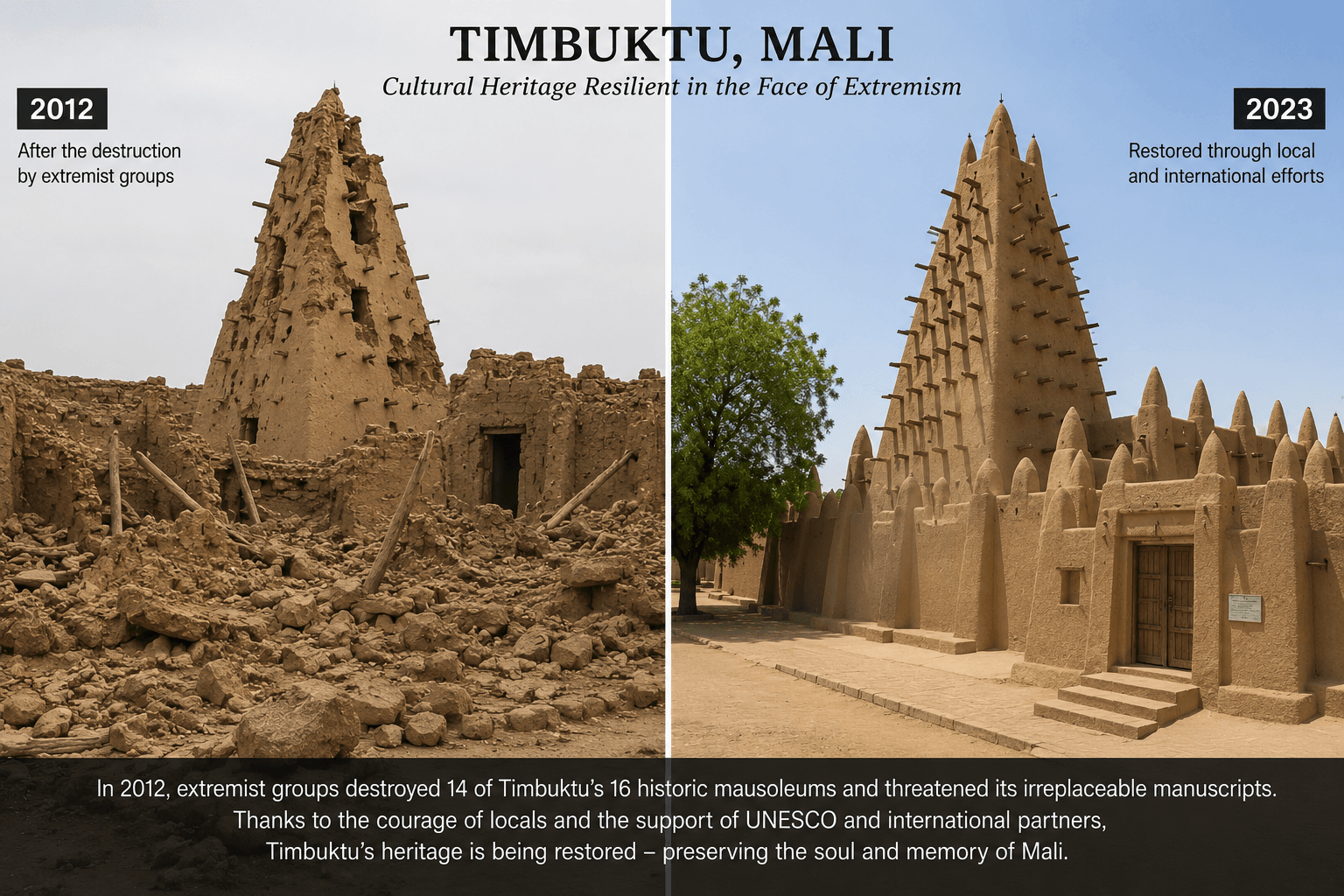
Timbuktu, Mali: 14 of the 16 World Heritage mausoleums were destroyed in 2012; manuscripts were either burned or stolen; the attack was framed as violent extremism targeting cultural identity.
Mosul, Iraq: ISIS destroyed major religious and civic heritage, including the al-Nuri Mosque and al-Hadba Minaret; UNESCO later made Mosul a flagship reconstruction case.
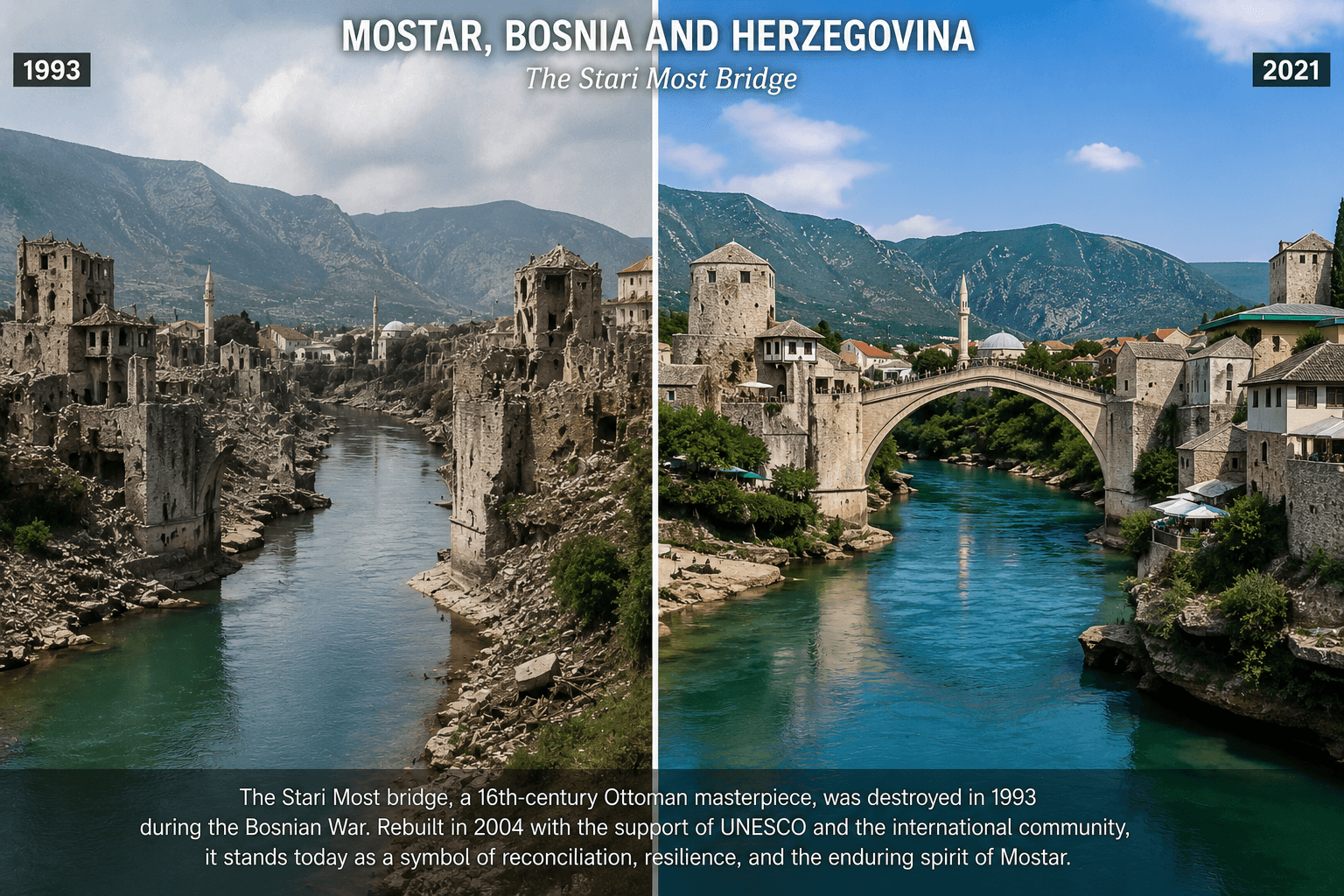
Mostar, Bosnia: the Old Bridge was not only used as of its infrastructural intent but also had created a symbolic connector between communities; its destruction became a sign of social fragmentation.
Berlin: Post-WWII reconstruction raised the question of whether to restore, modernize, or deliberately leave traces of destruction visible, also raising this debate to a new perspective.
Beirut: Wars and the 2020 port explosion showed how heritage recovery also involves education, urban planning, social memory, and community participation.
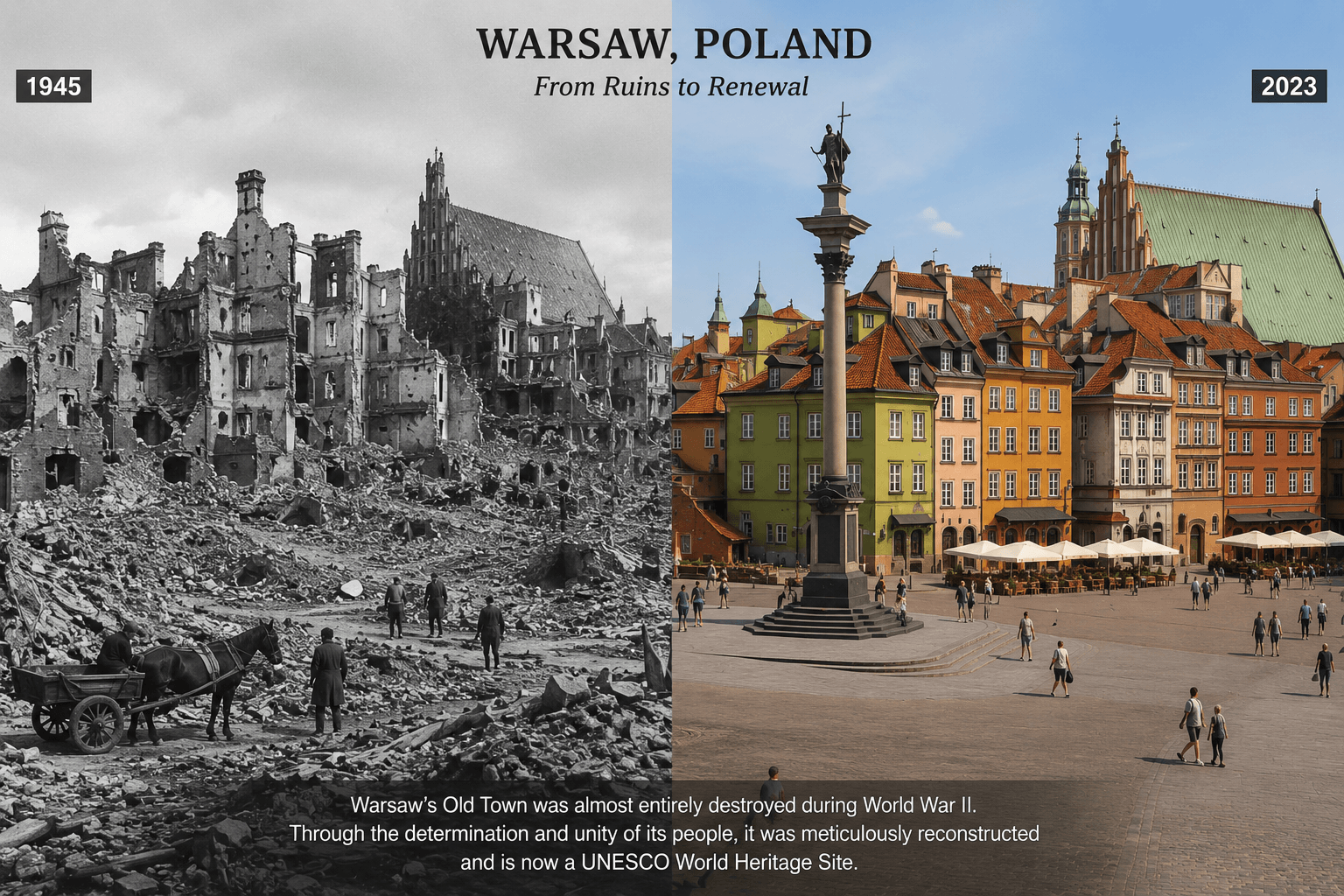
Warsaw: during WWII, it suffered through so much destruction that it made reconstruction a political, cultural, and identity-building project.
Hangzhou: A lot of its cultural heritage was destroyed following the Taiping Rebellion, it was later restored in the late Qing dynasty and the Republic of China period.
Rebuilding Heritage and Identity
UNESCO and regional governments have played a central role in the preservation and reconstruction of cultural heritage in cities devastated by war and conflict. Since its establishment in 1945, UNESCO has developed international legal frameworks such as the 1954 Hague Convention and the 1972 World Heritage Convention, creating mechanisms to protect cultural sites during and after armed conflicts. In cities like Timbuktu, Mostar, Mosul, Beirut, and Warsaw, UNESCO coordinated international funding, technical expertise, and restoration strategies while working alongside national authorities, local communities, and global partners. These efforts transformed heritage preservation into a broader mission of peacebuilding, reconciliation, and cultural recovery.
Regional governments have also been critical in ensuring reconstruction projects reflect local identity and community needs rather than becoming externally imposed developments. In Timbuktu, the Malian government collaborated with UNESCO to restore the destroyed mausoleums using traditional mud-brick construction techniques carried out by local masons. In Bosnia and Herzegovina, the reconstruction of Mostar’s Stari Most bridge became both a political and cultural project supported by regional authorities and international donors, symbolising reconciliation after the Bosnian War. Similarly, Iraq’s government worked with UNESCO and the United Arab Emirates to launch the “Revive the Spirit of Mosul” initiative, one of the largest heritage reconstruction programmes in the Middle East, combining restoration with education, urban renewal, and employment generation.
Beyond physical reconstruction, these initiatives have increasingly focused on long-term sustainability, digital preservation, and economic recovery. UNESCO’s use of 3D scanning, digital archives, satellite imaging, and AI-assisted damage assessments in cities such as Beirut and Mosul has modernised the way cultural heritage is documented and protected. Regional governments have also integrated heritage restoration into tourism development, infrastructure rebuilding, and creative economy strategies, recognising that restoring historical sites can generate jobs, attract investment, and strengthen social cohesion. Together, UNESCO and regional administrations have demonstrated that rebuilding cultural heritage is not only about restoring monuments, but also about rebuilding collective identity, stability, and future economic resilience.
The Restoration Process
Timbuktu, Mali:
When Ansar Dine militants swept across northern Mali in 2012, they brought with them an ideology that viewed Timbuktu's sacred mausoleums, the mud-brick tombs of Islamic scholars and saints dating to the city's 15th and 16th-century golden age, as heretical. Within months, 14 of the 16 World Heritage mausoleums had been razed to the ground, and over 4,000 manuscripts from the Ahmed Baba Institute had been burned or stolen. Local communities, however, secretly transferred more than 300,000 manuscripts to Bamako, a quiet act of cultural resistance that would later prove invaluable.
Following a French-led military operation that drove the militants from the city in 2013, UNESCO and the Malian government jointly launched an action plan for the rehabilitation of Timbuktu's cultural heritage. The reconstruction began in earnest in March 2014, and it was notable for a deliberate and principled approach: rather than importing outside expertise, UNESCO engaged the local corporation of traditional masons, using the age-old materials of the region: alhor stone, rice stalks, and banco, a mixture of clay and straw. "What's nice is that UNESCO did not look for masons elsewhere," said one of the workers on the reconstruction site, some 1,000 kilometres northeast of Bamako. The project generated around 140 local jobs in the process.
Malian engineer Mamadou Kone, who led the project, described the challenge of recreating structures whose documentary record had been deliberately destroyed. The team relied on remaining wall fragments, the testimony of Timbuktu's historians and elders, and old photographs to ensure the restored mausoleums reflected their authentic form. The reconstruction also carried a deeper symbolic dimension: the three initial mausoleums selected for rebuilding represented different ethnic and geographical communities within Mali: one from the Arab Kounta tribe, one from the central town of Djenné, and one from the Maghreb. UNESCO's Mali representative Lazare Eloundou Assomo described this as "the Mali rainbow", hoping the project could contribute to national reconciliation between the country's different ethnic groups.
The reconstruction of all 14 mausoleums was completed and inaugurated in a formal ceremony, at a cost of approximately $500,000. Financed by Malian authorities and UNESCO, with contributions from Andorra, the Kingdom of Bahrain, Croatia, and Mauritius, the project also stood as a landmark in international law: in 2016, the International Criminal Court convicted Ahmad Al Faqi Al Mahdi for directing the attacks on Timbuktu's cultural heritage, the first time the deliberate destruction of cultural heritage had been prosecuted as a war crime.
Mosul, Iraq:
When ISIS seized Mosul in 2014, Iraq's second-largest city, it held the city for three years. In that time, it devastated everything that symbolised pluralism and shared civilisation. The 12th-century Al-Nuri Mosque, whose famous leaning minaret had earned it the nickname "the hunchback", was blown up by ISIS fighters in 2017 as Iraqi forces closed in to reclaim the city. Estimates suggest that around 80 per cent of Mosul's historic Old City was destroyed during the occupation and the subsequent battle to liberate it. Mines and other explosives were left in the rubble when ISIS was finally expelled.
UNESCO's response was its most ambitious heritage reconstruction programme to date: the "Revive the Spirit of Mosul" initiative, launched in 2018 and funded to the tune of $115 million. The UAE contributed over $50 million towards the Al-Nuri Mosque alone, in what UNESCO's Director-General described as "the largest and most unprecedented cooperation to rebuild cultural heritage in Iraq ever."
The process began methodically. Before a single brick could be laid, the site had to be demined; 115 explosive devices were removed from the Al-Nuri Mosque complex alone. Rubble was carefully sifted to identify and preserve valuable fragments that could be reused in reconstruction, and salvaged structural elements were restored by Iraq's Board of Antiquities and Heritage. In August 2021, workers made a remarkable discovery beneath the ruins: four rooms dating to the 12th century, likely used for ablutions, entirely unknown before the destruction. These archaeological remains were incorporated into the mosque's reconstruction design, led by an Egyptian team selected through an international competition, ensuring that the rebuilt structure would be, in some ways, more authentically historical than what had stood before.
The programme was structured around three pillars: restoring significant heritage, promoting the return of cultural life, and strengthening spaces for education. Beyond the mosque, UNESCO rebuilt 124 heritage houses in the Old City, and restored Al-Tahera Church, one of Mosul's most cherished Christian landmarks, and the Al-Saa'a Convent, a 19th-century Dominican convent famous for its clock tower. On 1 September 2025, Iraq's Prime Minister inaugurated all three landmarks in a ceremony attended by UNESCO officials, religious leaders, and international partners, marking the formal completion of the programme.
Heritage expert Omar Mohammed, who launched the archival platform Reviving the Jewish Memory of Mosul, sees the city as "a model" for other shattered cities, from Gaza to Aleppo, even as he acknowledges that Mosul's Jewish quarter remains in disrepair, a reminder that reconstruction, however ambitious, is never fully politically neutral.
Mostar, Bosnia:
On 9 November 1993, after relentless shelling, the elegant arc of Stari Most, the Old Bridge of Mostar, disintegrated and fell into the Neretva River. Built in 1566 by Mimar Hajruddin, a pupil of the great Ottoman architect Sinan, at the order of Sultan Suleiman the Magnificent, the bridge had stood for over four centuries as a symbol of the city's identity: a 17th-century explorer had described it as a "rainbow arch thrown from rock to rock as high as the sky." Its destruction during the Croat-Bosniak War was met with horror across the international community. The bridge had been not merely an infrastructural crossing but the "friendship bridge" that had linked Mostar's diverse inhabitants: Bosnians, Croats, Serbs, Muslims, Jews, and Orthodox Christians alike.
The debate over what to do with the ruins was immediate and searching. Should the remains be preserved as a memorial to the destruction of war? Should the bridge be rebuilt using modern materials? Or should it be replicated as faithfully as possible? Ultimately, the people of Mostar and the Bosnian public made their position clear: they wanted an exact replica, to reassert the values that had been desecrated.
A grand coalition of international partners came together to make that possible. UNESCO provided its scientific expertise in cultural heritage preservation; the World Bank managed funding and financial oversight; and the World Monuments Fund and the Aga Khan Trust for Culture also contributed, along with financial aid from Turkey, Italy, the Netherlands, and France. UNESCO established an International Committee of Experts, ten distinguished specialists from across the world, tasked with ensuring the historical and cultural integrity of the reconstruction. UNESCO Director-General Federico Mayor emphasised that a budget of $15.5 million had been allocated to the project.
Reconstruction began in June 1999. The bridge was rebuilt using the original techniques and the same local Tenelija limestone that had been used four centuries earlier; the stones retrieved from the river bed were examined, catalogued, and, wherever possible, reused. By July 2004, Stari Most stood again over the Neretva. The following year, in 2005, it was inscribed on the UNESCO World Heritage List, the first monument from Bosnia and Herzegovina to receive that honour.
"The Old Bridge in Mosul shows us that, sooner or later, ruins must give way for reconstruction," said UNESCO's Deputy Director-General Qu Xing at the 20th anniversary of the bridge's reopening. "By restoring monuments, by galvanising international solidarity, we can rebuild the possibility of peace."
Berlin:
Berlin's experience of post-war reconstruction is unlike any other. The city was not merely a place that had been damaged; it was a place whose very ruins had become ideologically contested terrain, the physical embodiment of defeat, division, and the unresolved questions of national identity.
By the end of 1945, enormous swathes of Berlin lay in rubble. The subsequent division of the city between East and West meant that reconstruction followed two entirely different philosophical and political logics. In East Berlin, the Soviet-backed government tended towards restoring or recreating historic landmarks, albeit through a socialist lens, reconstructing institutions that could be made to serve as symbols of continuity and legitimacy. In West Berlin, by contrast, many architects and planners sought to distance themselves entirely from the monumental neoclassical architecture associated with the Nazi regime; modernism became not merely an aesthetic preference but an ideological statement.
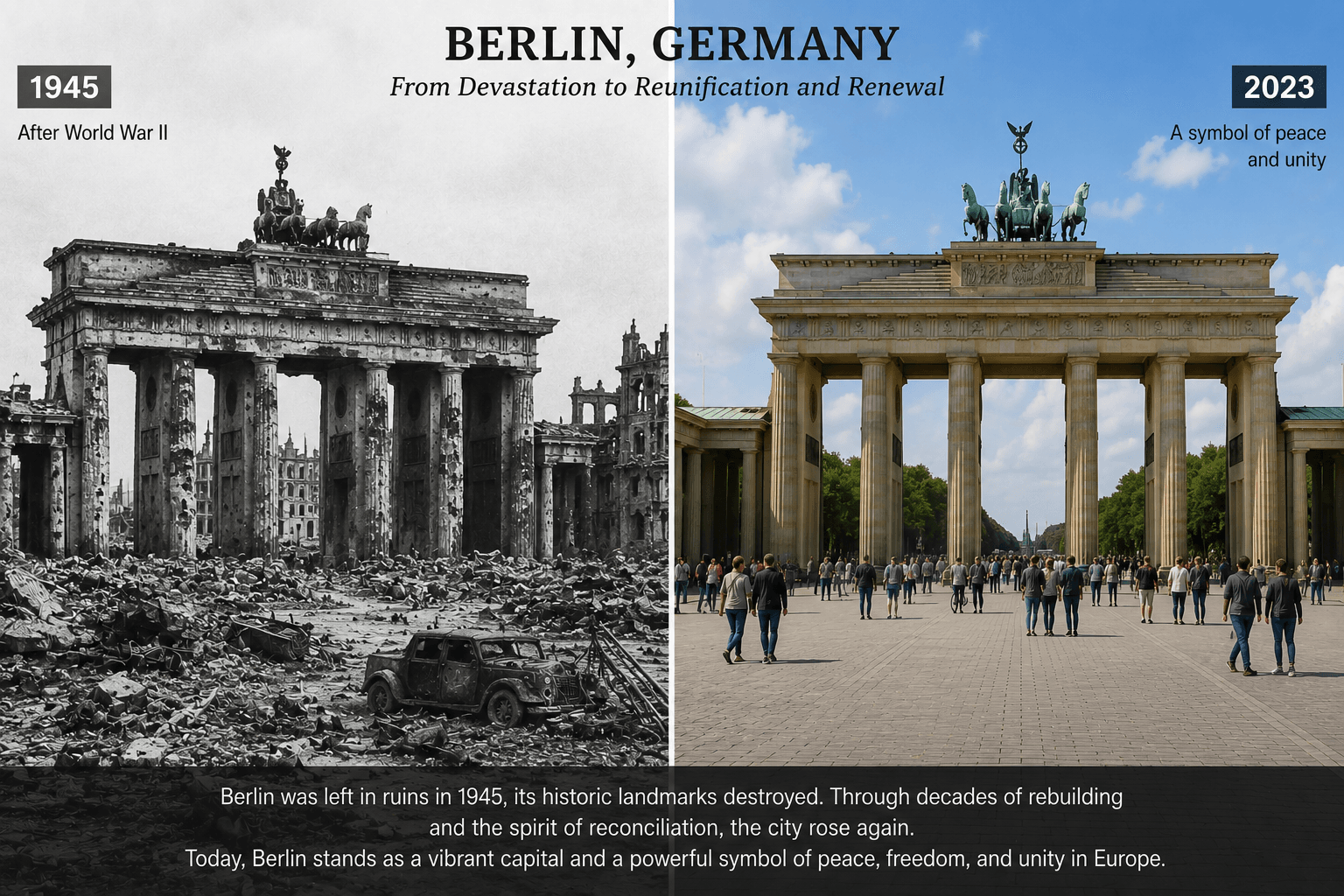
The most charged debates revolved around specific sites. The ruins of the Kaiser Wilhelm Memorial Church were deliberately left partially standing as an anti-war monument, a hollow shell alongside the modern chapel that was built beside it. The site of the former Gestapo headquarters was left as an open documentation centre, the Topography of Terror, where minimal intervention allowed the site to retain its evidence of the Third Reich. The Berlin Palace, razed to the ground by the GDR government after the war, was eventually rebuilt decades later as the Humboldt Forum, a decision that divided Berliners profoundly, with critics dubbing it "Prussian Disneyland" for what they saw as a sanitised reimagining of an imperialist past.
What this fragmented, contested, decades-long process produced was a city unlike any other in Europe: a mosaic of meticulously restored historic quarters, stark modernist housing blocks, deliberate ruins, and daring contemporary interventions. Museum Island, where careful restorations preserve centuries of history, sits alongside the Reichstag's glass dome, designed by Norman Foster, which metaphorically represents transparency and renewal while resting on historical foundations. In Berlin, reconstruction was never simply a technical act; it was always a statement about how a society chooses to reckon with its past.
Beirut:
Beirut had already endured decades of civil conflict when, on 4 August 2020, a massive explosion at the city's port, one of the largest non-nuclear blasts in history, tore through the historic neighbourhoods of Gemmayzeh, Mar Mikhael, and Karantina. The Sursock Palace, a magnificent 19th-century residence, suffered extensive structural damage; the nearby Sursock Museum lost much of its stained glass and interior detailing; historic residential buildings that had housed artists, academics, and cultural institutions were left uninhabitable. The explosion, in the words of one expert, did not merely damage buildings; it constituted an "erosion of collective memory and urban identity."
UNESCO's response was swift. The LiBeirut initiative, launched by Director-General Audrey Azoulay in the immediate aftermath of the explosion, mobilised international solidarity to protect Beirut's cultural fabric. As a first technical step, UNESCO partnered with the Directorate General of Antiquities of Lebanon and Iconem, a specialist organisation, to carry out large-scale 3D digital documentation of the affected historic areas, creating an irreplaceable archive that would serve as the basis for future restoration work. In the field of education alone, UNESCO mobilised $35 million to rehabilitate 280 educational institutions within 18 months of the explosion, benefiting 85,000 students.
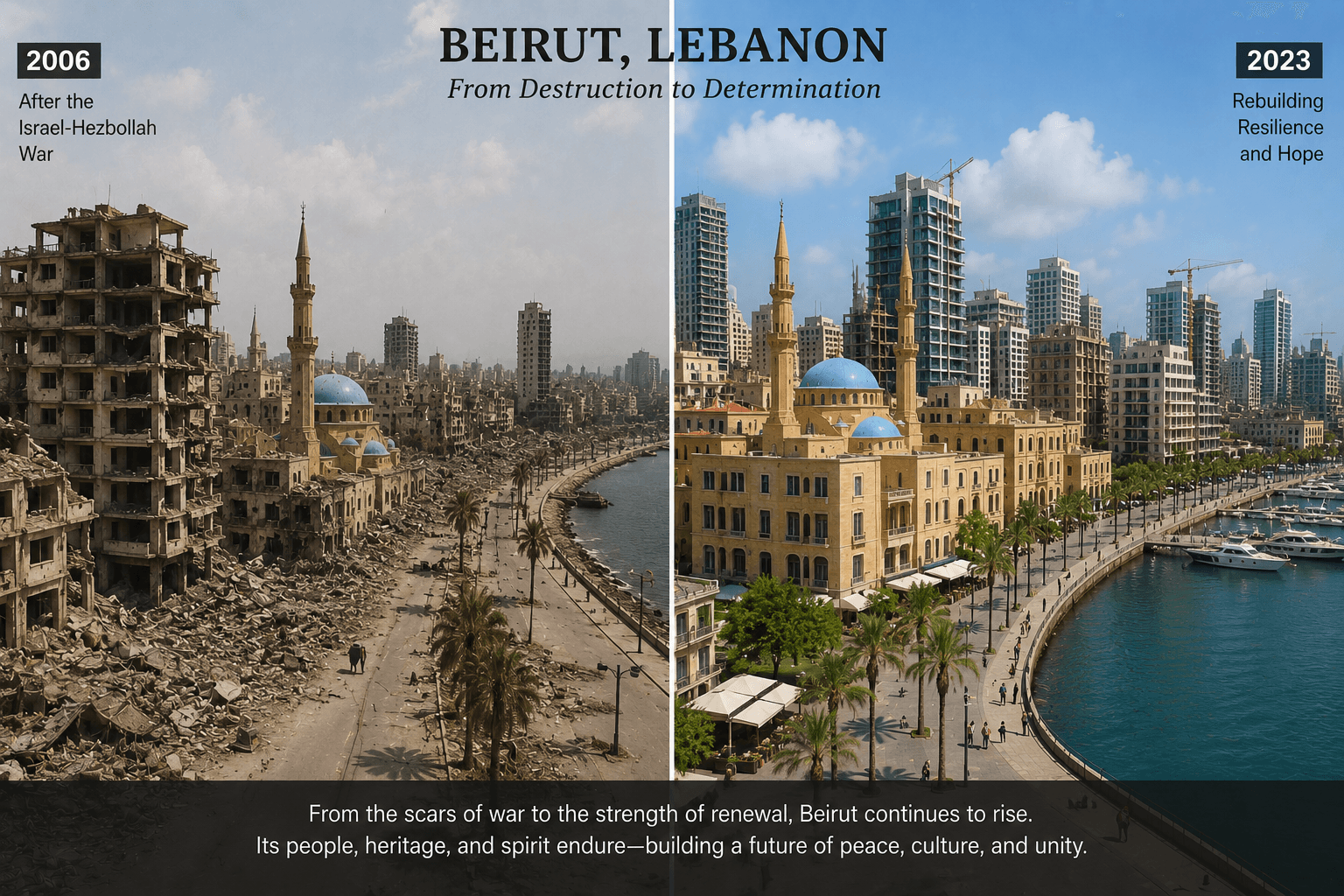
The LiBeirut initiative has since mobilised more than $45 million in total. Restoration and reconstruction programmes have been announced for the Mar Mikhael train station, an iconic structure of over 10,000 square metres that once connected three continents, which is set to be transformed by UNESCO and UN-Habitat into a cultural and public space scheduled to open in 2027. Beirut's Grand Theatre, which had been closed since 1990 and was further damaged in 2020, is also set for an ambitious restoration, with initial funding of $1 million from the UAE to stabilise the building and develop a cultural programme in consultation with the municipality and civil society.
What makes Beirut's case distinctive is the insistence of its reconstruction architects on a people-centred approach, one that integrates cultural heritage protection with socio-economic recovery, community participation, and urban planning. The recovery of Beirut is not merely a question of bricks and mortar; it is a question of whether the city's creative communities can be brought back, and whether the historic neighbourhoods that gave Beirut its particular vitality can be revived as living spaces rather than preserved as monuments.
Warsaw:
If any city represents the extreme outer edge of what heritage reconstruction can attempt, it is Warsaw. By the end of 1944, following the brutal suppression of the Warsaw Uprising, Nazi troops had systematically demolished over 85 per cent of the city's historic centre, not as a consequence of battle, but as a deliberate act of cultural annihilation. When the Red Army entered the deserted city in January 1945, what remained was, in the words of one account, "a plain littered with rubble and debris stretching over dozens of square kilometres."
The decision to rebuild Warsaw as the Polish capital was, from the outset, a political and cultural statement as much as a practical one. For the new communist government, rebuilding the capital represented a symbol of national survival and the victory over fascism. For the Polish people, it represented something deeper still: the reconstruction of the city was inseparable from the reconstruction of national identity itself. Nazism had specifically targeted the physical embodiment of Polish culture; rebuilding that culture was, therefore, an act of resistance.
The Warsaw Reconstruction Office, established in 1945, coordinated a meticulous process of research and rebuilding. Architects, historians, art historians, and conservators worked from pre-war conservation inventories, archival photographs, and, famously, from the 18th-century paintings of Bernardo Bellotto (Canaletto), whose detailed vedute of Warsaw's streets and buildings provided an extraordinarily precise visual record of the city as it had appeared before its destruction. The reconstruction of the Old Town was completed within ten years, a remarkable achievement, and the entire process, including the Royal Castle, was finalised in 1984.
In 1980, the Historic Centre of Warsaw was inscribed on the UNESCO World Heritage List, but as an exception. UNESCO's inscription explicitly celebrated not the antiquity of what stood there, but the act of reconstruction itself, describing it as "an outstanding example of a near-total reconstruction" and "a symbol of the nation's will to survive." Warsaw's Old Town became the first nominally "unauthentic" monument on the UNESCO list, and in doing so, it transformed the global conversation about authenticity in heritage. The Archive of the Warsaw Reconstruction Office was itself inscribed on UNESCO's Memory of the World Register in 2011, recognising the documentary record of the reconstruction as heritage in its own right.
Hangzhou:
Hangzhou's story of heritage loss and recovery unfolds across a longer timescale than most of the cities examined in this article. In 1856 and 1860, during the Taiping Rebellion, one of the deadliest civil wars in human history, Taiping forces occupied and heavily damaged Hangzhou, destroying much of the old city in the process. The famous temples, monasteries, and shrines around West Lake, which had for centuries made Hangzhou one of China's most celebrated cultural centres, suffered considerable losses.
The process of recovery began under the late Qing dynasty and continued into the Republic of China period, with successive phases of restoration of the city's cultural landscape. The catalyst for a more systematic approach was a plan titled "Building a New Market" in 1914, developed on the basis of earlier Qing-era proposals, which initiated a process of urban renewal that integrated West Lake into the city's modern urban form. City walls were removed, road networks were reconstructed, and the historic scenes of West Lake were gradually restored.
This long tradition of layered restoration was formally recognised when West Lake was inscribed as a UNESCO World Heritage Site in 2011. The inscription noted that the site "reflects the very specific cultural tradition of improving landscapes to create a series of pictures that reflect what was seen as a perfect fusion between people and nature," a tradition that had survived conquest, rebellion, occupation, and modernisation, and had been renewed in each generation. Today, the Ten Scenes of the West Lake, many of which had been damaged or lost during the Taiping period, stand restored, each one a living embodiment of the Chinese cultural tradition of landscape as art.
Technology and Innovation in Heritage Restoration
Across all of these case studies, one of the most significant developments of recent decades has been the integration of digital technology into the process of heritage preservation and restoration. The work of organisations such as Iconem in Beirut, producing precise 3D digital documentation of damaged historic areas, illustrates how photogrammetry and laser scanning now make it possible to capture the geometry of a building or an entire neighbourhood with millimetre-level accuracy, creating a digital archive that can guide reconstruction even when the physical fabric has been entirely destroyed.
In Mosul, the discovery of previously unknown 12th-century rooms beneath the Al-Nuri Mosque was made possible by the meticulous process of archaeological investigation that accompanied the reconstruction, an approach that transformed what might have been a straightforward rebuild into an act of discovery. Similarly, in Timbuktu, the consultation of old photographs and the testimony of local historians provided an analogue precursor to the digital methods now available, demonstrating that the fundamental principle, namely the rigorous documentation of what existed before, remains unchanged even as the tools evolve.
Drone surveys, satellite imagery, and artificial intelligence are increasingly being used to assess damage at scale, identifying which structures are at imminent risk of collapse and prioritising intervention. In conflict zones where it is dangerous for conservators to operate on the ground, remote sensing technologies allow a preliminary assessment to begin before the fighting has even ceased.
Funding Models
The financing of heritage reconstruction in post-conflict settings is invariably a complex, multi-actor endeavour. The cases examined in this article reveal several recurring patterns.
Multilateral partnerships are the norm rather than the exception. The Mostar Old Bridge was rebuilt through a partnership between UNESCO, the World Bank, the World Monuments Fund, the Aga Khan Trust for Culture, and bilateral contributions from Turkey, Italy, the Netherlands, and France. The Mosul programme combined UNESCO's technical leadership with a $50 million contribution from the UAE and support from the European Union. In Timbuktu, contributions came from Andorra, Bahrain, Croatia, and Mauritius, alongside the Malian government and the European Union.
Trust funds managed by international organisations, particularly the World Bank, provide a mechanism for pooling contributions from multiple donors and disbursing them through a single accountable framework. This reduces transaction costs, ensures coordination, and provides a degree of political insulation for the reconstruction process.
Community and government co-investment is increasingly recognised as essential not merely for financial reasons but for legitimacy. In Timbuktu, the involvement of local masons was a deliberate choice that generated local employment and ensured that the reconstruction was perceived as a community act rather than an externally imposed project. In Beirut, the insistence on community consultation in planning new uses for restored buildings reflects the same principle.
Restitution and reparation, whilst modest in financial terms, carries profound symbolic weight. The International Criminal Court's award of a symbolic one euro to the Government of Mali and UNESCO following Ahmad Al Mahdi's conviction for the destruction of Timbuktu's heritage was not intended to fund reconstruction, but it established the principle that the deliberate destruction of cultural heritage is a crime for which accountability can be demanded.
Economic Outcomes
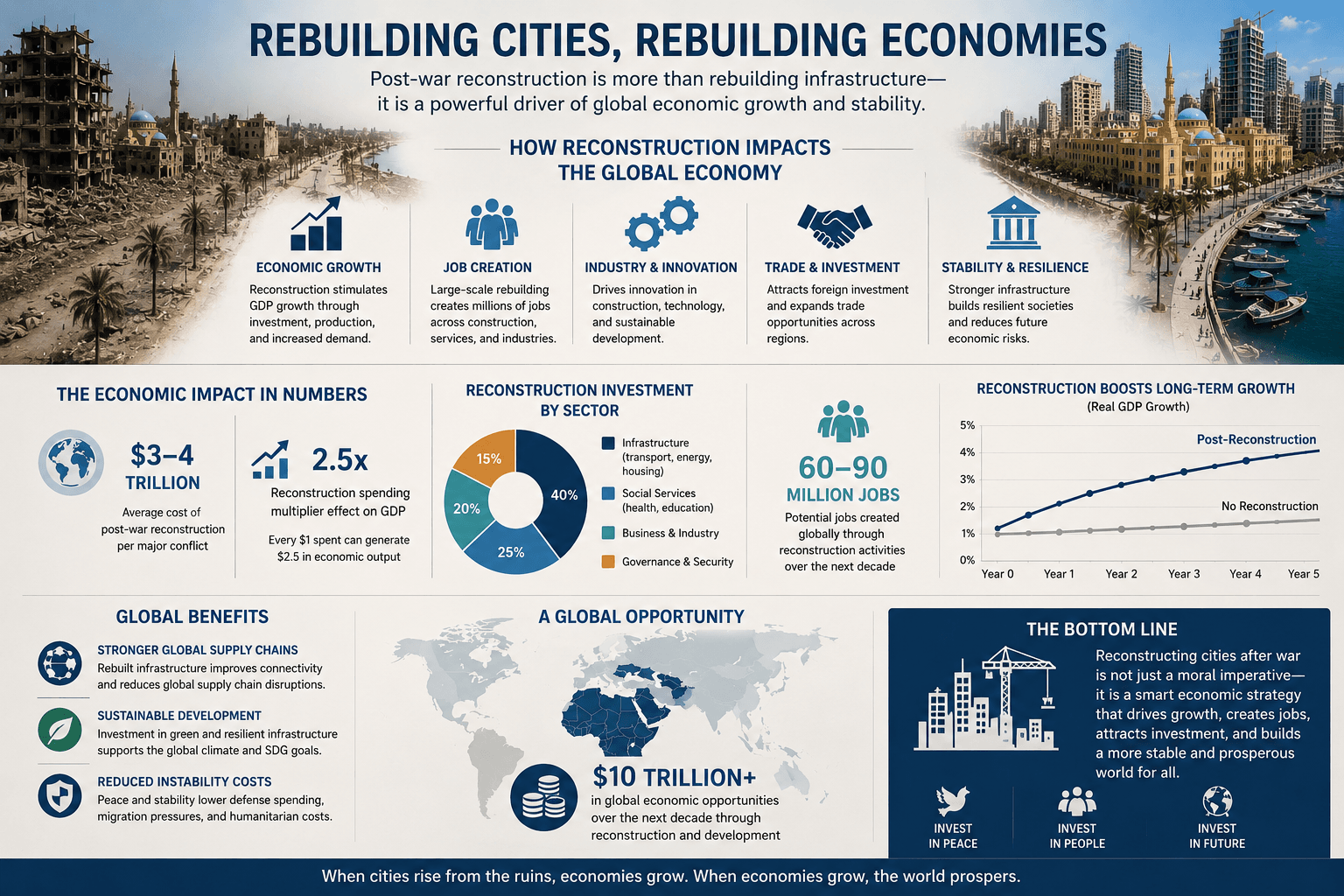
The economic case for heritage reconstruction is increasingly well documented. Tourism is the most visible beneficiary: the rebuilt Stari Most in Mostar rapidly became one of the most visited sites in the western Balkans, attracting hundreds of thousands of visitors annually and anchoring the recovery of the city's economy. In Timbuktu, even in a fragile security environment, the reconstruction of the mausoleums has supported the revival of the city's identity as a place of pilgrimage and historical significance.
Beyond tourism, heritage reconstruction generates employment during the construction phase, such as the 140 jobs created in Timbuktu or the thousand jobs promised for young Iraqi graduates from Mosul and Baghdad in the Al-Nuri reconstruction, and stimulates investment in the surrounding urban fabric. Historic buildings attract commercial and residential tenants; their restoration typically catalyses wider neighbourhood revitalisation.
There is also a broader economic case rooted in the concept of cultural capital. The destruction of heritage damages not merely the physical fabric of a place but its capacity to attract investment, talent, and visitor spending over the long term. Warsaw's Old Town, now a thriving centre of daily life, commerce, and tourism, is a testament to what the painstaking reconstruction of a historic urban environment can yield over decades.
Stakeholder Perspectives
Ukraine’s experience also demonstrates how digital transformation can become a tool of resilience during conflict. Launched in 2019, the country’s ambitious digitalisation programme centred around the Diia platform sought to transform Ukraine into a fully interoperable digital state by 2024. Under the leadership of the Ministry of Digital Transformation, headed by Mykhailo Fedorov, the initiative aimed to eliminate bureaucracy, place all public services online, and create what President Zelenskyy described as a “state in a smartphone.” By 2022, Ukraine became the first country where digital passports carried the same legal status as physical documents, while the Diia application reached over 18 million users, nearly half the country’s population.
According to Anastasia Bondar, Deputy Minister for Digital Development at the Ministry of Culture and Information Policy of Ukraine, the programme was deeply connected to Ukraine’s broader cultural identity and history of resilience. Speaking with Dinis Guarda, she explained that the country’s multicultural heritage and spirit of coexistence helped foster the adaptability and collaborative mindset necessary for large-scale technological transformation. “The main idea behind the digitalisation of Ukraine is to create the most convenient country in the world, to provide easy, fast, clear, and transparent communication between the government and the citizens of the country, wherever they are,” Anastasia said. The interoperability of these digital services became particularly important after the Russian invasion, allowing the government to maintain access to public services for millions of displaced Ukrainians living abroad.
Beyond public administration, the Diia ecosystem expanded into education, entrepreneurship, and economic development. The Diia.Digital Education platform trained more than 1.5 million Ukrainians in digital skills aligned with European standards, while Diia.Business supported small and medium-sized enterprises through consultations and training. The Diia.City framework also attracted hundreds of IT companies despite wartime conditions, illustrating how digital infrastructure can sustain innovation even amid instability. Anastasia described the programme as both a necessity and an opportunity, arguing that Ukraine’s experience demonstrates how nations under extreme pressure can still position themselves as leaders in technological innovation and governance.
Lessons for Other Cities
The experiences of Timbuktu, Mosul, Mostar, Berlin, Beirut, Warsaw, and Hangzhou, taken together, offer a body of knowledge that is increasingly being codified, notably in the Warsaw Recommendations on Recovery and Reconstruction of Cultural Heritage, adopted in 2018, which set out the principles that should guide post-conflict and post-disaster heritage reconstruction.
Several lessons stand out with particular clarity.
Documentation must begin before destruction, not after. The cities that have fared best in reconstruction, Warsaw, Timbuktu and Mostar, were those where detailed records existed: pre-war inventories, photographs, architectural surveys. The digitisation of these records and the creation of new 3D digital archives must be a priority in any city that faces a credible threat of conflict.
Authenticity is not a fixed standard but a conversation. Warsaw's Old Town demonstrated that a fully reconstructed historic environment could be recognised as heritage in its own right, if the reconstruction was sufficiently rigorous and the community's desire to reclaim its identity was sufficiently clear. The debate over authenticity should not be resolved by formula but through informed, inclusive dialogue involving the communities whose identity is at stake.
Local involvement is not optional. From the masons of Timbuktu to the architects of Warsaw's Reconstruction Office, the cases that have succeeded have been those that drew on local knowledge, skills, and ownership. Reconstruction imposed from the outside, without genuine community participation, risks producing physical results that do not serve the social purposes, namely identity, cohesion and memory, that made the heritage valuable in the first place.
Heritage reconstruction is inseparable from peacebuilding. The Old Bridge of Mostar was not merely an engineering project; it was a political act, a statement that the communities on either side of the Neretva intended to live together. The choice of which mausoleums to rebuild first in Timbuktu was a deliberate signal about national reconciliation. In every case, the restoration of heritage has been understood, by those who undertook it, as a contribution to the restoration of social fabric.
The threat to heritage in conflict is also a threat to justice. The conviction of Ahmad Al Mahdi by the International Criminal Court for the destruction of Timbuktu's cultural heritage marked a turning point in the legal protection of heritage. As UNESCO Director-General Audrey Azoulay has consistently argued, the deliberate targeting of cultural heritage is not merely vandalism; it is an attack on the identity and dignity of a people, and it must be treated as such under international law.
The cities and communities whose stories are told in this article did not merely rebuild buildings. They rebuilt, each in their own way and against extraordinary odds, the possibility of a shared future. That, perhaps, is the deepest lesson that heritage reconstruction has to offer: that the act of preserving or restoring what a society has made together is, ultimately, an act of faith in the society itself.


