
resources
Creating Character-Driven Stories from Text Using AI
30 Aug 2026

A story lives or dies on character. Plot can be simple, setting can be minimal, but if the viewer doesn't believe in the person on screen and care what happens to them, nothing else matters.
This is where text to video generation becomes genuinely powerful for character-driven narratives — a writer or storyteller already fluent in building character can translate that depth directly into generated footage, allowing a fully realized character to exist on screen rather than just on a page.
Dreamina's Seedance 2.5 model was built specifically to handle the nuance that character-driven stories demand: micro-expressions, gesture, the thousand small tells that make a character feel real rather than performed.
Why characters matter more than everything else combined
A perfect plot with a hollow character fails. A minimal plot with a compelling character succeeds. This has been true in storytelling forever, yet it's often treated as a secondary concern in production.
- A cinematographer can make a beautiful image
- An editor can make compelling pacing
- A composer can create mood
But none of those things matter if a viewer doesn't connect with the person at the center of the story. Character connection happens through small things. A glance. A pause.
- The way someone holds their shoulders when they're uncertain
- The specific rhythm of how they speak when they're lying
These micro-behaviors are what make a character feel like a real person rather than an actor playing a role. Traditional filming requires finding an actor who naturally carries these behaviors, or coaching an actor extensively to create them convincingly. Generating character-driven content from text makes these details explicit rather than accidental.
Building characters that feel like people, not performances
The difference between a character that feels real and one that feels performed is often invisible but always felt. Real people have hesitations. They contradict themselves. They have physical quirks that don't serve a narrative purpose. Performances are often too clean, too purposeful, every gesture serving the story.
Generated character-driven content can capture this messiness because it doesn't require traditional acting performance. A prompt can describe a character's internal experience — uncertainty, doubt, joy, sorrow — and the generation will render that as physicality and expression rather than as "acting." This often feels more authentic than even skilled acting because it avoids the performance quality that acting inherently carries.

What makes Seedance 2.5 built for character-driven narratives
Seedance 2.5 was designed specifically to understand and execute the subtle behavioral and emotional details that separate a compelling character from a wooden one.
Facial expression that conveys genuine emotion
The model renders micro-expressions with enough fidelity that emotional states become readable from small changes in the face. A character can communicate confusion, dawning realization, resistance, acceptance — all through subtle shifts in expression rather than broad, obvious acting. This specificity is what makes a character feel real rather than performed, since real emotion often lives in small, barely-visible moments.
Physical behavior that feels unselfconscious
Motion transfer consistency has improved to over 90%, which matters enormously for character work. A character's movement, posture, and physical habits can be rendered with authentic unselfconsciousness, avoiding the quality of "acting" that comes from overly controlled, purposeful movement. Characters can shift their weight while listening, fidget with tension, move with the kind of physical authenticity that makes them feel real.
Dialogue delivery that carries emotional subtext
The model understands dialogue not just as words but as performance, capable of rendering how emotion colors speech. A character can deliver a line while seeming uncertain of it. They can say something friendly with tension underneath. They can speak quickly because they're nervous or slowly because they're processing. This kind of subtext is what makes dialogue feel genuine rather than just functional.
Consistency in character across scenes and contexts
Cumulative errors that used to cause character drift across a sequence are largely resolved, which means a character stays recognizable and consistent even as they move through different emotional states and situations. A viewer can track who someone is across their arc without being distracted by visual inconsistencies in their appearance or energy.
Multimodal input that honors character complexity
The model accepts up to 50 pieces of multimodal material at once, meaning a full character description — physical reference, dialogue samples, emotional notes, backstory details — can all inform a single generation, creating characters with genuine depth rather than surface-level traits.
From character description to character on screen
Step 1: Describe the character as if writing them into existence
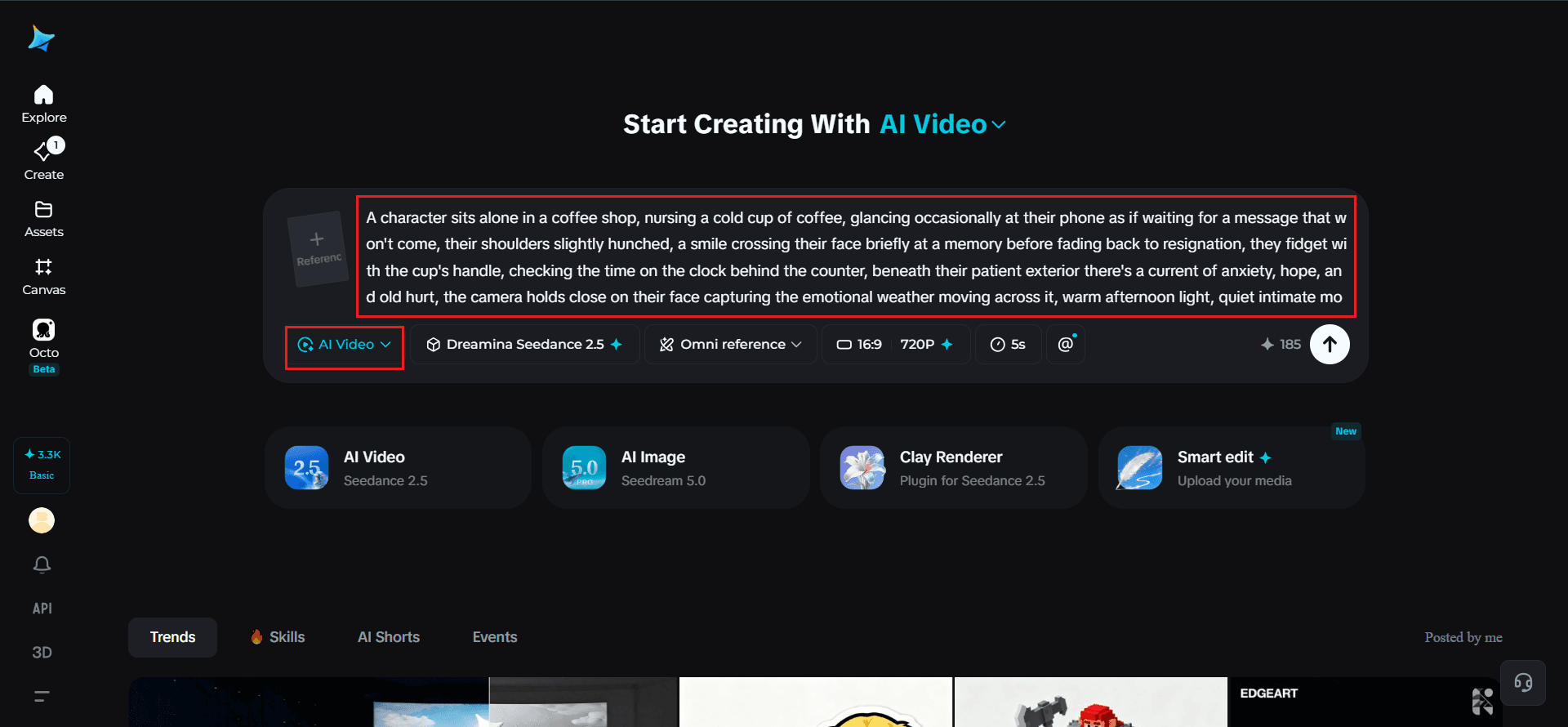
Visit Dreamina, sign in, and head to the "AI Video" section. Before anything else, write out a full character description — who they are, what they want, what they're afraid of, how they move through the world. Then click "Add reference image" if you have a photo or visual reference that captures their essence. Write a detailed prompt that shows the character in a moment revealing something true about them.
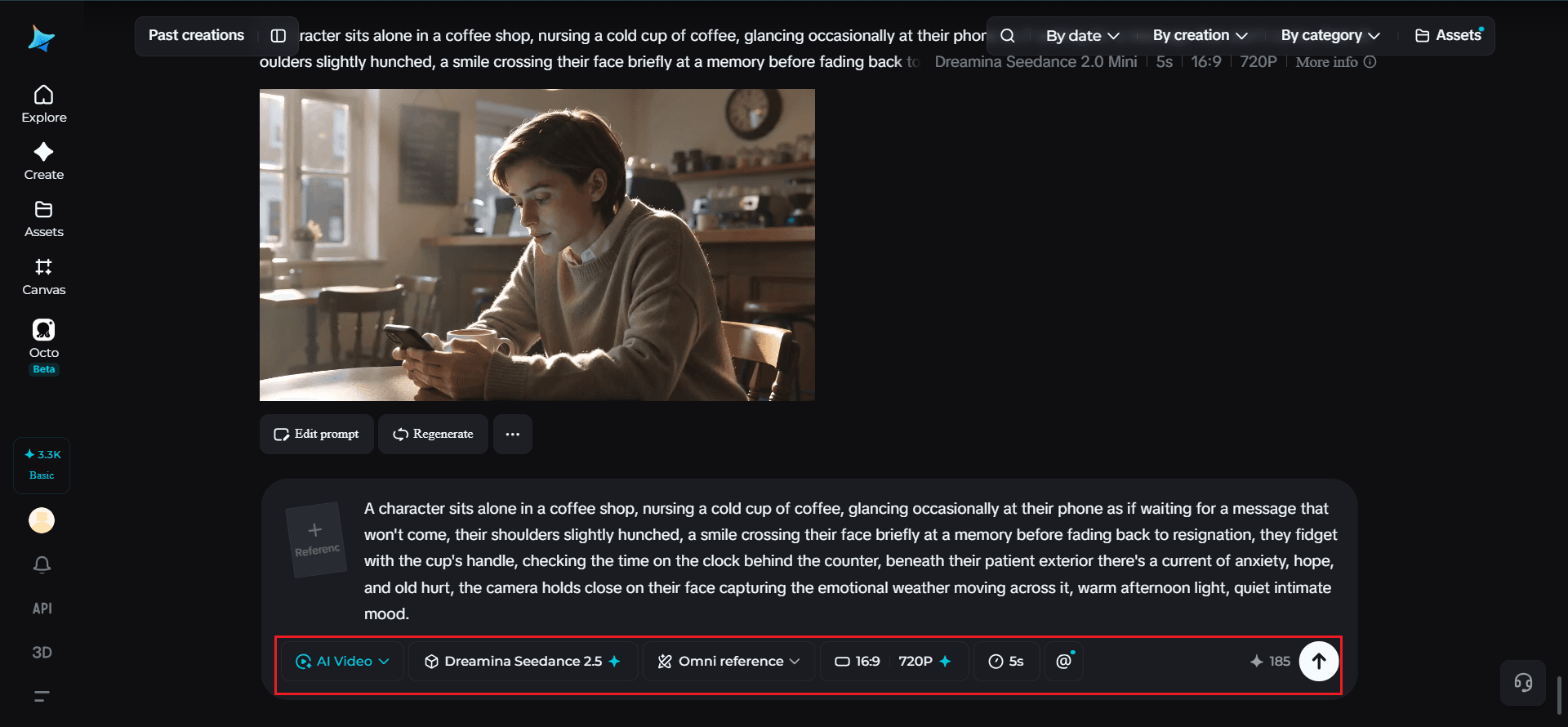
For instance: A character sits alone in a coffee shop, nursing a cold cup of coffee, glancing occasionally at their phone as if waiting for a message that won't come, their shoulders slightly hunched, a smile crossing their face briefly at a memory before fading back to resignation, they fidget with the cup's handle, checking the time on the clock behind the counter, beneath their patient exterior there's a current of anxiety, hope, and old hurt, the camera holds close on their face capturing the emotional weather moving across it, warm afternoon light, quiet intimate mood.
Step 2: Generate the character with Seedance 2.5
With your character fully described in the prompt, select the Seedance 2.5 model for generation. Choose your video length — 30 seconds to allow the character's emotional complexity to reveal itself. Pick an aspect ratio suited to where it will be shared — 16:9 for character studies or short films, 9:16 for social platforms. Click Dreamina's generation icon and let it render your character into physical, emotional existence.
Step 3: Review the character's authenticity and refine
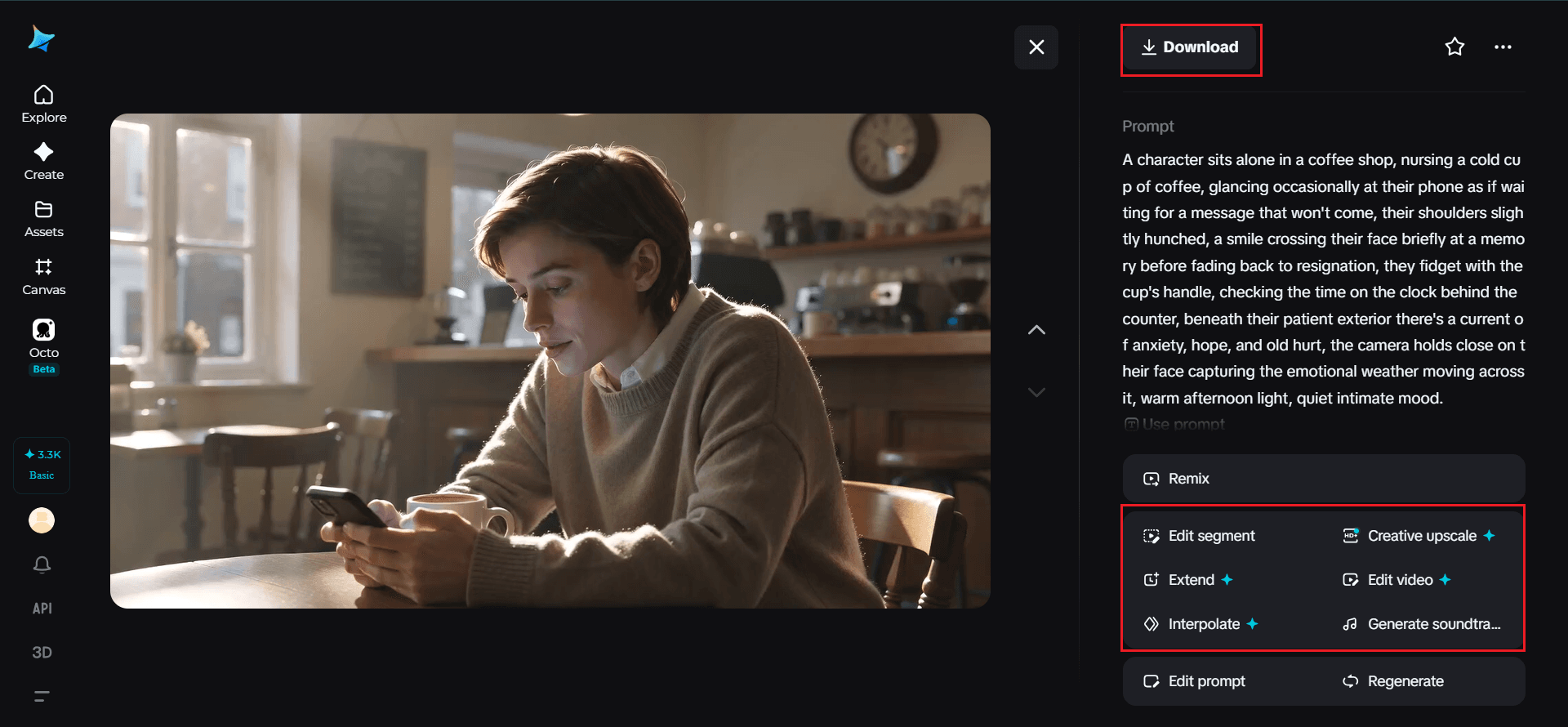
Use Dreamina's AI editing tools to ensure the character feels genuine. Upscale sharpens facial details where emotion is readable, while Generate Soundtrack adds ambient audio that supports the character's internal state. Before finalizing, ask whether this character feels real, whether their emotional complexity is apparent, whether a viewer would believe in them. Often the first generation is perfect; sometimes a small refinement in a specific moment captures more authenticity. Once it feels true, export and share it.
Writing characters for generated performance
Character-driven prompts need to describe internal state as much as external appearance. Rather than just "a woman in her thirties," a prompt might be "a woman in her thirties who carries herself like she's always slightly braced for disappointment, her voice careful when she speaks, movements controlled but with underlying tension." That description creates a character with complexity and recognizable depth.
The distinction between telling a character and showing them
A common mistake is describing a character's traits rather than showing them through behavior. Instead of "he's insecure," a better approach is describing the behaviors that reveal insecurity: how he downplays compliments, seeks reassurance, hesitates before speaking. The generation will execute those behaviors, and insecurity will be apparent without ever being stated.
When a character becomes unforgettable
The most memorable stories aren't memorable because of their plots — they're memorable because of their characters. A viewer remembers how a character made them feel, what they learned from watching someone navigate their world, the small moments that revealed who someone actually was.
With Dreamina and its Seedance 2.5 model, a character conceived in text can move directly to screen with all that complexity intact, creating the kind of genuine character connection that transforms a story from something watched into something remembered.


