
Trading Strategies & Tech
Day Trading for Beginners Reddit: Your Ultimate Guide to Getting Started
28 Mar 2026

So, you’re thinking about day trading and heard Reddit is the place to be? It’s true, online communities can be a goldmine for info, but they can also be a bit of a wild west. This guide is here to help you sort through the noise. We’ll cover how to use Reddit for day trading for beginners, what you actually need to get started, and how to avoid common pitfalls. Let’s get you on the right track.
Key Takeaways
- Start by learning the absolute basics of how the stock market works before you even think about trading.
- Use Reddit to find useful discussions, but always double-check any advice you get from strangers online.
- Begin with a simple trading plan and stick to it, focusing on one strategy that makes sense for you.
- Always know how much money you’re willing to lose and set clear limits to protect your capital.
- Practice with a demo account until you’re comfortable before risking real money.
Understanding the Reddit Day Trading Landscape
So, you’re thinking about diving into day trading and you’ve heard Reddit is the place to be? It’s true, online communities like Reddit can be a goldmine of information, but they can also be a bit of a wild west. It’s like walking into a bustling marketplace – there’s a lot going on, and you need to know what to look for.
Navigating Online Communities for Insights
When you first land on a day trading subreddit, it can feel overwhelming. You’ll see a lot of chatter about stocks, charts, and strategies. The key is to start by just observing. Pay attention to what people are talking about most. Are there specific stocks that keep popping up? What’s the general feeling about them – are people excited or worried? This initial observation helps you get a feel for the community’s pulse.
- Identify recurring themes: What trading setups or strategies are discussed most often?
- Note the sentiment: Are discussions generally optimistic, pessimistic, or neutral about certain assets?
- Look for educational content: Some users share helpful guides or explain complex topics.
Identifying Trends and Sentiment
Reddit can be a pretty good place to gauge market sentiment. If a particular stock is getting a ton of buzz, it might be worth looking into. However, remember that just because everyone’s talking about something doesn’t mean it’s a good investment. It could just be hype. You’ll want to see if this online chatter aligns with actual market movements or news.
Be aware that online discussions can sometimes create a feedback loop, where excitement about a stock drives its price up, which then leads to more discussion, and so on. This doesn’t always reflect the underlying value of the company.
Verifying Information and Avoiding Scams
This is probably the most important part. Not everything you read on Reddit is accurate, and unfortunately, there are people out there looking to mislead others. You’ll see posts promising guaranteed profits or pushing specific stocks. Always, always, always do your own research. Cross-reference anything you find on Reddit with reliable financial news sites, official company reports, or reputable trading platforms. If someone is promising unrealistic returns or pressuring you to invest quickly, that’s a huge red flag. Treat Reddit as a starting point for ideas, not as a definitive source of truth.
Essential Day Trading Strategies for Newcomers

Alright, so you’re looking to jump into day trading, and maybe you’ve seen a lot of different ideas floating around. It can get pretty confusing fast. The truth is, you don’t need to know a million things to get started. What you really need is a solid plan and the discipline to stick to it. Trying to do everything at once is a recipe for disaster, trust me. Instead, let’s talk about focusing your energy.
Mastering a Single High-Quality Trading Setup
Think of it like learning a musical instrument. You wouldn’t try to play the guitar, piano, and drums all at the same time from day one, right? You pick one, you practice it until you’re good, and then maybe you add another. Day trading is similar. The biggest mistake beginners make is chasing every shiny new strategy they hear about. It’s way more effective to pick one specific way of trading and get really, really good at it.
This could be spotting a stock that’s breaking out of a tight range with a lot of buying pressure, or maybe it’s catching a trend just as it’s starting to reverse. Whatever it is, you need to find a setup that makes sense to you and that you can execute consistently. Why focus on just one? Because it helps you build real skill, makes your trading more predictable, and cuts down on those impulsive, emotional decisions that can cost you money.
Understanding Different Trading Approaches
Even within that single setup you’re mastering, there are different ways traders approach the market. Some traders are scalpers, trying to grab tiny profits from many trades throughout the day. Others prefer momentum trading, jumping on stocks that are moving fast. Then there are those who look for reversals, trying to catch a stock right as it changes direction.
Here’s a quick look at a few common styles:
- Scalping: Aiming for very small profits on many trades, often lasting only seconds or minutes. Requires quick decision-making and low transaction costs.
- Momentum Trading: Following the trend, buying stocks that are already moving strongly upwards and selling when the momentum fades.
- Breakout Trading: Entering a trade when a stock price moves beyond a defined resistance or support level, expecting the move to continue.
- Reversal Trading: Identifying potential turning points in a stock’s price, aiming to profit from the shift in direction.
It’s important to understand these different styles because they require different types of analysis and risk management. Your chosen setup will likely fit into one of these broader categories.
Starting Small with Fractional Shares
Okay, so you’ve picked a strategy and you’re ready to practice. But putting real money on the line can be nerve-wracking, especially when you’re just starting. This is where fractional shares come in handy. Many brokers now let you buy a fraction of a share, meaning you don’t need hundreds or thousands of dollars to trade a single stock.
Let’s say you want to trade Apple (AAPL), and one share costs $170. With fractional shares, you could decide to invest just $10 or $20. This lets you get a feel for executing trades, managing your position, and dealing with the ups and downs of the market without risking a large chunk of your capital. It’s a smart way to build confidence and refine your strategy before you start trading with bigger amounts.
The key here is to treat every trade, even with small amounts, as if it were a significant one. This builds good habits for when you do have more capital at risk. Don’t get sloppy just because the dollar amount is small.
Building Your Day Trading Foundation
Alright, so you’ve dipped your toes into the Reddit day trading scene and maybe even figured out a basic strategy. That’s cool, but before you go throwing money around, we need to build a solid base. Think of it like building a house – you wouldn’t start putting up walls without a strong foundation, right? Same goes for trading. We’re talking about the bedrock stuff here, the concepts and plans that keep you from making rookie mistakes.
Defining Key Investment Concepts
Look, trading isn’t just about picking stocks that sound cool. There are some core ideas you just gotta get your head around. It’s not rocket science, but ignoring them is like trying to drive without knowing what the gas pedal does.
- Risk: This is basically the chance you might lose money on a trade. Every trade has risk, and knowing how much you’re willing to lose is super important.
- Reward: This is the potential profit you could make. You want the potential reward to be worth the risk you’re taking.
- Volatility: This just means how much the price of something tends to jump around. High volatility can mean big moves, both up and down, fast.
- Liquidity: This is about how easily you can buy or sell something without messing up the price. Stocks with high liquidity are easier to trade in and out of.
Understanding these basic terms isn’t just about sounding smart; it’s about making informed decisions. It’s the difference between guessing and actually having a plan.
Setting Realistic Investment Goals
So, what do you actually want to get out of this? Don’t just say "get rich quick." That’s a recipe for disappointment. Think about what’s achievable and what fits your life.
- Short-Term Goals: Maybe it’s making a certain amount of profit per week, or successfully executing a specific trading strategy X number of times without blowing up your account.
- Mid-Term Goals: This could be consistently growing your trading capital by a small percentage each month, or expanding your trading knowledge into a new market.
- Long-Term Goals: Perhaps it’s eventually replacing a portion of your income with trading profits, or building a substantial trading portfolio over several years.
It’s really important to write these down. Seeing them on paper (or screen) makes them feel more real and gives you something to aim for. Plus, it helps you track if you’re actually moving in the right direction.
Developing a Trading Strategy and Playbook
This is where you put all the pieces together. A trading strategy is your overall plan for how you’ll trade, and a playbook is like the detailed instruction manual for that strategy. It’s not just a vague idea; it’s specific.
Your strategy should cover:
- What you’ll trade: Stocks, options, futures? Specific sectors?
- When you’ll trade: Certain times of day? Based on specific market conditions?
- How you’ll enter trades: What signals or patterns tell you it’s time to buy or sell?
- How you’ll exit trades: When do you take profits? When do you cut your losses?
Your playbook should then detail your chosen trading setup. For example, if you’re focusing on a breakout strategy, your playbook might look something like this:
| Setup Component | Details |
|---|---|
| Entry Trigger | Stock breaks above resistance on high volume (e.g., 2x average volume). |
| Confirmation | RSI above 50, MACD showing upward momentum. |
| Stop Loss | Place below the breakout level or a recent swing low. |
| Profit Target | Aim for a 2:1 risk/reward ratio, or a specific resistance level. |
| Position Sizing | Risk no more than 1% of total trading capital per trade. |
Having this detailed playbook means you’re not making decisions on the fly based on gut feelings. You’re following a tested plan, which is way more likely to lead to consistent results. It’s your roadmap to staying disciplined.
Practical Steps to Begin Day Trading
Alright, so you’re ready to jump into the fast-paced world of day trading. It sounds exciting, and it can be, but you can’t just wing it. There are some concrete steps you need to take before you even think about placing your first trade. It’s not like picking up a new hobby; this is about managing money, and that requires a bit more structure.
What You Need to Start Day Trading
First off, you’ll need a few things. It’s not a huge list, but each item is important. Think of it as your day trading starter pack.
- A reliable internet connection: This is non-negotiable. You need fast, stable internet to get real-time market data and execute trades quickly. Lag can cost you money.
- A computer or device: Again, speed and reliability matter. You’ll be staring at charts and data, so a decent screen and processing power help.
- Capital to trade: This is where things get serious. You need money you can afford to lose. Day trading isn’t a get-rich-quick scheme, and you absolutely should not trade with money you need for rent or bills. The Pattern Day Trader (PDT) rule in the US requires a minimum of $25,000 in your account to day trade stocks, though some brokers offer ways around this for other markets or with specific account types.
- A brokerage account: This is your gateway to the markets. You’ll need to choose a broker that fits your needs. Choosing the right brokerage is one of the most important decisions you’ll make as a new trader.
Opening a Day Trading Account
Opening an account is usually pretty straightforward. Most online brokers have made the process quite simple. You’ll typically need to provide some personal information, like your name, address, and social security number. They’ll also ask about your trading experience and financial situation to gauge your risk tolerance. Once you fill out the application and it’s approved, you’re ready to fund the account. This whole process can often be done in about 15 minutes, so it’s not a huge hurdle to get started with day trading.
Practicing with Demo Accounts
Before you put real money on the line, you absolutely must practice. Most brokers offer what’s called a demo account, or paper trading account. This is like a simulator. You get virtual money to trade with in real market conditions. It’s the perfect place to test out strategies, get a feel for the platform, and make mistakes without any financial consequences. Seriously, don’t skip this step. It’s where you build confidence and learn what works and what doesn’t.
Treat your demo account like it’s real money. If you’re reckless with virtual cash, you’ll likely be reckless with actual funds. Discipline starts here.
Think of it this way: you wouldn’t try to run a marathon without training, right? Day trading is similar. You need to train your brain and your trading muscles. Use the demo account to get comfortable with order types, understand how charts move, and see how your chosen strategies play out over time. It’s your training ground, so use it wisely.
Managing Risk and Emotional Discipline
The Importance of Risk Management
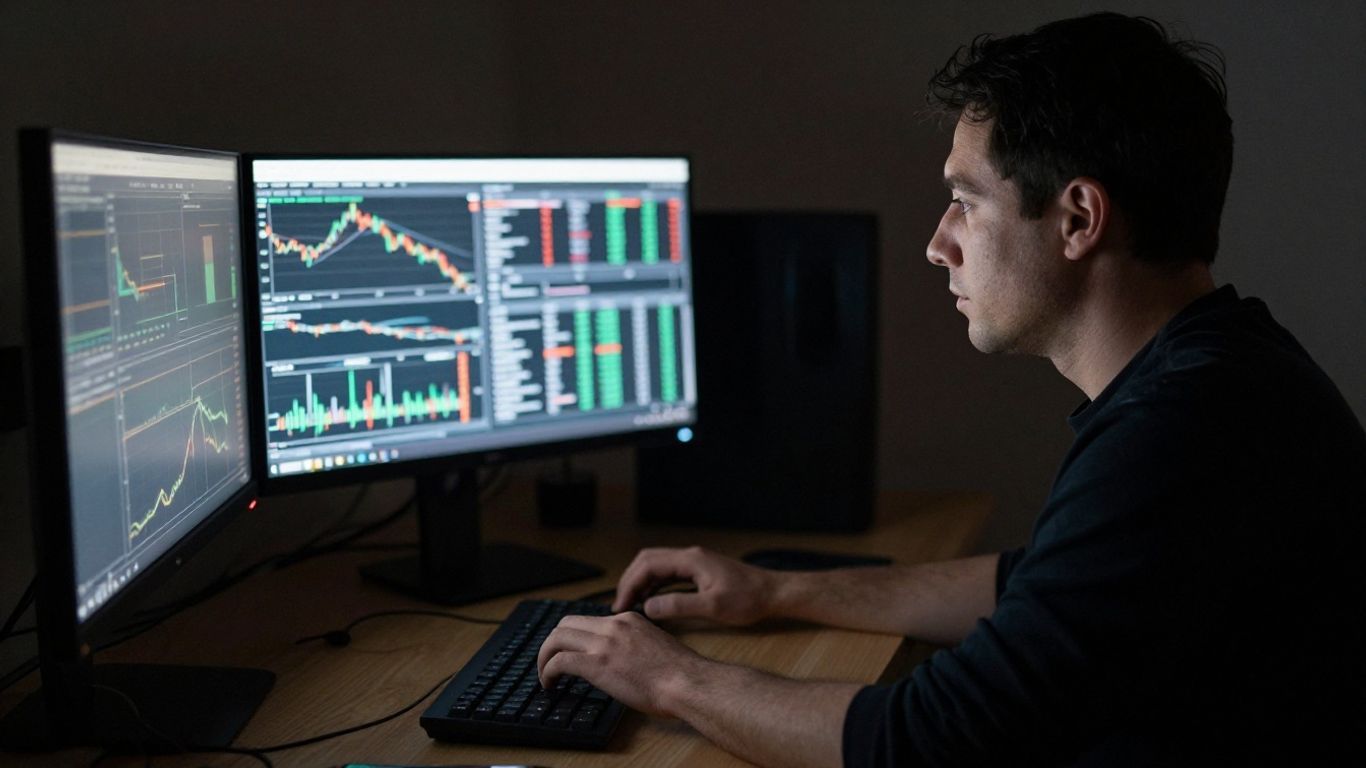
Look, day trading can feel like a rollercoaster, and not always the fun kind. You’re going to have winning days, and you’re definitely going to have losing days. The trick isn’t to avoid losses altogether – that’s pretty much impossible – but to make sure those losses don’t sink your whole ship. Smart risk management is your life raft in the often-stormy seas of the market. It’s about having a plan so that one bad trade doesn’t turn into a string of bad decisions fueled by panic or frustration. Think of it like wearing a seatbelt; you hope you never need it, but you’re really glad it’s there if something goes wrong.
Maintaining Emotional Control During Trades
This is where things get really personal. Your emotions – fear, greed, excitement, even boredom – can be your worst enemy. When a trade is going well, it’s tempting to get greedy and hold on too long, hoping for even bigger gains. Then, when a trade starts to dip, fear can kick in, making you sell too early and lock in a small loss when it might have recovered. It’s a constant battle to keep a level head. Sticking to your pre-determined plan, even when your gut is screaming at you to do something else, is key. It takes practice, and honestly, a lot of self-awareness.
Developing a Trading Strategy and Playbook
So, how do you actually put this into practice? It starts with a solid plan, often called a trading playbook. This isn’t just a vague idea; it’s a set of rules you follow. Here are some common elements:
- Stop-Loss Orders: These are non-negotiable. Decide beforehand at what price you’ll sell a stock to cut your losses. If you buy a stock at $10 and set a stop-loss at $9, you’re automatically out if it hits $9, limiting your loss to $1 per share. It’s a safety net.
- Position Sizing: How much money do you put into a single trade? A good rule is to never risk more than 1-2% of your total trading capital on any one trade. If you have $10,000, you might only risk $100-$200 on a single setup. This prevents one bad trade from wiping out a significant chunk of your account.
- Risk-Reward Ratio: Aim for trades where your potential profit is significantly larger than your potential loss. A common target is a 2:1 or 3:1 ratio, meaning you aim to make $2 or $3 for every $1 you risk.
It’s easy to get caught up in the excitement of potential profits or the sting of losses. But successful trading isn’t about hitting home runs every time; it’s about consistently making smart decisions, managing the downside, and letting the probabilities work in your favor over the long haul. Your playbook is your guide to staying disciplined, no matter what the market throws at you.
Leveraging Reddit for Continuous Learning
So, you’ve got the basics down and maybe even tried a few trades. That’s great! But the learning doesn’t stop there, not by a long shot. The world of day trading moves fast, and staying sharp means you need to keep soaking up new information. This is where Reddit can actually be a pretty useful tool, if you know how to use it right.
Finding Reputable Subreddits
First things first, you need to find the right corners of Reddit. Not all trading communities are created equal. Some are full of solid advice and experienced traders sharing their insights, while others… well, not so much. You’ll want to look for subreddits that focus on day trading specifically, or perhaps broader investing communities that have active day trading discussions. Some popular ones might be a good starting point, but always check the vibe and the quality of the posts. Look for communities that encourage discussion and analysis, rather than just hype.
- r/Daytrading: Often a good place to start for direct day trading discussions.
- r/stocks: While broader, it frequently has relevant news and analysis.
- r/trading: Another general forum that can offer diverse perspectives.
Engaging with the Community
Don’t just lurk! Once you find a few subreddits that feel right, start participating. Ask questions – seriously, no question is too basic when you’re starting out. You might be surprised how many people are happy to share their experiences and knowledge. You can also share your own observations, but be humble about it. The goal is to learn from others and contribute to the collective knowledge. It’s like joining a study group; the more you put in, the more you get out. You can even find book recommendations, like those for learning stock swing trading here.
Utilizing Reddit for Research and Validation
Reddit can be a fantastic place to get a feel for market sentiment or to hear about potential opportunities. People often discuss stocks they’re watching, news that might affect prices, or even new trading strategies. However, and this is a big one, never take what you read on Reddit as gospel. Always, always, always do your own research. Use Reddit as a starting point for your own investigation. If you see a lot of buzz about a particular stock, dig deeper. Check financial news sites, company reports, and other reliable sources before making any decisions. It’s easy to get caught up in the excitement, but remember that not everyone on the internet has your best interests at heart.
It’s tempting to follow the crowd, especially when you see others talking about big wins. But trading is personal. What works for one person might not work for you, and chasing someone else’s success can lead you down a risky path. Always filter what you read through your own strategy and risk tolerance.
Key Takeaways for Aspiring Day Traders
Alright, so you’ve been diving into the world of day trading, maybe spending some time on Reddit, and you’re ready to make some moves. It’s exciting, for sure, but let’s get real about what actually matters.
Start with the Basics and Educate Yourself
Look, nobody becomes a pro overnight. You wouldn’t try to build a house without knowing how to use a hammer, right? Trading is kind of the same. Before you even think about putting real money on the line, you need to get a solid grip on the fundamentals. This means understanding what you’re trading, how the market moves, and what all those charts and numbers actually mean. Think of it like learning a new language; you start with the alphabet and simple words before you’re writing novels. There are tons of resources out there, from articles to courses, that can help you build this foundation. Don’t skip this part.
Use Reddit Wisely for Information
Reddit can be a goldmine, but it can also be a minefield. You’ll find plenty of people sharing their experiences and insights, which is great. But you’ll also find a lot of noise, bad advice, and outright scams. The trick is to learn how to sift through it all. Look for subreddits with active moderation and a focus on education rather than just hype. Pay attention to discussions where people are explaining their reasoning, not just shouting about a stock going up. Always, always double-check what you read. What works for one person might be a disaster for you, and not everyone on the internet is looking out for your best interests. It’s a tool, and like any tool, you need to know how to use it properly.
Prioritize Risk Management and Discipline
This is probably the most important part, and it’s where a lot of beginners stumble. Day trading is risky business. You can lose money, and you can lose it fast if you’re not careful. So, you absolutely have to have a plan for managing that risk. That means deciding beforehand how much you’re willing to lose on any single trade and sticking to it. No exceptions. It also means keeping your emotions in check. Fear and greed are the enemies of any trader. You can’t let a losing streak make you reckless, and you can’t let a winning streak make you overconfident. Having a clear strategy and a strict set of rules, and then actually following them, is what separates the traders who stick around from those who burn out quickly. It’s about treating this like a business, not a lottery ticket. Remember, day trading requires serious commitment.
Here’s a quick rundown of what to keep in mind:
- Know Your Setup: Don’t try to trade everything. Pick one or two trading strategies that make sense for you and master them. Consistency is key.
- Start Small: Use demo accounts first. When you go live, start with small amounts of money you can afford to lose. Fractional shares can also help.
- Have a Plan: Write down your trading strategy, your entry and exit points, and your risk management rules. Then, follow your plan.
- Stay Calm: Emotions will mess with your trading. Learn to recognize when you’re feeling fearful or greedy and step away if needed.
- Keep Learning: The market is always changing. Stay curious, keep reading, and adapt your strategies as needed.
Wrapping It Up
So, you’ve made it through our guide on getting started with day trading, especially with a nod to what’s happening on Reddit. Remember, this isn’t a get-rich-quick scheme. It takes time, patience, and a whole lot of learning. Start small, focus on one strategy, and always, always manage your risk. Don’t be afraid to use demo accounts and learn from others, but be smart about who you listen to – not every tip on Reddit is gold. Keep practicing, stay disciplined, and you’ll be on your way to building your own trading journey. Good luck out there!
Frequently Asked Questions
What exactly is day trading?
Day trading is like buying and selling things, such as stocks, all within the same day. The goal is to make a quick profit from small price changes. Think of it as a fast-paced game where you try to buy low and sell high before the day ends.
Is day trading a good idea for someone just starting out?
Day trading can be exciting, but it’s also risky, especially for beginners. It takes a lot of learning, practice, and discipline. It’s often recommended to start with simpler investing methods or practice a lot with fake money before using real money.
How much money do I need to start day trading?
You don’t necessarily need a huge amount to start, but having enough to cover potential losses is important. Some brokers let you start with a few hundred dollars, but to be a ‘pattern day trader’ (making many trades quickly), you generally need at least $25,000 in your account.
What are some basic strategies for beginner day traders?
A good starting point is to focus on mastering just one simple trading method. This could be something like trying to catch a stock’s upward trend or a quick price jump. The key is to stick with what you understand well and practice it a lot.
Why is managing risk so important in day trading?
Day trading involves a lot of quick decisions, and prices can change fast. Managing risk means setting rules for how much you’re willing to lose on any single trade or overall. This helps protect your money so you don’t lose it all quickly.
How can Reddit help me learn about day trading?
Reddit has communities where people talk about trading. You can find discussions, learn about different ideas, and see what others are doing. However, it’s super important to remember that not everything you read is true. Always double-check information from other reliable sources before making any decisions.


