


resources-malaysia
Decoding Malaysia License Plates: A Comprehensive Guide
13 Dec 2025

Ever found yourself stuck in a jam and started wondering what those letters and numbers on the car in front of you actually mean? For Malaysian license plates, it’s not just a random jumble of characters. They're actually a little clue about where the car is from and how it was registered—kind of like a secret code for each vehicle. We’re about to break down what all those bits and pieces signify, so the next time you spot a Malaysian plate, you'll be in on the secret.
Key Takeaways
- Malaysian license plates follow a specific system of letters and numbers to identify every vehicle on the road.
- The first few letters you see almost always point to the state or federal territory where the car was registered.
- The numbers that follow are simply a sequential identifier and don't carry any special meaning.
- While some cultures link numbers to good fortune, this isn't a widespread practice for standard Malaysian license plates.
- Getting to know this structure makes it easy to recognise a vehicle's origins within Malaysia at a glance.
Understanding Malaysian License Plates
So, you're curious about those Malaysian number plates zipping past you on the highway? They're more than just a way to tell cars apart; they actually tell a bit of a story. Think of them as a mini-guide to where a vehicle comes from and its unique identity on our roads.
Malaysian plates generally stick to a standard layout. You'll typically see a combination of letters followed by numbers. The first letters are the key—they tell you the state or federal territory where the vehicle was first registered. After that, there's usually a space, followed by a series of up to four numbers. For instance, a plate beginning with 'W' tells you it’s from our bustling capital, the Federal Territory of Kuala Lumpur.
Here’s a quick breakdown of what you're looking at:
- State/Federal Territory Code: These are the initial letters (e.g., 'W' for Kuala Lumpur, 'P' for Penang, 'J' for Johor).
- Sequential Numbers: This is a number, usually up to four digits, that uniquely identifies the vehicle within that state's registration series.
It's not overly complicated once you get the hang of it. The system is designed to be pretty straightforward, making identification a breeze for the authorities and for us curious folks.
Those first letters aren't just picked out of a hat. They are specific codes assigned to each state or federal territory in Malaysia. This is incredibly handy if you're trying to figure out where a car is based, or if you're just a plate-spotting enthusiast on a long road trip.
Here are a few common ones to get you started:
- W / KL: Federal Territory of Kuala Lumpur
- J: Federal Territory of Putrajaya
- K: Kedah
- P: Penang
- B: Kelantan
- C: Perak
- T: Terengganu
- R: Perlis
- N: Negeri Sembilan
- M: Malacca
- S: Sabah
- K / SA: Sarawak
- JHR: Johor
- PA / PB / PC / PD / PE / PF / PG / PH / PJ / PK / PL / PM / PN / PP / PQ / PR / PS / PT / PU / PV / PW / PX / PY / PZ: Pahang
It's worth noting that as registration numbers grow, some states may be assigned multiple letter combinations over time. This clever solution helps ensure we never run out of unique identifiers for new vehicles.
Following the state or territory code, you’ll find a sequence of numbers. These numbers are exactly what they sound like: sequential. They start from 1 and simply count up. There isn't any hidden meaning or special significance attached to these numbers themselves. They purely serve to differentiate one vehicle from another under the same regional code. So, if you see 'W 1234' and 'W 1235', they're simply two different cars registered in Kuala Lumpur, one after the other.
It’s a straightforward numbering convention, much like how houses on a street are numbered. The main goal is clear identification, not to convey luck or status through the digits. You can find more nitty-gritty details on Malaysian vehicle registration plates and their official format.
Regional Identifiers on Malaysian Plates
Federal Territory Designations
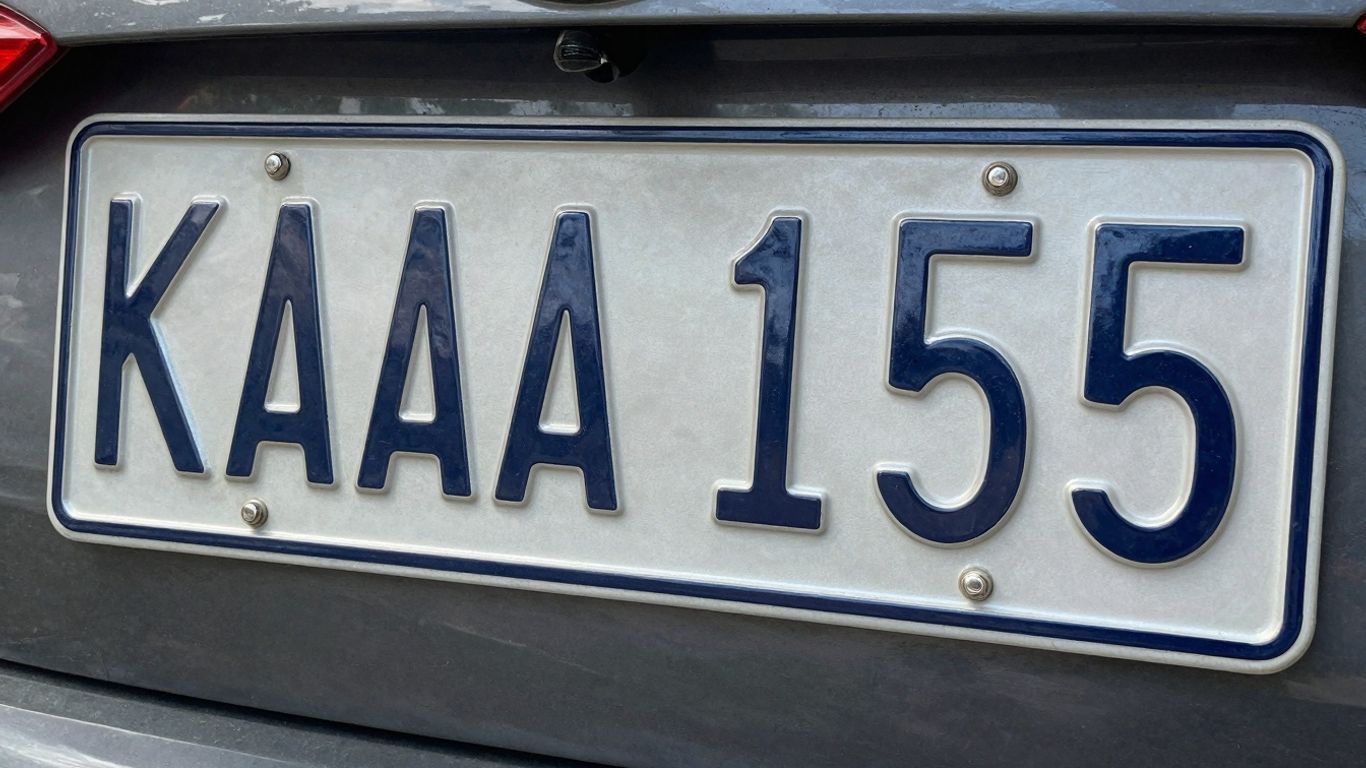
Malaysian license plates kick off with a letter or two that tells you where the vehicle calls home. Think of it like a postcode, but for your car. The Federal Territories, being major hubs, have their own distinct codes. Kuala Lumpur, our nation's capital, is famously represented by the letter 'W'. Putrajaya, the administrative centre, uses 'P'. And Labuan, our island territory off the coast of Borneo, is designated with 'L'. These initial letters are quite direct and immediately let you know if a vehicle is from one of these key administrative zones.
State-Specific Letter Codes
Moving beyond the Federal Territories, every state in Malaysia has its own unique letter code. These codes are often derived from the first letter of the state's name, though there are a few exceptions. For example, 'A' stands for Perlis, 'K' for Kedah, and 'P' for Penang. Down south, Johor uses 'J', while the bustling state of Selangor is represented by 'B'. It’s a system that has been around for ages, and most Malaysians can tell which state a car is from with just a quick glance—a handy bit of local knowledge!
Here's a quick reference for some of the common state codes:
| State | Code |
|---|---|
| Perlis | A |
| Kedah | K |
| Penang | P |
| Perak | A* |
| Kelantan | D |
| Terengganu | T |
| Pahang | C |
| Selangor | B |
| Kuala Lumpur | W |
| Negeri Sembilan | N |
| Malacca | M |
| Johor | J |
| Sabah | S |
| Sarawak | Q |
| Federal Territory | L |
*Note: Perak's code 'A' is shared with Perlis, but other elements on the plate usually help clarify its origin.
Interpreting Initial Letter Combinations
Occasionally, you might spot two letters at the start of a plate. This typically happens when a state has exhausted its single-letter combinations or needs to create a new series. For instance, Sabah started with 'S' but later introduced 'SA' and 'SB' as more vehicles were registered. Similarly, Sarawak, which began with 'Q', has moved on to 'QA', 'QB', and so forth. These combinations are a practical way to keep the numbering system going without having to assign entirely new codes to each state—a smart solution for managing the ever-growing number of vehicles on our roads.
The initial letters on a Malaysian license plate are far more than just random characters; they are a geographical fingerprint. They tell a story about the vehicle's origin, connecting it to a specific state or federal territory within Malaysia. This system, while simple on the surface, is remarkably effective in organising vehicle registration across the country.
The Numbering System Explained
So, you've cracked the code of the letters on a Malaysian license plate, but what about the numbers that follow? It's actually quite straightforward. The numbers are simply sequential identifiers, which means they just count up from 1. There’s no hidden code or special meaning tied to them, unlike in some other countries where certain numbers might be seen as lucky or unlucky. Think of it like a queue number at the post office—it's just there to make sure every vehicle is unique.
Sequential Numbering Conventions
In Malaysia, license plates typically feature a number sequence from 1 up to 9999. Once a particular letter series (like 'W') hits 9999, the system simply rolls over to the next available letter combination, and the numbering restarts from 1. This cycle repeats for each new series of plates.
Here's a simple idea of how it progresses:
- Initial Series: Plates might start with a format like
W 1. - Sequence Progression: As more vehicles are registered, the numbers increase sequentially:
W 2,W 3, all the way up. - Reaching the Limit: Once the sequence reaches
W 9999, the next plate issued will move to a new series, such asWA 1. - New Letter Combinations: This process continues, introducing new letter combinations to create a vast pool of unique plate numbers.
Absence of Special Number Meanings
It's a common assumption that certain numbers on license plates might hold special significance. In Malaysia, however, that's generally not the case for standard-issue plates. The numbers are purely functional. You won't find specific digits being avoided or sought after due to superstition or luck. The entire focus is on efficient identification rather than symbolic meaning. That said, if you have your heart set on a specific number, you can always check out the JPJeBid system, where you can bid for available running numbers.
Unique Vehicle Identification
Ultimately, the numbering system, when combined with the state letter codes, serves one primary purpose: to give every registered vehicle in Malaysia a distinct identity. This is absolutely vital for several reasons:
- Law Enforcement: It helps authorities track vehicles for traffic violations, security purposes, and criminal investigations.
- Administration: It’s essential for managing vehicle registration, insurance, and annual road tax renewals.
- Ownership Records: It provides a clear and undeniable link between a vehicle and its registered owner.
While the numbers themselves don't carry any intrinsic meaning, the complete plate—with its unique blend of letters and numbers—becomes the official identifier for a car or motorcycle on Malaysian roads. It's the digital fingerprint of your ride, so to speak.
This systematic approach ensures that even with millions of vehicles on our roads, each one can be individually identified and managed within the national registration framework.
Beyond Identification: Cultural Nuances
So, we've covered the letters and numbers on Malaysian license plates, but what about the unspoken side of things? It turns out that, like in many places, there’s more to these plates than just identifying a car's origin. People develop attachments to them, and sometimes, they even go the extra mile to get numbers that feel special or lucky.
Cultural Perceptions of License Plates
In Malaysia, while a license plate's main job is identification, there's a subtle undercurrent of personal significance. Unlike some neighbouring countries where specific numbers are hotly pursued for their perceived good fortune, the Malaysian approach is generally more practical. However, that doesn't mean personal preferences are completely off the table. Some people might grow fond of a particular sequence or letter combination that holds a personal meaning—like their birth year or initials—even if it doesn't carry a widely recognized cultural weight.
Feng Shui Influences in Asia
Throughout Asia, Feng Shui, the ancient Chinese practice of harmonising with one's environment, often extends beyond just homes and offices. It can influence decisions about cars and, yes, even license plates. The belief is that certain numbers or combinations can attract good fortune, wealth, or protection, while others might be seen as inauspicious. This belief system is quite prominent in some parts of East Asia, heavily impacting how people choose their vehicle registration numbers. For instance, in places like Vietnam, the chase for a "lucky" number plate is a well-known phenomenon.
Malaysian Plate Selection Practices
When it comes to picking a license plate in Malaysia, it's really a mixed bag. The vast majority of people simply accept the plate assigned during the vehicle registration process—it's quick, easy, and gets the job done. However, there's also a thriving market for special plates, often featuring desirable letter combinations or memorable numbers, which can command very high prices. The M_M series of car number plates, for example, gained recognition for their significant desirability and value. While not strictly a Feng Shui practice, the desire for a 'nice' or 'memorable' number plate is definitely a part of our car culture. It’s often less about deep spiritual beliefs and more about personal preference, status, or simply wanting something that stands out from the crowd.
The way people interact with and perceive their license plates offers a fascinating glimpse into cultural values. While the practical purpose of identification is universal, the layers of personal meaning, aspiration, and even superstition attached to these simple metal tags reveal a lot about societal attitudes towards luck, status, and individuality.
Here’s a quick summary of how plate selection can go:
- Standard Registration: Most vehicle owners receive a randomly assigned plate. This is the most common and cost-effective method.
- Bidding for Special Plates: Highly sought-after letter combinations or number sequences are often auctioned off by the authorities. This is where you see serious money being spent for a specific plate.
- Personal Preference (Limited): While not as common as in some other Asian nations, some individuals might try to secure a preferred plate through specific requests or by purchasing one from a previous owner, though this is less formalised.
Ultimately, while the official purpose of a Malaysian license plate is crystal clear, the cultural and personal significance attached to them adds an interesting layer to understanding vehicle registration in the country. It’s a blend of the practical and the personal, reflecting the diverse attitudes of the Malaysian people.
Regulations and Vehicle Registration
When you get a new vehicle in Malaysia, there are a few important things to know about the plates and the process of getting it all legally sorted. It's not just a matter of slapping on a plate and hitting the road—there’s a proper procedure and rules to follow.
Rules Governing Malaysian Plates
Malaysian license plates must meet specific requirements set by the authorities. They need to be clearly visible and legible at all times. You can't just create your own custom design or use something that isn't officially compliant. The Road Transport Department (JPJ) is the governing body that oversees all vehicle registration and licensing matters.
- Plate Material and Size: Plates must be made from a durable material and conform to specific dimensions, ensuring they can withstand our weather and are easy to read.
- Font and Spacing: The characters on the plate must use a standard, approved font with proper spacing. This is crucial for readability, especially for automated enforcement systems and police checks.
- No Alterations: You are not permitted to alter the plate in any way, such as adding stickers, changing the colours, or doing anything that might obscure the letters or numbers.
The Vehicle Registration Process
Registering a vehicle involves a few key steps. You’ll need to provide documentation for both yourself and the vehicle. This process is what officially assigns the license plate to your car.
- Vehicle Inspection: For certain vehicles, an inspection by PUSPAKOM may be required to ensure it meets all safety and roadworthiness standards.
- Documentation Submission: You'll need to submit the necessary forms, like the JPJ K1 form (Application for Registration of a New Vehicle), along with your IC and proof of ownership.
- Plate Assignment: Once everything is approved, a unique license plate number is assigned to your vehicle. You can then have the physical plates made by a licensed vendor.
- Road Tax and Insurance: Before you can legally drive, you must also purchase insurance and pay for your road tax (which comes as a sticker for your windscreen).
The entire registration system is designed to keep a comprehensive record of every vehicle on Malaysian roads, ensuring they are roadworthy and that their owners are identifiable. It's a system that helps with everything from traffic management to law enforcement and helps keep everyone safe.
Compliance and Legal Aspects
Driving with an improperly displayed or non-compliant license plate can get you into trouble. As the vehicle owner, it's your responsibility to make sure your plates are always in good condition and correctly displayed.
- Fines: Using incorrect or damaged plates can result in a *saman* (fine).
- Vehicle Impoundment: In more serious cases, particularly involving fake or heavily altered plates, your vehicle could even be impounded.
- Regular Checks: The authorities conduct regular checks, so it's always best to stay compliant to avoid any unnecessary hassle.
Comparing Malaysian Plates Regionally
Malaysian Plates vs. Singaporean Plates
When you're driving around Malaysia, you'll quickly get used to our license plates. They usually begin with a letter or two for the state, followed by numbers—'W' for Kuala Lumpur, 'B' for Selangor, 'J' for Johor. It’s a system that’s pretty easy to get the hang of. Now, just hop over the causeway to Singapore, and you'll see things are done a bit differently. Singaporean plates often feature a mix of letters and numbers, with a prefix that can indicate the vehicle type, like 'S' for private cars. The key difference really lies in the regional detail; Malaysian plates proudly display their state of origin, whereas Singapore's system is more centralised for the city-state.
Variations Across Southeast Asia
Southeast Asia is a true melting pot when it comes to license plates, with each country having its own unique style. Take Thailand, for example. Their plates can be quite vibrant, with different colours and symbols often indicating the vehicle type or registration status. Some Thai plates even feature beautiful Thai script, a striking contrast to Malaysia's Latin-based alphabet system. Then you have Vietnam, where plates might use provincial codes similar to ours, but the overall design and font choices give them a completely different feel. It’s like a visual road trip across the region, just by looking at number plates!
Here’s a quick glance at some common Southeast Asian plate styles:
- Malaysia: State/Federal Territory code + sequential numbers (e.g., W 1234 A).
- Singapore: Often a letter prefix for vehicle type + numbers + letters (e.g., S 1234 AB).
- Thailand: Varies greatly by province and vehicle type, often featuring Thai script and distinct colours.
- Indonesia: Provincial codes + sequential numbers/letters (e.g., B 1234 XYZ for Jakarta).
International Plate Recognition
For the most part, Malaysian license plates are easily recognised internationally due to their distinct format. The initial letters clearly point to a Malaysian registration, and the alphanumeric sequence is unique. When travelling to neighbouring countries, you'll typically need to adhere to their specific rules for foreign vehicles, which might involve displaying a country identifier sticker. Most border crossings are well-equipped to identify vehicles from other nations, and the standard Malaysian plate—with its clear state codes and numbering—rarely causes confusion for officials in neighbouring countries.
While the primary function of a license plate is identification, the way different countries design and organise them can tell you a lot about their administrative structures and even cultural priorities. It’s a small detail, but it’s part of the bigger picture of how a country operates.
Wrapping It Up
So, there you have it—the complete lowdown on Malaysian license plates. As it turns out, they're quite straightforward, serving mainly as a practical way to identify vehicles and their state of origin. While some cultures place a great deal of importance on lucky numbers or Feng Shui for their plates, it isn't a major factor here in Malaysia for most drivers. At the end of the day, it's all about the letters and numbers doing their job. Pretty simple, really, once you know what to look for. No secret messages, just an efficient system for keeping track of all the vehicles on our bustling roads. We hope this guide helped clear things up for you!
Frequently Asked Questions
What do the letters on Malaysian license plates mean?
Those initial letters are basically a postcode for your car, indicating the state or federal territory where the vehicle was first registered. For example, a 'W' plate means the car is from Kuala Lumpur.
Do the numbers on Malaysian license plates have special meanings?
Not really, no. The numbers on Malaysian plates don't have any special hidden meanings. They are simply sequential, used to give each vehicle a unique ID within its state series.
Are license plate numbers chosen for good luck in Malaysia?
While some people might bid for a number that's personally meaningful, it's not a widespread practice like in some other Asian cultures. Most Malaysians just take the next number in the series assigned by JPJ.
How do I know if a license plate is from a different state in Malaysia?
It's easy! Each state and federal territory in Malaysia has its own unique letter code at the start of the license plate. Once you learn the main codes, you can tell where a car is from at a glance.
What is the general format of a Malaysian license plate?
Typically, a Malaysian license plate starts with one to three letters for the location, followed by a space, and then a sequence of numbers from 1 to 9999. Some newer series might also have a letter at the very end.
Are Malaysian license plates similar to those in other countries?
Every country has its own style. Malaysian plates are distinct from those in neighbouring countries like Singapore or Thailand, though they all share the fundamental purpose of identifying vehicles with letters and numbers.


