


resources
Discover England's Famous Cities: A Journey Through History and Culture
05 Mar 2026

Thinking about a trip to England and wondering where to start? This nation abounds with history and captivating locales. From ancient Roman ruins to grand Georgian buildings, and of course, the birthplace of Shakespeare, England genuinely offers something for every visitor. We'll delve into some of its most renowned urban centers, each a superb showcase of England's profound history and rich cultural tapestry. Prepare to embark on your own unique adventure through these truly extraordinary destinations.
Key Takeaways
- England has many historic cities, like Bath, York, and Oxford, each with unique stories and sights.
- These cities offer a look into different periods of history, from Roman times to the Georgian era.
- Literary fans can visit places like Stratford-Upon-Avon, the home of Shakespeare.
- Planning your trip can involve different travel styles, from train journeys to guided tours.
- Experiencing local food, understanding currency, and knowing customs will make your visit smoother.
Exploring England's Historic Heartlands
England is adorned with cities where history isn't merely confined to museums; it's intricately etched into the very fabric of their streets and structures. This section will spotlight a selection of these distinctive locations, each offering an immersive journey into the nation's long and deeply layered past.
Bath: Roman Baths and Georgian Grandeur
Bath is a city that exudes its rich history with an undeniable elegance. It's renowned, naturally, for its remarkably well-preserved Roman Baths—a magnificent testament to the Romans' sophisticated appreciation for thermal waters. Can you imagine immersing yourself in waters that have been utilized for nearly two millennia? Yet, Bath's allure extends far beyond its Roman heritage. It also stands as an exquisite showcase of stunning Georgian architecture. Picture, if you will, grand crescents and sweeping terraces, all meticulously constructed from the distinctive local honey-colored stone. This lends the city a unique, almost golden luminosity, particularly captivating on a sunlit day.
- Roman Baths: Explore the ancient bathing complex, including the Great Bath and the Sacred Spring.
- Georgian Architecture: Wander through the Royal Crescent and The Circus, marveling at the symmetrical design.
- Jane Austen Centre: For fans of the famous author, a visit to learn about her connection to Bath is a must.
Bath offers a unique blend of ancient history and refined 18th-century style, making it a truly special place to explore.
Canterbury: A Pilgrimage Through Time
For centuries, Canterbury has served as a pivotal destination for travelers, most notably as a venerated site of pilgrimage. At its historical core stands the magnificent Canterbury Cathedral, a breathtaking exemplar of Gothic architecture and the revered mother church of the Anglican Communion. As you traverse its hallowed halls, one can almost sense the lingering echoes of countless pilgrims who have trodden these paths before—a truly immersive experience. Beyond the cathedral's grandeur, the city center unfolds as a charming labyrinth of medieval streets, independent boutiques, and inviting, cozy pubs, each awaiting discovery.
- Canterbury Cathedral: A UNESCO World Heritage site and a masterpiece of architecture.
- St. Augustine's Abbey: Explore the ruins of this once-powerful monastery, another UNESCO site.
- The Canterbury Tales: Experience a unique attraction that brings Chaucer's famous stories to life.
Salisbury: Cathedral Spires and Ancient Mysteries
Salisbury embodies the very essence of a quintessential English cathedral city. Its most commanding feature is, without doubt, Salisbury Cathedral, which proudly boasts the tallest church spire in Britain. This iconic spire dominates the horizon for miles around, an unmistakable beacon. The cathedral itself stands as a testament—a true marvel—to early English Gothic architecture. However, Salisbury's profound allure extends far beyond its impressive cathedral. The city serves as a convenient gateway to some of England's most profound ancient mysteries, most notably Stonehenge—that iconic prehistoric stone circle—located but a relatively short journey away. This compelling combination of a magnificent cathedral and immediate proximity to such ancient wonders positions Salisbury as a truly captivating destination.
- Salisbury Cathedral: Admire the spire, the original Magna Carta, and the beautiful architecture.
- Old Sarum: Visit the site of the original settlement of Salisbury, with its ancient earthworks.
- Stonehenge: Take a trip to the world-famous prehistoric monument nearby.
Centres of Learning and Literary Legacy
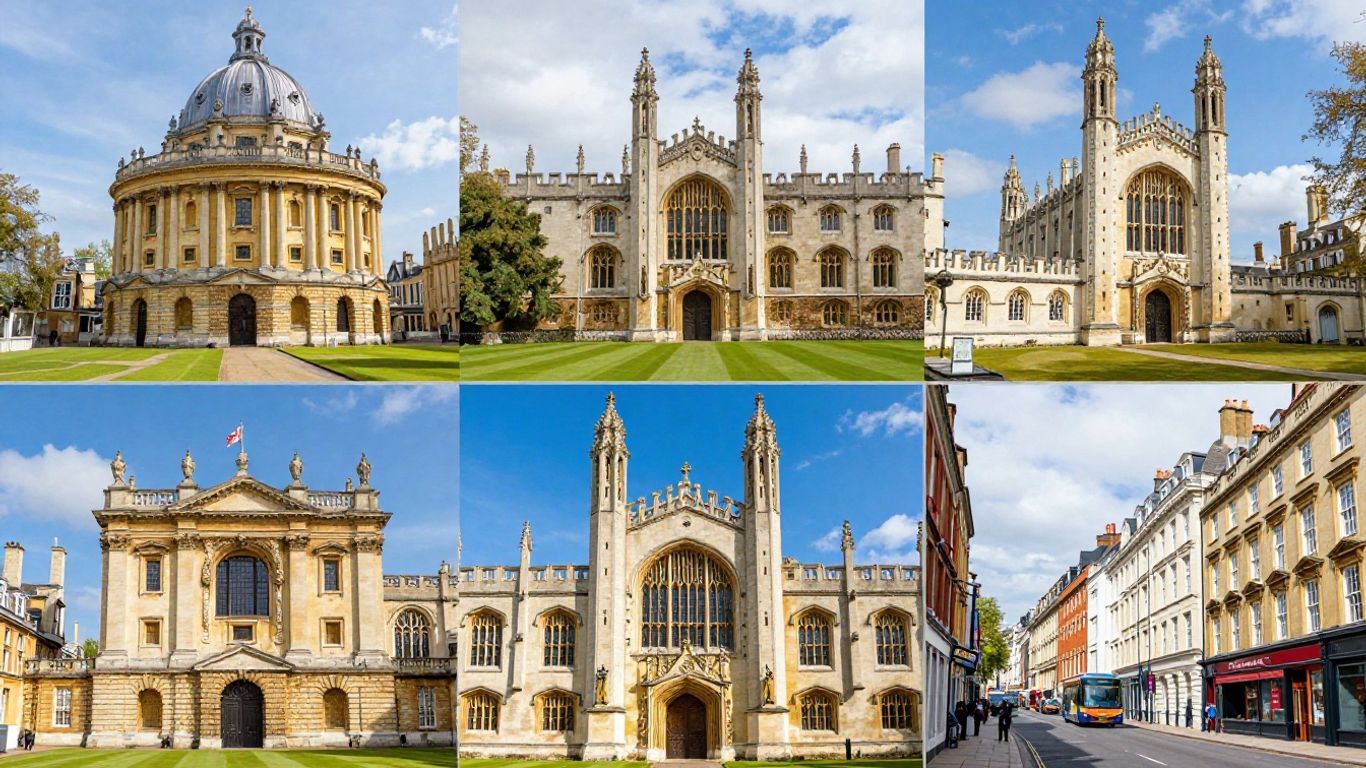
Oxford: A Tapestry of Colleges and Academia
Oxford, affectionately known as the 'City of Dreaming Spires,' presents a captivating destination where history and academia are intricately woven into the very fabric of its cobbled streets. For centuries, it has stood as a global beacon of learning, consistently drawing scholars and students from every corner of the world. To stroll through Oxford is akin to stepping back in time, amidst its venerable university colleges, majestic libraries, and charming cobblestone lanes. One can truly sense the profound weight of history in places like the Bodleian Library, revered as one of Europe's oldest libraries, or within Christ Church, a college celebrated for its stunning Great Hall—also famously a filming location for the Harry Potter movies.
Indeed, the University of Oxford itself isn't a singular institution but rather an interconnected collection of 39 self-governing colleges, each endowed with its own distinct character and venerable traditions. This decentralized structure fosters an exceptionally rich and varied academic environment. Beyond its academic heart, Oxford thrives with a vibrant urban pulse, boasting bustling markets, inviting pubs, and picturesque green expanses such as the University Parks.
Consider these highlights for an unforgettable visit:
- Bodleian Library: Explore one of the oldest libraries in Europe and admire its impressive architecture.
- Christ Church College: Visit the iconic Great Hall and walk the grounds that inspired many.
- Ashmolean Museum: Discover vast collections of art and archaeology, spanning centuries and cultures.
- Covered Market: Experience a slice of local life with this historic market offering everything from artisan foods to unique crafts.
Oxford's academic atmosphere is palpable, creating an environment that is both inspiring and intellectually stimulating for visitors and residents alike.
Cambridge: Riverside Charm and Scholarly Pursuits
Just a relatively short journey from Oxford, one encounters Cambridge—another world-renowned center of higher education, yet possessing its own truly distinct charm. Much like its counterpart, Cambridge is defined by its prestigious university, a captivating collection of 31 colleges gracefully lining the picturesque River Cam. The city often presents a somewhat more relaxed pace compared to Oxford, with a palpable emphasis on its idyllic riverside setting.
Punting along the serene River Cam is, without question, a quintessential Cambridge experience. As you glide gracefully along the water, you'll gain a truly unique perspective of the colleges' historic 'Backs'—the magnificent gardens and buildings that extend down to the riverbank. King's College Chapel, with its awe-inspiring fan vaulting, is a breathtaking sight and a profound testament to the pinnacle of Gothic architecture. The Fitzwilliam Museum, moreover, houses an impressive array of art and antiquities, capable of rivaling many national institutions.
Among Cambridge's key attractions, you'll find:
- King's College Chapel: Marvel at the stunning architecture and acoustics of this iconic chapel.
- The Fitzwilliam Museum: Immerse yourself in art and history with diverse collections.
- Punting on the River Cam: Enjoy a leisurely boat trip and see the colleges from a different angle.
- St John's College: Explore the historic Bridge of Sighs and the college's beautiful grounds.
Stratford-Upon-Avon: Shakespeare's Enduring Influence
Stratford-upon-Avon is a town that palpably breathes the enduring legacy of its most illustrious son, William Shakespeare. This charming market town in Warwickshire is where the Bard was born, lived, and now lies interred, solidifying its status as an indispensable pilgrimage site for literature enthusiasts worldwide. The town has meticulously preserved much of its Tudor heritage, thereby offering a vivid, tangible glimpse into the very era in which Shakespeare lived and penned his masterpieces.
A visit to Shakespeare's Birthplace offers a fascinating journey into his formative years, while Hall's Croft, the elegant home of his daughter Susanna and her husband, provides insightful glimpses into a prosperous Jacobean household. Anne Hathaway's Cottage, the picturesque farmhouse where his wife spent her childhood, is nestled amidst truly beautiful gardens, offering a poignant, romantic window into his family life. The Royal Shakespeare Company, too, calls Stratford-upon-Avon its home, with its theaters consistently staging world-class productions of his timeless plays throughout the year.
Be sure not to overlook these essential Shakespearean sites:
- Shakespeare's Birthplace: Step inside the house where the legendary playwright was born.
- Anne Hathaway's Cottage: Wander through the charming cottage and gardens of Shakespeare's wife.
- Hall's Croft: Discover the elegant home of Shakespeare's daughter and son-in-law.
- Holy Trinity Church: Visit Shakespeare's final resting place in this beautiful riverside church.
These cities offer more than just historical sites; they provide a living connection to centuries of intellectual achievement and literary genius.
Cities Steeped in Ancient Foundations

Chester: Echoes of Roman Walls and Tudor Rows
Chester is a city that, quite literally, wears its history out in the open. Indeed, one can walk directly atop Roman foundations, as the city proudly boasts remarkably preserved Roman walls that still encircle its entire historic center. It's a truly unique experience, offering a tangible sense of the city's scale as it existed nearly two millennia ago.
Yet, Chester's narrative extends far beyond its Roman origins. Venture inside those ancient walls, and you'll discover a town boasting a truly distinctive architectural style. The "Rows" are an absolute must-see—these unique two-tiered medieval shopping galleries feature shops on the ground floor and charming walkways above. These are beautifully lined with black-and-white timber-framed buildings, lending Chester a truly charming, almost storybook ambiance.
Here’s a concise overview of what distinguishes Chester:
- Roman Walls: Walk the full circuit for panoramic views.
- The Rows: Explore unique two-level shopping streets.
- Chester Cathedral: A beautiful example of Gothic architecture.
- Amphitheatre: Discover the remains of Britain's largest Roman amphitheatre.
Chester offers a tangible connection to different eras of English history, from its military origins to its medieval merchant past. It’s a place where you can easily spend a day just wandering and discovering hidden corners.
York: Layers of Roman, Viking, and Medieval History
York stands as another remarkable city where history isn't merely confined to museums; rather, it permeates every vista and corner. Originally founded by the Romans as Eboracum, it subsequently evolved into a significant Viking settlement, famously known as Jorvik, before flourishing as a powerful medieval center. This rich, layered past imbues York with an incredible historical depth.
The Minster, York's truly magnificent Gothic cathedral, is an absolute showstopper—a testament to architectural brilliance. Its sheer scale and intricate stonework are nothing short of breathtaking. Yet, beyond the Minster's impressive facade, visitors can stroll along the meticulously preserved medieval city walls, delve into the narrow, winding streets of The Shambles—a place that feels remarkably unchanged for centuries—and even explore the Jorvik Viking Centre to gain an immersive understanding of life during Viking rule.
Key historical highlights awaiting discovery in York include:
- York Minster: One of the world's most impressive cathedrals.
- City Walls: The most complete medieval city walls in England.
- The Shambles: A famously well-preserved medieval street.
- Jorvik Viking Centre: An immersive look at Viking history.
Indeed, while in York, one gains a profound sense of how diverse cultures and successive historical periods have profoundly shaped the very fabric of England. It's a city that genuinely invites you to step back in time, encouraging an imaginative immersion into life across various ages.
Northern Treasures and UNESCO Sites
Durham: A Dramatic Cathedral and Castle Landscape
Venturing northward, one discovers Durham, a city that unequivocally commands attention. Its distinctive skyline is majestically dominated by a magnificent cathedral and an imposing castle, both dramatically perched on a peninsula overlooking the scenic River Wear. This remarkable pairing has deservedly secured Durham a coveted spot on the UNESCO World Heritage list, and its rationale is readily apparent. To traverse the city feels genuinely like stepping back in time, with cobbled streets and venerable architecture gracing every turn.
The sheer scale and profound beauty of Durham Cathedral are truly breathtaking—a masterpiece of Norman architecture that has steadfastly endured for centuries. Inside, visitors can explore its expansive nave, admire the intricate carvings, and even ascend the tower for unparalleled panoramic views of the surrounding, picturesque landscape. Adjacent to the cathedral stands Durham Castle, a former royal palace now integrated into Durham University. Its history is long and intricate, with structural elements dating back as far as the 11th century.
Consider these essential highlights when planning your visit to Durham:
- Durham Cathedral: Explore the stunning architecture, visit the Galilee Chapel, and consider climbing the tower.
- Durham Castle: Take a guided tour to learn about its history as a royal residence and its current role.
- River Wear Walk: Enjoy a scenic stroll along the riverbanks for fantastic views of the cathedral and castle.
- Museums: Discover local history and heritage at the various museums within the city.
The city's layout, with the cathedral and castle dominating the peninsula, creates a unique and memorable atmosphere. It’s a place where history feels alive, etched into the very stones of the buildings and the winding streets.
Accessing Durham is quite straightforward, thanks to excellent rail links connecting it to other major cities across the north of England and further afield. Once there, much of the historic center is most effectively explored on foot, affording you the opportunity to truly soak in the unique atmosphere and uncover its many hidden gems.
Crafting Your England Originals Itinerary
Tailored Journeys Through Historic Cities
Planning a journey through England's historic cities might initially seem like a formidable undertaking, yet it needn't be. The "England Originals" initiative thoughtfully links cities such as Bath, York, Oxford, and Chester, thereby simplifying the process of weaving them into a cohesive itinerary. Imagine it as constructing with historical building blocks—each city representing a unique, invaluable piece, and you, the architect, decide how they coalesce.
The fundamental key lies in aligning your journey with your specific interests and desired experiences. Are you, for instance, fascinated by Roman ruins? Then Chester and Bath should unequivocally rank high on your itinerary. Perhaps Shakespeare's enduring legacy is more to your liking? Stratford-Upon-Avon, then, is precisely the place for you. Or are you drawn to the intellectual vibrancy and academic buzz of renowned university towns? In that case, Oxford and Cambridge eagerly await your exploration.
Here’s a straightforward approach to begin conceptualizing your personalized route:
- Decide on your main interests: History, literature, architecture, or a mix?
- Pick your "must-see" cities: Based on your interests, which ones call to you the most?
- Consider the geography: Look at a map to see how the cities connect. Many are well-linked by train.
- Set a timeframe: How long do you have for your trip? This will help you decide how many cities you can realistically visit.
Building your itinerary is about creating a personal story. It's not just about ticking off sights; it's about experiencing the atmosphere of places that have shaped history for centuries. Don't be afraid to mix and match based on what truly excites you.
Seamless Travel: Rail, Road, and Guided Experiences
Navigating between these historic gems is, perhaps surprisingly, quite straightforward. England boasts an efficient public transport system, and crucially, the "England Originals" cities are frequently exceptionally well-connected.
- By Train: This mode of transport frequently proves to be the most convenient. Cities such as York, Durham, Oxford, Cambridge, and Bath are seamlessly linked by regular, efficient train services. Purchasing tickets in advance often yields more favorable prices, and with stations typically situated directly in the city center, you can commence your exploration almost immediately upon arrival.
- By Car: Renting a car certainly offers the greatest degree of freedom, particularly if your plans include exploring the picturesque countryside between cities or venturing into smaller, charming towns. However, it's worth noting that parking within historic city centers can occasionally prove challenging and costly.
- Guided Tours: Should you prefer to forgo the complexities of logistics, a plethora of small group tours and private driver options are readily available. These services can be invaluable for gaining authentic local insights and facilitating visits to multiple "England Originals" cities without the inherent stress of meticulously planning each individual leg of your journey.
When devising your itinerary, consider carefully the balance between time spent traveling and time dedicated to exploration. For a more concise trip, prioritizing cities that are geographically proximate and efficiently connected by train might be the most judicious approach. Conversely, for a more expansive adventure, a rental car could unlock a wider array of possibilities.
Experiencing England's Famous City Culture
Culinary Delights: Iconic English Dishes
When one considers English cuisine, it's perhaps not a singular, monolithic entity. Instead, it's a delightful collection of deeply cherished dishes, widely available across the nation. Fish and chips, that quintessential combination of crispy fried fish and hearty, thick-cut fries, is practically an emblem of England itself. Then, of course, there's the beloved Sunday roast—typically beef, cooked to perfection, and invariably accompanied by a fluffy Yorkshire pudding. It's a complete meal, imbued with a palpable sense of tradition. For an option that is truly comforting, shepherd's pie consistently proves a winner. This delightful dish features a savory blend of ground meat and vegetables, all generously topped with creamy mashed potatoes. And, indeed, one simply cannot overlook toad in the hole, a distinctively English dish comprising sausages baked within a fluffy Yorkshire pudding batter. These are the very sorts of foods that evoke a comforting, 'right at home' sensation.
Navigating Currency and Payments
England's official currency is the British pound, more formally known as pound sterling. You'll encounter banknotes in denominations of £5, £10, £20, and £50. As for coinage, £1 and £2 pieces are common, alongside various smaller denominations. Exchanging your currency is quite straightforward; facilities are available at banks, dedicated currency exchange bureaus, or simply by withdrawing cash from the ubiquitous ATMs found nationwide. Converting your home currency to pounds is easily accomplished either prior to your departure or upon your arrival.
Understanding Local Customs and Tipping
When exploring England's vibrant cities, a few key cultural nuances are beneficial to understand. Politeness is generally highly valued, so a simple 'please' and 'thank you' can genuinely go a long way. In dining establishments, tipping isn't always an automatic expectation as it might be in some other nations, but it is certainly much appreciated for commendable service. Do note that a service charge might already be incorporated into your bill, making it prudent to verify this detail initially. If no service charge has been applied, a gratuity of approximately 10-15% is considered standard for excellent service.
- Politeness is key: Simple courtesies are always well-received.
- Check your bill: Look for a service charge before adding a tip.
- Standard tip: If no service charge is added, 10-15% is common for great service.
- Taxis: Rounding up the fare or adding a small amount is a nice gesture.
Being aware of these small details can make your interactions smoother and more enjoyable as you explore.
Your English Adventure Awaits
So, we've embarked on a captivating journey through some of England's most historic and intriguing cities. From the ancient Roman vestiges in Bath to the venerable academic halls of Oxford and Cambridge, and the enchanting medieval streets of York, an astonishing wealth of history is packed into this remarkable country. Each city possesses its own unique narrative, its distinct ambiance, and its specific array of sights that render it truly special. Whether your passion lies in ancient history, the works of literary giants such as Shakespeare, or simply soaking up breathtaking architecture, England's renowned cities genuinely offer something enriching for every visitor. It's a journey that seamlessly connects you with a profound past while simultaneously offering an abundance of modern charm. So, why not commence planning your own remarkable exploration? An entire, vibrant country awaits your discovery, one historic city at a time.
Frequently Asked Questions
What exactly are the 'England Originals' cities?
The 'England Originals' comprise a distinguished collection of England's most historic cities. Consider destinations such as Bath, famed for its ancient Roman baths; York, with its venerable walls; and Oxford, renowned for its prestigious universities. These cities have been curated for their exceptional historical significance and unique atmospheres. They are thoughtfully interconnected, simplifying the process of planning a multi-city itinerary.
When is the most opportune time to visit these historic cities?
The most favorable periods for a visit are typically spring (April to June) and early autumn (September to October). During these seasons, the weather is generally pleasant—neither excessively hot nor cold—and crowd levels tend to be more manageable than during the peak summer months. Springtime ushers in beautiful floral displays, while autumn showcases stunning foliage colors.
What essential items should I pack for a trip to England?
England's weather is notoriously unpredictable, so packing in layers is a wise strategy. Be sure to bring clothing items that can be easily added or removed as conditions change. A waterproof jacket and comfortable walking shoes are indispensable, regardless of the season. Even during summer, a light jacket for cooler evenings is advisable. For winter visits, pack warm attire such as sweaters and a substantial coat.
What are the primary modes of transport for navigating between these cities?
Indeed, you have several excellent options! Travel by train is a highly recommended method, offering picturesque views of the countryside and seamlessly connecting many of these cities. Driving your own vehicle or a rental provides greater flexibility and autonomy. Additionally, guided tours—available both for small groups and as private experiences with a driver—can simplify your exploration considerably.
Which iconic English dishes should I make a point to try?
England offers a selection of classic dishes that are certainly worth sampling! Fish and chips remains a perennially popular choice. A traditional Sunday roast, complete with succulent beef and fluffy Yorkshire pudding, provides a truly hearty meal. For something supremely comforting, shepherd's pie—a savory meat and potato dish—is highly recommended. And, of course, do not overlook specialties such as sausages baked in batter, affectionately known as 'toad in the hole'.
What currency is used in England, and what are the common payment methods?
England utilizes the British Pound (£), also known as Pound Sterling. You can acquire pounds by exchanging currency at banks or by using the readily available ATMs throughout the country. Most establishments, including shops and restaurants, widely accept card payments, meaning you may not require extensive amounts of physical cash. While tipping is not strictly mandatory, it is customary to leave a modest tip in restaurants for satisfactory service.


