
"Do Architecture": Wang Shu and Lu Wenyu Reveal Vision for 2027 Venice Architecture Biennale
19 May 2026

The 20th International Architecture Exhibition of La Biennale di Venezia has officially announced its curatorial direction. Architects Wang Shu and Lu Wenyu, co-founders of Amateur Architecture Studio and recipients of the 2012 Pritzker Architecture Prize, will lead the landmark 2027 edition under the title "Do Architecture, For the Possibility of Coexistence Facing a Real Reality”, scheduled to take place from May 8 to November 21, 2027, across the Giardini, the Arsenale, and throughout Venice.
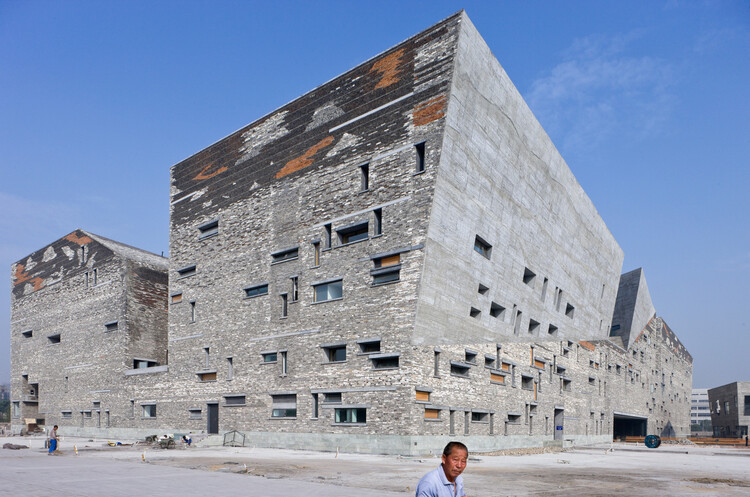
The curatorial direction reflects many of the ideas developed through the work of Amateur Architecture Studio, founded by Wang Shu and Lu Wenyu in 1997. Their projects have consistently explored the reuse of salvaged materials, regional construction techniques, and the continuity between historic and contemporary forms of building. Across both urban and rural contexts, the studio's work often emphasises craft traditions, collective memory, and the spatial qualities embedded within everyday environments.
We believe that architecture is not only something to be discussed but, more importantly, something to be done first-hand," the curators state. "The philosophy of architecture is a philosophy of how to do: a practice that confronts real reality, in real places, through real construction.
About Wand Shu and Lu Wenyu
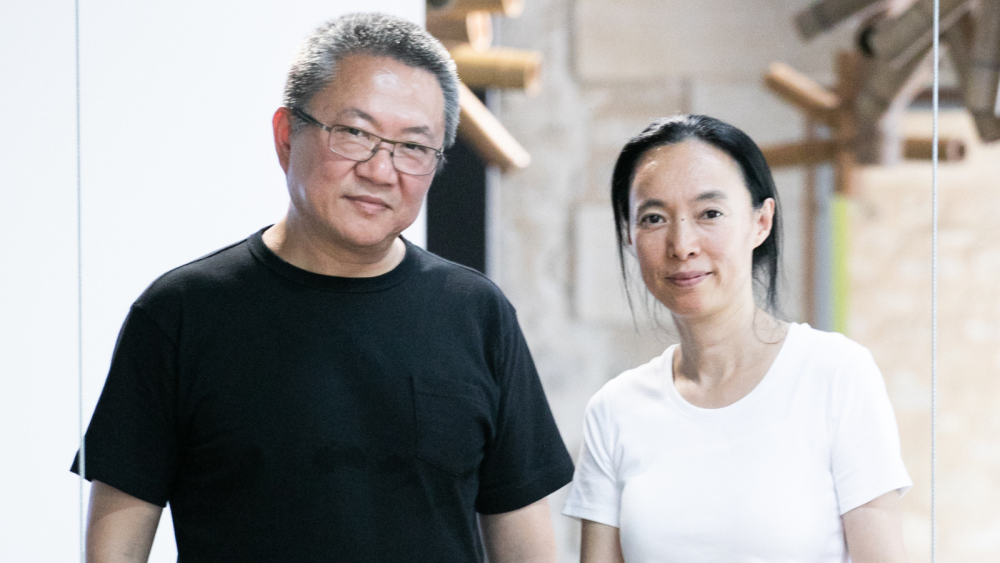
Wang Shu and Lu Wenyu are among the most philosophically distinctive voices in contemporary architecture. Their practice, rooted in Chinese spatial tradition and hand-craft, consistently challenges the globalised, efficiency-first model of construction. With "Do Architecture," they invite practitioners and audiences alike to return to architecture's foundational act: the deliberate, considered making of space for human coexistence.
The phrase "Real Reality" signals a deliberate departure from speculative or digital abstraction. It is a call to engage with the material, social, and ecological conditions of our current moment, from climate urgency to cultural displacement, through the concrete act of building.
The 2027 Biennale arrives at a pivotal moment. Architecture's global conversation has increasingly grappled with contradictions: the profession's capacity to house, connect, and inspire set against its entanglement with extraction, inequality, and environmental harm. Wang Shu and Lu Wenyu's curatorial lens, shaped by decades of practice in China and a profound engagement with local materials, memory, and community, offers a grounded counterpoint.
About 2027 Venice Architecture Biennale
The 2027 Venice Architecture Biennale marks the 20th edition of the International Architecture Exhibition of La Biennale di Venezia, running from 8 May to 21 November 2027 across the Giardini, the Arsenale, and various venues throughout Venice.
Curated by Chinese architects Wang Shu and Lu Wenyu, co-founders of Amateur Architecture Studio and winners of the 2012 Pritzker Architecture Prize, the exhibition is titled "Do Architecture, For the Possibility of Coexistence Facing a Real Reality."
The theme is a call to return to architecture's most essential purpose: the deliberate making of space for human coexistence. Rather than engaging with speculation or digital abstraction, Wang Shu and Lu Wenyu invite architects and audiences to confront the material, social, and ecological conditions of the present moment. "Real Reality" is their term for this grounded, urgent engagement, a practice shaped by lived experience, local culture, and the concrete act of building.
It's a quietly radical proposition for one of architecture's biggest stages.
Sources:
Share

Sara Srifi
Sara is a Software Engineering and Business student with a passion for astronomy, cultural studies, and human-centered storytelling. She explores the quiet intersections between science, identity, and imagination, reflecting on how space, art, and society shape the way we understand ourselves and the world around us. Her writing draws on curiosity and lived experience to bridge disciplines and spark dialogue across cultures.


