
eSports & Gaming
The Expanding Universe – Space Age Dreams and Mechas (1963–1979)
24 Sept 2025

The golden age where anime conquered the cosmos! How 60s-70s classics like Astro Boy, Space Battleship Yamato, and Mobile Suit Gundam transformed from simple cartoons into profound epics. This wasn’t just entertainment; it was a revolution that gave us giant robots and space operas, forever changing animation.
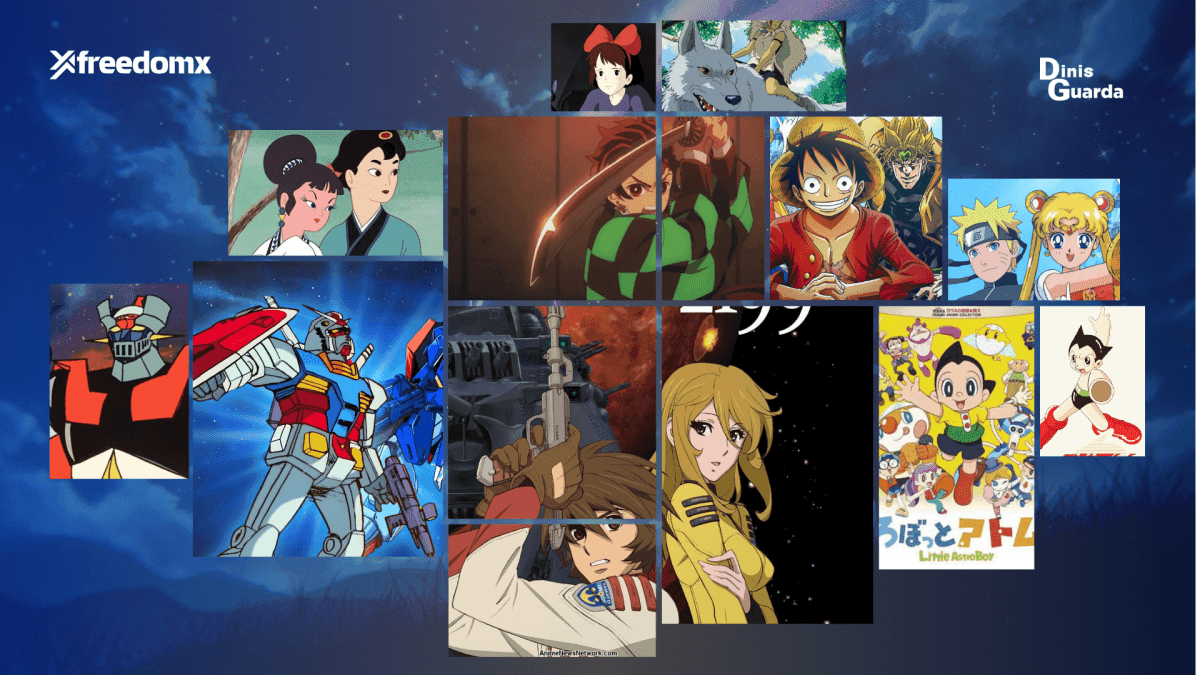
The universe is vast, infinite and endlessly mysterious, but in the two decades following the Second World War, only one nation captured that immensity through the glowing lens of animation with such audacious imagination: Japan.
Between 1963 and 1979, Japanese anime did more than tell stories for children. It became a bridge into the cosmos, a stage for technological marvels, and a mirror for mankind’s deepest anxieties and hopes. It was also the beginning of something seismic: the age of space operas, colossal robots, and the birth of serial storytelling that would shape anime for decades to come.
This wasn’t just entertainment; it was an era where people looked skyward and saw both utopia and apocalypse reflected back at them, and animators channelled that into dreams of rockets, starships and titanic mechas striding across stellar frontiers.
Let’s step into that expanding universe?
The 1960s: The Dawn of the Space Age in Animation
To understand why Japanese animation latched onto rockets and robots so eagerly, one needs to picture the 1960s. This was the decade where Yuri Gagarin became the first man in space (1961), Neil Armstrong set foot on the Moon (1969), and the Cold War turned the sky above into a theatre of ideology.
In Japan, a nation rebuilding after Hiroshima and Nagasaki, the cosmos was not simply a technological playground, it was a canvas for reconciliation and reinvention.
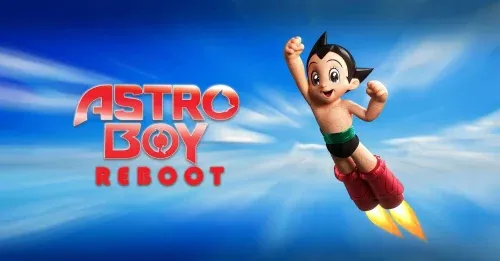
And so, in 1963, Osamu Tezuka’s Astro Boy (Tetsuwan Atom) rocketed onto television screens.² The series carried a deceptively cute exterior, with a plucky child-robot at its heart, but beneath those big eyes were bold questions: What does it mean to be human? Can machines feel? Can they dream?
Tezuka planted the seeds of the man-machine relationship, seeds that would, by the late ’70s, blossom into the towering figure of the Gundam.
Astro Boy wasn’t mecha in the sense we recognise today, it was far more intimate. Atom (or Astro) was both machine and child, bridging the artificial with the human. But the importance of Tezuka’s contribution cannot be overstated; he set the precedent that science fiction anime would not merely dazzle with futuristic gadgetry. Instead, it would shine as an allegory for society, ethics, and even metaphysics.
The 1960s brought optimism with satellites and moonshots, but they also carried shadows of nuclear terror. Anime during this decade quietly prepared Japanese audiences to explore new cosmic horizons, asking: What if our future was amongst the stars? What if technology was not just a tool, but part of our very being?
Into the 1970s: The Universe Expands, and So Do the Robots
The fire ignited in the 1960s soon blazed into a full interstellar epoch. The 1970s transformed anime into an epic canvas of larger-than-life star battles, existential quests, and machines that became avatars of human courage.
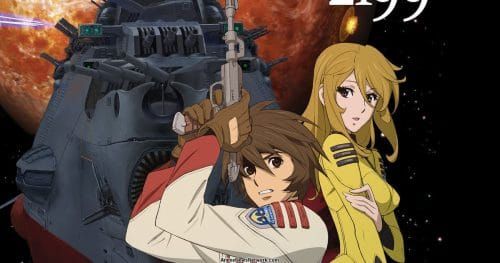
It was in this decade that one of anime’s most influential works emerged: Space Battleship Yamato (known abroad as Star Blazers). Debuting in 1974, Yamato was nothing less than a watershed moment. Gone were the neatly contained stand-alone episodes of yesteryear.
In their place arrived serialised storytelling, with week upon week of continuous narrative arcs building towards a climactic conclusion. For the first time, anime dared to unfold like an odyssey, not snippets.
Yamato presented its audience with a mythic voyage through the stars, a mission to save Earth from ecological destruction by journeying across galaxies on a refitted battleship. This wasn’t merely spaceship dogfights; it was a modern Greek epic, tackling mortality, sacrifice, and the very survival of the species.
For Japanese viewers still conscious of their country’s wartime losses and peacetime vulnerability, the image of a resurrected battleship soaring through the stars carried potent symbolism.
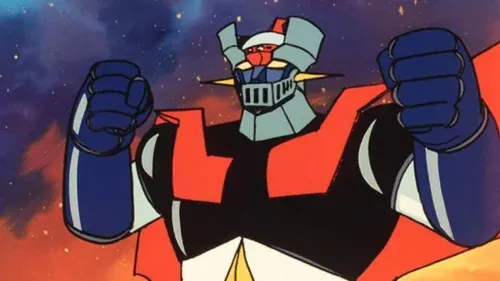
Equally, the 1970s gave us the growth of the mecha genre. But let’s be clear: “mecha” wasn’t born fully formed with Gundam. Its roots had been crawling across Japanese screens since the early 1970s with Go Nagai’s Mazinger Z (1972). Unlike Astro Boy, Mazinger wasn’t a robot-child but a colossal mechanical warrior piloted by a human being.
This was revolutionary. Robots were no longer characters themselves, they became vehicles of projection, extensions of human will, tools as powerful and as fallible as the pilots at their controls.
In other words, man and machine fused, quite literally. The cockpit became a crucible of human drama.
Why Space and Robots?
Before diving into the late ’70s climax in Gundam, it’s worth asking: Why did Japan, above all, intertwine space fantasies with mechanical giants?
- Cultural Resonance: Post-war Japan lived under the dual legacy of technology’s destructive force—the atomic bomb—and its redemptive potential—economic recovery through industrial innovation. Robots in anime embodied both fears and hopes.
- Escapism with Teeth: Space adventures like Yamato weren’t escapism in the shallow sense. They projected Earth’s problems onto galactic backdrops, offering metaphors through which audiences could process nuclear anxiety, pollution, and war trauma.
- Media Evolution: By the ’70s, anime had become a mass medium in Japan. Broadcast television was widespread, and longer-form serial storytelling could capture the attention of a generation ready to follow multi-month sagas.
The Philosophical Leap: Gundam and the Real Robot Revolution
Then came 1979.
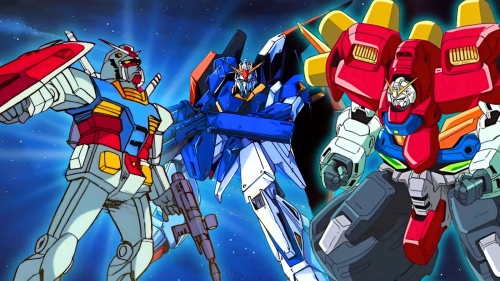
With the premiere of Mobile Suit Gundam, anime entered a new gravitational pull. Gundam wasn’t simply another tale of heroes in flashy mechanical suits. Rather, it marked a tectonic shift towards realism, complexity and ambiguity, the “real robot” genre.
Where previous series such as Mazinger Z or Getter Robo embodied a more fantastical super-robot style (machines verging on magical in their power), Gundam grounded its robots, mobile suits, in military logic, politics, and socio-economic drama. It asked uncomfortable questions:
- What happens when giant machines are no longer symbols of hope, but weapons of mass destruction?
- Do pilots fight for ideals, or are they pawns in a larger geopolitical machine?
- If humanity reaches the stars, do we take our wars and prejudices with us?
Mobile Suit Gundam recast the mecha pilot not as a clean-cut hero, but as a reluctant participant in a messy, tragic war. Protagonist Amuro Ray wasn’t a cackling villain-smasher; he was a teenager shoved into a cockpit, grappling with duty, fear, and alienation. The supposed glamour of mechanised combat shifted into existential dread.
Audiences didn’t fully catch on during its original run (ratings were not strong), but Gundam was playing the long game. Its impact rippled outwards over decades, cementing the idea that anime was not just children’s entertainment but intelligent science fiction for all ages.
The Universe Opens Wide
By 1979, anime had irrevocably changed. The universe had expanded, both literally in the stories and figuratively in the medium’s artistic ambition. In little more than a decade and a half, Japanese animation transformed from black-and-white fables like Astro Boy into galaxy-spanning mythologies and soul-searching epics like Mobile Suit Gundam.
From the first childlike dreams of robotic companionship to the sobering realisation of wars amongst the stars, this period gave anime its soul. The mecha was no longer a mere toy; it was a mirror of ourselves. The cosmos was no longer just a backdrop; it was the stage for the human drama writ large.
And as audiences in the late 1970s sat watching Yamato’s voyage or Amuro’s reluctant battles, they weren’t just witnessing science fiction. They were staring into their own future, equal parts hope and caution, dazzling light and haunting shadow.
The universe was expanding. And so was anime.
Share

Himani Verma
Content Contributor
Himani Verma is a seasoned content writer and SEO expert, with experience in digital media. She has held various senior writing positions at enterprises like CloudTDMS (Synthetic Data Factory), Barrownz Group, and ATZA. Himani has also been Editorial Writer at Hindustan Time, a leading Indian English language news platform. She excels in content creation, proofreading, and editing, ensuring that every piece is polished and impactful. Her expertise in crafting SEO-friendly content for multiple verticals of businesses, including technology, healthcare, finance, sports, innovation, and more.


