
resources
Explore Italy's Urban Gems with Our Comprehensive Cities Italy Map
24 Nov 2025

The prospect of planning a trip to Italy can often feel quite daunting, can't it? With such a wealth of incredible destinations and only a finite amount of time, it's easy to become overwhelmed. We've all admired the stunning imagery, but truly navigating the logistics—deciding where to go and how to travel—presents a real challenge. This is precisely where maps become indispensable. Think of them as your essential companions for uncovering the myriad wonders of Italy's cities. Whether your aspirations include exploring ancient ruins or simply locating the most authentic pizzeria, a well-chosen map can significantly enhance your experience. Let's delve into how utilizing an Italy city map can empower you to craft your ideal exploration of this magnificent country.
Key Takeaways
- Employing an Italy cities map provides an excellent foundational understanding of geographical placements, from bustling metropolises to charming smaller towns.
- Diverse map types, such as transit or road maps, prove exceedingly beneficial for meticulously planning your movements once you've arrived.
- Prioritizing a select few cities that genuinely pique your interest, rather than attempting to encompass every attraction, invariably leads to a more enriching journey.
- Italy is characterized by distinct regions and cities, each possessing its own unique ambiance, culinary traditions, and rich history, making interest-based selection a judicious approach.
- Maps extend beyond mere navigation; they can also unveil historical landmarks, picturesque natural landscapes, and even prime dining locations.
Navigating Italy's Diverse Urban Landscapes
Understanding Italy's Political Divisions
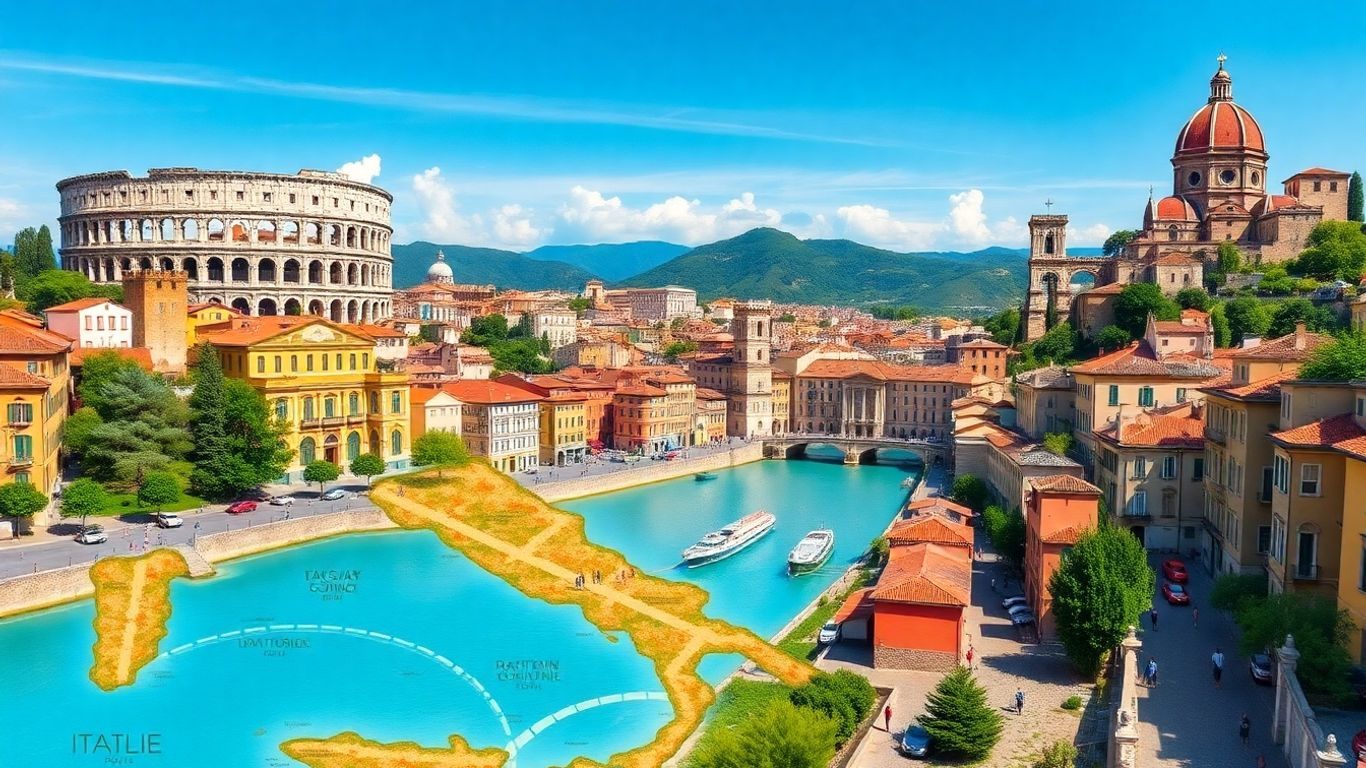
Italy, a nation steeped in history and vibrant culture, is meticulously structured into distinct political units that profoundly shape its identity and administrative framework. At the highest echelon, you'll find 20 regions, each boasting its own unique character and system of governance. These regions are then subdivided into provinces, which in turn comprise individual comuni—the smallest administrative units, frequently corresponding to cities and towns. Grasping this hierarchical structure is paramount to comprehending Italy's operational dynamics and how its diverse territories are effectively managed. For instance, Lombardy, a northern powerhouse with Milan as its capital, functions quite differently from the southern region of Sicily, which cradles Palermo at its heart. Each region operates with its own council and president, diligently responsible for local policies and development, thereby reflecting a decentralized governance approach that meticulously preserves regional specificities.
Exploring Italy's Regions and Their Charms
Italy truly presents itself as a rich tapestry woven from 20 distinct regions, each offering a singular glimpse into Italian life, history, and breathtaking landscapes. From the majestic alpine beauty of Trentino-Alto Adige/Südtirol in the north to the sun-kissed shores of Sicily in the south, the sheer variety is nothing short of astounding. Consider, for example, Tuscany, renowned globally for its undulating hills, verdant vineyards, and unparalleled Renaissance art, or Campania, home to the dynamic city of Naples and the world-famous Amalfi Coast. Even within individual regions, one encounters immense diversity. Emilia-Romagna, for instance, is widely celebrated as Italy's culinary heartland, while Puglia, the distinctive 'heel' of Italy's boot, proudly showcases ancient olive groves and the iconic trulli houses.
Here's a brief overview of a few notable regions:
- Lombardy: A formidable hub of industry and finance, primarily centered around Milan, yet also graced by the scenic beauty of lakes like Como and Garda.
- Veneto: Famous for Venice, certainly, but also home to historic cities such as Verona and Padua, alongside its esteemed Prosecco wine region.
- Lazio: Encompassing the capital, Rome, with its unparalleled historical sites, but also featuring charming countryside and attractive coastal areas.
- Sicily: A captivating island rich in history, boasting ancient Greek ruins, Norman architecture, active volcanoes, and uniquely distinct culinary traditions.
Visualizing Italy's Terrain with Relief Maps
To genuinely appreciate the dramatic and varied landscapes of Italy, a relief map proves itself an invaluable instrument. Unlike conventional flat maps, relief maps ingeniously employ shading and color to vividly depict the three-dimensional qualities of the terrain, thereby imparting a visceral sense of elevation and the rugged character of the land. With one glance, you can clearly discern the imposing presence of the Alps in the north, forming a formidable natural border, and the elongated, central spine of the Apennine Mountains, which gracefully traverses the length of the peninsula. What does this reveal? A fascinating interplay of geological forces that have shaped the country's very essence.
Relief maps significantly aid in visualizing the dramatic shifts in elevation, spanning from the towering peaks of the Dolomites to the expansive coastal plains and the distinctive volcanic landscapes of southern Italy. They powerfully illustrate how geography has profoundly influenced settlement patterns and transportation routes throughout Italy's extensive history.
These maps offer profound clarity, making it much easier to understand why certain cities flourished where they did—often strategically positioned near vital rivers or natural harbors—and how mountain ranges have historically exerted influence over regional development and even cultural divisions. They furnish a visual context that flat maps simply cannot replicate, offering a more intuitive and comprehensive understanding of Italy's intricate physical geography.
Discovering Italy's Iconic Cities
Italy is brimming with urban centers that have profoundly shaped the course of history and artistic expression. When one contemplates Italy, certain illustrious destinations undoubtedly spring to mind immediately. These are the cities that annually captivate millions of visitors, and for very compelling reasons. They offer an immersive journey into the heart of what makes Italy so extraordinary, ranging from ancient wonders that defy time to artistic masterpieces that inspire awe.
Rome: The Eternal City's Historical Depth
Rome stands as a city where history is not merely confined to museum walls; rather, it envelops you at every turn. One can traverse the venerable Roman Forum, effortlessly envisioning life as it unfolded millennia ago, or stand in profound awe within the colossal Colosseum, conjuring images of gladiatorial spectacles. Vatican City, with its magnificent St. Peter's Basilica and the treasure-filled Vatican Museums, houses an unparalleled collection of art and holds immense religious significance. It is a unique destination where ancient ruins coexist harmoniously with the vibrancy of modern urban life, forging an atmosphere unlike any other—a truly 'Eternal City,' indeed.
- Must-See Historical Sites: The Colosseum, Roman Forum, Pantheon, Palatine Hill.
- Art & Culture Hubs: The Vatican Museums (home to the Sistine Chapel), Borghese Gallery.
- Neighborhood Exploration: Trastevere, famed for its charming, winding streets and delectable food scene.
Rome is a city that truly lives up to its cherished nickname, the 'Eternal City.' Every corner turned reveals yet another rich layer of history, from ancient aqueducts to splendid Baroque fountains. It is a place that demands time to absorb its essence, with countless stories patiently awaiting discovery.
Florence: Renaissance Art and Tuscan Beauty
Florence is frequently heralded as the birthplace of the Renaissance, and its profound influence is immediately evident. The renowned Uffizi Gallery and the Accademia Gallery house some of the globe's most celebrated artworks, prominently featuring Michelangelo's iconic David. The Duomo, with Brunelleschi's engineering marvel of a dome, majestically dominates the skyline and stands as an architectural triumph. Beyond its artistic grandeur, Florence also serves as the picturesque gateway to the rolling hills of Tuscany, offering idyllic landscapes, exquisite cuisine, and world-class wines—what could be more quintessentially Italian?
- Artistic Treasures: Uffizi Gallery (home to Botticelli's Birth of Venus), Accademia Gallery (featuring Michelangelo's David).
- Architectural Wonders: The majestic Florence Cathedral (Duomo), the historic Ponte Vecchio.
- Panoramic Views: Piazzale Michelangelo, offering breathtaking vistas of the city.
Venice: A Magical City on the Water
Venice is truly an anomaly, a city unlike any other worldwide. Constructed upon an intricate network of canals, its primary mode of transportation is, quite naturally, by boat—be it a romantic gondola or a practical water taxi. St. Mark's Square serves as the city's vibrant heart, gracefully encircled by the magnificent St. Mark's Basilica and the Doge's Palace. Part of its undeniable allure lies in the sheer pleasure of getting delightfully lost within its labyrinthine alleyways and traversing its myriad bridges. The city's unique setting and inherently romantic atmosphere undeniably make it an utterly unforgettable destination—a dreamscape suspended on water.
- Iconic Landmarks: St. Mark's Square, St. Mark's Basilica, Doge's Palace, Rialto Bridge.
- Unique Experiences: A classic gondola ride, or navigating via Vaporetto (water bus) for broader exploration.
- Island Excursions: Visits to Murano (famous for glassmaking) and Burano (renowned for its vibrantly colored houses).
These three remarkable cities collectively form a classic Italian itinerary, presenting a compelling overview of the country's immense historical, artistic, and cultural wealth.
Beyond the Classics: Italy's Unique City Experiences
While Rome, Florence, and Venice frequently command the global spotlight, Italy is, in fact, absolutely teeming with cities that offer distinct flavors and truly unforgettable experiences. Venturing off the more conventional tourist paths can reveal an altogether different facet of this captivating country—one deeply rooted in authentic local traditions and an undeniable charm. These destinations, while perhaps not on every first-time visitor's itinerary, hold a special allure for those endeavoring to discover something uniquely different.
Bologna: The Culinary Capital
Often affectionately termed Italy's gastronomic heart, Bologna is a city where food transcends mere sustenance; it embodies a profound way of life. Forget the generic tourist menus; here, you will uncover the unadulterated essence of Italian cooking. The city proudly claims to be the birthplace of numerous iconic dishes, and its bustling markets offer a veritable feast for all the senses. Imagine savoring rich ragù, delicate tortellini, and an impressive array of world-class cheeses and cured meats. Bologna provides an unparalleled opportunity to fully immerse yourself in Italy's esteemed culinary heritage. Participating in a cooking class or visiting local producers can offer invaluable insights into the passion and enduring tradition that infuse every single bite.
- Must-Try Foods: Tagliatelle al Ragù, Tortellini in Brodo, Mortadella.
- Local Delicacies: Parmigiano-Reggiano cheese, Prosciutto di Parma.
- Experiences: Explore the vibrant Quadrilatero market, or perhaps take a hands-on pasta-making workshop.
Bologna's historic porticoes, gracefully extending for miles, create a unique urban environment perfectly suited for leisurely strolls, come rain or shine, frequently leading to charming hidden trattorias and artisan shops.
Naples: Authentic Southern Italian Flavors
Naples pulsates with an undeniable, raw energy that distinctly sets it apart from its northern counterparts. It is a city of vivid contrasts, where ancient history seamlessly intertwines with an incredibly vibrant street life. This, of course, is the undisputed birthplace of pizza, and experiencing an authentic Neapolitan pizza, baked to perfection in a scorching wood-fired oven, is nothing short of a culinary rite of passage. Beyond its legendary pizza, the city boasts an astounding array of street food and a rich culinary tradition profoundly influenced by its prime Mediterranean location. Moreover, Naples serves as an excellent gateway to truly fascinating historical sites like Pompeii and Herculaneum, offering a poignant glimpse into Roman life, famously frozen in time.
- Culinary Highlights: Pizza Napoletana, the exquisite Sfogliatella pastry, and the rum-soaked Babà al Rum.
- Historical Significance: A crucial gateway to the archaeological marvels of Pompeii and Herculaneum.
- Vibrant Culture: Characterized by lively street markets, historic churches, and truly stunning bay views.
Matera: Ancient Cave Dwellings and Heritage
Matera, gracefully situated in the Basilicata region, is an utterly extraordinary destination. Famous for its ancient cave dwellings, known as Sassi, which are a UNESCO World Heritage site.
Practical Tools for Your Italian City Adventure
Organizing a journey through Italy's cities might initially seem like a formidable undertaking, yet having the correct tools at your disposal simplifies the process considerably. Consider these resources your indispensable companions for exploring everything from venerable ancient ruins to lively, bustling piazzas.
Utilizing a Comprehensive Cities Italy Map
A high-quality map serves as your essential first step. It is, in fact, far more than mere lines on paper; it functions as your primary guide to understanding the precise location of every element within a city. These invaluable maps are readily accessible online, frequently in interactive formats, or can be acquired as physical copies at local shops or airports. Crucially, these maps meticulously detail the layout of major cities, prominently highlighting key attractions, distinct neighborhoods, and occasionally even suggesting optimized walking routes. They are instrumental in helping you gain a tangible sense of a city's scale and how its various areas interconnect, long before your actual arrival.
- Zoom In: Seek out maps that facilitate zooming into specific neighborhoods to discern street names and smaller points of interest with clarity.
- Key Landmarks: Clearly identify major sights such as the Colosseum in Rome or the Duomo in Florence, which will greatly assist in orienting yourself.
- Transportation Hubs: Make careful note of the locations of train stations and major bus stops to streamline your arrival and departure planning.
A judiciously chosen map can effectively prevent disorientation and often lead to the discovery of hidden gems you might otherwise have overlooked. Ultimately, it’s about optimizing your valuable time on the ground.
Leveraging Transit Maps for Urban Exploration
Once you are within a city, public transportation will prove to be your most efficient ally for seamless navigation. Transit maps are expertly designed to illustrate the operational intricacies of bus, tram, and metro systems. They frequently employ color-coding for different lines and clearly indicate transfer points, making it remarkably straightforward to plan your journey. How much easier can it get?
- Metro Lines: Generally represent the swiftest method for covering greater distances within an urban environment.
- Bus Routes: Excellent for accessing areas not served by the metro, or for shorter, convenient hops between attractions.
- Tram Networks: Often provide exceptionally scenic routes directly through city centers, combining utility with visual appeal.
Road Maps for Exploring Beyond City Limits
Should your Italian adventure extend beyond the confines of its principal urban centers, a comprehensive road map becomes an absolutely indispensable tool. These detailed maps delineate highways, secondary routes, and even charming smaller country lanes. They are perfectly suited for meticulously planning day trips to quaint towns, renowned vineyards, or breathtaking scenic drives through the countryside. You can effectively utilize them to verify distances, accurately estimate travel times, and pinpoint intriguing points of interest along your chosen route—such as charming villages or historical sites that often remain blissfully off the main tourist radar. Wondering which winding path leads to that hidden agriturismo? A good road map will show you the way.
Planning Your Italian City Itinerary
Balancing Destinations for Meaningful Travel
Contemplating your Italian city excursion can feel somewhat akin to choosing your favorite gelato flavor—an embarrassment of delightful riches! It is entirely natural to feel a surge of excitement and an eagerness to experience everything, yet attempting to squeeze too many cities into a brief trip often results in merely skimming the surface. It is demonstrably more rewarding to truly immerse yourself in a select few destinations than to hastily rush through a multitude. Imagine dedicating your precious days to frantic dashes from one train station to another, instead of luxuriating over a meticulously prepared coffee in a sun-drenched piazza or allowing yourself the serendipitous pleasure of getting wonderfully lost down a captivating side street. A more measured, relaxed pace empowers you to genuinely absorb the pulse of a city, uncover those authentic trattorias beloved by locals, and truly comprehend what imbues each place with its unique character.
Prioritizing Cities Based on Interests
Italy is far more than a singular destination; it represents a rich collection of unique and compelling experiences. Whether your inclinations lean towards ancient history, world-class art, extraordinary cuisine, or breathtaking coastlines, there exists an Italian city perfectly aligned with your passion. For instance, if ancient history is your predominant draw, then Rome is unequivocally a must-visit. Art aficionados will undoubtedly find themselves utterly captivated by Florence, while discerning food enthusiasts might be well-advised to make a direct route for Bologna or Naples—or perhaps both, given the culinary delights. Here’s a brief, helpful guide to assist you in matching cities to your specific interests:
- Art & History Buffs: Rome, Florence, Pompeii (a highly recommended day trip from Naples).
- Food Enthusiasts: Bologna, Naples, Parma, Palermo.
- Romance Seekers: Venice, Verona, Siena.
- Unique Heritage: Matera, Ravenna.
- Coastal Charm: Naples (ideal for Amalfi Coast access), Genoa (perfect for Cinque Terre access).
The Benefits of Slow Travel in Italy
Opting for a slower, more deliberate approach to travel through Italy affords you the invaluable gift of a deeper connection with the country. Rather than simply ticking off a checklist of major sights, you begin to discern the nuanced details: the way vibrant laundry gracefully sways between ancient buildings, the specific dialect passionately spoken in a local market, the time-honored evening ritual of the passeggiata. This thoughtful approach enables you to venture beyond the typical tourist hotspots and truly uncover the authentic heart of Italian life. You might fortuitously stumble upon a charming small artisan shop, engage in a memorable conversation with a local shopkeeper, or simply find a serene spot to observe the world gently unfold. It transforms a mere trip from a perfunctory checklist of visited places into a rich collection of genuine experiences and enduring memories.
When meticulously planning your itinerary, consider what genuinely excites and motivates you. Do not feel unduly pressured to visit the 'top 10' destinations if they do not authentically align with your personal travel style. Italy's profound magic often resides in the unexpected discoveries made when you graciously allow yourself the essential time and ample space to truly explore.
A Cartographic Journey Through Italy
Physical Maps for Natural Landscapes
When one first visualizes Italy, thoughts often drift to its renowned cities and exquisite culinary offerings. However, the country itself is, in essence, a masterful landscape artist. Physical maps serve as profound guides, unveiling this inherent natural beauty. They prominently highlight the towering Alps in the north, the extensive spine of the Apennine Mountains gracefully tracing the country's center, and the fertile plains, such as the expansive Po Valley. With these maps, you can clearly trace the winding paths of rivers and marvel at the dramatic contours of the coastlines. These maps are instrumental in fostering a deeper appreciation for the very land that has so profoundly shaped Italy's rich history and diverse culture. It's akin to gaining an exclusive, behind-the-scenes perspective on the nation's captivating geography.
Topographic Maps for Elevation and Distance
If your travel plans involve serious hiking or if you simply wish to comprehend the true undulations of a region, topographic maps will undeniably become your most trusted companion. These specialized maps expertly employ contour lines to clearly illustrate changes in elevation. The closer these lines are to one another, the steeper the slope—a crucial detail for outdoor enthusiasts. This information proves exceedingly valuable for:
- Meticulously planning challenging hiking routes.
- Accurately estimating potential travel times between towns.
- Identifying specific areas that may be susceptible to landslides or flooding.
These maps offer a significantly more detailed and granular picture than a standard road map, revealing the intricate ups and downs that define the Italian terrain.
These maps are not exclusively for outdoor enthusiasts. They provide a clear visual representation of how the land is shaped, which can profoundly influence everything from where settlements are strategically built to how vital transportation routes are meticulously planned.
Geological Maps for Earth Science Insights
For those possessing a keen scientific curiosity, geological maps present a fascinating opportunity to peer beneath the surface. They meticulously display the types of rocks and soil that constitute Italy, alongside crucial fault lines and areas of volcanic activity. Italy is situated in a geologically active zone, hence, understanding its geology can shed light on phenomena such as:
- The prevalence of invigorating hot springs.
- The intricate formation of its majestic mountains.
- The inherent risk of seismic events, or earthquakes.
While these maps are admittedly more specialized, they unveil an entirely different layer of Italy's grand narrative, intrinsically connecting its diverse landscapes to the powerful, shaping forces that have acted upon them over millions of years.
Your Italian Adventure Awaits
So, we've embarked on a comprehensive exploration of various map types, ranging from the grand geographical overview of Italy to the intricate street layouts of its charming cities. It's quite remarkable how much insight one can gain and how many details one can uncover simply by consulting these diverse cartographic perspectives. Whether your intention is to meticulously plan an upcoming trip or you simply possess a curious mind, these maps are truly invaluable for fostering a deeper understanding and appreciation of the country. Italy is, unequivocally, so much more than just a handful of famous landmarks; it is a rich tapestry woven from unique places, each possessing its own compelling story. We sincerely hope this guide has equipped you with a solid foundation for exploring Italy's urban gems. Happy travels, and perhaps—who knows—we'll cross paths on the road!
Frequently Asked Questions
What is the best way to see Italy's cities?
To genuinely experience Italy, it is generally recommended to select a few cities and explore them thoroughly, rather than attempting to rush through a greater number. Aim to dedicate at least 2-3 days in each primary city, or even more if your schedule permits. This considered approach allows you to uncover charming local spots and truly absorb the distinctive ambiance of each location.
Which cities should I visit if it's my first time in Italy?
For a maiden voyage to Italy, Rome, Florence, and Venice are consistently excellent choices. Rome offers an unparalleled immersion in ancient history, Florence captivates with its extraordinary art and serves as a gateway to the beautiful Tuscan countryside, and Venice presents a truly magical, ethereal experience on water. These three destinations collectively provide a magnificent introduction to the essence of Italy.
What are the top cities in Italy for food lovers?
If you consider yourself a true gourmand, Bologna is an absolute must-visit! It is widely celebrated as Italy's undisputed food capital, renowned for its exquisite pasta and world-class cheeses. Naples, of course, is the birthplace of the planet's finest pizza, and Parma is rightfully famous for its delectable ham and renowned Parmigiano-Reggiano cheese.
How can a map help me explore Italian cities?
A well-designed city map efficiently guides you to crucial locations, such as famous landmarks, serene parks, and essential transportation hubs. Furthermore, a detailed transit map proves invaluable for navigating public transport—buses, trains, and subways—with remarkable ease. For journeys between cities or explorations into the picturesque countryside, road maps are exceptionally useful.
Are there less crowded alternatives to popular Italian cities?
Indeed there are! As alternatives to exceptionally crowded destinations, consider visiting places like Ravenna, celebrated for its ancient mosaics, instead of Rimini; or exploring Verona and Padua during peak seasons, rather than navigating the often-bustling canals of Venice. These locales offer equally rich cultural experiences with significantly fewer crowds.
What makes cities like Rome and Florence so special?
Rome, affectionately known as the 'Eternal City,' holds a unique allure because history permeates every street and structure, from the majestic Colosseum to its countless ancient ruins. Florence, a true treasure chest of Renaissance art and exquisite architecture, is beautifully nestled amidst the rolling Tuscan hills, effectively presenting itself as a living art museum—an experience that truly transcends time.


