
resources
Explore Texas: A Detailed Map Showing Cities and Their Locations
11 Nov 2025

Considering a journey to the Lone Star State? Given Texas's sheer size, a clear understanding of its geography is incredibly beneficial. This comprehensive guide leverages a detailed Texas map, showcasing its vibrant cities, to provide you with an insightful overview of what lies where. We'll delve into the major population centers, alongside some noteworthy smaller locales, offering you a much clearer sense of the regional landscape. Whether you're meticulously planning an extensive road trip or simply curious about this remarkable state, this exploration of Texas cities should undoubtedly illuminate your path.
Key Takeaways
- Texas encompasses a multitude of large cities, sprawling across its expansive area, from the eastern metropolises of Houston and Dallas to El Paso in the far west.
- Prominent urban hubs such as Houston, the Dallas-Fort Worth Metroplex, San Antonio, and Austin serve as crucial centers for business, culture, and travel.
- Consulting a Texas map that highlights its cities is instrumental for grasping the state's diverse geography, with each region presenting its own distinct characteristics.
- Familiarity with area codes and zip codes can prove exceptionally useful for efficient travel planning or mail dispatch within Texas.
- Major international and regional airports are strategically located near the largest cities, facilitating relatively seamless travel into and out of Texas.
Navigating Texas: A Comprehensive City Map Overview
Understanding the Texas Map With Cities
Texas, a state celebrated for its expansive landscapes and rich, diverse culture, is truly best explored with an excellent map at hand. When we refer to a Texas city map, we're talking about a vital tool that clearly illustrates the location of all its primary population centers. It's much more than just a collection of dots on a page; rather, it’s an indispensable guide to comprehending the state's unique layout and how its communities are thoughtfully dispersed. Consider it your essential first step in truly getting acquainted with the magnificent Lone Star State.
Key Cities and Their Locations on the Texas Map
Texas is home to some truly enormous cities, and knowing their locations can make all the difference in understanding the state. You have your major hubs – Houston, Dallas, San Antonio, Austin, and El Paso – each radiating its own distinct energy and holding significant importance. A good map will display these cities with clarity, often emphasizing their relative positions. For instance, you'll immediately see that El Paso lies far out west, while Houston anchors the Gulf Coast. Dallas and Fort Worth are nestled in the north, and Austin, the state capital, gracefully occupies a more central position.
Here’s a concise look at some of the most prominent cities:
- Houston: The state’s most populous city, strategically situated in Southeast Texas.
- Dallas-Fort Worth Metroplex: An immense and dynamic urban area dominating North Texas.
- San Antonio: Renowned for its deep historical roots, found in South Central Texas.
- Austin: The vibrant state capital, located squarely in Central Texas.
- El Paso: The principal city in West Texas, positioned right along the border.
Planning Your Journey with the Texas City Map
Utilizing a Texas city map proves immensely helpful, whether you're orchestrating a spontaneous weekend road trip or coordinating a cross-state relocation. It allows you to visualize distances between cities, identify optimal routes, and even grasp the subtle nuances of Texas's various regions. You can readily spot the major highways that seamlessly connect these urban areas, making your course plotting significantly simpler. Indeed, it's akin to possessing a comprehensive cheat sheet for the entire state, empowering you to make well-informed decisions about where to explore and what captivating sights await.
Exploring Major Urban Centers on the Texas Map
Texas is a state universally recognized for its sheer vastness, and its cities undoubtedly mirror this impressive scale. From expansive, modern metropolises to charming, historically rich centers, these urban areas are absolutely fundamental to appreciating the state's diverse landscape. Let's delve a little deeper into some of the most significant urban hubs you’ll consistently encounter on any detailed Texas city map.
Houston: The Largest City on the Texas Map
As the most populous city in Texas—and remarkably, the fourth largest in the United States—Houston is undeniably a major global player. It stands as a prominent international center for the energy industry and boasts an impressively diversified economy, featuring substantial contributions from aerospace and healthcare sectors. The city's enviable location near the Gulf Coast significantly influences both its climate and its economic vitality. When you glance at a Texas map, Houston distinctively emerges as a massive urban expanse, a true testament to its remarkable growth and undeniable importance.
Dallas-Fort Worth Metroplex: A Hub on the Texas Map
Often affectionately known as the DFW Metroplex, this dynamic region is an undeniable powerhouse of both commerce and culture. It's not merely a single city, but rather an intricate constellation of interconnected urban centers, with Dallas and Fort Worth forming its very core. This area functions as a critical transportation nexus, home to Dallas Fort Worth International Airport, one of the world's busiest air travel hubs. The Metroplex is a crucial center for finance, cutting-edge technology, and telecommunications, thereby rendering it an absolutely vital component of the state's economic engine. You'll find it strategically situated in North Texas, a sprawling, vibrant area that's truly impossible to overlook on any comprehensive map.
San Antonio's Historic Presence on the Texas Map
San Antonio uniquely presents a compelling fusion of profound history and vibrant modernity. It is widely celebrated for its rich Spanish colonial heritage—most notably the Alamo, an enduring symbol of Texas independence. Beyond its iconic historical sites, however, San Antonio thrives as a growing city, pulsating with a strong, distinctive cultural identity. Its strategic placement in South Central Texas situates it within a region boasting a truly unique cultural flavor. When you immerse yourself in a Texas map, San Antonio's deep historical significance becomes immediately, strikingly apparent.
Austin: The State Capital on the Texas Map
Austin, the dynamic state capital, is widely recognized for its electrifying live music scene, flourishing tech industry, and distinctly progressive culture. It's a city that consistently attracts a vibrant, youthful population and is often affectionately dubbed the "Live Music Capital of the World." As the seat of state government, it naturally serves as a hub for political activity, but it's also a thriving center for innovation and boundless creativity. Located squarely in Central Texas, Austin remains a dynamic metropolis that perpetually grows and evolves, solidifying its status as a key point of interest on any comprehensive map of Texas cities. Wondering about its exact coordinates? You can pinpoint its precise location using Texas zip codes.
Discovering Other Significant Cities in Texas
While metropolises like Houston, the Dallas-Fort Worth area, and San Antonio often capture the lion's share of attention, Texas is, in fact, dotted with numerous other cities, each possessing its own unique character and undeniable importance. These urban centers play crucial roles in the state's economy, culture, and diverse geography. Let's take a closer look at a couple of these significant, yet often overshadowed, locations.
El Paso: West Texas's Major City on the Map
Positioned at the far western tip of Texas, El Paso is a city with a truly distinct identity, profoundly shaped by its border location and its singular desert environment. It serves as a major hub for commerce and culture in the expansive region, effectively acting as a vital gateway between the United States and Mexico. The city's breathtaking landscape is dramatically defined by the majestic Franklin Mountains, which ascend directly from the urban area, offering both stunning vistas and abundant recreational opportunities. El Paso's rich history is deeply intertwined with its strategic position along the Rio Grande, and its cultural tapestry is an exquisite blend of Native American, Spanish, Mexican, and American influences.
Fort Worth's Role in the Texas Map
Often mentioned in tandem with Dallas, Fort Worth is a city that proudly cherishes its own strong sense of heritage, particularly its deep roots in the cattle industry and the authentic Wild West. It steadfastly maintains a vibrant Western atmosphere, wonderfully evident in its Stockyards National Historic District, where you can still witness impressive cattle drives. Yet, beyond its undeniable historical charm, Fort Worth thrives as a modern city with a flourishing arts scene, including the renowned Cultural District, home to several world-class museums. It also stands as a significant economic center, contributing substantially to the overall strength of the Dallas-Fort Worth Metroplex.
Corpus Christi's Coastal Location on the Texas Map
Gracefully situated on the Gulf Coast, Corpus Christi provides a refreshingly different perspective on Texas. This vibrant city functions as a major port and a highly popular tourist destination, celebrated for its beautiful beaches, the iconic USS Lexington Museum, and the impressive Texas State Aquarium. Its economy is significantly influenced by the bustling port, thriving tourism, and the nearby naval air station. The captivating coastal environment profoundly shapes the city's lifestyle, with various water sports and outdoor activities being a cherished part of daily life here. The city's strategic location makes it an essential point for truly understanding the Gulf Coastal Plains region of Texas.
These cities, while perhaps not quite as massive as the state's primary metropolises, are nonetheless indispensable to the rich, intricate mosaic that is Texas. They represent diverse economic drivers, unique cultural expressions, and distinct geographical settings—all contributing profoundly to the state's overall identity and enduring appeal.
Understanding Texas Geography Through Its Cities
Geographical Regions and Their Cities on the Texas Map
Texas is an enormous state, and it's far from monolithic. In fact, it's typically divided into five principal geographical areas, and the cities you find within each region eloquently narrate a story about the land itself. Consider this: coastal cities will naturally possess a distinct character compared to those situated far out west or nestled in the Panhandle.
Here’s a concise overview of how some major cities align with these regions:
- East Texas: Characterized by its lush piney woods and generally wetter climate. Cities such as Beaumont and Tyler are prominent here.
- North Texas: This dynamic region proudly encompasses the Dallas-Fort Worth metroplex, a colossal economic and population hub.
- Central Texas: Home to both the state capital, Austin, and the historically rich city of San Antonio, this area features rolling hills and a captivating blend of diverse landscapes.
- West Texas: A truly vast, arid expanse. El Paso sits squarely on the border here, surrounded by sweeping, wide-open spaces.
- South Texas: Extending southward to the Gulf Coast, this region includes cities like Corpus Christi and is significantly influenced by its close proximity to Mexico and the sea.
Climate Variations Across Texas Cities
Because Texas sprawls over such an immense area, the weather can vary quite dramatically depending on your specific location. You simply won't encounter the same intense heat and humidity in El Paso as you would in, say, Houston.
- Coastal Areas (like Corpus Christi): Visitors can anticipate warm, humid summers and generally mild winters. However, hurricanes can occasionally pose a concern here.
- North and Central Texas (like Dallas and Austin): Summers are typically hot and can often be quite dry, while winters are generally mild, though they may experience occasional cold snaps.
- West Texas (like El Paso): This arid region is considerably drier, featuring hot summers and distinctly cooler winters. You might even be surprised by snow at times.
The profound differences in climate have not merely shaped the natural environment but have also fundamentally influenced how people live and work in these cities—affecting everything from agricultural practices to the thriving tourism industry.
Physical Features Influencing City Placement
When early settlers first began establishing themselves in Texas, they certainly didn't just haphazardly plop towns down anywhere. They actively sought out locations blessed with ample water, fertile land suitable for farming, or strategic spots that offered ease of defense or passage. Rivers, coastlines, and even expansive, fertile plains played incredibly significant roles.
- Rivers: Many initial settlements—and indeed, some modern cities—flourished along major waterways like the Brazos, Trinity, or Colorado River. These essential arteries provided crucial water for drinking, agriculture, and transportation.
- Coastline: Cities such as Houston and Corpus Christi owe their very existence and subsequent growth to their advantageous access to the Gulf of Mexico, which is invaluable for bustling ports and robust trade.
- Natural Resources: The discovery of oil, for instance, spurred the rapid growth of countless towns and cities, particularly across the central and southern portions of the state.
It's truly fascinating how the inherent characteristics of the land itself were instrumental in determining where Texas's enduring cities would ultimately take root.
Essential Information for Your Texas Map Exploration
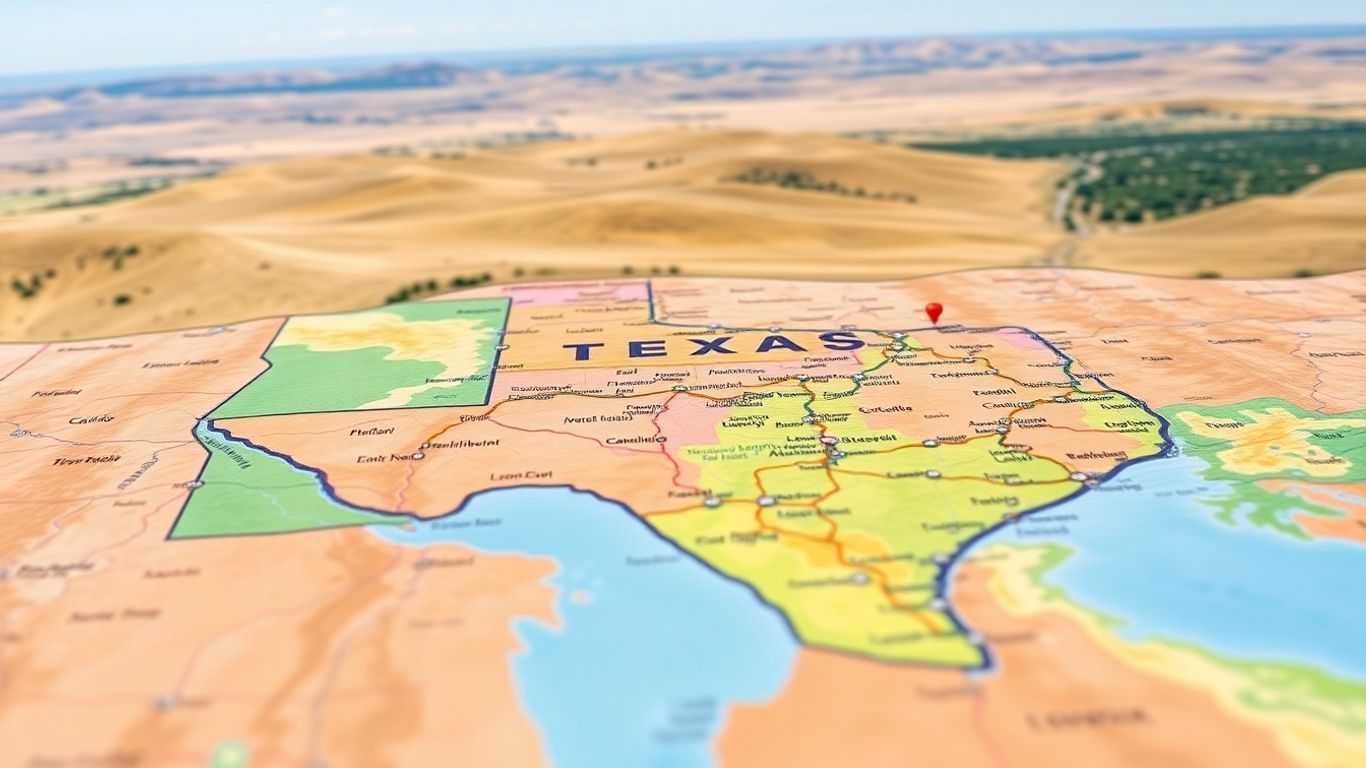
Planning a journey across the expansive landscapes of Texas necessitates a grasp of some key practical details. Beyond merely knowing where cities are located, understanding area codes, zip codes, and the state's major airports can truly streamline your travel experience. Think of it as acquiring a valuable cheat sheet for navigating the vast and vibrant Lone Star State.
Texas Area Codes and Their Associated Cities
Area codes, in essence, function as digital identifiers for distinct neighborhoods and regions. Knowing them facilitates seamless communication with people and places throughout Texas. For example, if your destination is Dallas, you'll likely encounter codes such as 214, 469, or 972. Houston typically utilizes 713, 281, and 832, while Austin primarily falls under the 512 area. San Antonio is covered by 210, and Fort Worth by 682 and 817. These numerical sequences are more than mere digits; they represent unique, identifiable segments of the state.
Here’s a concise list of some primary area codes and the cities they serve:
- 210: San Antonio
- 512: Austin
- 713, 281, 832: Houston
- 214, 469, 972: Dallas
- 682, 817: Fort Worth
- 915: El Paso
Zip Codes for Precise Location Finding
Zip codes elevate location pinpointing to an even greater level of precision. While undeniably essential for mail delivery, they are also incredibly valuable for mapping out specific neighborhoods or identifying exact addresses when you're meticulously planning routes. Texas boasts an extensive number of zip codes, each meticulously covering a precise geographic area. While enumerating every single one here would be impractical, understanding their existence and functional utility is paramount. For instance, a zip code like 78701 will guide you directly into the heart of downtown Austin, whereas 77002 is situated in downtown Houston. Employing zip codes within your GPS or mapping applications can significantly assist in zeroing in on your ultimate destination.
Major Airports Serving Texas Cities
Texas is, of course, a truly massive state, and consequently, air travel frequently represents the most efficient means of traversing its considerable distances. Several major airports serve as crucial gateways to various regions across the state. Dallas Fort Worth International Airport (DFW) stands as one of the busiest worldwide, catering to the enormous Dallas-Fort Worth metroplex. Houston’s George Bush Intercontinental Airport (IAH) is another significant international hub. Austin-Bergstrom International Airport (AUS) serves the state capital, and San Antonio International Airport (SAT) provides your entry point to that historically rich city. Finally, El Paso International Airport (ELP) is the primary gateway for West Texas.
Here are some of the principal airports:
- Dallas Fort Worth International Airport (DFW): The primary hub for the sprawling Dallas-Fort Worth area.
- George Bush Intercontinental Airport (IAH): A major international airport serving the Houston metropolitan area.
- Austin–Bergstrom International Airport (AUS): Conveniently serves the state capital, Austin.
- San Antonio International Airport (SAT): The main airport facilitating travel to San Antonio.
- El Paso International Airport (ELP): The key airport for the West Texas region.
Understanding these practical elements—area codes, zip codes, and airports—seamlessly transforms a general map into an incredibly functional tool for travel. Ultimately, it’s all about connecting the spatial dots between places and the intricate systems that facilitate our journeys there.
Historical Context of Texas Cities
The Alamo and Its Significance in San Antonio
The compelling narrative of Texas is profoundly interwoven with its history, and few places embody this truth more powerfully than the Alamo in San Antonio. This venerable former Spanish mission is far more than just an ancient structure; it stands as an enduring symbol of Texas's fierce struggle for independence. The legendary siege in 1836, where a small, courageous band of defenders valiantly held out against a vastly larger Mexican army, swiftly became a fervent rallying cry for Texans. Even today, the evocative phrase "Remember the Alamo" echoes throughout the state’s history, serving as a poignant reminder of the profound sacrifices made.
Historical Expeditions and Early Settlements
Long before Texas achieved statehood, it was a land extensively explored by various groups. European explorers initially arrived in the early 1500s, and the Spanish subsequently dispatched numerous expeditions over the ensuing centuries. These early journeys meticulously laid the groundwork for future settlements. Later, American colonists began to arrive in significantly larger numbers, particularly following the Louisiana Purchase in 1803. This influx of people from diverse backgrounds profoundly shaped the early character of the towns and cities that would eventually form across the state.
The Evolution of Texas Cities Through History
Texas cities boast a rich and intricate past that has undeniably shaped their present character. From the foundational days of Spanish missions and Mexican rule to the era of the Republic of Texas and eventual statehood, each period has indelibly left its mark. The state's remarkable growth has been influenced by a multitude of factors, including:
- Trade and Transportation: Major rivers, expanding railroads, and later, an extensive network of highways played pivotal roles in determining where cities would flourish and how they would interconnect.
- Economic Opportunities: From the extensive cattle ranching and prolific cotton farming to lucrative oil booms and advanced modern industries, economic shifts have consistently drawn people to specific regions.
- Cultural Influences: The captivating blend of Native American, Spanish, Mexican, and American cultures has collectively forged the unique and vibrant character found in so many Texas cities.
The development of Texas cities is a compelling saga of expansion, occasional conflict, and constant adaptation. Each settlement, whether initially a modest outpost or a burgeoning metropolis, possesses a unique narrative that significantly contributes to the state's rich and multifaceted historical tapestry.
Consider, for a moment, how cities like Houston, which began as a relatively small port town, burgeoned into a major global hub largely due to the influential oil industry. Or how San Antonio, with its deeply ingrained Spanish roots, proudly maintains a distinct cultural identity that resonates to this day. Even smaller towns often possess fascinating origins tied to early trails, military forts, or vital agricultural centers. A deeper understanding of this profound history undeniably helps us appreciate the Texas we observe on the map today.
Wrapping Up Your Texas Exploration
So, we've truly covered a significant amount of ground across Texas, journeying from its sprawling metropolises like Houston and Dallas to its charming smaller towns and even some of its remarkable national parks. This map, you see, is truly just a starting point; there is so much more to encounter and experience in the magnificent Lone Star State. Whether you're meticulously planning an extensive road trip or simply harboring a curiosity about where things are situated, having a guide like this can certainly make things a bit more manageable. Texas is an immensely vast place, and gaining even a fundamental understanding of its layout—especially the basics of its cities and major points of interest—helps one truly appreciate its sheer scale and incredible diversity. We sincerely hope this map overview has been an invaluable resource for your future Texas adventures!
Frequently Asked Questions
What's the best way to see where Texas cities are?
The most effective way is by utilizing a comprehensive Texas City Map! It meticulously displays all the major cities and towns, offering you an excellent visual understanding of where everything is located across this enormous state. It's incredibly helpful for planning trips or simply deepening your knowledge about Texas.
Which are the biggest cities in Texas?
Some of the most prominent and largest cities in Texas include Houston, which holds the distinction of being the biggest, followed by Dallas, San Antonio, Austin (the state capital), and Fort Worth. El Paso also stands as a significant urban center located out west.
Is Texas mostly hot all the time?
Texas experiences varied weather conditions depending on your specific location. While the northwest can exhibit a more continental climate, much of the remaining state enjoys a subtropical environment. Summers are generally hot, especially in the lowlands, though conditions tend to be drier the further west you travel. Winters are typically mild, but occasional cold snaps are certainly possible.
How big is Texas compared to other states?
Texas proudly ranks as the second-largest state in the U.S. by total area. Only Alaska surpasses it in size. It encompasses a massive expanse of land, which means there's an incredible amount to explore!
When did Texas become a state?
Texas officially became part of the United States, achieving statehood on December 29, 1845. Prior to that pivotal date, it existed as an independent nation, known as the Republic of Texas.
What is Texas famous for?
Texas is renowned for a multitude of things! People often associate it with the iconic NASA Space Center in Houston, its famous cattle ranches, substantial oil and gas production, delicious chili, and significant historical sites like the Alamo. It's also widely celebrated for its thrilling rodeos and the breathtaking beauty of its bluebonnet wildflowers.


