
resources
Explore the Globe: Your Ultimate Guide to World Map Online Resources
07 Jan 2026

Considering an armchair journey across the globe, or perhaps meticulously planning your next significant excursion? Fortunately, the digital landscape abounds with exceptional resources designed to facilitate your exploration of the world. We're referring to an extensive array of tools, ranging from intuitive mobile applications on your smartphone to sophisticated interactive globes accessible online. This comprehensive guide aims to illuminate the finest online world map resources available, while also delving into the core functionalities that make them so invaluable. Let's embark on your global adventure!
Key Takeaways
- Engaging with online world maps significantly enhances one's understanding of geography, international borders, and prominent urban centers.
- When selecting a mapping resource, crucial considerations include its scale, construction materials, and overall aesthetic presentation.
- Certain maps boast augmented functionalities, such as integrated time zone indicators or illumination features, thereby increasing their utility and appeal.
- Maps serve as potent instruments for education, catalyzing travel aspirations, and fostering a deeper appreciation for diverse global cultures.
- A vast spectrum of map styles is available, from vintage renditions to contemporary designs, many of which are readily accessible digitally across various devices.
Choosing Your Ideal World Map Resource
Navigating the myriad options when selecting the perfect map or globe can, frankly, feel a tad overwhelming. It's not merely about acquiring an item that complements your decor; rather, it’s about identifying a truly functional tool tailored to your specific requirements—be that for academic pursuits, enhancing your living space, or meticulously charting your next major trip. Ultimately, the most suitable map will seamlessly integrate with your environment, align with your budget, and adeptly serve your intended purpose.
Selecting the Right Globe Size
Globes, much like the world they represent, come in a delightful array of sizes, from compact desktop models to imposing floor-standing centerpieces. A primary consideration, then, is determining its prospective home. A smaller globe, perhaps around 12 inches in diameter, proves ideal for a bookshelf or a desk; it's effortlessly maneuverable and provides visual access without encroaching upon valuable space. Conversely, if your setting permits, such as a spacious living room or a dedicated study, a larger 16-inch or even a substantial 24-inch globe can truly command attention, offering a significantly richer level of detail. Indeed, one might even encounter considerably grander versions in educational institutions or public venues.
Here’s a concise overview of common dimensions:
| Size (Diameter) | Typical Use Case |
|---|---|
| 6-10 inches | Desktop, travel, confined spaces |
| 12-14 inches | Desk, bookshelf, general residential use |
| 16 inches and up | Floor standing, prominent display, detailed exploration |
Durable Materials for Longevity
The composition of a map or globe profoundly influences its enduring quality. Inexpensive plastic globes, for instance, are prone to cracking or fading over time, particularly if exposed to direct sunlight. Superior quality globes, in contrast, are typically crafted from more robust materials. As you explore options, give careful thought to:
- Construction: Is it fashioned from resilient plastic, sturdy metal, or even elegant wood? This choice profoundly affects both the tactile experience and the item's long-term resilience.
- Finish: A well-applied finish safeguards the map from general wear and tear, ensuring colors remain vibrant and true.
- Base: For globes, the base is a critical component. A substantial and well-designed base not only ensures stability but also contributes significantly to the item's overall aesthetic appeal.
The selection of materials extends far beyond mere visual appeal; it directly dictates the lifespan and continued utility of your map or globe. A thoughtfully constructed piece promises years of valuable service and aesthetic pleasure, unlike those that quickly succumb to the ravages of time.
Considering Aesthetic Appeal
When making your selection, it's wise to contemplate the prevailing style of the room where the map or globe will reside. Do you envision it harmoniously blending into the existing decor, or perhaps serving as a captivating focal point? Sometimes, a map infused with a more artistic sensibility can prove just as enlightening as one designed purely for utilitarian function. Ultimately, the objective is to procure an item you will genuinely relish observing and engaging with on a regular basis. Whether it's a meticulously detailed globe for scholarly pursuits or a striking wall map for your office, the judicious choice elevates the entire experience of global exploration. You'll discover a broad spectrum of styles available, from timeless classics to cutting-edge contemporary designs, all poised to complement your individual taste and your home's decor.
Leveraging Digital World Map Tools
Indeed, the era demanding bulky atlases or physical globes for world exploration has largely receded. Today, our ubiquitous digital devices have metamorphosed into extraordinarily potent instruments for geographical discovery. These sophisticated applications and online platforms place the entirety of our planet quite literally at your fingertips, rendering learning and exploration more accessible and dynamic than ever before.
Mapping Applications for Devices
Your smartphone or tablet, surprisingly, can function as an exceptionally capable mapping device. Applications such as Google Maps or Apple Maps empower you to meticulously zoom in on virtually any corner of the globe, from sprawling continents to individual city streets. Users can effortlessly toggle between diverse views, including standard topographical maps, stunning satellite imagery, or even immersive street-level photographs. Planning an upcoming journey? These indispensable apps readily furnish directions, approximate travel durations, and skillfully assist in locating local points of interest. It's akin to carrying a perpetually updated, remarkably detailed atlas right in your pocket.
Interactive Online Globes
Beyond the functionalities of basic mapping applications, numerous websites now host fully interactive online globes. These are far from mere static images; users can effortlessly rotate them, zoom in with precision, and frequently overlay various informational layers. Can you imagine visualizing population density, climate zones, or even historical trade routes superimposed onto a dynamic 3D globe? Certain platforms even facilitate detailed terrain exploration or permit the viewing of historical map renditions. These resources are unequivocally invaluable for students, or indeed anyone keen to visually comprehend intricate global patterns.
Satellite Imagery Views
Satellite imagery has, without question, utterly transformed our perception of Earth. Services like Google Earth offer astonishingly detailed perspectives from orbit. One can virtually soar over majestic mountain ranges, meticulously explore remote archipelagos, or observe the evolutionary growth of cities over decades. It presents a truly unparalleled opportunity to appreciate the planet's sheer immensity and rich diversity. Moreover, historical imagery is often available, allowing users to witness temporal changes in various locations—a truly remarkable perspective for grasping our world's physical geography and humanity's enduring impact. This satellite-derived data, it's worth noting, also constitutes a significant economic asset, influencing sectors ranging from AI development to advertising digital footprints.
The sheer volume of data made available through modern digital mapping tools is truly astonishing. It permits a degree of detail and interactivity that would have been unimaginable just a few short decades ago. Whether you identify as a student, a seasoned traveler, or simply someone possessing an inherent curiosity about the world, these resources offer an unparalleled avenue for learning and profound exploration.
Understanding World Map Features
Beyond their primary function of depicting landmasses and oceans, many world maps are imbued with an array of features that genuinely amplify their utility. It's not simply a matter of aesthetic appeal on a wall; these thoughtful additions actively contribute to a more profound understanding and appreciation of our planet. Consider them, if you will, as integrated tools crafted specifically for in-depth exploration.
Interactive Features for Enhanced Learning
Certain maps transcend their static nature. They may incorporate elements that users can manipulate or engage with, thereby fostering a more captivating experience. For instance, a physical globe might feature a mechanism for rotation, or a wall map could include removable overlays. These interactive components have the remarkable capacity to transform geographical learning from a potential chore into an engaging, almost gamified experience. The ability to physically move elements around significantly aids in solidifying information, offering a superb means to grasp distances and the intricate relationships between various global locations.
Understanding Time Zone Differences
Have you ever pondered why it's bright daylight in one part of the world while profound darkness envelops another? That universal phenomenon, of course, is entirely attributable to time zones. Many maps, particularly globes, incorporate intuitive methods for illustrating this concept. You might encounter a rotatable ring encircling the globe, distinctly marked with hourly increments, or perhaps a separate, dedicated dial. These features prove immensely practical, whether you're coordinating an international call or simply aiming to comprehend how the Earth's continuous rotation impacts us all. It beautifully underscores the interconnected yet distinctly temporal nature of various global regions. While seemingly straightforward, this concept profoundly influences global communication and travel. A nuanced understanding of time zones can genuinely deepen your appreciation for our planet's vast scale and the diverse ways human life adapts to diurnal cycles based on geographical positioning—a fundamental concept with far-reaching implications.
Here's a concise explanation of how time zones operate:
- Meridians: The Earth is notionally divided by 24 imaginary lines, known as meridians, extending from the North Pole to the South Pole.
- One Hour Per Zone: Each designated zone typically encompasses 15 degrees of longitude, corresponding to a one-hour time differential.
- Coordinated Universal Time (UTC): This serves as the foundational time standard by which global clocks and timekeeping are regulated. Most time zones are then defined by their specific offset from UTC.
Grasping the intricacies of time zones extends beyond merely knowing the local time elsewhere; it embodies a recognition of our planet's inherent rhythm and how human activity dynamically adjusts to the progression of daylight across immense distances. It stands as a profoundly practical facet of geography, influencing the daily lives of billions.
Nighttime Viewing Capabilities
Some maps and globes possess a rather ingenious feature: the ability to illuminate! This isn't solely for show, though it undoubtedly adds a captivating visual dimension. Internal lighting mechanisms facilitate enhanced detail visibility, which is particularly beneficial when operating in dimly lit environments. This attribute is especially valuable for discerning major urban centers or geographical formations when ambient light levels are low. Furthermore, it transforms the map into a striking decorative element, artfully blending educational utility with aesthetic appeal. Should you seek a map that performs admirably as both a conversation starter and a functional informational tool, an option with integrated lighting might very well be your ideal choice. It offers an engaging way to continue your explorations, even after dusk. Indeed, one can discover truly fascinating illuminated globes that artfully highlight various global facets, such as major global cities.
Exploring Different World Map Styles
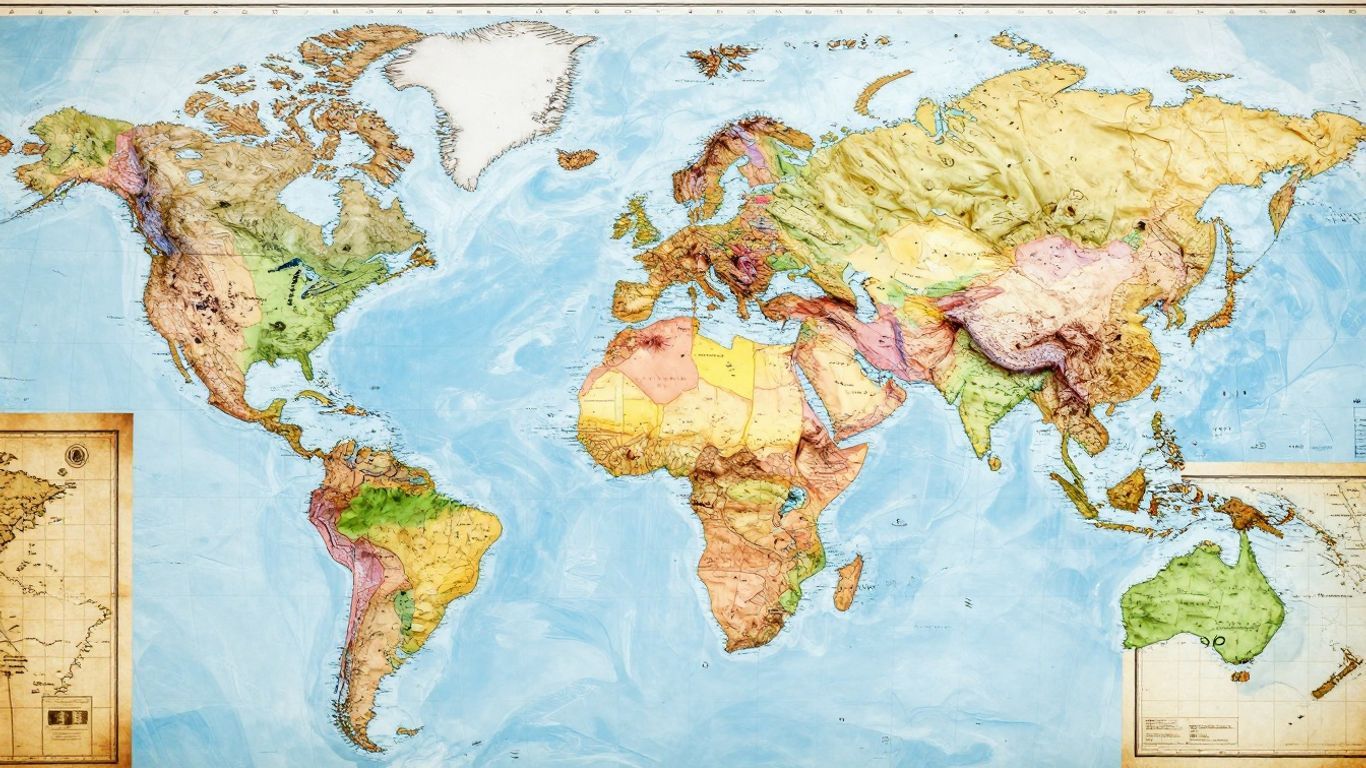
Upon venturing into the realm of world maps, one swiftly discerns a remarkable diversity in their presentation. It's certainly not a case of one-style-fits-all, which is, in fact, quite advantageous, as it allows you to pinpoint precisely what you require for any given endeavor. Each distinct map type boasts its own inherent strengths and is optimally suited for varying applications.
Modern and Minimalist Designs
These maps epitomize clean aesthetics, characterized by sharp lines and an uncluttered appearance. They frequently employ vibrant, unambiguous color palettes and highly legible typography. Digital maps stand as the quintessential modern paradigm, enabling seamless zooming and panning. If your sensibilities lean towards order and simplicity, a modern map will likely resonate with your preferences. Such designs integrate effortlessly into contemporary spaces, ensuring they enhance rather than dominate a room.
Antique and Classic Styles
Maps, as historical artifacts, have graced human endeavors for millennia, and their stylistic evolution profoundly shapes our perception of the world. Classic maps exude a timeless, old-world charm. They often feature historical fonts, subdued color schemes, or even portray geopolitical boundaries from bygone eras. These pieces can serve as exquisite wall art, imbuing your home or office with a rich sense of history. They are, in essence, works of art that also conveniently inform your geographical knowledge. One can discover truly captivating antique globes that eloquently infuse any room with a palpable sense of historical gravitas.
Navigational and Travel Maps
These specialized maps are engineered with a singular, overriding objective: facilitating movement from one point to another. Navigational maps—those utilized by maritime vessels or aircraft, for instance—are meticulously detailed. They incorporate highly specific data, such as water depths or predefined flight paths, functioning as sophisticated technical instruments for professionals. Travel maps, conversely, cater to the everyday explorer. They delineate road networks, highlight points of interest like tourist attractions, hotels, and dining establishments. While traditionally encountered as folded paper charts, they are now more frequently accessed as smartphone applications. They are indispensable for trip planning, navigating unfamiliar urban landscapes, and uncovering intriguing local spots. Indeed, a well-designed travel map undeniably renders the exploration of a new destination far more straightforward and enjoyable. The initial stages of trip planning frequently commence with an examination of these map types, and resources such as Citiesabc can prove invaluable in understanding major global hubs.
The specific style of map you ultimately select can significantly influence both its practical application and its visual contribution to your environment. Consider carefully whether your priority is purely functional utility or a piece that also harmonizes with your existing decor. Ultimately, choosing a map that you genuinely enjoy viewing and using will undoubtedly elevate your experience of exploring the world.
The Educational Value of World Maps
World maps are far more than mere aesthetically pleasing depictions on a wall or screen; they stand as extraordinarily potent instruments for cultivating a profound understanding of our planet and its inhabitants. They offer an invaluable macroscopic perspective, helping us discern how all global elements coalesce.
Teaching Geographic Literacy
Maps serve as phenomenal conduits for acquiring a firm grasp of spatial relationships. Through them, one can readily identify neighboring countries, comprehend their relative dimensions, and pinpoint the expansive oceans and continents. This isn't solely about rote memorization of names; rather, it’s about visualizing the grand tapestry of our world. One can gesture to a nation and discuss its adjacent territories, its climatic conditions, or even its historical trajectory. This visual, interactive approach significantly enhances retention compared to purely textual learning. It truly represents the foundational step toward cultivating genuine geographical literacy.
Inspiring Future Travelers
A contemplative gaze upon a world map possesses a remarkable capacity to ignite a fervent desire for new horizons. You might spot a diminutive island or a colossal continent and find yourself pondering the realities of life in such a place. It functions as a compelling visual invitation to adventure, wouldn't you agree? Furthermore, maps can be ingeniously employed for hypothetical journey planning, tracing potential routes and discovering the myriad locales one might visit. This particular brand of imaginative dreaming frequently blossoms into tangible travel itineraries, providing an excellent means to cultivate excitement about diverse cultures and landscapes long before a single bag is packed. It’s an ideal starting point for conceiving your next adventure, perhaps even to destinations indexed on platforms like Citiesabc.
Expanding Knowledge of Cultures
Maps, crucially, transcend the mere delineation of land and water; they are intrinsically about people. As you observe a map, you begin to acquire knowledge about different nations and the rich tapestry of cultures thriving within them. The geographical positioning of countries prompts reflection on why specific cultures might have evolved in particular regions. For instance, studying a map of Africa can profoundly deepen your appreciation for the immense variety of peoples and traditions spanning that vast continent. It vividly illustrates the sheer multiplicity of human existence across the globe—a truly awe-inspiring realization.
Here’s a concise breakdown of how maps facilitate learning:
- Visual Learning: Observing countries and continents graphically simplifies the retention of their locations and interrelationships.
- Context: Maps furnish the essential backdrop required for comprehending current events, historical narratives, and cultural nuances.
- Curiosity: They naturally provoke inquisitive questions such as "What lies beyond that border?" or "How do communities thrive in that specific nation?"
- Planning: Whether for academic projects or deeply personal travel aspirations, maps invariably serve as the initial point of reference.
Maps empower us to perceive the broader narrative. They reveal the intricate interconnectedness of everything, from global trade routes to shared historical legacies. Cultivating this understanding of interconnectedness is, unequivocally, paramount to becoming a more informed and engaged global citizen.
It's quite remarkable, isn't it, how much insight one can glean simply by engaging with a map?
Accessing World Maps Offline
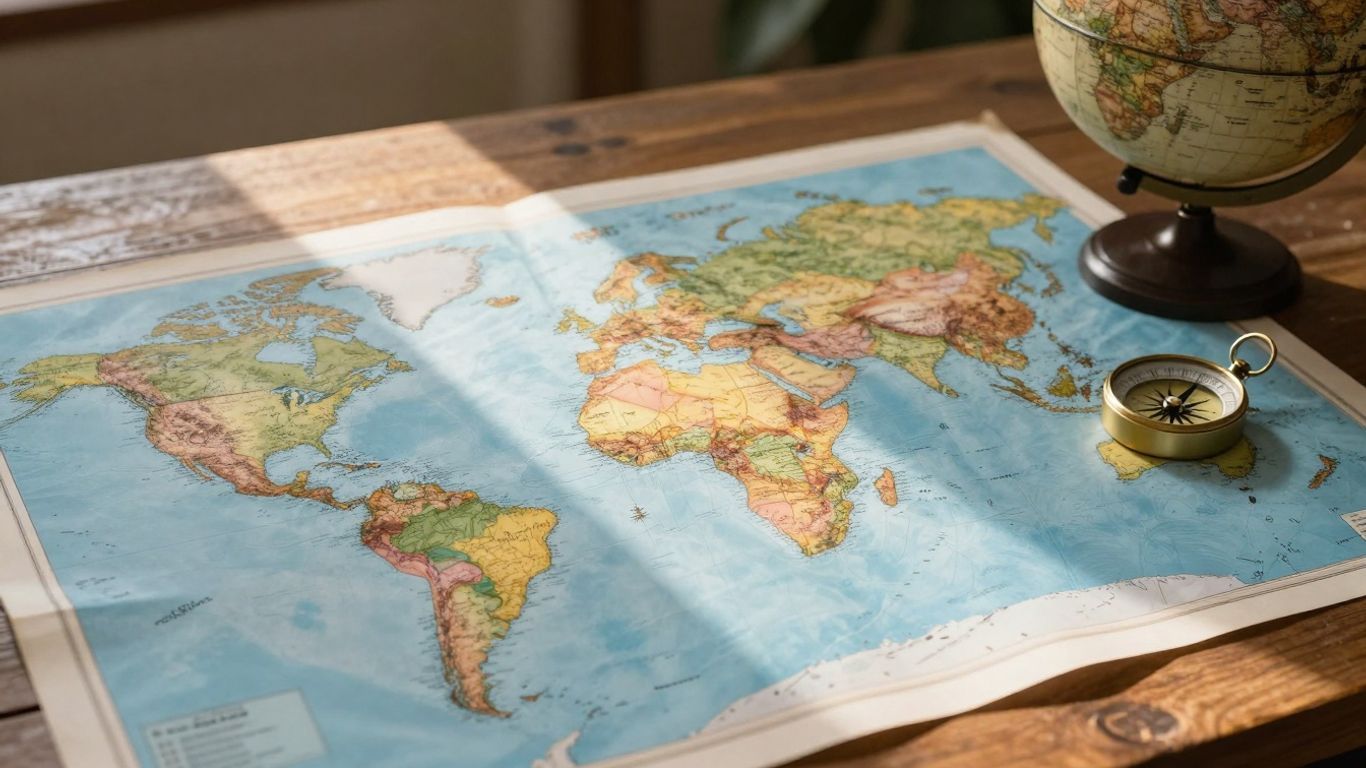
In our increasingly digitized era, it's rather easy to fall into the assumption that every map necessitates an internet connection. However, when it comes to world maps, the provision of offline access proves immensely significant. This capability translates into either downloading extensive map data directly onto your smartphone or tablet, or, indeed, simply relying on a trusty, traditional paper map that functions perfectly without Wi-Fi or cellular service. Imagine, for a moment, employing a highly detailed map application on your phone that continues to perform flawlessly even when you're well beyond service range, or perhaps unfolding a robust paper map during a remote wilderness hike. This particular kind of access guarantees that you are never truly adrift and can always consult your navigational aid, regardless of your location or internet availability.
Offline Access for Reliability
The most compelling advantage inherent to offline maps is their unwavering functionality—anywhere, at any time. This eliminates the anxiety associated with weak or nonexistent signal strength. Such reliability is profoundly critical when venturing into remote territories, trekking through mountainous terrain, or even simply navigating the confines of a subterranean subway system. A physical map, or indeed a pre-downloaded digital map, stands as a steadfast companion, perpetually at your disposal.
Data Savings and Accessibility
Opting for offline maps can translate into substantial savings on mobile data charges. Instead of perpetually downloading map tiles in real-time, you leverage data that has already been securely stored on your device. This also proves to be an absolute godsend in regions where internet access is either sporadic or prohibitively expensive. For any individual exploring locales far removed from reliable Wi-Fi, ensuring maps are ready for immediate use is unequivocally a strategic decision. It renders the discovery of new places considerably more straightforward and decidedly less stressful.
Physical Maps as a Reliable Option
Let's not overlook the enduring appeal of the classic paper map! While digital convenience is undeniable, a physical map possesses its own distinctive charm and an intrinsic reliability. They are entirely impervious to battery depletion, immune to software crashes, and inherently unhackable. They excel at providing a comprehensive overview of an area and are perfectly suited for meticulous route planning even before your departure. A diverse array of these exists, from highly detailed road atlases to specialized topographical charts. They serve as an excellent backup and a wonderfully tactile method for engaging with geography sans screen. In a pinch, they're truly indispensable.
- No Battery Dependency: Unlike electronic gadgets, paper maps never succumb to power depletion.
- Ease of Sharing: A single paper map can be simultaneously consulted by multiple individuals, fostering collaborative planning.
- Enhanced Spatial Awareness: Spreading out a large-format map can significantly improve one's grasp of the broader geographical context.
The reliance on maps that operate independently of an internet connection offers a profound sense of security. It assures that you will consistently be able to orient yourself and find your way, even in scenarios where technology falters or is simply unavailable. This independence is truly fundamental to authentic exploration.
Your World Awaits
So, we've journeyed through a fascinating array of methods for visualizing our planet, from the ubiquitous mapping applications on our smartphones to the tangible, rotating globes gracing our shelves. Whether your objective is to pinpoint a nation for a school project, meticulously chart your next grand adventure, or simply to satisfy a burgeoning curiosity about distant lands, a well-chosen map or globe proves to be an indispensable aid. These tools are far more than mere guides for navigation; they are profound instruments that illuminate the interconnectedness of our global tapestry. Therefore, we encourage you to continue exploring, to persist in your learning, and to allow these remarkable maps to guide you on your own, unique adventures—be they grand expeditions or intimate discoveries.
Frequently Asked Questions
What's the best way to start learning about world maps?
An excellent starting point involves simply examining a world map to identify the continents and major oceans. Following this, endeavor to locate countries you're already familiar with or those that pique your interest. Many maps thoughtfully include prominent cities and renowned landmarks, which can significantly enhance your geographical learning.
Are there different kinds of world maps?
Indeed, there's a considerable variety! Some maps primarily depict physical geography—landforms and bodies of water—while others concentrate on national borders and urban centers, known as political maps. You'll also encounter maps styled with an antique, classic aesthetic, alongside those featuring modern, minimalist designs. Furthermore, specialized maps exist specifically for travel planning.
How can a globe help me understand time zones?
Globes frequently incorporate specialized markings or a rotating dial to illustrate different time zones. Given the Earth's rotation, various regions experience day or night at distinct times. A globe provides a clear visual demonstration of how this rotation influences time across different countries, proving exceptionally useful for coordinating with international contacts.
Are digital maps and apps useful?
Absolutely, they are remarkably beneficial! Applications like Google Maps or dedicated globe apps enable you to zoom in and out with precision, view satellite imagery, and even receive turn-by-turn directions. They are ideally suited for planning journeys or engaging in virtual explorations via your phone or tablet. Importantly, many of these applications offer offline functionality, even without an internet connection.
Why are world maps important for learning?
World maps hold significant educational value because they visually convey the locations and relative sizes of countries, along with their geographical relationships. This foundational knowledge is crucial for understanding geography. They facilitate learning about diverse cultures, historical events, and the underlying reasons for global phenomena. Additionally, maps inherently inspire a desire to travel and discover new destinations!
What should I look for when buying a physical world map or globe?
Consider first the intended placement. Do you require a compact version for your desk, or a larger, wall-mounted display? Furthermore, assess the materials used in its construction—durability is key for longevity. Some globes feature integrated lighting, which not only offers an attractive display but also enhances visibility of details in low-light conditions.


