
resources
Explore the United States: A Comprehensive US Cities Map Guide
04 Jan 2026

Considering an exploration of the United States? Consulting a map that delineates U.S. cities serves as an excellent starting point. This isn't merely a tool for charting a course from one locale to another; it offers a profound appreciation for the country's vast expanse and its intricate geographical arrangement. One can readily identify major urban centers and gain an intuitive understanding of population distribution and topographical characteristics. Whether you're meticulously planning an itinerary, conducting in-depth research, or simply indulging a geographical curiosity, such a map proves an exceptionally valuable guide.
Key Takeaways
- Maps help us understand our world and how places connect to events.
- Maps of the U.S. have changed a lot as the country grew.
- A city's location and the people there really shape it.
- Digital maps make exploring cities easier and more fun.
- Every city on the map has its own story, showing America's variety.
Navigating the United States Map with Cities
Understanding the USA Map with Cities
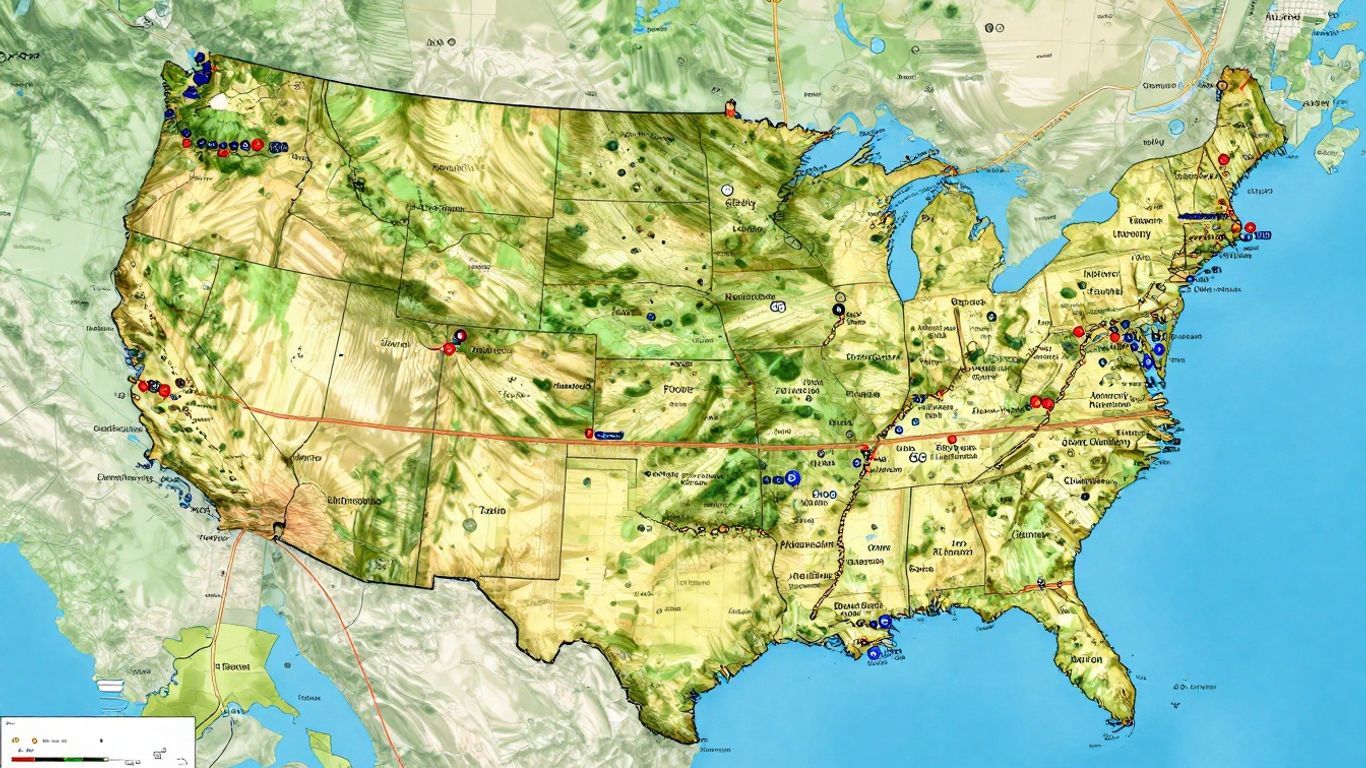
Surveying a map of the United States with its urban centers meticulously marked offers an insightful initial perspective on the nation. It extends beyond simply charting directions between two points; rather, it allows one to grasp the sheer scale of the country and observe how its diverse elements coalesce. You can swiftly discern prominent population hubs and how they interact with the surrounding landscape. For those embarking on a journey, undertaking academic work, or merely curious about the nation's fabric, this type of map provides an indispensable resource. Indeed, it presents a compelling visual narrative of America's geography and its populace.
The Role of Maps in Education
Maps are incredibly powerful educational instruments. Within academic settings, they assist students in comprehending spatial relationships and the interplay between various locations and historical occurrences. They lend a tangible quality to the study of geography and history, making complex concepts more accessible. Visualizing the country on a map, for instance, can render lessons on pivotal historical events or distinct regions far easier to assimilate. For example, the nuances of westward expansion become considerably clearer when one can observe territories being progressively incorporated into the map over time. It is, quite simply, a deeply effective visual methodology for understanding the world.
How Maps Reflect Cultural Identity
Beyond merely delineating landmasses and urban areas, maps often serve as profound indicators of a place's culture and historical trajectory. The very demarcation of the United States into individual states, each possessing its unique nomenclature and form, speaks volumes. These divisions frequently stem from significant historical events and the diverse communities that initially settled these areas. A careful examination of a map can therefore offer a fascinating window into the varied backgrounds that constitute the nation – much like perusing a curated collection of distinct neighborhoods, each with its own character and rich past. You might even discover campus maps for esteemed institutions such as MIT to illuminate specific localized areas.
Exploring Iconic Cities Across the USA Map
New York City: A Quintessential Cultural Melting Pot
When one contemplates the United States, New York City frequently emerges as a primary association. It stands as a global nexus where individuals from myriad corners of the world have converged, each contributing their distinct traditions, culinary arts, and linguistic heritage. This vibrant amalgamation generates a singular, palpable energy. One can traverse its diverse boroughs and often feel transported to an entirely different nation. From the dazzling luminescence of Times Square to the tranquil pathways of Central Park, the city presents an unparalleled array of experiences. It is a preeminent global center for the arts, haute couture, and commerce, truly embodying the essence of America – a nation forged by contributions from every conceivable background. What makes it so magnetic? Perhaps it's this constant flux, this endless reinvention.
Regional Highlights of Cities on the USA Map
The U.S. is an extraordinarily expansive nation, and its cities vividly reflect this inherent diversity. A glance at the map reveals how disparate regions host their own distinctive urban typologies. For example, the West Coast might feature cities renowned for technological innovation and coastal allure, whereas the Midwest could showcase urban centers with a robust industrial legacy or deeply agricultural roots. The South frequently offers a unique confluence of history and musical traditions, while the Northeast is densely populated with historic nuclei and formidable financial powerhouses.
Here's a brief overview of some notable regional distinctions:
- Northeast: Characterized by historic cities, significant financial centers, and a high population density. Prime examples include Boston, Philadelphia, and New York City.
- South: Distinguished by its unique culture, music, and wealth of historical sites. Cities such as Atlanta, New Orleans, and Miami are emblematic of this region.
- Midwest: Often referred to as the "heartland," with cities largely focused on industry, agriculture, and a more expansive urban footprint. Chicago, Detroit, and St. Louis serve as key illustrations.
- West: Defined by its expansive natural landscapes, innovative spirit, and a blend of established traditions and contemporary trends. Los Angeles, San Francisco, and Denver exemplify this multifaceted diversity.
Understanding these regional patterns helps paint a clearer picture of the nation's vastness and the unique character of its urban centers.
Visualizing Geographic and Cultural Diversity
Examining a map of U.S. cities transcends mere spatial identification; it’s an exercise in understanding how geography and culture inextricably shape human habitation and lifestyles. Rivers, formidable mountain ranges, and extensive coastlines have historically exerted a profound influence on urban development. Early settlements, for instance, frequently emerged along waterways, harnessing them for trade and transit. Subsequently, evolving transportation networks – think railroads and interstate highways – interconnected these burgeoning communities, fostering their expansion and specialization. This intrinsic relationship explains why certain industries tend to cluster in specific locales or why cities exude such divergent atmospheres depending on their geographical position. A coastal metropolis, for example, will undoubtedly exhibit a different pace of life and economic orientation than an urban center nestled in the nation's interior. Maps, in essence, allow us to decipher these profound connections and fully appreciate the rich tapestry of variety across the United States.
The Historical Context of USA Maps
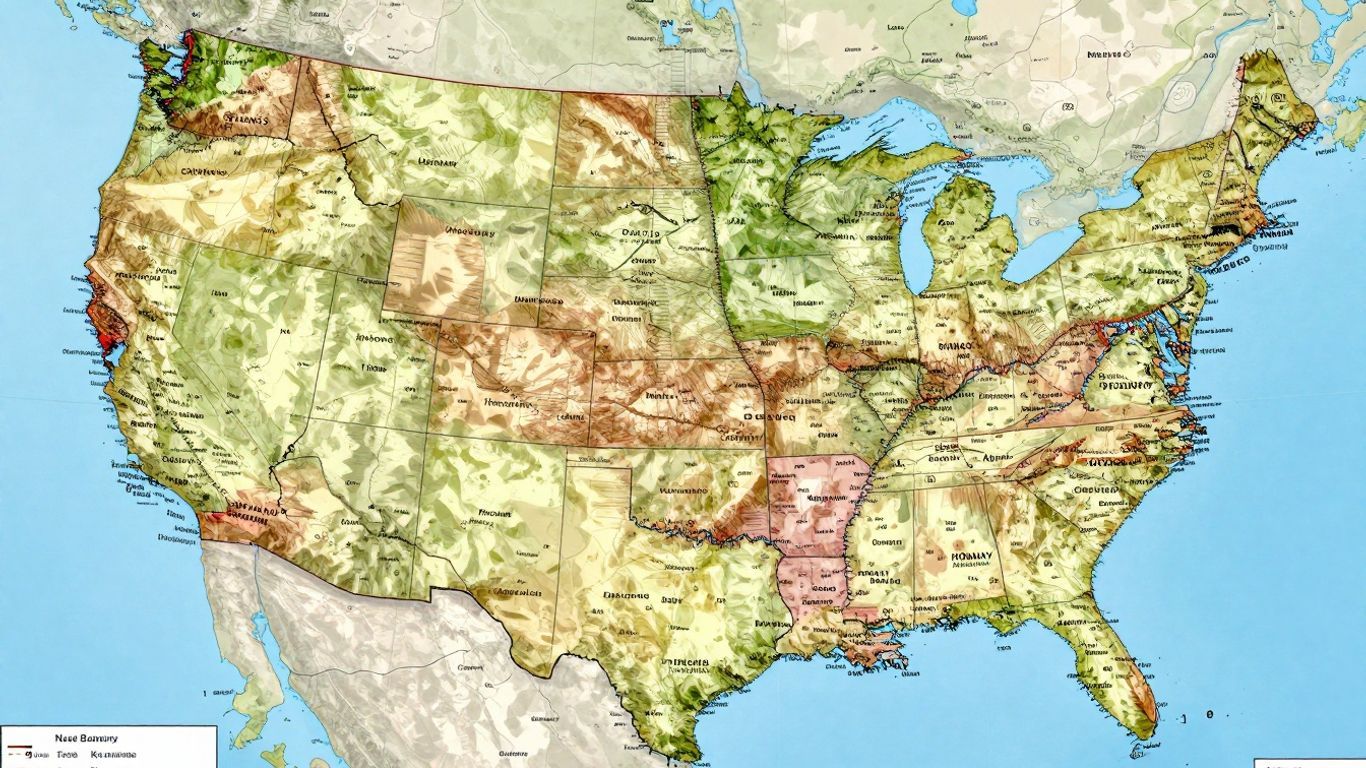
Maps depicting the United States and its cities are far more than simple graphical representations of places. They serve as historical documents, chronicling the nation's growth and transformative evolution over time. By examining the genesis and evolution of these cartographic artifacts, we can gain a deeper appreciation for the country's development and the dynamic forces that have shaped its urban landscapes.
Mapping the Historical Evolution of Major US Cities
One might easily overlook the fact that the maps we utilize today have not always appeared in their current form. Early maps of North America primarily focused on coastlines and the initial European colonial outposts. As the nascent country expanded, so too did its cartographic depictions. Many cities now recognized as major centers for commerce and culture frequently originated as modest frontier settlements or crucial trading hubs. Their trajectory of growth was intrinsically linked to burgeoning economic opportunities, the establishment of vital transportation corridors, and the influx of diverse populations drawn to new territories. It truly underscores the monumental effort expended in settling and developing the continent.
Early Maps and the Westward Expansion Saga
Consider this: the U.S. began as a collection of just a few colonies hugging the Eastern Seaboard. As the nation pushed westward, maps had to constantly adapt to incorporate newly acquired lands and, eventually, new states. This was by no means a seamless process; it entailed extensive exploration, persistent settlement, and, at times, considerable conflict. The maps we consult today are the distilled outcome of this entire historical narrative, visually charting the country's journey from its foundational beginnings to its contemporary configuration. Every modification on the map, then, narrates a segment of the grand American story.
Maps are like a visual history book, showing not just where things are, but how they got there and who made them happen.
Here's a concise overview of how these maps have transformed:
- Colonial Era: Cartography was concentrated on the original thirteen colonies and nascent settlements.
- Westward Expansion: Maps began to illustrate vast, often uncharted territories, reflecting the imperative to explore and populate new lands.
- Statehood and Growth: As territories achieved statehood, maps were meticulously updated to reflect the new political boundaries and the concomitant growth of cities within them.
The chronicle of U.S. maps is deeply intertwined with the monumental westward movement. Following the establishment of the initial colonies, a powerful impetus to discover new lands and resources propelled individuals across the continent. Seminal events like the Louisiana Purchase in 1803 dramatically reconfigured the nation's territorial scale, with further land acquisitions continuing over many decades. Early maps from this period often depicted immense, largely unknown expanses, dotted with only a scattering of fledgling towns. These maps were not solely navigational aids; they powerfully articulated the national aspiration of continental settlement. The process of mapping the U.S., therefore, was not a singular event but a protracted evolution, wherein exploration, episodes of conflict, and the emergence of new communities collectively shaped the ever-changing American landscape. Each subsequent survey, newly integrated territory, and officially recognized town added another layer to the intricate mosaic that defines the modern U.S. map.
Delving into Physical and Political Map Details
When you examine a map of the United States featuring its cities, you're observing far more than mere points on a page. You are, in fact, engaging with a rich amalgamation of information that comprehensively describes the nation's character. Political elements—such as the lines delineating state borders and the marked locations of capitals—provide the foundational framework for governmental administration and territorial organization. Beyond these, the physical features are prominent: the majestic mountain ranges, the sinuous rivers that meander across the terrain, and the extensive coastlines. These are not merely aesthetic backdrops; they frequently played a pivotal role in determining where early cities were established and how they subsequently flourished. For instance, numerous nascent towns strategically emerged along rivers due to their utility for transportation and commerce. Grasping the synergistic relationship between these physical and political dimensions is crucial to understanding the rationale behind urban placement.
Understanding Geographical Features and Their Impact
Physical maps primarily illustrate the land itself: its mountains, valleys, rivers, and plains. They employ a chromatic scale to denote elevation, with greens typically representing lower-lying areas and browns or purples signifying higher ground. Contour lines, which connect points of equal height, offer a precise depiction of the land's topography. These maps are immensely valuable for outdoor enthusiasts. Hikers and campers, for example, rely on them to meticulously plan routes and anticipate terrain challenges. Even if your interests don't lie in wilderness excursions, physical maps foster an appreciation for the sheer diversity of the American landscape, from the imposing Rocky Mountains to the sprawling Great Plains. They serve as a powerful reminder of the natural wonders that profoundly shape the country—indeed, how often do we truly consider the impact of a mountain range on a region's entire way of life?
Highlighting Interstate Road Networks and Capitals
An effective map of U.S. cities will invariably feature the primary highway systems, most notably the expansive Interstate network. These vital arteries interconnect urban centers and smaller towns across considerable distances, functioning as the nation's circulatory system. Observing this intricate network helps one gauge the ease or complexity of travel between various parts of the country. State capitals, too, are invariably—and quite rightly—clearly marked. These locations frequently serve as crucial hubs, not solely for governmental functions but also for robust business and cultural activities. Familiarity with the placement of capitals provides a keen insight into the administrative heart of each state. New York City, for example, is a colossal metropolitan center, and though not a state capital, it is undeniably a significant hub in its own right, exerting influence far beyond its immediate boundaries.
The Interplay of Geography and Urban Development
Geography and urban development are, in essence, two sides of the same coin, intrinsically linked. Rivers historically furnished essential water resources and facilitated travel, leading many early settlements to flourish along their banks. Mountains could serve as formidable natural barriers or, conversely, provide abundant resources. Coastlines, naturally, opened avenues for maritime trade. As the nation matured, advancements in transportation infrastructure—such as railroads and later the Interstate Highway System—fundamentally altered how cities expanded and interconnected. Political directives also played a significant role, with the establishment of state capitals and the drawing of territorial lines directly influencing patterns of development. It’s a perpetual dynamic, a constant dialogue between the inherent characteristics of the natural landscape and the strategic decisions made through human planning.
The way cities are laid out and grow is a story told by both the land itself and the decisions people make about how to organize and connect their communities. Understanding these physical and political layers is key to seeing the full picture of the United States.
Planning Your Journey with a US Cities Map
Contemplating an expansive cross-country journey? A comprehensive map showcasing U.S. cities will undoubtedly prove to be an invaluable companion. Its utility extends beyond simple point-to-point navigation; it fosters a holistic understanding of your entire route. With such a map, you can discern optimal travel corridors, accurately estimate transit durations, and even pinpoint suitable locations for stops and overnight stays. Possessing a map, whether it’s a digital interface on your device or a reliable paper counterpart, instills a sense of autonomy and renders the prospect of extensive exploration considerably less formidable. Furthermore, it's a wise precaution to carry a physical map, particularly when venturing into areas where cellular service might be unreliable.
Planning Road Trips Across the Nation
When meticulously charting a road trip, a detailed cities map offers crucial perspective. You can tentatively trace various routes, identify potentially scenic byways, and gain a foundational understanding of inter-city distances. This capability assists significantly in establishing pragmatic daily driving objectives and locating suitable accommodations en route. It also proves beneficial for identifying national parks or other points of interest that, while perhaps slightly off the primary highway, are well worth a planned detour.
- Identify major highways and interstates.
- Locate potential overnight stops.
- Spot points of interest like national parks or historical sites.
- Estimate driving times between major cities.
A well-planned route means less stress and more enjoyment. It allows you to focus on the experience rather than constantly worrying about where you're going next.
Exploring Major Cities Effectively
Upon arrival in a prominent urban center, a detailed city map transitions into your indispensable guide. It aids in deciphering the city's layout, navigating bustling thoroughfares, and precisely locating specific attractions. Many contemporary digital maps now incorporate features like public transportation information, which is exceptionally practical for traversing the city without a personal vehicle. These tools can also direct you to highly-rated restaurants or particular neighborhoods you're keen to explore. Leveraging a map efficiently ensures you can maximize your visit, making the most of your time without feeling unduly hurried—a true boon for any traveler, wouldn't you agree?
Understanding Regional Differences for Informed Travel
The United States boasts extraordinary diversity, a characteristic vividly illustrated by its maps. You can readily observe how urban clusters differ in density and character from the Northeast to the West Coast, or how the geographical tapestry shifts as you journey from the expansive Great Plains to the majestic Rocky Mountains. A nuanced understanding of these regional variations, which are frequently reflected in the placement and scale of cities, can immeasurably enrich your travels. It fosters an appreciation for why certain areas developed as they did and what imbues each region with its unique identity. For instance, cities situated near major rivers frequently blossomed as crucial trade hubs, a pattern distinctly visible on any comprehensive map of US cities.
| Region | Typical City Density | Dominant Geographical Feature |
|---|---|---|
| Northeast | High | Coastlines, Mountains |
| Midwest | Moderate | Plains, Great Lakes |
| South | Moderate to High | Coastlines, Rivers |
| Southwest | Low to Moderate | Deserts, Mountains |
| West Coast | High | Coastlines, Mountains |
The Evolving Landscape of American Maps
Unveiling the Diverse World of American Maps
Maps of the United States, especially those highlighting its cities, are far from static representations of spatial location. They function, in essence, as dynamic historical archives. Consider this trajectory: the nation began with a limited number of settlements along the Eastern Seaboard. As populations migrated westward and new territories were incorporated, the cartographic record necessarily adapted. Every newly drawn line, every added urban center, narrates a segment of the multifaceted American story. It is truly captivating to witness how these visual depictions have undergone a continuous metamorphosis over time, faithfully mirroring the nation's growth and ongoing transformation.
The Transformation of Cartography Over Time
Early maps were often meticulously hand-drawn, their accuracy limited by the observational capacities of explorers. As the nation expanded, particularly with the vigorous push westward, the demand for increasingly precise maps became paramount. The 19th century ushered in significant advancements, exemplified by the establishment of the U.S. Geological Survey, which commenced producing detailed topographic maps depicting mountains and valleys. Subsequently, aerial photography and satellite imagery revolutionized our approach to cartography. Today, sophisticated computer systems and specialized software enable the creation of extraordinarily detailed and interactive maps. Thus, the evolution of mapping has progressed from rudimentary sketches to highly intricate digital instruments. Indeed, what was once a painstaking manual process is now often an instant, algorithmically driven endeavor.
Here’s a concise overview of how mapping has changed:
- Early Exploration: Hand-drawn maps, frequently emphasizing coastlines and major rivers.
- Westward Expansion: More elaborate maps illustrating territories, emerging roads, and nascent settlements.
- Technological Advancements: The integration of aerial photography, satellite imagery, and ultimately, sophisticated digital mapping platforms.
Maps are a visual narrative of a nation's journey, showing not just where places are, but how they came to be and the people who shaped them.
Interactive Digital Maps for Enhanced Exploration
In our current era, we benefit from digital maps that are continually updated and capable of presenting a wealth of real-time information. One can effortlessly zoom in on any city to view street names, local businesses, and even prevailing traffic conditions. These cutting-edge tools render trip planning—or simply gaining an understanding of a new locale—considerably more efficient. Platforms such as Citiesabc represent a facet of this ongoing evolution, striving to connect and catalog urban centers on a global scale. This sophisticated capability marks a considerable departure from those initial, often rudimentary, sketches of North America, powerfully illustrating just how dramatically our capacity to visualize and engage with geographic information has expanded.
Your Journey Continues
We've now comprehensively surveyed a diverse array of cities across the United States. It is truly remarkable how each locale possesses its own distinct narrative, wouldn't you agree? From the venerable towns that marked the nation's inception to the dynamic urban centers currently experiencing rapid growth, the map serves as an illuminating guide to both our historical origins and our future trajectory. Reflecting upon these unique locations significantly deepens our collective understanding of the country as a whole. Whether your inclination is toward meticulous travel planning or simply an intellectual curiosity about new places, remember that every city depicted on the map contributes an integral element to the grand mosaic of America. We encourage you to continue your explorations!
Frequently Asked Questions
What exactly is a map of U.S. cities?
A map of U.S. cities is essentially a comprehensive visual representation of the country, meticulously illustrating the locations of its primary towns and cities. It provides crucial insight into population distribution and the overall geographic organization of the nation, much like assembling the intricate pieces of a grand puzzle.
Why are maps so helpful for learning?
Maps are exceptionally valuable pedagogical instruments because they facilitate a clearer comprehension of diverse places, significant historical events, and global cultures. They function as a compelling visual guide, simplifying complex geographical and historical information and significantly aiding retention.
How have maps of the United States changed over the years?
Maps of the U.S. have undergone substantial transformation in tandem with the nation's expansion. Initially, the United States comprised only thirteen colonies. As new territories were explored and subsequently incorporated, new states and urban centers were progressively added to these maps, offering a dynamic, visual chronicle of the country's continuous growth and evolution.
How does the land itself shape where cities are built?
Topographical features such as mountain ranges, river systems, and even prevailing climatic conditions exert considerable influence over the genesis and development of urban areas. For instance, numerous early settlements strategically emerged along rivers due to their inherent advantages for transportation and trade. The natural landscape, therefore, plays a profound and often decisive role in shaping a city's historical trajectory.
Can maps help me plan a trip around the U.S.?
Absolutely! Maps are an indispensable resource for trip planning. They enable you to identify optimal routes for travel, estimate projected journey durations, and pinpoint suitable stopover points along your itinerary. Specialized maps can even highlight notable attractions and points of interest for enhanced exploration.
What makes each city in the U.S. feel different from the others?
Each U.S. city possesses a distinctive character, a result of its unique historical background, the diverse demographics of its inhabitants, and its specific geographical location. Expansive, bustling metropolises present a markedly different ambiance than smaller, more tranquil towns, with each cultivating its own singular identity and spirit.


