
citiesabc, first_page
Favikon: AI, Influencer Branding and Digital Citizenship in Emerging Communities
26 Feb 2026

Influence is no longer just a marketing tactic – it is infrastructure for digital communities. Platforms such as LinkedIn have become town squares for professionals, while TikTok and Instagram shape cultural narratives.
- In 2024 the global influencer‑marketing industry was valued at roughly US $24 billion, and it is projected to reach US $33 billion in 2025 for platforms alone.
- In the United States over 86 % of marketers plan to partner with influencers in 2025, and 26 % of agencies allocate more than 40 % of their marketing budget to influencer partnerships.
Digital influence is therefore a socio‑economic layer: it helps people find information, shapes career opportunities and informs buying decisions.
At the same time, digital citizenship – how individuals behave in online communities – hinges on authenticity and trust. Consumers increasingly expect honesty and transparency.
A survey by Sprout Social found that:
- 67 % of consumers believe the best brand–influencer collaborations are honest and unbiased
- nearly 86 % of consumers make at least one purchase per year based on influencer content.
Yet trust is fragile: a 2025 study by the BBB National Advertising Division reported that
- 87 % of consumers trust company advertisements but only 74 % trust influencer ads,
- 70 % of respondents react negatively when influencers fail to disclose paid partnerships.
In Clutch’s 2026 survey almost half of consumers had not bought a product recommended by an influencer in the previous year, and 53 % said paid endorsements eroded trust.
Digital communities, thus, value authentic voices more than brand‑scripted promotions – a dynamic that companies must respect if they want influence to feel like citizenship rather than propaganda.
Favikon – AI‑powered discovery and credibility scoring
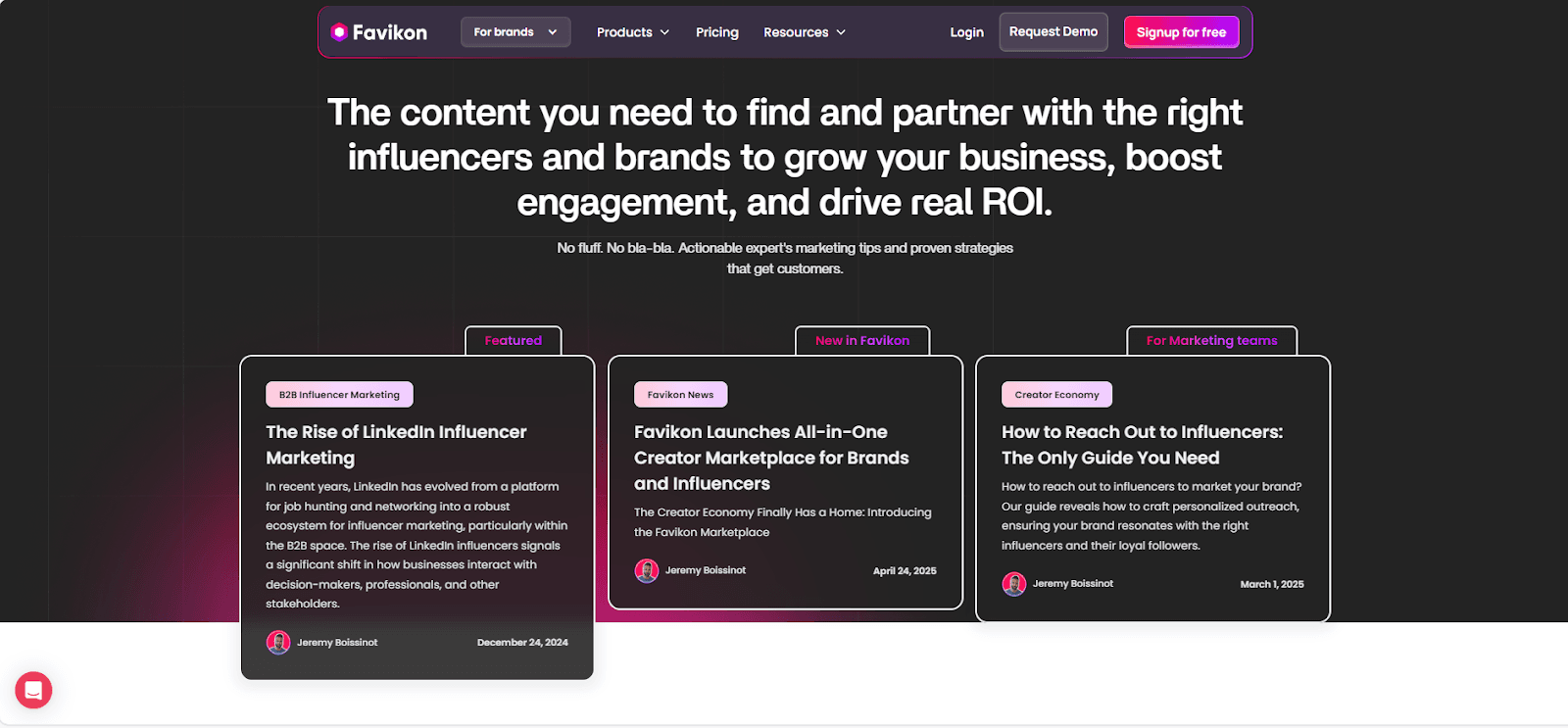
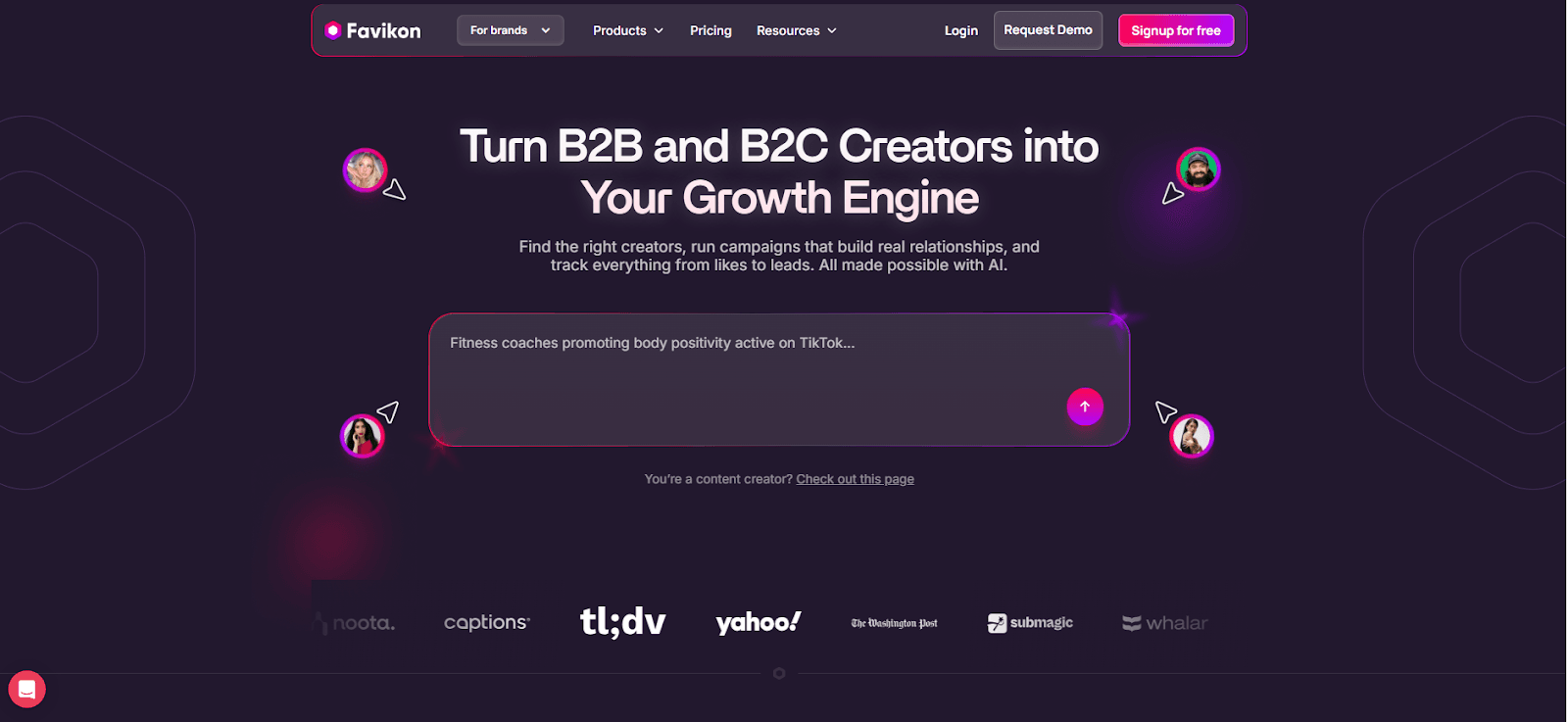
Favikon is an AI‑driven influencer‑marketing platform built to address these trust and discovery challenges. Where many legacy tools focus on follower counts, Favikon combines data science and community context to help brands identify and vet thought leaders. Independent reviews of influencer‑vetting platforms note that Favikon’s scoring system "evaluates an influencer’s credibility based on engagement quality, content consistency and past collaborations". The platform provides detailed profiles that include audience location, interests and follower authenticity checks, allowing brands to avoid creators who rely on bots or purchased engagement. It also offers niche and industry‑based search filters and an AI‑powered scoring system so marketers can quickly find creators with genuine influence.
Favikon’s own documentation highlights the platform’s end‑to‑end workflow: users can discover creators across LinkedIn, Instagram, X (Twitter), YouTube and TikTok, filter them by average engagement per post, region, niche and language, and reach out directly through the platform. For pricing‑negotiation, Favikon even provides a “fair price” calculator based on real data from more than 130 verified LinkedIn influencers, helping brands establish reasonable rates. Because its database contains a significant number of B2B and LinkedIn influencers – something highlighted by users comparing Favikon to competing platforms – it is especially useful for companies looking for thought‑leadership collaborations rather than lifestyle endorsements.
How Favikon measures authenticity
Influencers are scored on more than vanity metrics. Favikon’s scoring system weighs:
Dimension | Meaning |
| Engagement quality | Evaluates likes, comments and shares relative to audience size, helping identify genuine community interaction. |
| Content consistency | Reviews posting frequency, thematic coherence and long‑term growth. |
| Past brand collaborations | Tracks an influencer’s partnership history to avoid conflicts or misaligned endorsements. |
| Audience authenticity | Analyzes follower demographics and detects bots or fake accounts. |
| Niche filters | Allows brands to refine searches by industry, region or language. |
This multi‑metric approach aligns with digital citizenship because it rewards authenticity and diversity. Creators who game the system with bots or sporadic viral posts may rank lower, while those who build consistent, engaged communities are surfaced more prominently.
Case study – Synthesia’s data‑driven expansion
One instructive example comes not from Favikon directly but from a company that leveraged targeted influencer marketing and community insights to break into new markets. Synthesia, an AI‑video start‑up, wanted to expand beyond its home market. According to a Favikon article on LinkedIn influencer marketing, the company first focused on Germany, hiring a local creator‑marketing agency to identify suitable German influencers. After testing messaging and tailoring content to German professionals, Synthesia iteratively expanded its influencer campaigns to Brazil, Spain, Italy, India and other countries. The strategy worked: the article notes that the campaign was "a success", and the company adapted its messaging from successful creator content into paid advertising.
What makes this example instructive for digital citizenship? Localisation and trust. Rather than treating influencers as generic advertising channels, Synthesia sought voices who understood the local language and cultural nuances. Favikon’s platform supports such strategies by allowing brands to filter creators by language and region and by providing audience‑authenticity data. In this way, a global tech company built community‑driven influence without appearing as an outsider.
The challenges of digital branding and influencer marketing
While platforms like Favikon help brands find authentic voices, digital branding remains fraught with challenges. The influencer economy is maturing, and over‑saturation leads to “influencer fatigue.” A 2025 industry report observed that the market is crowded and engagement rates for top influencers are plateauing. Fake followers and inauthentic engagement continue to plague the space, undermining brand credibility and prompting regulators to take action. Clutch’s 2026 survey found that half of consumers have not purchased a product recommended by an influencer and that 53 % distrust paid endorsements. The same survey noted that 20 % of respondents prefer product recommendations from micro‑influencers (10 000–100 000 followers) – evidence that communities favour relatable voices over celebrity endorsements.
Transparency and disclosure are another challenge. The National Advertising Division’s 2025 Influencer Trust Index reported that 70 % of consumers react negatively when influencers do not disclose paid partnerships. Consumers also appreciate candour: 70 % said that knowing an influencer is in a paid partnership does not make them less trustworthy, so long as the relationship is disclosed. This underscores the importance of explicit disclosure tags and alignment with regulatory guidelines.
For brands, budgeting and ROI are unpredictable. Influencer pricing remains “the wild west,” according to marketers interviewed by Favikon; rates vary widely, and negotiation is still necessary. Some companies invest in one‑off posts and see little return – for example, Ahrefs spent US $14 000 on creators and generated only 11 free‑trial sign‑ups when pitching their full product – whereas long‑term collaborations yield better results. Data from the LinkedIn influencer case study shows that about 85 % of people engaging with a creator’s posts are brand‑new audiences, and engagement can increase across multiple campaigns. In Sprout Social’s survey, 71 % of influencers offer discounts for longer‑term partnerships, highlighting the financial benefit of sustained relationships. However, the B2B buyer journey is long; companies like Storylane give creators three months to perform because results correlate with buyer cycles.
Finally, regulation and ethics are tightening. Government agencies and social platforms are implementing stricter rules around sponsorship disclosure. Failure to comply not only damages trust but can lead to legal challenges.
How influencer marketing is evolving
Despite these challenges, influencer marketing continues to evolve in ways that promote transparency, authenticity and meaningful community participation:
- Shift to micro and nano influencers – Brands are moving away from celebrity endorsements toward creators with smaller, highly engaged audiences. Find Your Influence’s 2025 report notes that micro/nano influencers achieve higher engagement rates and provide niche targeting. Clutch’s survey shows consumers also prefer these voices.
- AI‑powered analytics – Tools like Favikon use machine learning to analyse engagement quality and audience authenticity. AI also powers virtual influencers and content creation, enabling new forms of community interaction.
- Short‑form video and live commerce – TikTok, Instagram Reels and YouTube Shorts have made short‑form video the dominant content format. Live shopping integrates entertainment and e‑commerce.
- Long‑term partnerships – The era of one‑off posts is waning. Brands now seek long‑term brand ambassadors. Long‑term partnerships not only yield better pricing but also allow creators to authentically integrate products into their narratives.
- Always‑on programmes for B2B – Nearly 58 % of B2B marketing teams use an always‑on influencer approach, and those who don’t are 17 times more likely to consider their programmes ineffective. The main goals for B2B brands are increasing brand awareness (67 %) and credibility (54 %).
- Transparent measurement – More tools integrate analytics with CRM and web‑traffic data. Sprout Social reported that marketers measure influencer performance through engagement metrics (68 %), link traffic (50 %) and increased website traffic (45 %). Favikon’s integration with metrics like average engagement per post and its fair‑price calculator contribute to transparent evaluation.
Digital citizenship and the future of communities
Digital citizenship is about responsible, transparent participation in online communities. As influencer marketing becomes part of civic life, platforms like Favikon can help shape healthier ecosystems. By emphasising authenticity, cross‑cultural relevance and data‑driven vetting, Favikon aligns with the values of digital citizenship. However, technology is not a panacea. Brands and creators must still invest in honest storytelling, abide by ethical standards and respect the local cultures and norms of their audiences.
For emerging communities – from AI ethics forums to urban innovation networks – influence will increasingly resemble knowledge sharing rather than product placement. Data‑driven platforms can identify voices who are credible and inclusive, but the future of digital influence will depend on communities rewarding transparency and engaging with creators as peers. In this sense, influencer branding becomes a form of collective digital citizenship – a way for individuals and organisations to contribute to shared narratives, exchange expertise and build trust across borders.


