
business resources
Hardware and AI Integration Form Apple’s Balanced Financial Signal
05 Mar 2026

Apple's upcoming event in New York City looks not just like a traditional product announcement but also like an attempt to precisely adjust the company's financial strategy amid a slowdown in the electronics market. The presentation is expected on March 4, during a busy week on the economic calendar. Several product lines are anticipated to be updated at once, from the MacBook Air and MacBook Pro based on the M5 Pro and M5 Max chips to the iPhone 17e and new iPads. However, a key element of the revenue structure may be the launch of a more affordable MacBook with an A18 Pro processor.
If the retail price of the new product is indeed around $699, Apple will actually expand the lower limit of its laptop segment by almost $300 relative to the current MacBook Air. This can boost sales in a subdued consumer-demand environment and strengthen penetration in the educational and mass segments. From a financial standpoint, the move looks pragmatic. The company retains the aluminum body and brand positioning but optimizes costs by using an already mastered mobile chip and a new production process. This model can increase supply volumes without significant pressure on the margins of the entire Mac line.
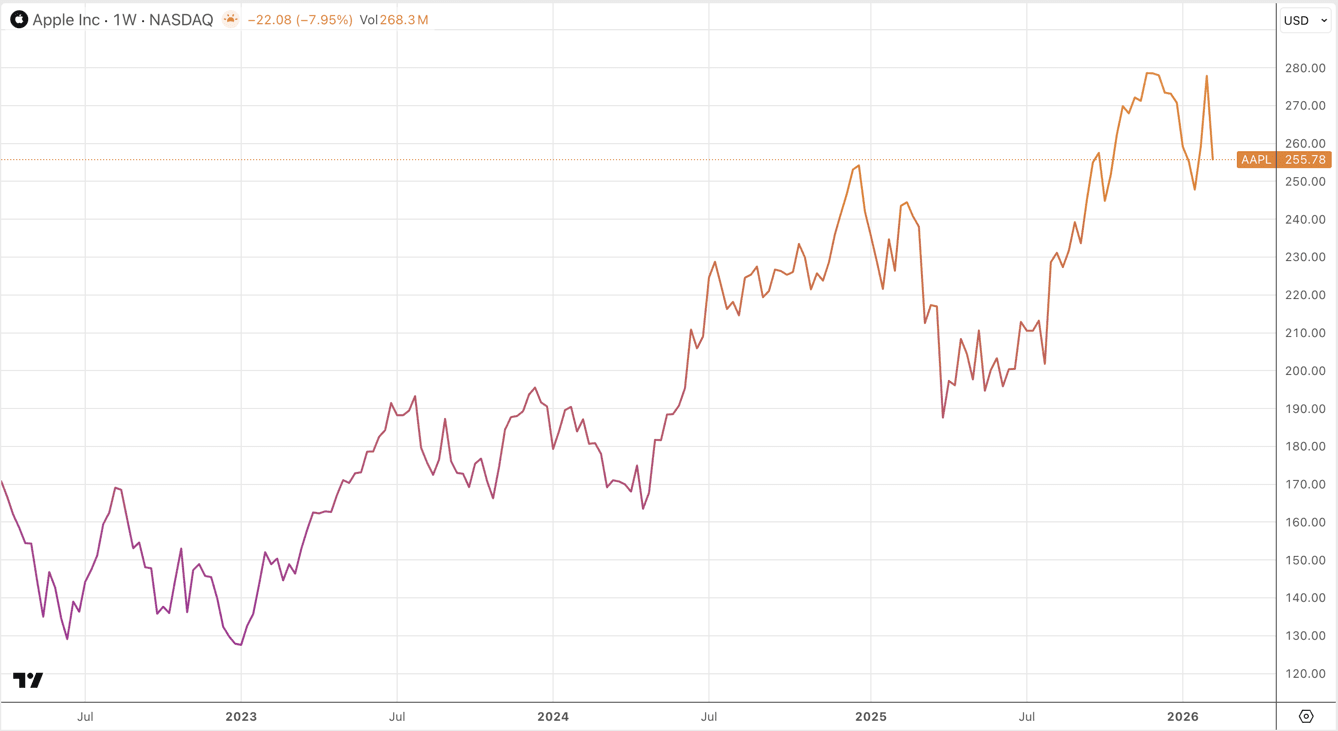
The market's reaction to the March announcements will depend not only on the devices' characteristics but also on financial expectations. Usually, on the eve of major presentations, volatility increases in both Apple shares and derivatives, including Emini futures, where the company's securities carry significant weight. If investors perceive the launch of a more affordable MacBook as a signal to expand market share without significant margin pressure, this could support risk appetite in the broader technology segment. Otherwise, cautious rhetoric on demand or forecasts can cause a short-term correction.
At the same time, Apple is strengthening the software component of the ecosystem. The release of the iOS 26.4 beta with support for end-to-end encryption of RCS messages and the continued development of Apple Intelligence reflect a strategy to increase the platform's value and retain users. Improving compatibility with Android through RCS and the introduction of E2EE removes some communication barriers, potentially reducing audience churn. For investors, this means strengthening the long-term monetization of services, a segment that has traditionally shown higher margins than the hardware business.
Special attention should be paid to the possible integration of Siri with the Google Gemini model. If Apple really expands the use of third-party AI solutions, this will accelerate the implementation of functionality without a sharp increase in its own R&D costs, redistributing the investment burden. In an environment where the AI market requires multibillion-dollar investments in infrastructure, such flexibility can positively impact operating profitability.
Together, hardware announcements and software updates form a balanced financial signal. On the one hand, the company is strengthening the premium segment with the new MacBook Pro and iPhone while maintaining average selling prices. On the other hand, it is testing a more aggressive pricing policy for laptops to increase market share and revenue. If the strategy proves successful, Apple will be able to simultaneously expand its user base and maintain stable margins, which traditionally remains the main indicator for shareholders.


