


resources
Hawaii Smart City Initiatives: Innovations Shaping the Future of the Islands
01 Jan 2026

Hawaii is truly making significant strides with its smart city plans, particularly noticeable on Maui and its neighboring islands. At its core, this ambitious endeavor seeks to harness cutting-edge technology to streamline daily life, cultivate more robust community connections, and—critically—bolster environmental sustainability across the archipelago. However, these efforts extend far beyond merely integrating advanced gadgets and applications; these ambitious undertakings are consciously designed to honor local culture and safeguard the islands' unparalleled natural beauty. Indeed, much is currently unfolding, from pivotal community meetings that help shape the vision to the tangible implementation of novel technologies within the transportation and energy sectors. With 2025 drawing near, it's becoming ever clearer that Hawaii's smart city endeavors are genuinely committed to striking that crucial balance between forward-thinking progress and deeply cherished tradition.
Key Takeaways
- Hawaii's smart city projects are thoughtfully crafted to integrate innovative technology with the rich local culture and a strong commitment to sustainability.
- Successful outcomes hinge critically upon robust collaborations among government entities, technology companies, and—most importantly—the residents themselves.
- Advanced infrastructure and data-driven tools are proving indispensable for managing vital resources and public services with greater efficiency.
- Ambitious environmental goals, such as achieving widespread renewable energy adoption and implementing robust conservation strategies, form the bedrock of all strategic planning.
- Nevertheless, considerable challenges persist, including the need to update existing regulations, ensure comprehensive privacy protection, and guarantee the equitable distribution of benefits across all communities.
Understanding Hawaii's Smart City Vision
Hawaii's approach to becoming a 'smart city' is fundamentally rooted in harnessing innovative technology to enrich the lives of everyone who lives here, while simultaneously safeguarding the archipelago's breathtaking natural splendor. Far from merely deploying sophisticated gadgets, this vision centers on addressing tangible challenges and optimizing operational efficiency. Consider, for instance, the prospect of enhanced water resource management, smoother traffic flow, or frictionless access to public services. Ultimately, the overarching aim is to elevate daily living without compromising Hawaii's distinctive spirit and unparalleled natural beauty.
Defining Smart Cities in the Context of Hawaii
When we discuss smart cities in Hawaii, it's crucial to recognize its distinctive character compared to similar initiatives globally. In Hawaii, the emphasis lies squarely on implementing technology in a manner that harmonizes with the islands' specific requirements and cherished cultural tapestry. This encompasses leveraging intelligent systems for critical sectors such as water and energy management, ensuring pervasive digital connectivity for all residents, and even employing automated streetlighting solutions to conserve power. Indeed, the paramount objective is to render everyday living simpler and more efficient, all while steadfastly honoring local traditions and the pristine environment. Ultimately, it's about fostering progress that resonates authentically with Hawaii's unique ethos.
The vision for smart cities in Hawaii is profoundly interwoven with the islands' unique environment and cultural heritage. Rather, technology is perceived as a facilitative instrument—one designed to bolster, not supplant, the existing way of life—with a view toward generating enhancements that are simultaneously practical and culturally respectful.
Key Goals for Maui and Neighboring Islands
Maui and the islands around it have delineated several distinct objectives for their smart city efforts. These aspirations transcend mere modernization; they represent concrete, pragmatic steps designed to benefit every individual.
- Sustainability: Ensuring the judicious stewardship of invaluable resources, such as water and electricity, for the benefit of future generations.
- Connectivity: Guaranteeing ubiquitous access to the internet and essential digital tools for all inhabitants, irrespective of their geographical location.
- Service Improvement: Facilitating an enhanced daily experience through superior public transportation networks and more rapid response capabilities during critical incidents.
To provide a clearer picture, here's an overview of some principal areas under scrutiny:
| Goal | Example Initiative |
|---|---|
| Sustainability | Renewable energy for public spaces |
| Connectivity | Island-wide broadband expansion |
| Service Quality | Smart public transportation pilots |
Balancing Technology and Island Culture
A pivotal inquiry revolves around how to integrate emerging technologies without inadvertently eroding the intrinsic qualities that render Hawaii so distinct. Each successive step—from initial concept to final implementation—necessitates careful consideration of local customs, the pristine natural environment, and the articulated desires of the community. This means:
- Convening regular community forums where residents can openly articulate their perspectives and concerns.
- Meticulously strategizing the placement and methodology of technological integration to preclude any detriment to natural or culturally significant locales.
- Developing inclusive programs that engage both senior and younger generations, thereby ensuring a comprehensive representation of all viewpoints.
Understandably, residents here harbor a justifiable wariness about the prospect of transforming into merely another bustling, high-tech metropolis. Consequently, transformations are enacted only after exhaustive deliberation and open discourse, consistently prioritizing the preservation of a robust Hawaiian culture. The objective is not to replicate external urban models, but rather to cultivate solutions that authentically resonate with and belong to these islands.
Technological Innovations Driving Hawaii's Smart City Projects
Hawaii's journey into smart city development is profoundly interwoven with the intelligent deployment of technology. Indeed, this initiative transcends the mere introduction of novel gadgets; it's fundamentally about leveraging sophisticated tools to foster a more seamless and sustainable island existence. How best to envision this? Perhaps as a comprehensive upgrade to the islands' operational infrastructure, designed to manage daily exigencies with heightened efficiency.
Information and Communication Technology Solutions
Central to these pivotal initiatives lies Information and Communication Technology (ICT). This extends beyond mere enhancements in internet speed, though that certainly constitutes a component. Rather, ICT encompasses the comprehensive ecosystem of tools designed to optimize management across sectors such as traffic, public utilities, and essential public services. The objective is to implement sophisticated systems capable of optimizing traffic flow, intelligently managing energy consumption, and rendering governmental services more readily accessible to all citizens. Indeed, ICT serves as the indispensable digital nervous system for an evolving, modern Hawaii.
Pivotal steps in realizing these ICT solutions encompass:
- Sensor Networks: The strategic deployment of sensor networks throughout the archipelago to collect real-time data, spanning from intricate traffic patterns to critical environmental metrics.
- Public Wi-Fi Expansion: Broadening public Wi-Fi accessibility, particularly in previously underserved areas, with the explicit aim of bridging the prevalent digital divide.
- Centralized Platforms: Establishing unified, centralized platforms for communication and service delivery, thereby facilitating enhanced inter-departmental collaboration and simplifying residents' access to essential resources.
The vision for ICT in Hawaii's smart cities is to create a connected infrastructure that fosters efficient operations and accessible services, all the while reverently respecting the distinctive island environment.
Environmental Monitoring and Conservation Efforts
Given Hawaii's singular and frequently delicate ecosystems, environmental preservation stands as a paramount focus. To that end, technology is being deployed to meticulously monitor natural resources and bolster conservation endeavors. This involves leveraging intelligent tools to gain insights into land use patterns, anticipate potential challenges such as flooding, and rigorously monitor air and water quality—crucial for island health.
To illustrate, here's how technology is actively contributing to these conservation efforts:
- AI for Efficiency: Harnessing artificial intelligence to meticulously analyze data pertaining to traffic and waste, with the overarching objective of mitigating pollution and safeguarding ecologically sensitive natural areas.
- Real-time Monitoring: Deploying advanced sensors and cameras for continuous oversight of vital water systems, thereby aiding in the prevention of pollutants reaching delicate coral reefs and crucial river ecosystems.
- Transparent Tracking: Creating intuitive digital dashboards that afford both municipal officials and the general public transparent visibility into the progress of environmental goal attainment.
Revitalization of Key Urban Areas in Maui
Maui, notably, stands as a prime illustration of where these technological innovations are actively being deployed to enhance urban living environments. The strategic emphasis is on rendering urban centers more functional, environmentally sustainable, and aesthetically pleasing for both residents and visitors. This entails a comprehensive overhaul of infrastructure coupled with the implementation of intelligent solutions designed to mitigate prevalent urban challenges.
Specific revitalization efforts within urban areas encompass:
- Smart Traffic Management: Implementing adaptive traffic management systems capable of real-time signal adjustments according to prevailing conditions, thereby significantly mitigating congestion and shortening travel durations.
- Energy-Efficient Infrastructure: Modernizing streetlighting infrastructure to advanced LED technology, featuring intelligent controls that can modulate illumination levels based on necessity, leading to substantial energy savings.
- Waste Management Solutions: Deploying intelligent waste bins that autonomously signal their fill status, thereby optimizing collection routes and curtailing superfluous trips—a measure that also demonstrably reduces emissions.
Crucially, these technological advancements are not merely about projecting a contemporary image; they represent tangible, practical measures designed to elevate the quality of life across the islands while assiduously preserving their innate natural beauty and profound cultural heritage.
Stakeholder Collaboration in Hawaii's Smart City Development
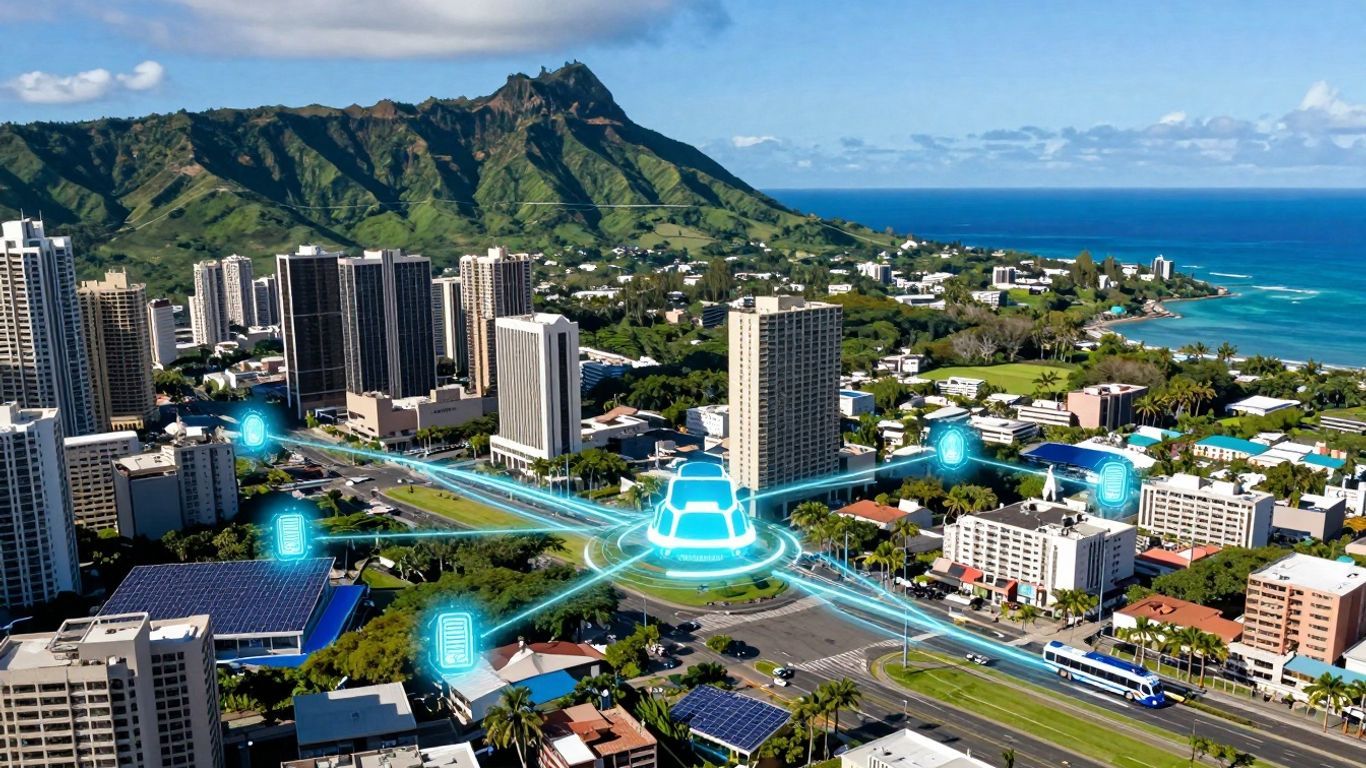
Building a smart city is not an undertaking achievable by a singular entity. Indeed, it demands the collective effort often likened to 'it takes a village'—or, in Hawaii's unique context, the collaborative synergy of diverse individuals and organizations. The fundamental premise involves converging governmental representatives, technology firms, and—most crucially—the resident population, to ensure that these nascent projects genuinely benefit all stakeholders.
Community Engagement and Participation
For any smart city blueprint to achieve optimal efficacy in Hawaii, it is imperative that the resident population perceives it as directly serving their interests. This necessitates engaging residents from the earliest conceptual stages. Beyond merely soliciting feedback, the imperative is to ensure that community voices actively sculpt the direction of initiatives. How best to describe this collaborative spirit? Envision planning a community luau—where every participant genuinely contributes to the selection of cuisine, entertainment, and activities.
- Regular town hall meetings: Regular town hall meetings are convened within various neighborhoods, providing a direct forum for residents to articulate their preferences and express concerns.
- Online feedback tools: Accessible online feedback mechanisms, such as user-friendly websites or applications, enable individuals to submit ideas or monitor project progress.
- Working with local groups: Forging partnerships with established local organizations possessing intimate knowledge of a neighborhood's distinct requirements and challenges.
Ultimately, the overarching objective is to ensure technology serves the community, rather than the inverse. When individuals feel genuinely heard and appreciated, their propensity to embrace and utilize new systems significantly increases.
Private Sector and Technology Partnerships
Technology companies and private enterprises represent a substantial constituent in the realization of smart city initiatives. They contribute cutting-edge innovations, intelligent concepts, and the requisite expertise to develop infrastructure such as enhanced internet connectivity or sophisticated energy management systems. This extends beyond a mere contractual arrangement; it entails cultivating collaborative relationships wherein all parties share a vested interest in the archipelago's future prosperity.
Businesses typically contribute in the following capacities:
- Funding new ideas: Providing capital for pilot programs, such as those exploring solar power applications for public spaces or devising more intelligent transportation solutions.
- Creating useful tools: Innovating practical tools, including applications or systems, designed to facilitate urban resource management or monitor energy consumption.
- Sharing knowledge: Imparting specialized knowledge and training to municipal personnel regarding emerging technologies.
Government and Community-Driven Initiatives
Governmental agencies, exemplified by Maui's Office of Planning and Sustainable Development, perform a pivotal function in translating overarching strategic visions into tangible, ground-level community requirements. Their role is to ensure community input is rigorously considered and that all projects harmonize with the islands' distinctive culture and delicate environment. Fundamentally, it's about guaranteeing that advancement does not inadvertently compromise the singular attributes that define Hawaii.
- Setting clear goals: Establishing unequivocal objectives for the smart city, such as optimizing public transportation or fostering cleaner energy solutions.
- Connecting different groups: Serving as a crucial liaison, bridging the gap between technology firms, local community members, and various governmental departments.
- Supporting local needs: Ensuring that initiatives are precisely tailored to address the particular challenges confronted by island residents, rather than merely generic urban problems.
Addressing Challenges in Hawaii's Smart City Initiatives
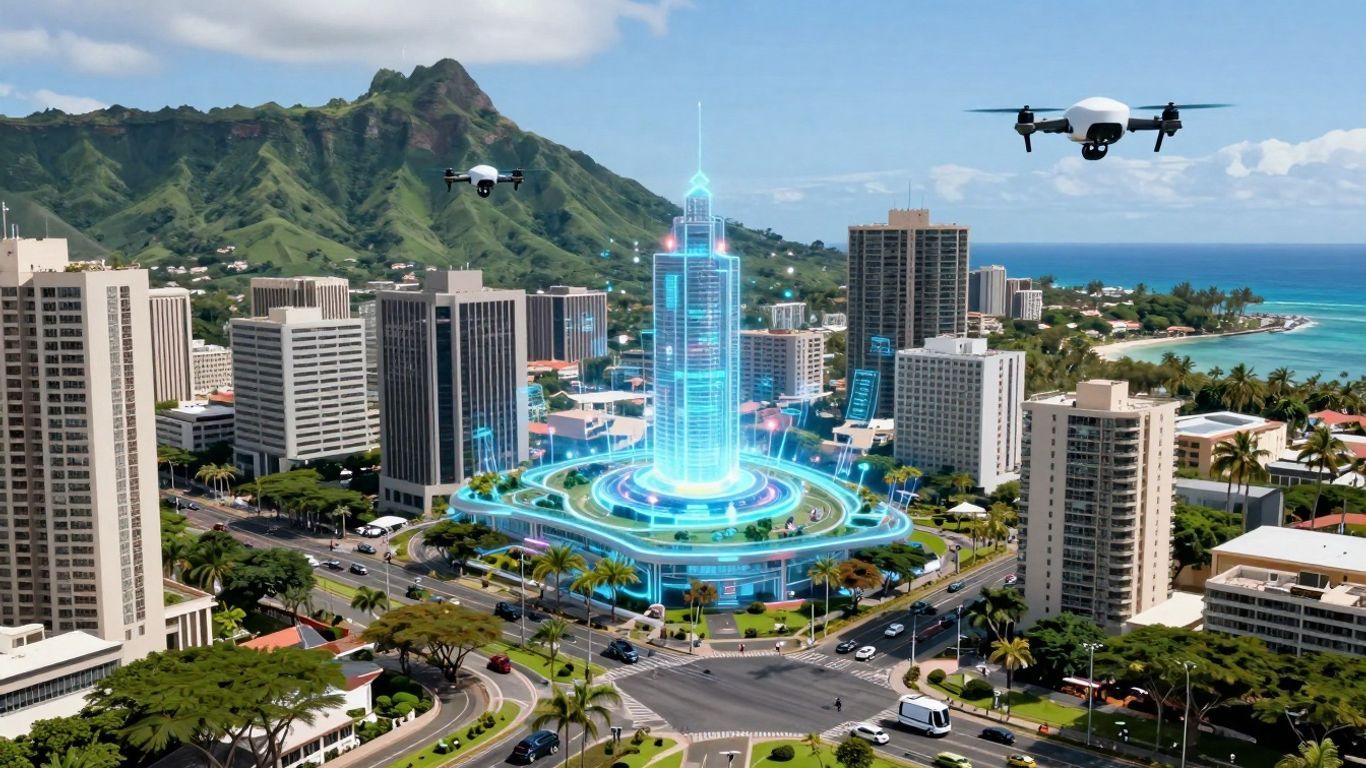
While the overarching vision for Hawaii's smart cities is undeniably promising, translating these innovations into tangible realities presents its own set of formidable hurdles. One might metaphorically compare this endeavor to meticulously constructing a magnificent sandcastle just as the tide begins to roll in—requiring both ingenuity and agility.
Cybersecurity and Data Privacy Concerns
Among the foremost concerns is the imperative to safeguard the integrity of all nascent digital systems. As an increasing number of crucial elements, such as traffic control systems or power grids, become interconnected via the internet, new vectors emerge for malicious actors to potentially disrupt operations. Thus, the paramount concern becomes shielding sensitive resident information and critical infrastructure against emergent cyber threats. This necessitates robust encryption protocols for data and a stringent policy of collecting only essential information. Indeed, it's an ongoing, dynamic challenge to remain abreast of evolving security risks—especially given the difficulties often encountered in sourcing specialized local cybersecurity talent.
Addressing Social Equity and Inclusion
Another critical consideration centers on ensuring comprehensive social equity and preventing any segment of the population from being disenfranchised. Disparities exist in both technological access and user comfort levels across the populace. It is therefore crucial to guarantee that the advantages of smart city initiatives extend universally, rather than exclusively benefiting residents in more digitally connected locales or those already adept with technology. This entails a multi-faceted approach, including:
- Dedicated efforts to mitigate the digital divide, exemplified by ensuring pervasive and reliable internet access across all geographical areas.
- Proactive inclusion of diverse perspectives from all community strata, moving beyond solely governmental or corporate leadership.
- Crafting user-friendly programs and interfaces that are intuitive and accessible for all demographic groups.
Ensuring Equitable Benefit Distribution
It is insufficient for technology merely to function; it must unequivocally serve everyone. Indeed, what constitutes true progress? Should a novel smart traffic system exclusively benefit a particular urban sector, or if a new digital service proves overly complex for elder residents, then genuine collective progress remains elusive. The fundamental objective is to elevate the quality of life for all residents, irrespective of their socio-economic background or geographical location. Achieving this necessitates meticulous planning and an unwavering commitment to ensuring the equitable distribution of these new technological advantages throughout all communities. This implies an active process of attentively discerning community needs and adapting strategic plans accordingly, rather than merely advancing technology for its inherent novelty.
The ultimate success of these initiatives hinges upon a delicate yet vital equilibrium: embracing technological advancement while steadfastly upholding the intrinsic values and profound inclusivity that characterize island life. This, indeed, mandates continuous dialogue and an authentic commitment to serving the entirety of the community.
The Future of Hawaii Smart City Growth
The journey of smart city development in Hawaii is truly in its nascent stages, yet the future outlook appears remarkably promising. Envision a future where technology contributes to a more seamless, interconnected, and unequivocally sustainable island existence. This vision transcends the mere proliferation of advanced devices; it's fundamentally about cultivating communities that operate with enhanced efficacy for all, while diligently preserving that distinctive island ethos.
Long-Term Vision for Connected Island Communities
The expansive, long-term vision for Hawaii's smart cities centers on forging truly interconnected and cohesive communities. Can you imagine a Hawaii where public services are exceptionally responsive, where vital resources such as water and energy are managed with unparalleled efficiency, and where navigating the islands is significantly less cumbersome? Crucially, this vision encompasses guaranteeing that every individual, regardless of their geographical location across the archipelago, possesses access to dependable internet connectivity and the essential digital tools required. Ultimately, the overarching goal is to construct a resilient and adaptable future for every resident. This inherently requires proactive foresight regarding how best to manage inevitable growth and transformation—in a manner that deeply respects both the environment and the local cultural heritage.
Upcoming Projects and Future Opportunities
As we cast our gaze forward, numerous sectors present themselves as ripe for significant development. We can anticipate a proliferation of initiatives centering on renewable energy solutions for public infrastructure, the expansion of broadband access to even the most secluded locales, and the piloting of more intelligent public transportation systems. These endeavors, it must be stressed, transcend mere technological enhancements; they signify profound opportunities to generate new employment, elevate the overall quality of life, and bolster the islands' inherent capacity to address complex challenges such as climate change. Indeed, a genuine opportunity exists to innovate substantially within domains such as waste management and public safety, leveraging data-driven insights to inform more astute decision-making.
Strengthening Technological Capabilities and Community Engagement
As Hawaii advances into this new era, a primary emphasis will undoubtedly be placed on cultivating its indigenous technological expertise and ensuring profound community involvement at every stage. This translates into strategic investment in training local talent and establishing accessible platforms through which residents can actively contribute to shaping their smart city future. Ultimately, it's about guaranteeing that as technology progresses, the inhabitants of these islands are not merely passive users, but rather empowered, active partners in the evolutionary process.
The ultimate success of Hawaii's smart city initiatives hinges upon a delicate yet vital equilibrium: embracing innovation while steadfastly preserving the profound cultural heritage and breathtaking natural beauty that singularly define the islands. This, without question, mandates ongoing dialogue, meticulous planning, and an unwavering commitment to inclusive growth that demonstrably benefits all residents.
To provide further insight, here's an overview of some crucial areas designated for future focus:
- Infrastructure Upgrades: Undertaking comprehensive modernization of both digital and physical infrastructure to robustly support emergent technologies.
- Data Management: Formulating secure and ethically sound methodologies for the collection, analysis, and utilization of data, thereby facilitating superior decision-making.
- Workforce Development: Implementing targeted training programs to furnish residents with the requisite skills for the evolving tech-driven economy.
- Policy and Regulation: Proactively adapting local legislative frameworks to align with rapid technological advancements and effectively safeguard citizens' interests.
- Pilot Programs: Initiating controlled pilot programs to rigorously test novel solutions on a smaller scale prior to broader deployment, thereby enabling iterative learning and adaptation.
Looking Ahead: Hawaii's Smart Future
Hawaii's journey into smart city development, particularly on islands like Maui, is unveiling a truly exceptional paradigm. It transcends the mere adoption of novel technologies; rather, it embodies the judicious application of such innovations to enhance the quality of life for all, whilst simultaneously ensuring the meticulous stewardship of the islands. We have witnessed firsthand the profound significance of fostering collaborative synergy—encompassing local communities, private enterprises, and governmental bodies—to guarantee that these transformations genuinely serve the islands' best interests. While certain challenges undeniably persist—such as ensuring robust data security and the equitable distribution of benefits—the progress achieved to date is remarkably encouraging. Hawaii is unequivocally demonstrating that advancement through innovative concepts can be achieved without compromising the intrinsic uniqueness that defines the archipelago. This represents a judicious path that harmonizes innovation with cherished tradition, seemingly poised to usher in a profoundly positive future for both its inhabitants and its cherished environment.
Frequently Asked Questions
What is a 'smart city' in Hawaii?
A smart city in Hawaii leverages technology to enhance and simplify island living. Essentially, it involves employing intelligent tools to more efficiently manage vital aspects such as traffic, energy, and water, all while diligently safeguarding the islands' pristine natural environment and rich local culture—elements that render Hawaii truly exceptional.
What are the main goals of Hawaii's smart city projects?
The primary objectives are to foster greater convenience for residents, diligently protect the environment through prudent resource management, and ensure pervasive access to internet and digital services for all. Furthermore, a crucial aim is to ensure technology serves to augment, rather than diminish, the islands' distinctive cultural heritage.
How does Hawaii make sure technology doesn't harm its culture?
Hawaii meticulously ensures the inclusion of local populations in planning sessions and actively solicits their invaluable input. Technological integrations are carefully orchestrated to respect both natural landscapes and cherished traditions. The ultimate goal is to harmoniously blend innovation with established practices, rather than seeking outright replacement.
Who is involved in making these smart city projects happen?
Indeed, a diverse array of stakeholders contributes! This encompasses governmental officials, technology firms supplying essential tools, and—paramountly—local residents who articulate their needs and provide constructive feedback. It is, unequivocally, a collaborative endeavor.
What are some challenges Hawaii faces with smart cities?
Foremost among the challenges are safeguarding online information from malicious intrusions, ensuring universal accessibility and benefit from new technologies (extending beyond urban centers), and guaranteeing that enhancements are equitably distributed across all communities, not merely a select few.
What can we expect in the future for Hawaii's smart cities?
Looking forward, Hawaii aims to cultivate even more robustly interconnected communities. This entails the continuous refinement of technology, close collaboration with residents, and the ongoing discovery of novel smart solutions to benefit both the populace and the environment, thereby rendering the islands even more exemplary places to reside.


