


business resources
How B2B Companies Can Turn Online Visibility Into Qualified Leads and Revenue
28 Aug 2026

Because more than 6 billion people now use the internet regularly, online traffic often acts as a vanity metric for growth teams. Driving thousands of monthly visits means very little if those users exit without taking action or booking a call.
For revenue leaders, conversion requires capturing search intent early and mapping content to specific buyer decision stages. There are many unqualified search queries made every day by casual browsers who will never buy your software or services. Filtering out that noise demands an intentional SEO strategy centered on pipeline value rather than raw volume.
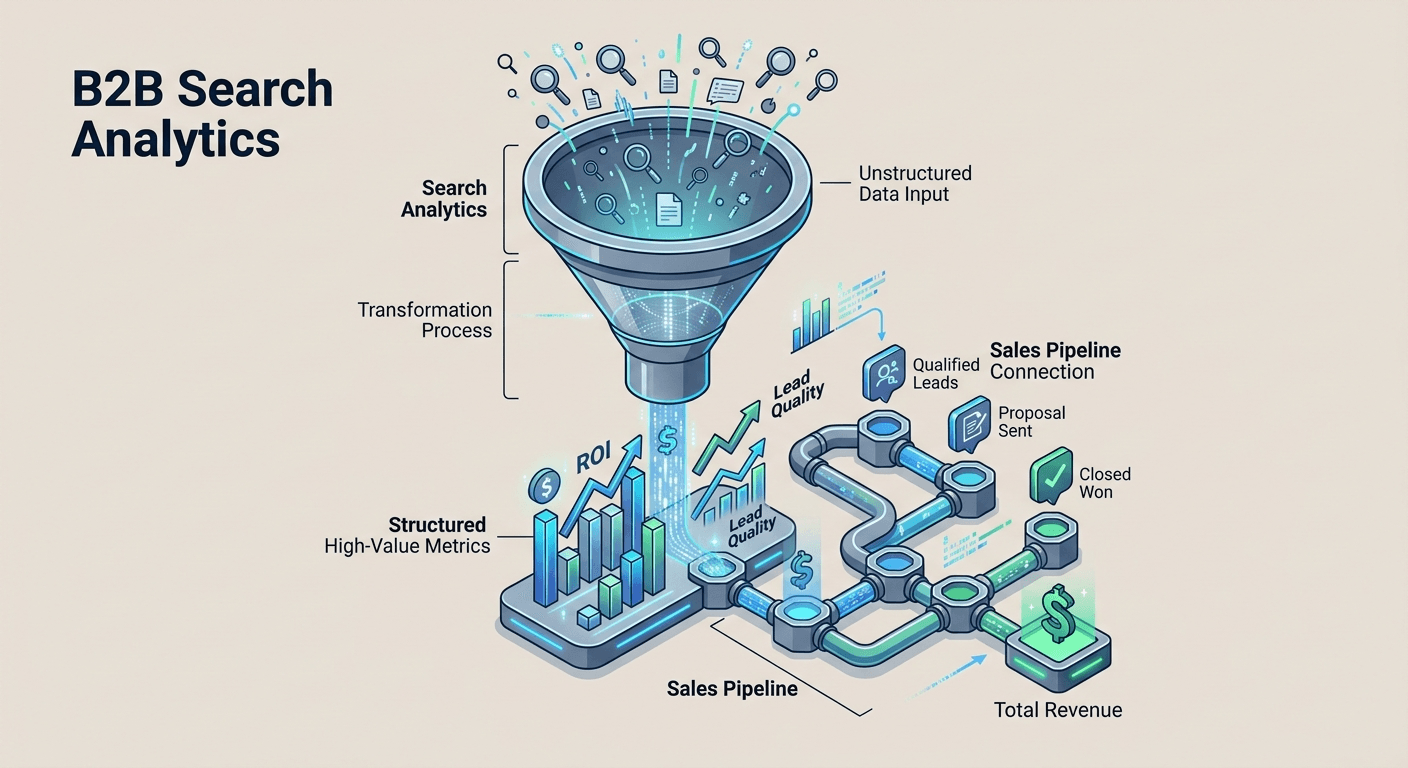
Image Source: Google Gemini
Fixing the Intent Disconnect in B2B Search
Most organic acquisition strategies struggle because they target only top-of-funnel keywords. Broad informational searches might inflate your Google Analytics dashboard, but they rarely generate qualified sales opportunities.
High-growth organizations prioritize bottom-of-funnel queries where users show active purchasing intent. These searchers evaluate options, compare competitors, and look for immediate operational solutions. When you structure pages around specific pain points and software features, visitors recognize your solution as a candidate for their tech stack.
Research shows that organic search accounts for 44.6 percent of B2B revenue across major commercial sectors. Capturing that revenue requires aligning your published content with actual buying triggers rather than broad industry terms.
Executing this strategy often requires specialized expertise to overhaul website architecture and content frameworks. Partnering with the best B2B SEO agencies allows companies to scale technical execution and build search visibility that directly targets decision-makers. Bringing outside expertise in is better than trying to master a tricky process internally.
When high-intent traffic arrives, the page layout must present a clear next step. Clear positioning, visible proof points, and friction-free forms turn passive readers into sales prospects.
Removing Friction From the Conversion Path
Driving qualified users to a landing page is only half the battle. If your user experience relies on gated whitepapers or complex forms, or has speed issues, conversion rates will plummet. Modern business buyers prefer self-serve research over scheduling premature sales calls.
Data from 6Sense indicates that 83 percent of B2B buyers define requirements online before speaking with a sales representative. If your site hides pricing, core capabilities, or product demonstrations behind gates, buyers simply bounce to a competitor.
Building a low-friction buyer journey involves three key structural updates:
- Transparent product positioning that immediately explains what your solution does
- Streamlined contact forms that request minimal initial contact details
- Embedded video demonstrations or interactive product tours directly on high-intent pages
Simplifying site navigation ensures prospects find case studies and product specs without hunting through dropdown menus. Eliminating extra steps keeps prospects moving forward in their evaluation.
Winning Pre-Contact Evaluation Cycles
By the time a prospect fills out a contact form, they have already evaluated your brand against competing offerings. The modern buying journey happens independently across digital channels long before your sales team receives a notification.
Again, 6Sense research shows that 80 percent of B2B deals go to companies on the buyer's initial shortlist before first contact. To make that shortlist, your digital footprint must establish category authority well before a sales demo occurs.
Building early trust requires deep, authoritative content that directly addresses technical objections. Comprehensive comparison guides, transparent feature breakdowns, and real customer ROI metrics position your product as the obvious choice. Combining high-intent search visibility with frictionless site architecture transforms passive organic traffic into a predictable engine for sales revenue.
Maximizing Value From Existing Search Placement
Driving sustainable pipeline performance requires continuously optimizing the content assets you already have live. High-ranking pages often decay over time or miss conversion opportunities due to outdated calls to action and weak user engagement signals.
Reviewing performance metrics inside Google Search Console highlights pages with high impression volumes but low click-through rates. Refreshing meta titles, updating outdated statistics, and improving internal linking can quickly lift organic positioning without building entirely new pages from scratch.
Connecting your organic search metrics directly to your CRM provides full visibility into which search terms drive closed-won deals. Expanding on those high-performing topics allows your business to capture market share where revenue impact is highest. For more insights into maximizing your digital presence and growing your business, read our other posts.


