
business resources
How Community-Based Funding Models Support Local Enterprises
27 Feb 2026

What if the people who love your neighborhood café, corner grocery, or repair shop could help it grow, not just by shopping there, but by funding it?
That's the basic idea behind community-based funding. Neighbors, customers, and local supporters pool money so a local enterprise can start, expand, or survive a rough patch. It matters because traditional bank loans can be hard to get, especially for newer businesses, seasonal revenue, or owners without deep collateral.
And there is clear evidence that Americans are willing to fund causes they believe in at scale: Americans gave $592.50 billion to U.S. charities in 2024.
The upside is bigger than cash. When the community helps fund a project, you often end up with loyal customers and loud word of mouth. Below are the main models, how they help in real life (especially in today's tighter funding climate), and how to run a campaign people trust.
The main community-based funding model, and what makes each one different
Community funding isn't one thing. It's a small toolbox, and each tool fits a different job.
Here's a quick side-by-side to set the stage.
| Model | What supporters provide | Best fit for | Main benefit | Main tradeoff |
| Rewards crowdfunding | Money for perks | New launches, equipment | Early cash, demand proof | Fulfillment work, margin risk |
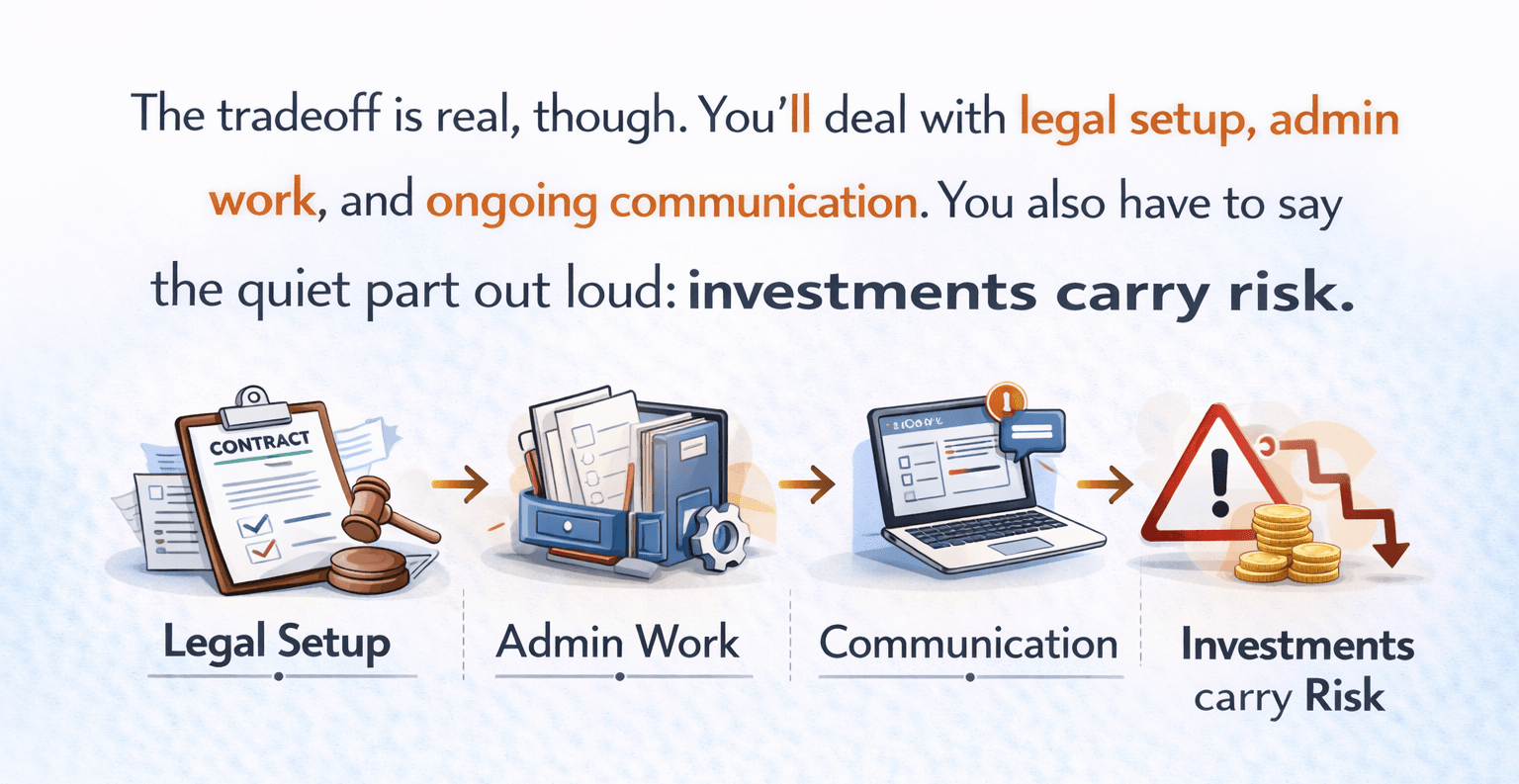
| Community shares, local investment groups | Smaller investments from many people | Long-term growth, property | Local ownership, patient capital | Legal/admin effort, clear risk talk |
| Giving circles, mutual aid, memberships | Pooled gifts or monthly support | Ongoing community services | Predictable support, strong ties | Needs steady communication, clear boundaries |
Rewards crowdfunding: pre-sell products, prove demand, and get cash early
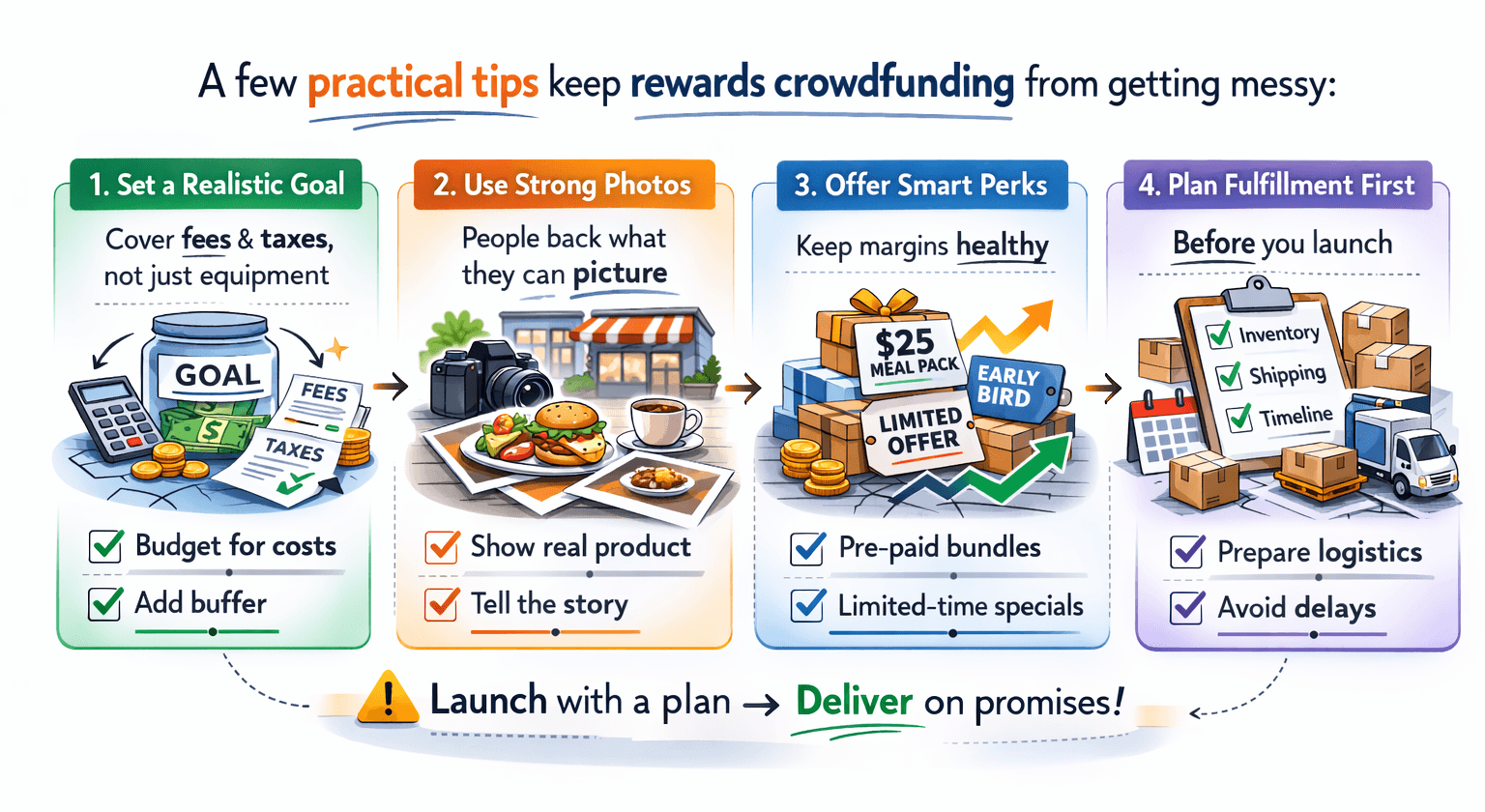
Rewards crowdfunding is simple. People chip in, and you give them a perk. That perk might be a bag of coffee, a "founding member" mug, or a private class at your maker studio.
On Kickstarter, the overall “fully funded” success rate was 41.98% as of 2025. So roughly 4 out of 10 projects reach their goal, which makes planning and presentation count.
This works well when you can deliver something concrete. Think: a café launching a new menu, a repair shop upgrading diagnostic tools, or a pop-up testing demand before signing a lease.
Community shares and local investment group: neighbors become small investors
Community shares (sometimes called community share offers) and local investment groups let many people invest smaller amounts into a local business or community asset. In plain English, the crowd becomes a set of mini-investors, not just donors.
This model fits bigger, longer projects. For example, a childcare center might raise funds to expand capacity. A small farm might invest in cold storage. A corner grocery might buy its building instead of renting forever. Long timelines make more sense here because investors expect a plan, reporting, and a fair description of risk.
The benefit is powerful: ownership stays local, and capital can feel more patient than a standard loan. While some businesses explore options like CDFI lenders for mission-aligned financing, community shares allow supporters to participate directly and keep decision-making close to home.
Giving circles, mutual aid, and recurring memberships
Some community funding looks less like a campaign and more like a habit.
Giving circles poll donations and decide together where money goes. Mutual aid is even more direct, it's neighbors supporting neighbors based on immediate needs. Recurring memberships work like subscriptions, people give monthly to keep something they value alive.
These models fit enterprises with a strong community role. A food co-op can offer paid memberships. A downtown association can run a "support local" club that funds storefront improvements. A maker studio can use monthly memberships to subsidize youth programs or tool access.
In February 2026, collective giving and hyper-local decision-making are gaining attention, and recurring support is trending because predictability helps with planning. This matters in a time when many groups report tighter public support and more competition for grants.
How to run a community-based funding effort that people trust
Trust is the real currency. Without it, even a great idea stalls.
Start with a clear ask, a simple budget, and one strong local story
First, say exactly what you're raising for. "Support us" is vague, while "Help us buy a $9,000 walk-in cooler" feels real.
Next, show a plain budget. Keep it human. Include equipment, permits, staffing time, platform fees, and a small cushion. If you're planning outreach, include basic digital marketing costs such as email tools, local ads, or simple design work. Also explain what success looks like, plus what happens if you raise less or more than expected.
Finally, tell one local story that connects the project to a shared benefit. Maybe it's new jobs, a walkable downtown, or keeping a service nearby so seniors don't have to drive across town.
Make it easy to participate, and keep updating people
Lower friction wins. Offer multiple payment options if you can, and allow small contributions so more people can join.
Some local teams now use simple AI agents to answer common questions, send automated updates, or guide supporters through the contribution process. Used well, this reduces admin work and keeps communication consistent without adding staff costs.
Keep the campaign short enough to feel urgent, but long enough to reach beyond your regulars. Then, after people give, keep showing up. Weekly updates are plenty.


