


business resources
How Much Does a Customer Incentive Program Actually Cost?
15 Oct 2026
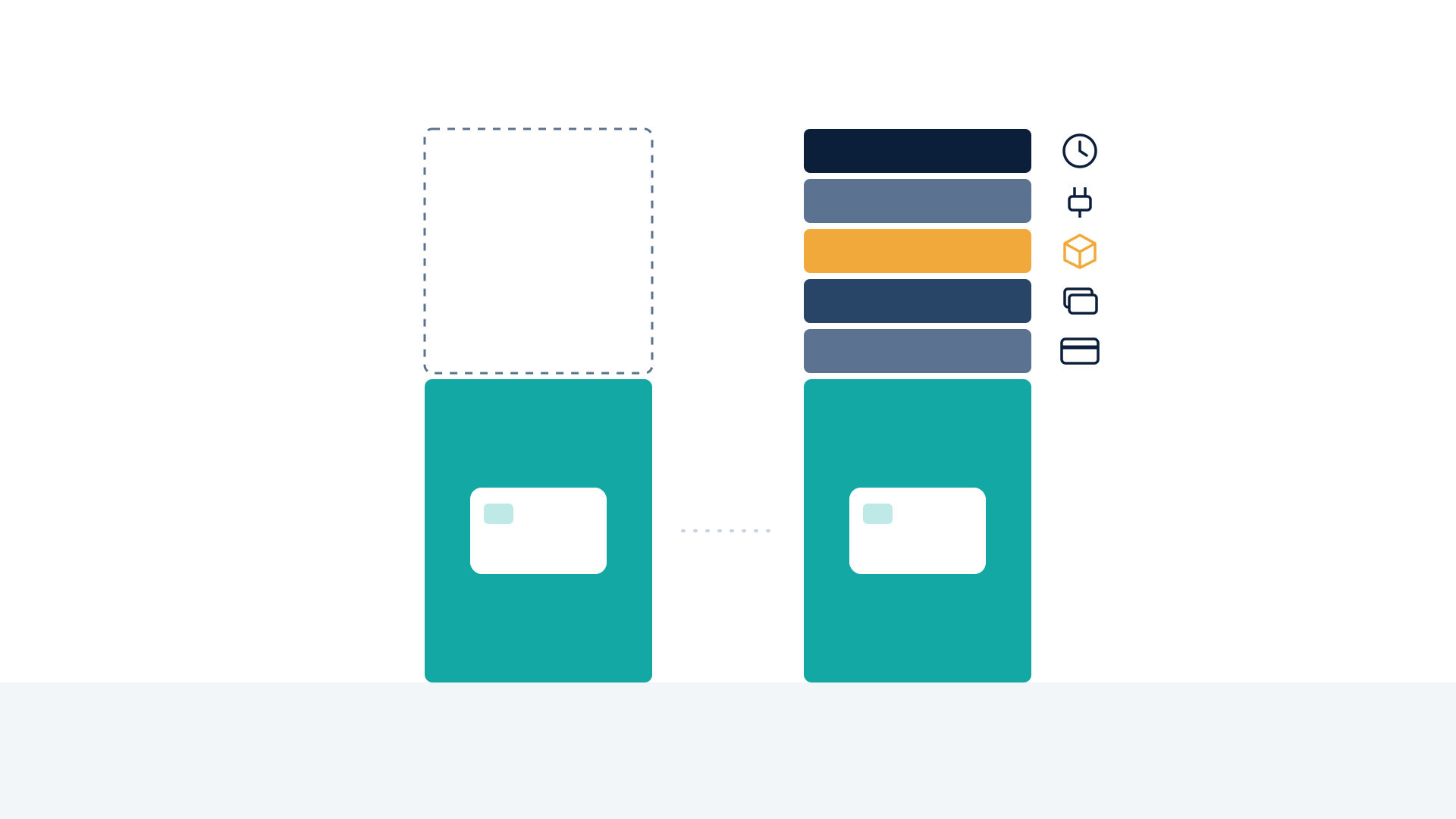
A customer incentive program has two prices: the value sent to customers and the cost of delivering those incentives. Sending 50 $25 incentives costs $1,250 in rewards. 5,000 means a $125,000 cost. Those numbers are easy to crunch. The harder questions are how the program is funded, whether the reward format adds fees, and how much employee time goes into approvals, failed deliveries, exceptions, and reconciliation.
The true customer incentive program cost is the reward face value plus any funding, physical-fulfillment, integration, and administrative costs. Giftogram keeps the first layer straightforward for standard digital bulk gift cards for business: a $50 reward costs $50 with no platform fee, while physical prepaid cards carry a handling fee.
The Reward Budget is Only the Starting Point
The same $25 reward can cost a business different amounts depending on how it is funded and delivered. Giftogram charges no platform fees on standard digital rewards, so a $25 digital reward costs $25; physical prepaid cards carry a handling fee, and some integrations may carry a monthly fee depending on volume. Tremendous charges no platform or subscription fee for standard rewards, but credit-card funding carries a 3% processing fee, and monetary options can carry 4% to 6% fees. Tango allows free ACH, wire, and check funding through its portal, while API credit-card funding carries a 2.9% fee.
That is why asking about a subscription fee doesn't solve the pricing question. Incentive software pricing must reflect the actual program being run. For any digital rewards program, buyers need to model the money's actual path: funding method, reward type, digital or physical delivery, and any recurring integration costs.
Platform | Standard digital reward economics | Costs to check |
Giftogram | No platform fees on standard digital rewards; a $50 reward costs $50 | Physical prepaid-card handling fee; some integrations may carry a monthly fee depending on volume |
Tremendous | No platform/subscription fee for most standard rewards | 3% credit-card funding; 4%–6% on monetary payout options depending on method and fee handling |
Tango | ACH, wire, and check funding available without a funding fee in the portal | 2.9% credit-card funding through the API; verify reward availability and any program-specific costs |
The comparison focuses on matching fees to how the program will operate, rather than searching for the cheapest universal platform.
Scale Changes the Cost Model
Program size | Reward pool at $25 each | What changes |
50 recipients | $1,250 | Setup effort and whether manual sending is reasonable |
500 recipients | $12,500 | Bulk distribution, approvals, and exception handling |
5,000 recipients | $125,000 | Automation, reporting, reconciliation and repeatable controls |
At 50 recipients, a spreadsheet and manual upload work fine. At 5,000, the same process becomes a real operating cost. Interestingly, that cost rarely appears on a vendor invoice. A Numeral/OpinionWay survey of 905 finance executives found that 97% experienced payment-operations pain points, including execution errors and returns. Tipalti's Global Finance Outlook, reported by Enterprise Times, found finance professionals spending 11 hours a week on manual accounts-payable tasks. Neither study measures incentive programs specifically, but both show the real internal cost of manual payment administration.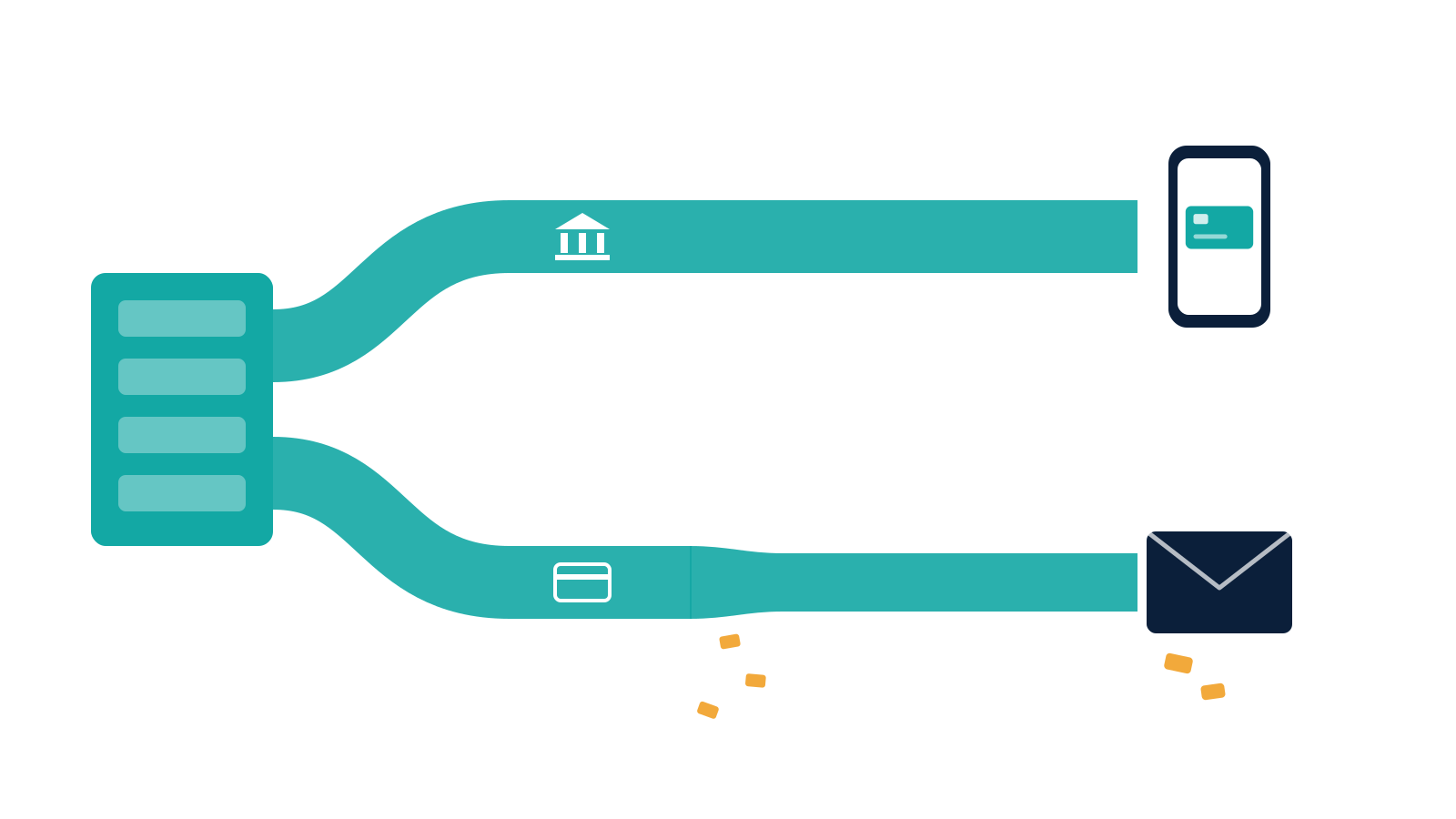
Price the Program the Company Plans to Run
A pilot can tolerate workarounds that a recurring program cannot. If one campaign for 100 customers becomes a monthly incentive for 2,000, finance needs repeatable controls, marketing needs reliable distribution, and someone needs visibility into what was sent. The same principle applies when evaluating a loyalty management system: price the operating model at expected volume, not the smallest pilot the business can approve today. A useful cost model should answer five questions: how much value will be sent, how the account will be funded, whether the reward format adds charges, what automation or integration costs apply, and how much internal work remains. Again, the useful number is what it costs to move each approved reward from budget to customer at the volume the business actually intends to run.
Frequently Asked Questions
How do you calculate the cost of a customer incentive program?
Start with total reward face value, then add applicable funding, reward-format, physical-fulfillment, and integration costs. Include the staff time needed for approvals, reconciliation, exceptions, and support.
What pricing should companies expect for digital customer rewards?
Pricing depends on the provider, funding method, and reward type. Giftogram has no platform fees on standard digital rewards, so a $50 digital reward costs $50. It also offers bulk gift card pricing. Physical prepaid cards carry a handling fee, and businesses must first decide on the incentive format to calculate the real platform cost.
What should companies compare when choosing an incentive platform?
Compare the program at expected volume: reward value, funding method, delivery format, automation needs, international requirements, and internal administration. That gives a more useful picture than comparing subscription prices alone.


