
resources
How Often Should a Deck Contractor Update You During the Build?
21 Aug 2026

If you've never had a deck built before, the not knowing is often worse than the actual construction noise. Is it normal to go two days without hearing anything? Should someone be calling you every morning? There's no universal rulebook here, but there is a reasonable rhythm most solid crews follow, and once you know what that looks like, the whole process gets a lot less stressful.
Why Communication Frequency Is Different from Communication Quality
Here's something people mix up constantly. Getting a text every single day doesn't automatically mean you're being kept in the loop. A daily "all good, working on it" message is nice, sure, but it's not the same as knowing exactly what stage your project is at and what's coming next.
What actually matters is whether the updates carry useful information. A contractor who tells you on day two that the lumber delivery got pushed back three days is doing you a favor, even if that's not what you wanted to hear. Bad news delivered early is always better than bad news you discover on your own when nobody shows up on the day you expected them.
What a Reasonable Update Schedule Looks Like
For a mid-size deck project, daily check-ins during active build days are pretty standard. If it's a smaller job, maybe just a repair or a small addition, weekly updates are usually enough since the whole thing might wrap in under a week anyway.
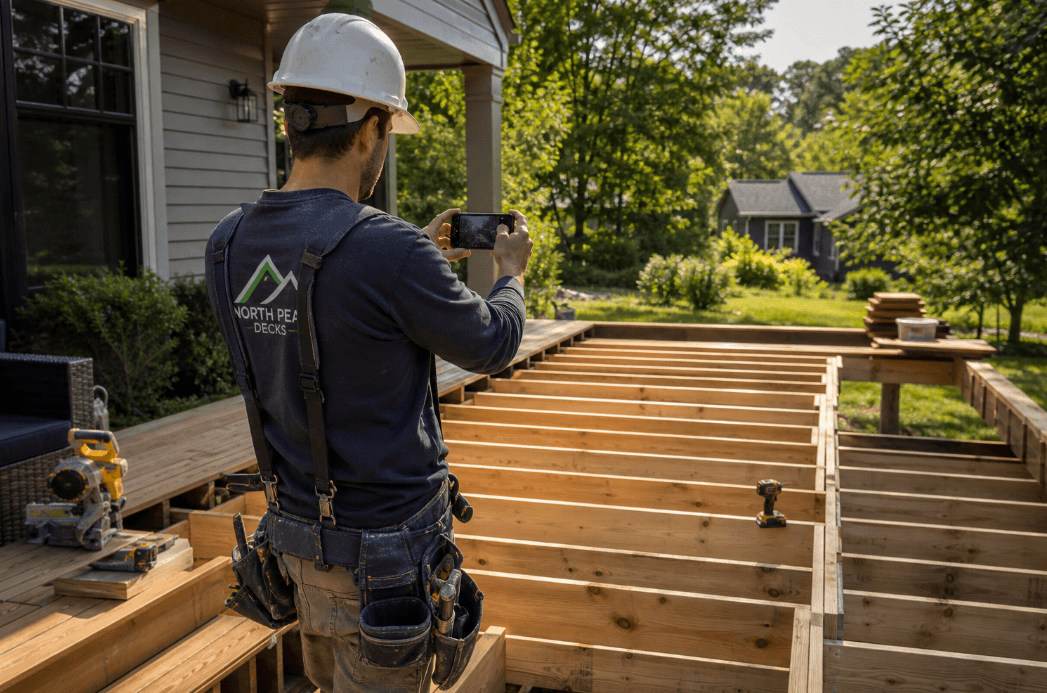
That said, there are a few moments where you should expect to hear something no matter the project size. Site prep, footing installation, framing, and the final inspection are the checkpoints where silence starts to feel uncomfortable. A good deck contractor treats these as natural moments to reach out, even with something as simple as a photo and a two line text.
Here's roughly how that communication should break down across a typical project:
- Site prep: one update before work begins, usually a call or an email
- Footings and foundation: an update after this stage wraps up, typically a photo plus a short message
- Framing and decking: daily or every other day updates, usually a text with photos attached
- Final finishing: an update once this stage is complete, ideally a call plus a photo report
- Final inspection: an update on the day of inspection, almost always a phone call
If your project is following something close to this pattern, you're probably in good hands.
How Contractors Should Set Expectations Before Work Starts
A lot of communication frustration actually comes from a conversation that never happened at the start. Before the first board goes down, you and your contractor should agree on how you'll actually talk to each other. Some people hate phone calls and want everything by text. Others want a call, not a wall of texts they'll forget to read.
It also helps to know exactly who your point person is. On bigger crews, there might be a site lead handling day to day work and a separate project manager handling scheduling and updates. Knowing who to call, instead of guessing, saves a lot of back and forth.
One more thing worth nailing down early: reasonable hours. If you're the type who wants updates the second something happens, say so. If you'd rather not get a text at 7am, say that too. A contractor who agrees to a rough communication schedule upfront is a lot easier to work with than one who just improvises as they go.
Red Flags in Contractor Communication
A few patterns should make you a little uneasy. If you find yourself constantly chasing your contractor for basic updates, that's not a great sign. You shouldn't have to send three texts just to find out if the footings passed inspection.
Missing photo updates after major stages are another flag. Most crews take photos anyway for their own records, so if you're not getting any, that's worth asking about directly. And silence during weather delays or unexpected site issues is probably the biggest one. Deck projects hit snags all the time, tree roots where nobody expected them, a permit hiccup, a rain delay. None of that is a dealbreaker on its own. What matters is whether your contractor tells you about it or just quietly reschedules without a word.
How Weather and Delays Should Be Communicated
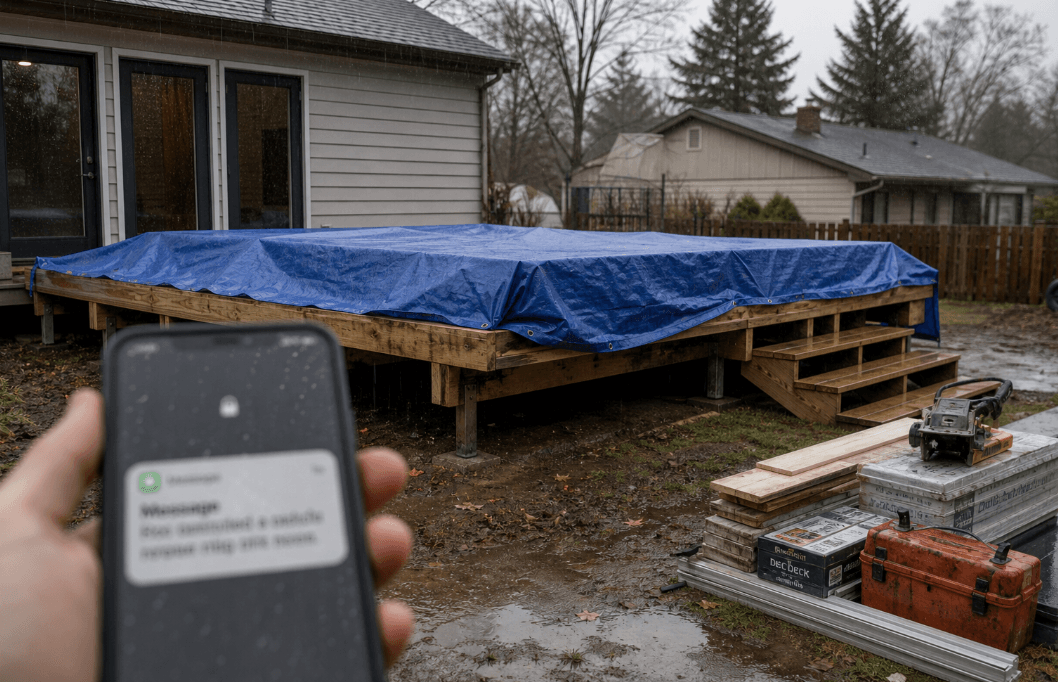
Speaking of delays, this is where a lot of trust either gets built or gets broken. A rainy week pushing your timeline back a few days is completely normal and honestly out of anyone's control. What separates a good deck contractor from a mediocre one is how that delay gets communicated.
There's a real difference between a quiet delay, where you just notice the crew hasn't shown up and nobody told you why, versus getting a quick message that says something like "rain's pushing framing back to Thursday, we'll update you once the ground dries out." Same delay, completely different experience on your end.
Site Visits vs. Remote Updates: Finding the Right Balance
It's fair to want to see progress with your own eyes, and most contractors are fine with scheduled site visits as long as they don't interrupt the actual work. Walking through during a lunch break or at the end of a work day usually works better than showing up mid-install.
One thing to avoid though, don't start directing questions straight at the crew doing the physical work. It might feel efficient, but it usually isn't. Questions and concerns should go through your project manager or main point of contact. That person can actually track decisions and changes, while a guy mid-cut with a saw probably can't give you a thoughtful answer anyway.
What to Do If Communication Falls Short
If updates have gone quiet for longer than feels normal, start by putting your concern in writing, even something as simple as a short email works. It creates a record and gives your contractor a clear chance to respond and fix things.
Most of the time, a direct conversation solves it. Contractors get busy, and sometimes a simple reminder is all it takes. But if the pattern keeps repeating, go back to your original contract. Most agreements include some language about communication expectations or a process for resolving disputes, and it's there for exactly this kind of situation.
At the end of the day, a reasonable update schedule isn't about getting a phone call every single morning. It's about knowing that at each real milestone, someone is going to tell you what happened, what's next, and what to expect if anything changes. That kind of predictable rhythm, paired with honesty about delays, is really what separates a stressful build from a smooth one.


