
Businesses
How Smart Small Businesses Use SEO to Beat Bigger Competitors
25 Mar 2026

Competing against a business ten times your size sounds exhausting. But in the world of search, size is not the deciding factor. Focus is.
Small businesses that pair local SEO, smart web design, well-targeted Google Ads, and AI chatbot tools are quietly outperforming brands with far deeper pockets. Here is how they do it.
Why the Digital Playing Field Is More Even Than It Looks
Google does not rank businesses based on their size. It ranks them by how well they answer what someone is searching for. That distinction is what gives small businesses a genuine shot at the top.
A national brand optimizes for everyone. A small business can optimize for one specific person, in one specific place, with one specific need.
That specificity is a ranking advantage, not a consolation prize. The businesses winning in local search are the ones showing up most accurately for the searches that actually matter to their customers.
Local SEO: Getting Found by the People Already Looking for You
Local SEO connects a small business with nearby customers when they are ready to act. It is not about chasing traffic. It is about being visible to the right people at the right time.

Most small business customers do not start their search with a brand name. They start with a problem. "Electrician near me." "Best Thai food open now." "Emergency locksmith Saturday."
These are buying searches. The person already has their wallet out. Any experienced Sacramento SEO company will tell you that local SEO determines whether your business shows up in that moment or a competitor does.
Getting local SEO right comes down to a few consistent actions:
- Keep the Google Business Profile complete, accurate, and active with fresh photos and posts.
- Build a steady stream of genuine customer reviews and reply to each one personally.
- Make sure the business name, address, and phone number match exactly across every online directory.
- Create individual pages on the website for each service area, rather than a single generic location page.
- Get mentioned on local blogs, community websites, and neighborhood news sources Google already trusts.
A family-owned roofing company in Sacramento began creating individual pages for each of the suburbs it served and responded to every Google review within 24 hours. Within four months, their calls doubled without spending a dollar more on advertising.
The businesses that treat local SEO as an ongoing habit rather than a one-time setup are the ones that hold their rankings when competitors come after them.
Web Design: The Part Most Small Businesses Get Wrong
A website that ranks but fails to convert is a leaky bucket. Good web design for small businesses means building a site that earns trust in the first few seconds and makes it obvious what to do next.

Getting traffic to a website is only half the job. What happens after the click determines whether that traffic turns into revenue.
Google uses page experience signals as ranking factors. A slow, confusing, or mobile-unfriendly website does not just frustrate visitors; it actively costs the business rankings.
Consider a local dental practice that redesigned its website to load faster and added a prominent "Book Appointment" button above the fold. Organic traffic stayed the same, but new patient bookings increased by 40% in the first two months.
A well-built small business website does a few things well:
- It loads quickly on a phone, because most local searches happen on mobile.
- The layout makes it immediately clear what the business does, who it serves, and how to get in touch.
- Service pages speak to specific customer problems rather than listing features in generic terms.
- Each page has one clear next step, whether that is calling, booking, or filling out a form.
None of that requires an enterprise budget. An AI website builder can get a small business a fast, mobile-friendly site off the ground quickly, leaving more time to focus on the customer-first details that matter. It requires intentional design and a clear understanding of the customer.
Google Ads: Buying Time While Organic Rankings Grow
Google Ads gets a small business to the top of search results immediately. Used with discipline, it fills the visibility gap while SEO builds and targets customers who are actively ready to buy.
Organic SEO takes time. Google Ads does not. For a small business that needs leads now, a well-run campaign can generate calls and inquiries from day one.
The trap many small businesses fall into is running ads the same way large brands do. Broad keywords, generic ad copy, and traffic sent straight to the homepage burn budget fast with little to show for it.
A local HVAC company targeting "AC repair same day" in three specific zip codes with ad copy that mentions the city by name will consistently outperform a national brand running a broad campaign. Specificity is exactly what converts a searcher into a caller.
A tighter approach works better:
- Broad keywords attract browsers. The goal is to show up for the person who has already made up their mind and just needs to find someone local.
- Lock the ads to the zip codes that actually matter to the business. If the search is coming from outside the service area, that click is wasted budget.
- Write ad copy that speaks to the specific problem the customer has, not a generic tagline.
- Send every ad to a dedicated landing page built around that exact search.
- Check the search terms report weekly to cut wasted spend on irrelevant clicks.
The advantage a small business holds in Google Ads is not the budget. It is precision.
AI Chatbots: Closing the Gap on Customer Response Time
An AI chatbot on a small business website responds to visitors instantly, day or night. It answers questions, qualifies leads, and books appointments without requiring a staff member to be available at every hour.
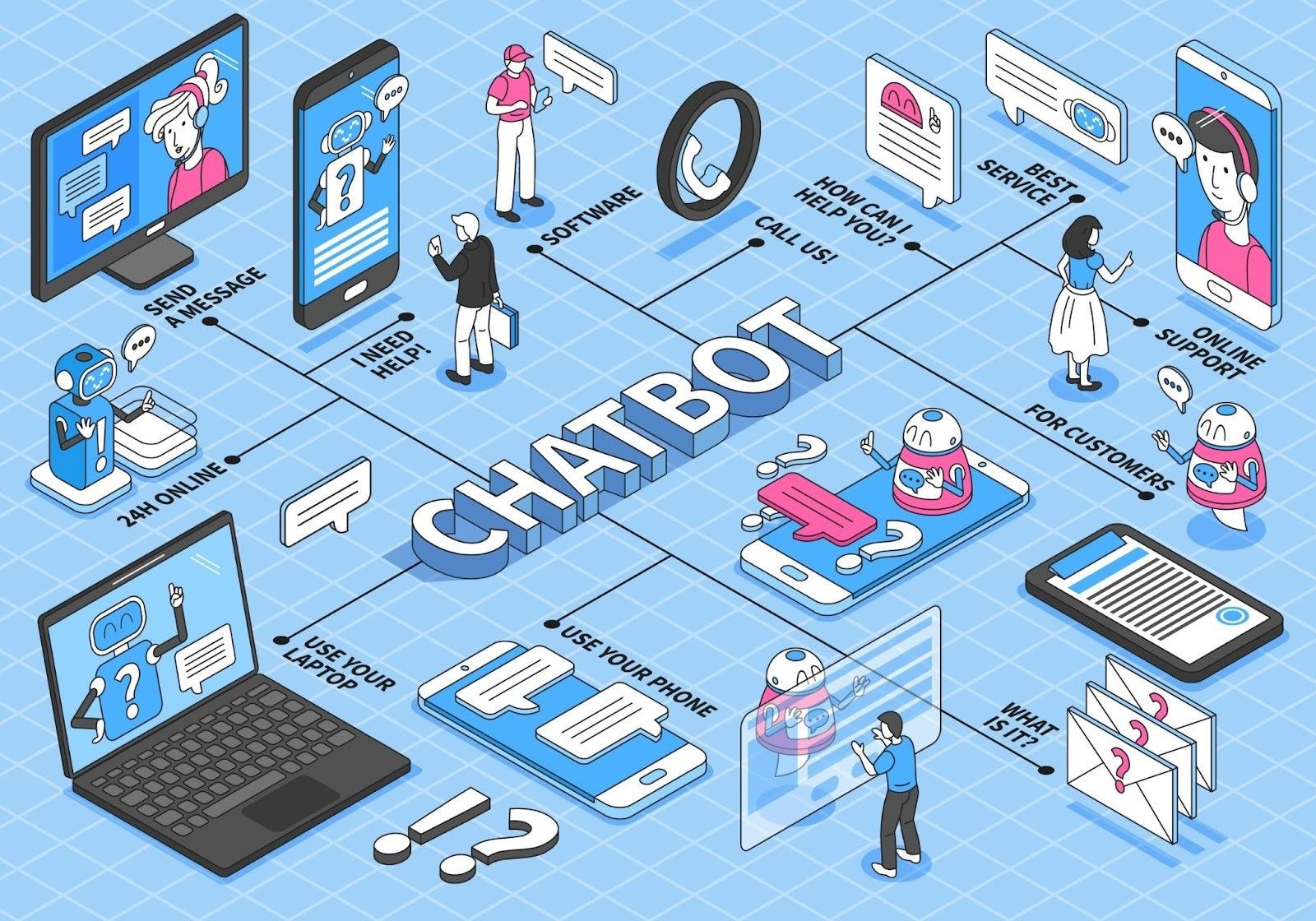
One of the quieter advantages large companies have is availability. Customers expect fast responses, and a big business has someone on chat or phone around the clock.
An AI chatbot addresses that gap without hiring additional staff. Someone curious about pricing at 9 pm gets an instant answer instead of a voicemail, and that is usually the difference between booking the job and losing it.
A small law firm in the Bay Area added a chatbot after noticing most contact form submissions came in after 6 pm. Within the first month, the chatbot handled 60% of initial inquiries and automatically booked consultation calls.
Daytime was where the chatbot really proved its worth:
- It collected contact details and qualified leads before they ever reached a human.
- It automatically booked consultation calls, eliminating back-and-forth scheduling.
- It freed front desk staff from having to answer the same intake questions repeatedly.
- The conversation data revealed the most common questions clients had, which the firm used to improve both its website and its intake process.
For a small business competing against larger operations, a well-configured AI chatbot levels the customer service playing field without the cost of additional staff.
Putting It All Together
Local SEO, web design, Google Ads, and AI chatbots are individual tools. Their real value shows up when they work as a connected system, each one making the others more effective.
None of these strategies delivers its full potential in isolation:
- Local SEO drives organic traffic, but a slow website and the lack of a chatbot mean leads slip through the cracks.
- A Google Ad that leads to a confusing page does not convert. It just costs money to confirm the visitor was never going to call anyway.
- The chatbot only closes leads that actually show up. Without traffic, it sits idle.
- Web design does not sit alongside the other three strategies. It sits underneath them, holding everything up.
One Sacramento landscaping company went all in on the system. The organic lead count jumped 35% inside five months. Half the new consultation bookings were coming in overnight through the chatbot while the team was at home. Other businesses in the area that are spending more could not say the same.
FAQ: People Also Ask
How does local SEO help a small business compete with larger companies?
National brands are too broad to own every neighborhood. A small business that shows up for "electrician in Midtown Sacramento" beats a national chain every time because the search is too specific for a big brand to bother with. That is exactly the gap local SEO fills.
Does web design directly affect Google search rankings?
Yes. Google evaluates page speed, mobile usability, and overall user experience through its Core Web Vitals metrics. A poorly designed or slow website loses ranking positions to competitors with better-performing sites, even if the content itself is comparable.
Should a small business run Google Ads or invest in SEO first?
They solve different problems, so the answer is both. SEO drives traffic that doesn't disappear when the budget runs out. Google Ads puts the business at the top of the results this week. Running them together means the business is now covered and will be for the next six months.
What does an AI chatbot actually do for a small business?
It responds to website visitors in real time, answers common questions, collects contact information, qualifies leads, and books appointments without staff involvement. The biggest practical benefit is lead capture outside of business hours.
How long before local SEO starts producing results?
Clean up the Google Business Profile first, and do not be surprised if things start moving within weeks. The citations, content, and backlinks take more time to build, but they are the reason rankings stay put instead of bouncing around every time Google updates something.
Conclusion
Outranking a bigger competitor is not about matching their budget. It is about being more relevant, more visible, and more responsive to the specific customers searching for exactly what the business offers.
Local SEO makes the business findable. A fast, sharp website does the convincing before the first phone call is made. Google Ads shows up when someone has already decided to hire and just needs to pick who. The chatbot handles everything that comes in after the lights go out.
None of these needs the others to work. But when they run together, the business stops relying on luck and starts running on a repeatable process that compounds over time


