
resources
How the Chicago Skyline Evolved: From the Great Fire to Modern Marvels

The Chicago skyline is one of the most recognizable in the world, a forest of steel, glass, and ambition that tells the story of a city that refused to stay down. But this iconic horizon wasn’t built in a day. It rose from the ashes of disaster, grew through bold experimentation, and today stands as a testament to human ingenuity. Few cities have transformed their skylines as dramatically as Chicago, and understanding its evolution is key to appreciating why it looks the way it does today.
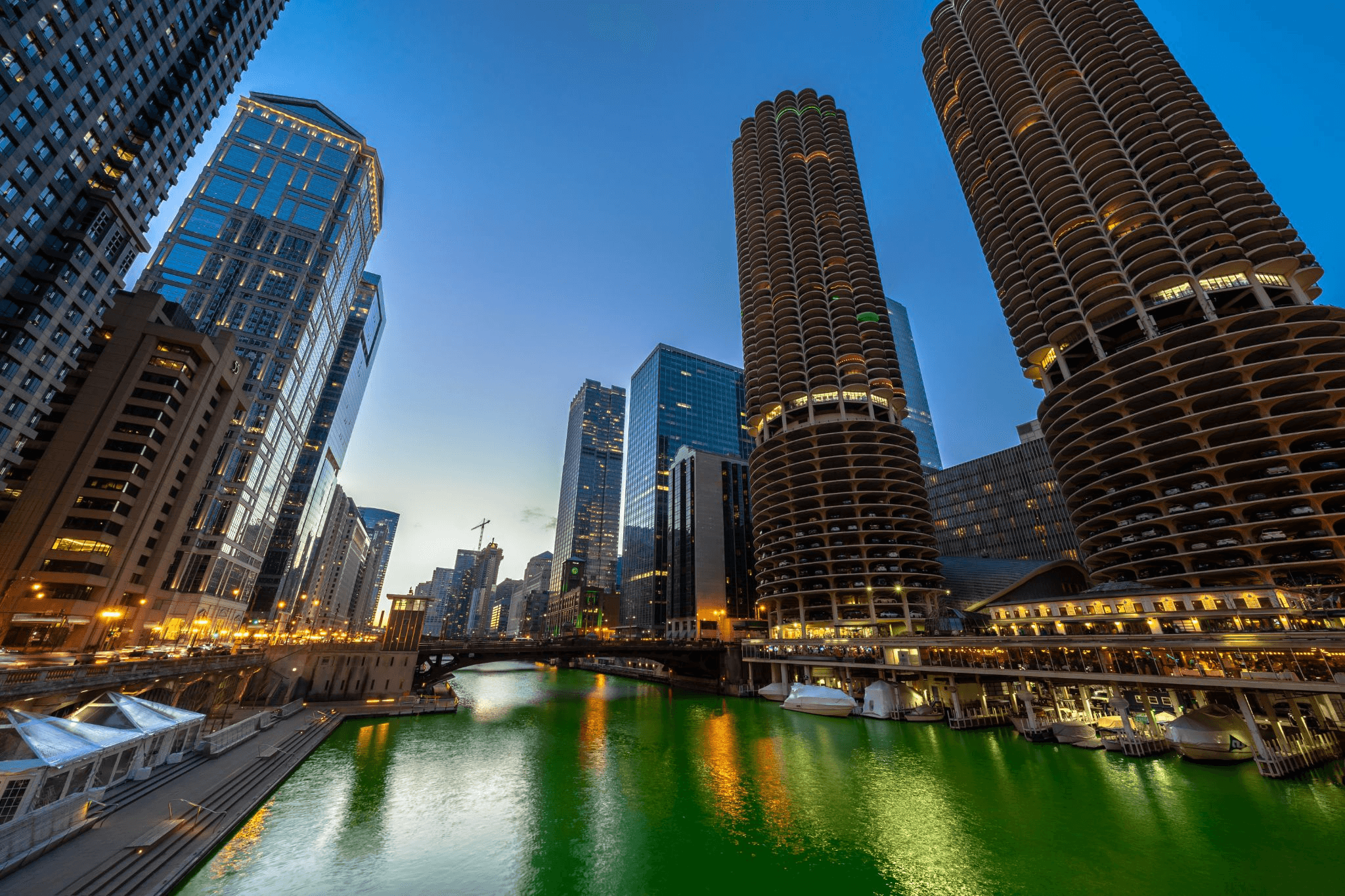
At Citiesabc.com, we explore how urban landscapes shape and are shaped by their history. Chicago’s skyline is a perfect case study: a phoenix that reinvented itself not once, but repeatedly. From the devastation of 1871 to the cutting-edge towers of the 21st century, here’s how the Chicago skyline became the architectural masterpiece we know today.
The Great Fire: The Birth of a New Chicago Skyline
Before 1871, Chicago was a fast-growing but largely wooden city, its buildings constructed from timber and brick. That changed on October 8, when a fire allegedly sparked by Mrs. O’Leary’s cow razed nearly 3.3 square miles of the city, leaving 100,000 homeless and reducing the downtown core to rubble. The disaster was catastrophic, but it also created an opportunity.
With the old city destroyed, architects and planners had a blank canvas. The rebuilding effort prioritized fire-resistant materials like stone and iron, but more importantly, it sparked an architectural revolution. The Chicago skyline as we know it began here, with three key developments:
- The Rise of the Skyscraper: Before the fire, buildings rarely exceeded six stories. Afterward, architects like William Le Baron Jenney pioneered steel-frame construction, allowing structures to climb higher than ever before.
- The Chicago School of Architecture: A group of innovators, including Louis Sullivan and Dankmar Adler, developed a new aesthetic: functional, streamlined, and distinctly modern. Their work laid the foundation for the Chicago skyline’s future.
- Zoning and Grid Expansion: The city adopted a strict grid system and wider streets, setting the stage for vertical growth. The fire didn’t just destroy, it forced Chicago to think bigger.
By the 1880s, Chicago was already home to the world’s first skyscraper: the Home Insurance Building (1885), a 10-story structure with a steel skeleton. It was demolished in 1931, but its legacy lives on in every tower that followed.
The Early 20th Century: The Roaring Twenties
By the 1920s, the Chicago skyline was taking shape, defined by two major movements: the practicality of the Chicago School and the ornamental flair of Art Deco. This era saw the construction of some of the city’s most enduring landmarks, each reflecting the optimism and excess of the time.
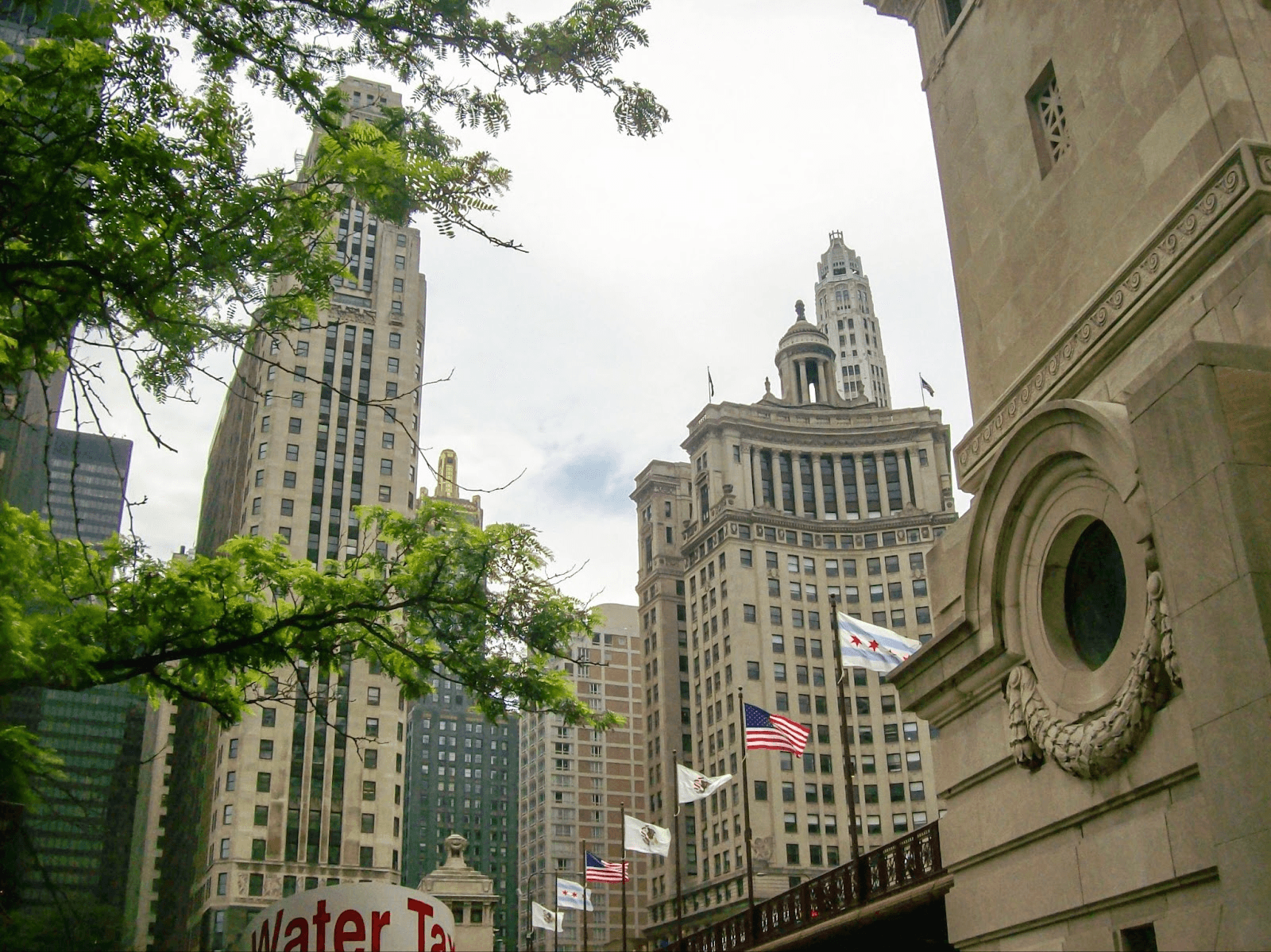
The Tribune Tower (1925)
When the Chicago Tribune held an international competition for its new headquarters, it attracted designs from architects worldwide. The winning entry, by New York firm Howells & Hood, was a neo-Gothic masterpiece with flying buttresses and a crown inspired by Rouen Cathedral. The Tribune Tower wasn’t just a newspaper office—it was a declaration that Chicago’s skyline would be as grand as Europe’s.
- A Global Time Capsule: The tower’s façade includes fragments from historic sites, including the Great Pyramid, the Parthenon, and the Great Wall of China, symbolizing Chicago’s ambition to rival the world’s great cities.
- A Beacon of Journalism: Its illuminated top made it a nighttime landmark, reinforcing the idea that Chicago was a city that never slept.
The Wrigley Building (1924)
With its gleaming terra cotta façade and clock tower, the Wrigley Building became another jewel in the Chicago skyline. Designed to resemble the Giralda Tower in Seville, Spain, it was one of the first buildings to be floodlit at night, turning it into a glowing symbol of the city’s progress.
The Merchandise Mart (1930)
At the time of its completion, the Merchandise Mart was the largest building in the world by floor area. Its massive scale reflected Chicago’s role as a hub of trade and commerce, a status it still holds today.
The Board of Trade Building (1930)
The Board of Trade’s tower, with its three-story-tall statue of Ceres (the Roman goddess of agriculture) perched on top, embodied the city’s dual identity as both an industrial powerhouse and a center of finance. Its setbacks and intricate details made it a standout in the growing Chicago skyline.
Mid-Century Modern: The Race for Height
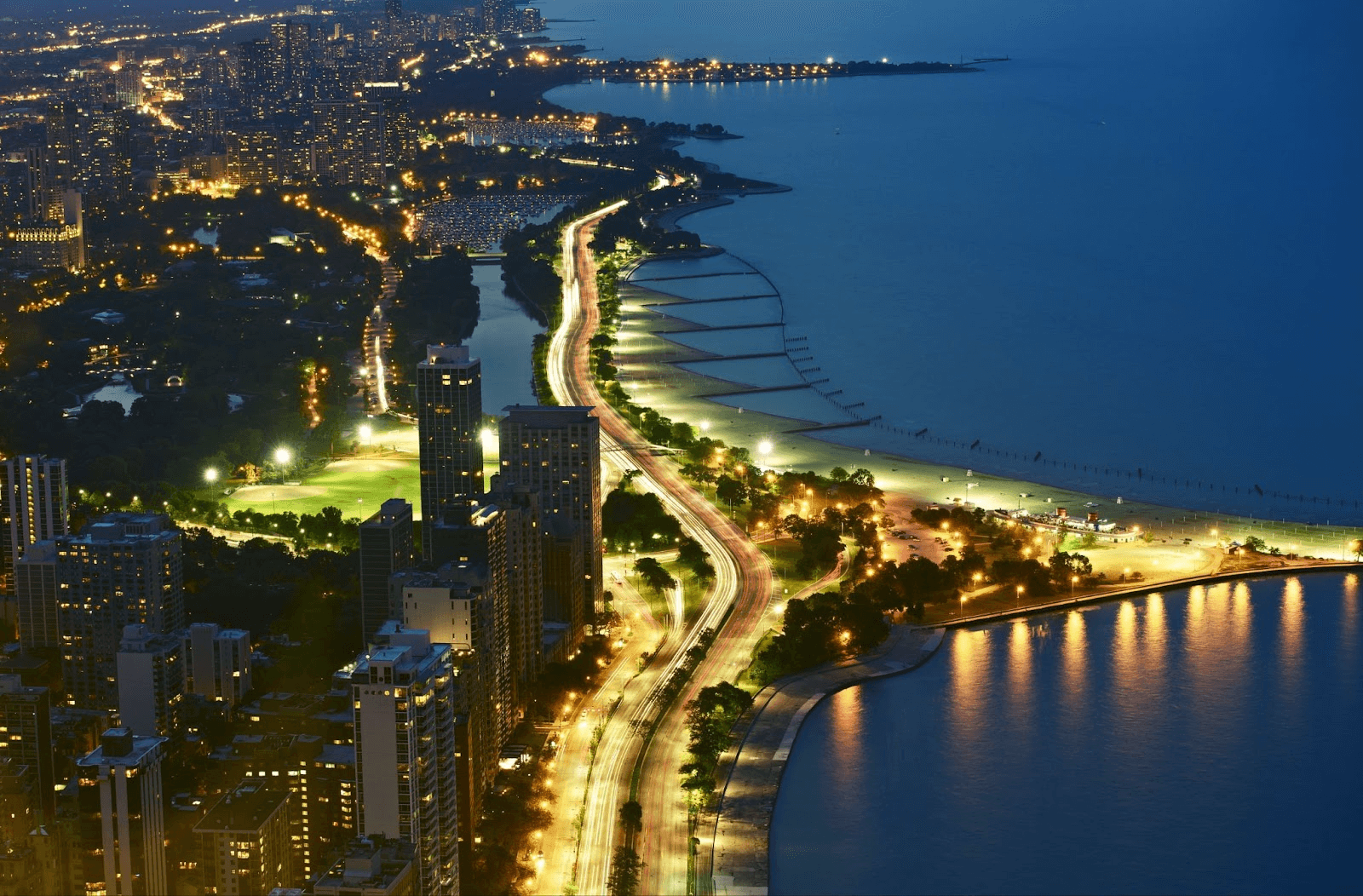
The post-World War II era brought a new wave of innovation. Architects like Ludwig Mies van der Rohe and Skidmore, Owings & Merrill (SOM) embraced minimalism, steel, and glass, stripping away ornamentation in favor of clean lines and efficiency. This was the birth of the International Style, and Chicago became its laboratory.
860-880 Lake Shore Drive (1951)
Mies van der Rohe’s twin apartment towers were radical for their time: all-glass façades with exposed steel frames, offering unobstructed views of Lake Michigan. They set a new standard for residential high-rises and influenced skylines worldwide.
- “Less is More”: Mies’ philosophy shaped modern architecture, and these buildings were its purest expression in the Chicago skyline.
- A Model for Urban Living: The towers proved that high-rises could be elegant, functional, and livable—a concept that would define Chicago’s later developments.
The Inland Steel Building (1958)
Designed by SOM, this sleek, 19-story tower was the first to use stainless steel cladding, giving it a mirror-like finish that reflected the changing city around it. Its plaza also introduced the idea of open public space in downtown Chicago, a trend that would continue with later projects.
Marina City (1964)
Bertrand Goldberg’s twin cylindrical towers, with their distinctive “corn cob” balconies, were more than just apartments—they were a self-contained city within a city. Marina City included a theater, bowling alley, and marina, proving that skyscrapers could be mixed-use hubs.
- A Cultural Landmark: The towers appeared in films, TV shows, and albums (including the cover of The Blues Brothers), cementing their place in pop culture.
Engineering Innovation: Their circular design reduced wind resistance, a lesson applied to later supertall structures.
The 1970s and 80s: The Age of Superlatives
By the 1970s, Chicago was in a height race, determined to build taller, bolder, and more efficiently than any other city. The Chicago skyline became a battleground for architectural records, with two buildings leading the charge:
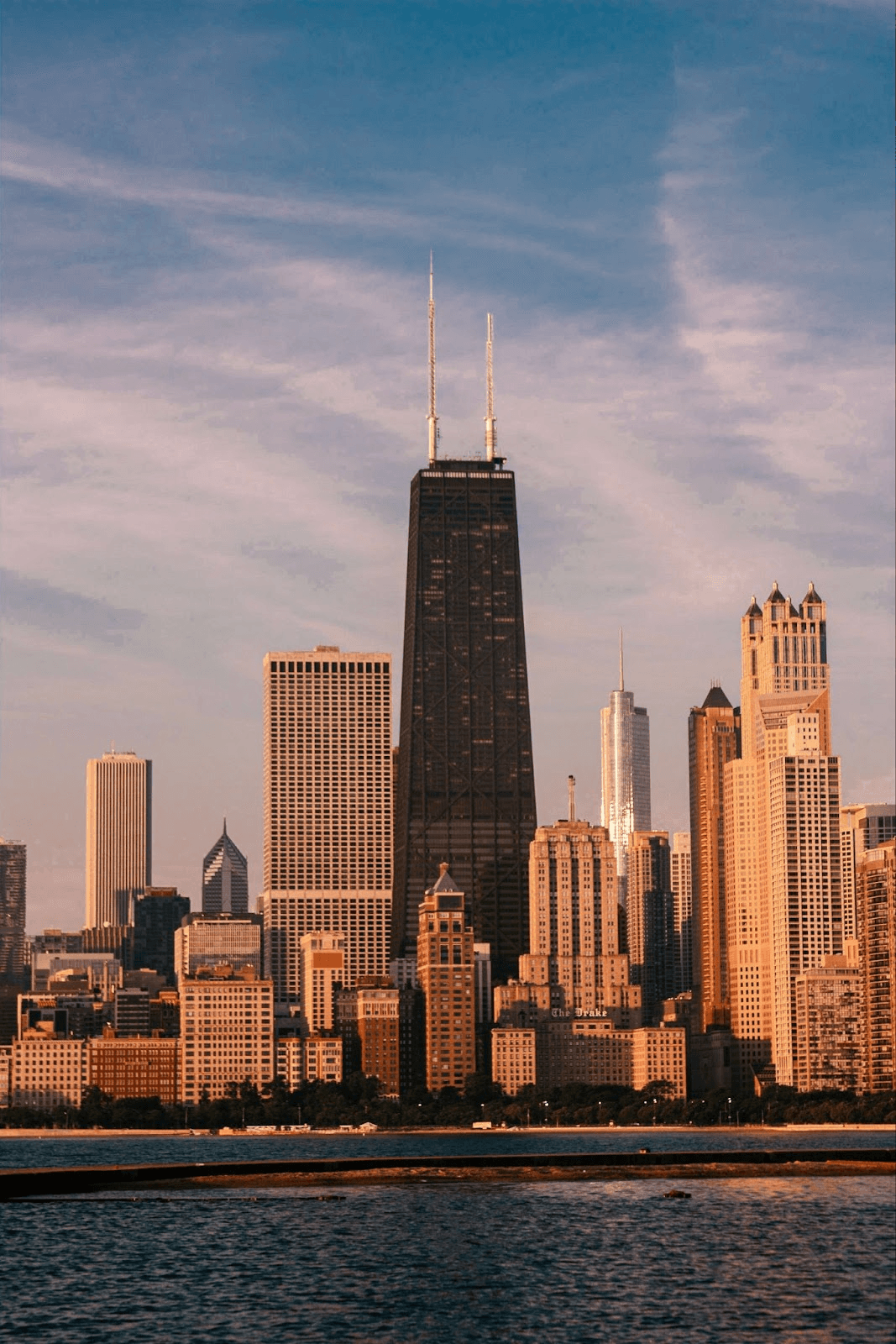
The John Hancock Center (1969)
At 1,128 feet, the Hancock was the second-tallest building in the world when completed. Its exposed diagonal bracing wasn’t just structural, it became an iconic part of the Chicago skyline, visible from miles away.
- A Mixed-Use Pioneer: It combined offices, residences, and retail, setting a template for future skyscrapers.
- The Skydeck Alternative: Its observation deck (now 360 CHICAGO) offered views that rivaled the Sears Tower’s, giving visitors a new way to experience the city.
The Sears Tower (1973)
Renamed the Willis Tower in 2009, this 1,450-foot behemoth was the tallest building on Earth for nearly 25 years. Its bundled-tube design, another SOM innovation, allowed it to withstand wind and earthquakes while maximizing floor space.
- A Symbol of Corporate Power: Built for Sears, Roebuck & Co., it represented Chicago’s economic might.
- The Skydeck’s Glass Ledge: Added in 2009, the transparent balcony became one of the most thrilling (and photographed) attractions in the Chicago skyline.
The 1990s to 2000s: Postmodernism
As the 20th century wound down, Chicago’s architecture took a playful turn. Postmodernism brought color, whimsy, and historical references back into the Chicago skyline, while sustainability became a growing concern.
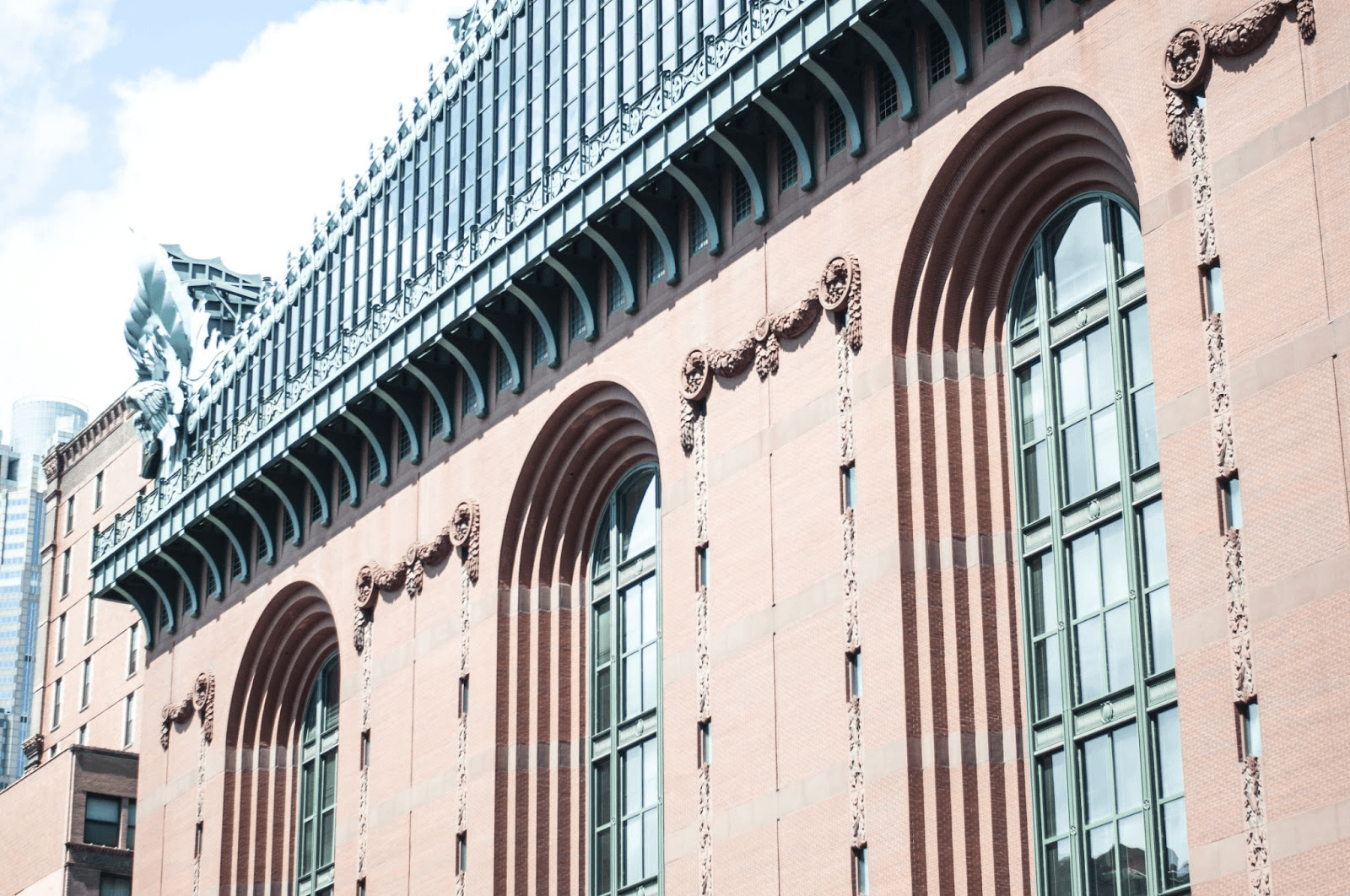
The Harold Washington Library (1991)
With its red granite façade and giant owl statues, this library was a bold departure from the glass-and-steel norm. It honored Chicago’s literary heritage while adding a touch of grandeur to the skyline.
The Aqua Tower (2009)
Designed by Jeanne Gang of Studio Gang, the Aqua Tower’s undulating balconies made it the most distinctive addition to the Chicago skyline in decades. It was also one of the first skyscrapers designed by a woman-led firm to reach such heights.
- Green Design: The balconies provide shade, reducing energy costs, while the building’s shape minimizes wind turbulence.
- A New Era for Women in Architecture: Gang’s work proved that Chicago’s skyline wasn’t just a boys’ club.
The 21st Century: Smart Growth
Today, the Chicago skyline is evolving faster than ever, with a focus on sustainability, mixed-use developments, and record-breaking heights. Here’s what’s defining the modern era:
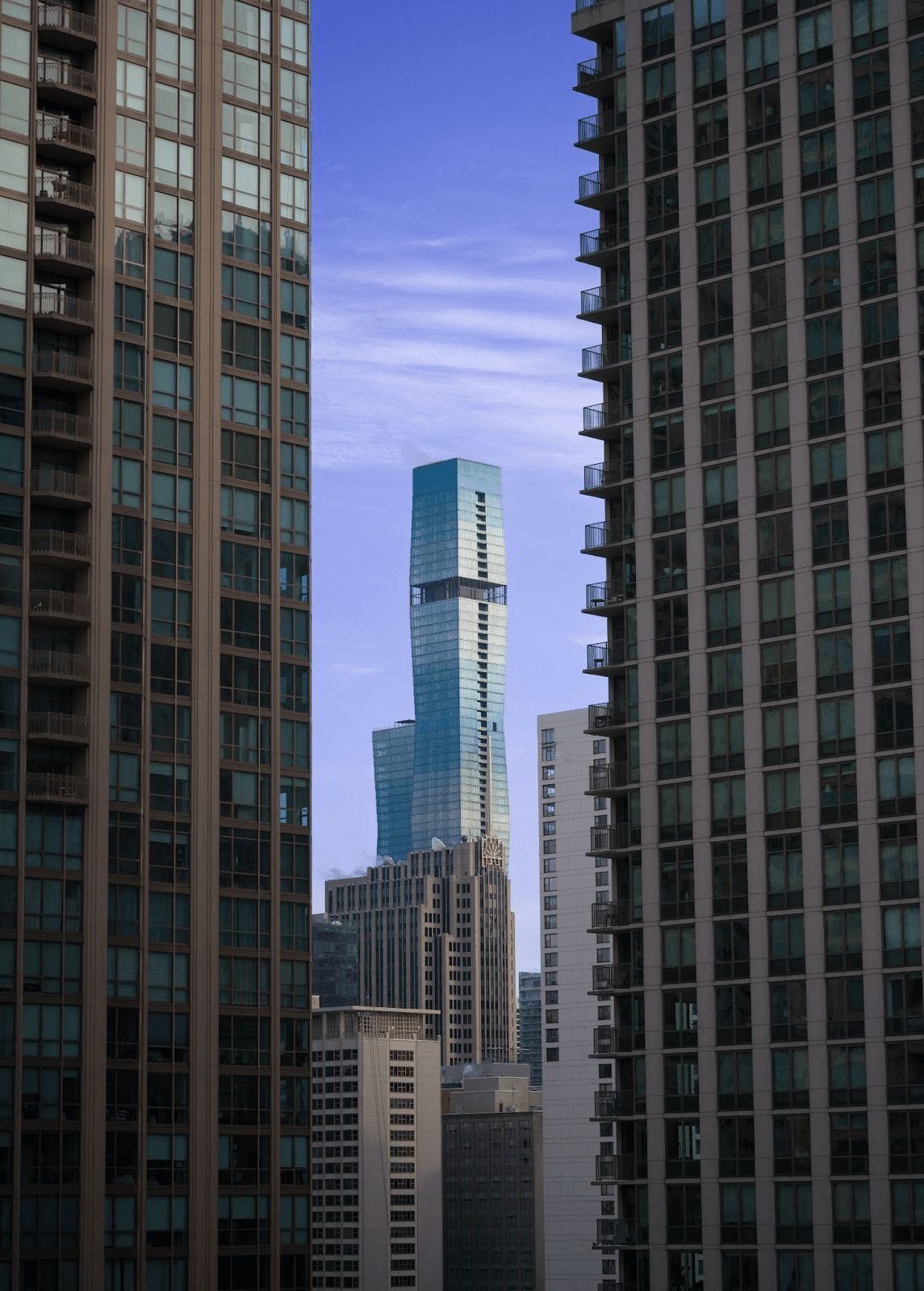
The Vista Tower (2020)
At 1,191 feet, this sleek, three-tiered skyscraper is the tallest building in the world designed by a woman (Jeanne Gang, again). Its wavy façade and luxury condos reflect Chicago’s shift toward high-end urban living.
One Chicago (2021)
This 1.4-million-square-foot complex includes two towers (one 792 feet, the other 975 feet) with residences, a hotel, and retail. Its design emphasizes community, with shared amenities and green spaces.
The 78 (Under Development)
This $7 billion project along the Chicago River will add 13 million square feet of mixed-use space, including some of the city’s tallest buildings. It’s part of a larger trend: Chicago is no longer just building upward, it’s building smarter, with an eye on walkability, transit, and sustainability.
One Central (Proposed)
If approved, this ambitious plan would deck over the railway tracks near Soldier Field, creating a new district with skyscrapers, parks, and transit hubs. It’s a bold vision for the future of the Chicago skyline.
Final Thoughts:
The Chicago skyline is a work in progress, just like the city itself. It’s a place where history and futurism collide, where every new tower adds another chapter to the story. Whether you’re an architecture buff, a history lover, or just someone who appreciates a stunning view, Chicago’s horizon has something to offer.


