
business resources
How to Become an Airbus RACER Helicopter Component Supplier?
25 Sept 2025

The Airbus RACER is a truly groundbreaking project aiming to redefine the capabilities of rotorcraft, with a sharp focus on speed and efficiency. Becoming a component supplier for the Airbus RACER helicopter means you'd be joining a select group contributing to this leap in aviation technology. So, what does it take to be part of this innovative program? This guide outlines exactly that.
Key Takeaways
- At its core, the RACER helicopter sports a unique design with wings and rear propellers, which allows it to reach speeds much higher than traditional helicopters.
- To make the helicopter lighter and boost its performance, it relies on advanced materials like titanium and composites, crafted using methods like 3D printing and resin transfer moulding.
- It features a hybrid-electric engine system that allows one engine to be shut down during flight—a smart move that saves fuel and significantly cuts down on pollution.
- Major industry players like Safran Helicopter Engines are supplying the powerplants, while Aernnova is building the specialized tail section, showcasing a deep level of industry collaboration.
- Ultimately, this project is a powerful demonstration of how Airbus works with partners across the globe, proving that teamwork is absolutely essential for developing next-generation aircraft.
Understanding the Airbus RACER Helicopter
The Airbus RACER helicopter represents a significant leap forward in rotorcraft design, pushing the envelope of both speed and efficiency. It’s not just the product of a single company, but rather a testament to what can be achieved through broad, international collaboration. This advanced aircraft masterfully combines an innovative design with cutting-edge manufacturing, aiming to redefine what’s possible in vertical flight.
Defining the RACER's Advanced Design
The RACER certainly stands out with its unique configuration. Instead of a traditional tail rotor, it features a distinctive 'H' shaped tail assembly. This design, coupled with its 'box wings', is engineered to manage airflow and slash drag, especially at higher speeds. The main rotor is intentionally kept at a conventional size to ensure solid performance for landing and takeoff in all sorts of conditions. This clever combination allows the aircraft to achieve speeds well over 240 knots—a substantial jump compared to many helicopters currently in service.
The Role of Collaborative Innovation
This project serves as a prime example of how international teamwork truly drives progress in aviation. While Airbus Helicopters leads the charge, a whole host of specialized companies from around the world contribute vital parts and expertise. This global network brings a rich diversity of skills and ideas to the table, which is essential for tackling the complex engineering challenges that come with creating such an advanced aircraft. It just goes to show how working together can spark major breakthroughs.
Key Technological Advancements
Several key technologies are what make the RACER such a standout aircraft:
- Hybrid-Electric Propulsion: The RACER runs on a hybrid-electric system with two engines. During cruising flight, one engine can be switched off, which dramatically cuts down on fuel consumption and emissions. In fact, the system is designed to be about 20% more fuel-efficient than comparable helicopters.
- Advanced Tail Assembly: The 'H' configuration tail, developed by partners like Aernnova, takes the place of a traditional tail rotor. This not only helps with high-speed flight but also contributes to reducing the aircraft's overall weight.
- Innovative Materials and Manufacturing: The use of materials like titanium alloys and composites—produced using methods such as 3D printing (additive manufacturing) and resin transfer moulding—is key to shedding weight and improving performance. These modern techniques allow for the creation of incredibly complex shapes and strong, lightweight parts.
The RACER's design is all about prioritizing both high-speed capability and operational efficiency. By integrating advanced aerodynamic features with a hybrid-electric powertrain and novel manufacturing processes, Airbus is aiming to set a new benchmark for the rotorcraft of the future.
Becoming an Airbus RACER Helicopter Component Supplier
To supply components for the Airbus RACER helicopter, companies have to align perfectly with the project's advanced technological requirements and demanding standards. This means getting to grips with the unique design principles of the RACER, which puts a premium on speed and efficiency through innovations like its box-wing configuration and rotorless tail system. Collaboration is absolutely essential, as the RACER is the product of international teamwork, integrating specialized contributions from various global partners. Suppliers are expected not just to provide high-quality parts, but also to engage actively in the development and integration process—working right alongside Airbus and other stakeholders to hit the program's ambitious goals.
Identifying Partnership Opportunities
Exploring opportunities to become a supplier for the RACER program calls for a proactive approach to understanding Airbus's supply chain needs. This journey often starts with pinpointing specific component areas where your company's capabilities match the project's technical specifications. For instance, if your company excels in advanced materials or precision manufacturing, you might look into areas like the tail assembly, propulsion system parts, or airframe structures. Attending industry trade shows, keeping an eye on Airbus's official supplier portals, and connecting with their procurement teams are all practical steps to uncover potential collaborations. Building those relationships early in the project lifecycle can also give you a significant leg up.
Meeting Rigorous Quality Standards
Supplying to a program like the RACER means adhering to some of the most stringent quality and safety standards in the aerospace industry. This includes obtaining and maintaining certifications like AS9100, which is specifically designed for aviation, space, and defense organizations. Companies must be able to demonstrate robust quality management systems, complete traceability of materials, and meticulous process control. The ability to consistently produce parts that meet tight tolerances and performance specifications is simply non-negotiable. This often involves a serious investment in testing equipment, employee training, and process validation to make sure every single component contributes to the overall safety and reliability of the helicopter.
Navigating the Supply Chain Integration
Integrating into the RACER's supply chain is about more than just delivering parts; it demands a real commitment to collaborative integration. What does that mean in practice? It means working closely with Airbus and other tier-one suppliers to ensure components fit and function exactly as intended within the larger system. Companies may need to adapt their production processes, data management systems, and communication protocols to get in sync with Airbus's requirements. This can involve participating in joint design reviews, providing detailed production data, and being responsive to feedback throughout the development and manufacturing phases. At the end of the day, successful integration is built on a foundation of transparency, communication, and a shared commitment to the project's success.
Core Component Contributions
The Airbus RACER helicopter is one complex machine, and its advanced capabilities are built on a foundation of specialized parts. This is where suppliers play such a vital role—providing these critical components. Just think about the main systems that make the helicopter tick: the engine, the tail, and the parts that transfer power. Each of these areas requires very specific expertise and manufacturing prowess.
Propulsion System Expertise
At the heart of any aircraft, you'll find its propulsion system. For the RACER, this involves some truly cutting-edge technology, including hybrid-electric elements. Companies that can contribute here must have a strong background in designing and building high-performance engines and their related systems. It's not just about raw power, either; it's also about efficiency and seamless integration with the aircraft's other systems. Safran Helicopter Engines, for example, is a key player, providing the core hybrid-electric propulsion units. This really underscores the need for suppliers to be at the forefront of engine technology, fully capable of meeting demanding performance and environmental standards.
Advanced Tail Assembly Manufacturing
The tail of the RACER isn't just a simple structure. It’s an innovative rotorless design that is crucial to the helicopter's overall performance. Manufacturing these advanced tail assemblies demands incredible precision and specialized techniques. Companies like Aernnova are deeply involved in this area. The development process often involves creating custom tooling for prototype parts, as we've seen with Italian firms OMPM and Metitalia. They were tasked with making the precise tools needed to build the initial tail components. This just goes to show that suppliers need to be adaptable, capable of producing both the components themselves and the specialized equipment required to make them. The ability to work with advanced materials and complex geometries is also a must-have here.
Transmission and Gearbox Specialization
All that power from the engines has to be managed and transferred to the rotors. That’s the job of the transmission and gearbox systems. These components are put under immense stress and require an extremely high degree of precision in their manufacturing. Avio Aero is one partner contributing critical transmission parts, including gearboxes and specialized bearings. Suppliers in this field must demonstrate a deep understanding of mechanical engineering, material science, and high-volume, high-precision manufacturing. The reliability of these parts is paramount—any failure can have serious consequences. For this reason, suppliers must adhere to the strictest quality control measures and have the capability to produce components that can withstand the most extreme operational demands.
Leveraging Advanced Manufacturing Techniques
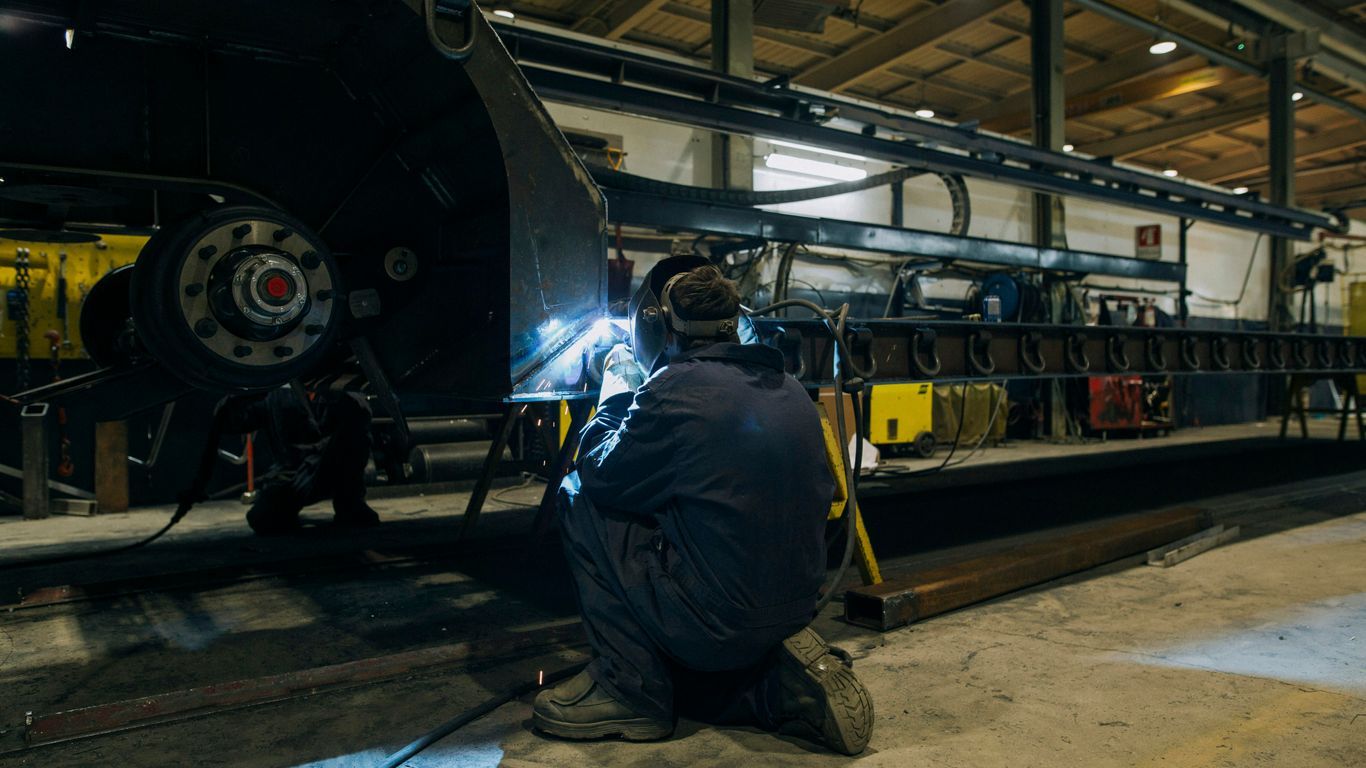
To be a supplier for the Airbus RACER helicopter, you'll need to be comfortable with some pretty cutting-edge manufacturing methods. This isn't your grandfather's factory floor; we're talking about processes that build lighter, stronger, and more efficient parts. Think of it as building the future of flight, one precisely crafted component at a time.
Additive Manufacturing Capabilities
Additive manufacturing, or 3D printing as it's more commonly known, plays a huge role in the RACER project. It's used to create complex parts that would be difficult, if not impossible, to make any other way. For example, a specific fitting for a trimming tab was created from a titanium alloy using a process called selective laser melting. This method builds parts layer by layer from a metal powder, which is perfect for making intricate shapes and results in parts that are both tough and light. Smaller bits and pieces, like brackets for cameras and antennas on the tail, are also made this way, often using aluminum alloys. This technology truly lets designers create shapes that just weren't feasible before.
Resin Transfer Moulding Processes
For some of the larger structural parts, like the main box of the horizontal stabilizer on the tail, a technique called Resin Transfer Moulding (RTM) comes into play. What's particularly neat is that for the RACER, the team managed to fabricate a component about three meters long in just one go. This means they didn't need a huge, energy-guzzling oven called an autoclave. This 'one-shot' process saves a significant amount of energy and time. While RTM is typically used for smaller, precise parts, applying it to something of this scale is a pretty big leap forward. Basically, it involves injecting liquid resin into a mold that's already filled with the composite fibers.
Utilizing Titanium and Composite Materials
The RACER makes smart use of all sorts of advanced materials. For instance, titanium alloys, like Ti6Al4V, are chosen for those 3D-printed components because they're incredibly strong and resist corrosion. Lighter aluminum-magnesium-scandium alloys are used for some of the smaller tail parts, striking a great balance between being lightweight and durable. The use of out-of-autoclave RTM for large composite structures—like that horizontal stabilizer torsion box—is a prime example of how these materials and processes come together beautifully. It allows for single-step manufacturing without the need for an autoclave, which is a major step forward in making aerospace parts. These methods, combining additive manufacturing and out-of-autoclave RTM, really do cut down on production time and energy use. Plus, they let engineers build lighter, more complex structures, which directly helps the helicopter perform better and use less fuel.
The integration of additive manufacturing and out-of-autoclave RTM represents a notable advancement in aerospace parts manufacturing. These techniques not only reduce production time and energy consumption but also enable the creation of lighter, more complex structures – directly enhancing the helicopter's overall efficiency and capabilities.
The Global Collaboration Framework
Engaging with International Partners
The RACER helicopter project stands as a shining example of how international cooperation drives progress in aviation. Airbus Helicopters spearheaded this initiative, successfully bringing together specialists from around 13 different countries. This incredible reach means a rich diversity of ideas and technical skills are poured into the project. It's not just about building a helicopter; it's about building it with the best minds from across the globe. This global approach helps to pool knowledge and discover new ways to solve tough engineering challenges.
Synergistic Component Integration
Getting all the different parts to work together in perfect harmony is a huge part of the RACER's design. Think of it like a highly complex puzzle where each piece is crafted by a different expert. For example, Safran supplies the engines, while Aernnova handles the tail section. The ultimate goal is to ensure these specialized components fit and function together seamlessly. This requires close-knit teamwork, where suppliers aren't just making parts in isolation but are actively involved in ensuring their contributions work perfectly with everything else. It’s simply a more connected way of building aircraft.
Contributing to a Complex Aviation Program
Supplying components for a project like the RACER means you become part of a much larger, coordinated effort. Your company's parts will be integrated into a highly sophisticated system, requiring a high level of coordination. It’s vital to understand exactly how your specific contribution fits into the overall mission of the helicopter. This involves clear communication and a shared vision with Airbus and other partners to meet the program's demanding requirements. Success here means your company gets to be part of a truly groundbreaking aviation achievement.
Working with a global team means adapting to different ways of doing things and communicating effectively across borders. It's about shared goals and mutual respect for each partner's contribution to the final product.
Strategic Alignment with Project Goals
Supplying components for the Airbus RACER helicopter means you're directly contributing to a program that's all about pushing the boundaries of rotorcraft performance and efficiency. It isn't just about making parts; it's about aligning your capabilities with the project's core objectives. This alignment is the key to becoming a valued partner in such an advanced aviation endeavor.
Supporting Speed and Efficiency Objectives
The RACER demonstrator is designed to offer enhanced operational capabilities, especially in scenarios where speed is a huge advantage. However, this speed isn't pursued at any cost. The project aims for a delicate balance, providing that increased speed while remaining economically viable and environmentally conscious. For suppliers, what does this mean? It translates to a need for components that are not only lightweight and robust but also contribute to overall aerodynamic efficiency and reduced operational costs. Your components must support the helicopter's ability to achieve higher speeds without compromising fuel economy or driving up maintenance demands.
Contributing to Fuel Savings Initiatives
A major goal of the RACER program, as part of the broader Clean Sky 2 initiative, is to significantly cut fuel consumption and emissions. This includes a target of a 20% reduction in both fuel burn and CO2 emissions compared to conventional helicopters of a similar weight. Suppliers play a direct and crucial role in achieving this by providing components that are optimized for fuel efficiency. This could involve materials that reduce weight, aerodynamic designs that minimize drag, or systems that manage power more effectively.
Enhancing Rotorcraft Technology
Beyond just speed and fuel savings, the RACER project is a platform for wider technological advancement in the world of rotorcraft. This includes exploring new materials, manufacturing processes, and system integrations. As a supplier, your ability to innovate and adapt to these advancements is critical. Whether it's through the use of advanced composites, additive manufacturing, or novel transmission designs, your contributions help shape the very future of helicopter technology.
Suppliers are expected to:
- Develop components that meet stringent weight and performance targets.
- Incorporate materials and designs that contribute to reduced fuel consumption.
- Demonstrate capabilities in advanced manufacturing techniques.
- Collaborate on solutions that improve the overall efficiency and operational envelope of the helicopter.
The RACER project represents a forward-thinking approach to rotorcraft development, where efficiency and performance are pursued in tandem with environmental responsibility. Suppliers who can demonstrate a clear understanding of and contribution to these overarching goals will find themselves well-positioned within this innovative program.
Becoming a Supplier for the Airbus RACER Helicopter
The Airbus RACER helicopter represents a massive step forward in rotorcraft technology, truly pushing the limits of speed and efficiency. Its creation is a testament to what can be accomplished through extensive collaboration across a global network of specialized companies. For businesses hoping to become a part of this innovative ecosystem, understanding the intricate supply chain and the specific demands of a project like RACER is absolutely key. It requires not just technical skill but also a deep commitment to quality, advanced manufacturing methods, and a readiness to work closely with lead partners like Airbus Helicopters. By focusing on these areas and demonstrating a capacity to contribute to cutting-edge aerospace projects, companies can position themselves as valuable suppliers for the future of helicopter design and production.
Frequently Asked Questions
What makes the Airbus RACER helicopter so special compared to other helicopters?
Simply put, the RACER helicopter is designed to fly much faster than conventional helicopters. It has wings and propellers at the back, in addition to its main rotor. This unique setup allows it to hit speeds over 240 knots (about 444 kilometers per hour), which is a huge leap in speed for a rotorcraft.
Who is working together to build the RACER helicopter?
Building the RACER is a massive team effort involving many companies and experts from across the globe. Airbus Helicopters leads the project, but other major companies like Safran Helicopter Engines and Aernnova are building crucial parts. Smaller, specialized businesses, including several in Italy, also contribute their unique skills and components. It’s a fantastic example of global teamwork in the aviation industry.
How does the RACER helicopter save fuel?
The RACER uses a clever hybrid-electric system with two engines. When the helicopter is just cruising, one of those engines can be turned off, which saves a lot of fuel and also reduces pollution. The entire design is focused on being fuel-efficient, aiming to use about 20% less fuel than similar helicopters.
What is different about the RACER's tail design?
Instead of the usual tail rotor that keeps a helicopter steady, the RACER has a unique 'H' shaped tail. This innovative design helps with control and makes flying at high speeds much smoother. It also plays a part in making the helicopter lighter overall.
Are there any new ways parts are being made for the RACER?
Yes, absolutely. The RACER project uses some very modern manufacturing methods. Certain parts are created using 3D printing, also known as additive manufacturing, with strong metals like titanium. Other components are made using a process called resin transfer moulding, which involves special plastics and glass fibers. This method is particularly efficient because it doesn't require the big, energy-intensive ovens called autoclaves for certain parts.
What are the main goals of the RACER project?
The main goals are to create a helicopter that is significantly faster and more fuel-efficient. The project aims to demonstrate how new technologies—like hybrid-electric systems and advanced materials—can make helicopters more effective and environmentally friendly. It's really all about pushing the limits of what helicopters are capable of doing.


