
citiesabc
How to Choose the Right ITSM Training for Your Career Goals
01 Sept 2026

Choosing the right ITSM Training can shape your career goals faster than many people expect. If you work in IT service management, service delivery, or support, the right course can sharpen your service management skills and give you a clearer next step. This guide explains what to look for, which paths fit different roles, and how to choose with confidence.
Understanding ITSM Training and Its Value in Australia
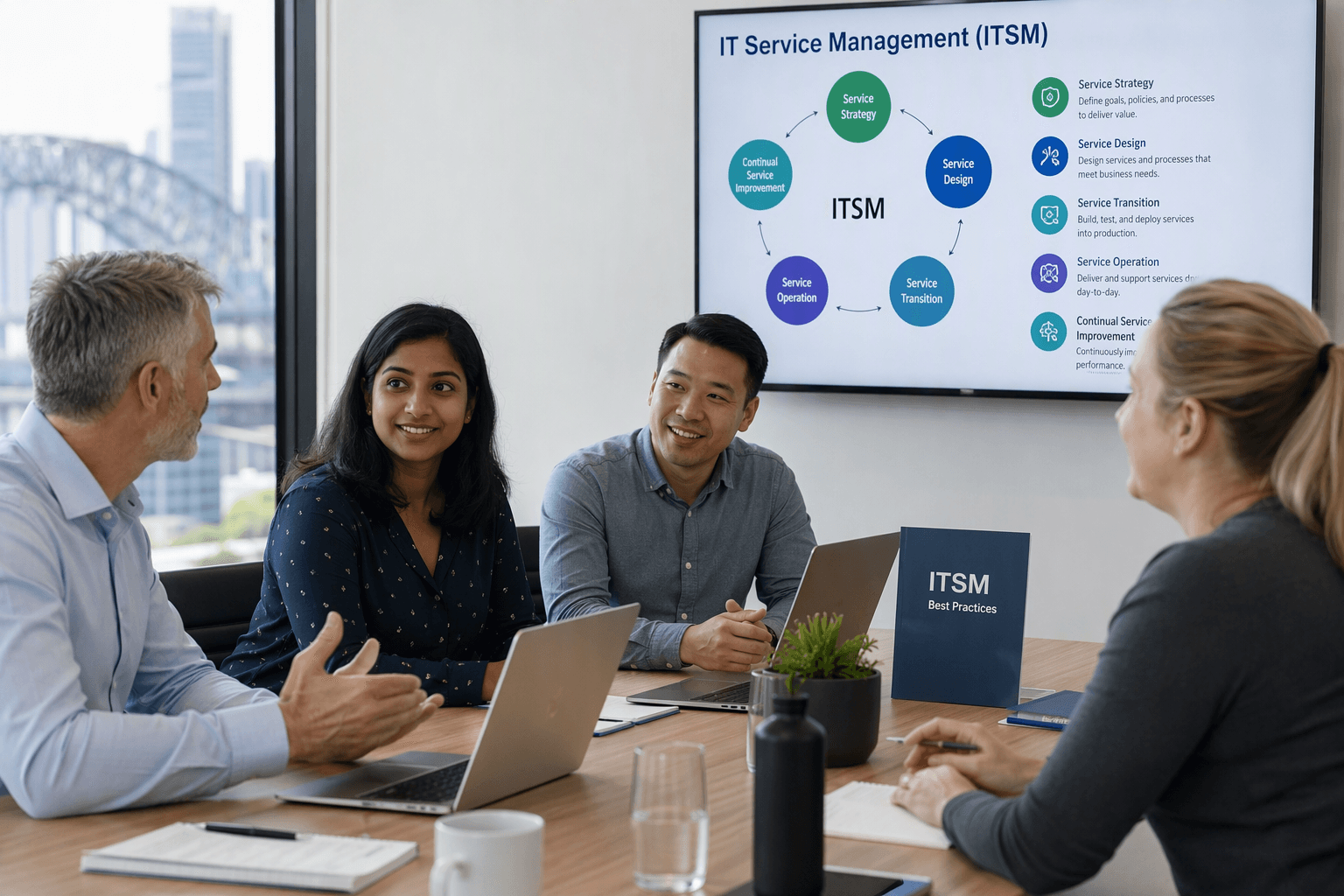
ITSM Training teaches you how IT service management works in real teams. It focuses on service delivery, support operations, and the service value system that helps organisations deliver better outcomes.
In Australia, where technology teams need practical capability, this training supports career growth by improving service management knowledge and daily performance. That makes it useful for both individuals and employers.
What ITSM Training Covers: Core Concepts Explained
ITSM training provides practical frameworks and best practices you can apply daily to improve service quality, minimise disruptions, and resolve issues faster across IT support, service desk, and operations teams.
Key topics include:
- Incident and problem management
- Service requests and support operations
- Change control, approvals, and the change manager role
- Process management and continual improvement
- Service value system thinking
For example, a service desk analyst using Jira Service Management can use these principles to handle tickets more consistently. This benefits support teams, team leads, and future leaders by building stronger service improvement habits.
Why ITSM Training Is Considered Essential for IT Careers
Many IT jobs involve service management, even if the title doesn’t mention it. If you work in IT support, a service desk, or support operations, you already manage incidents and use customer service skills daily.
That’s why ITSM training is valuable. It offers certification, builds soft skills, and provides best practices for problem-solving. A foundation certification is ideal for early-career roles.
For career advancement, team leads and project managers use ITSM principles to reduce disruptions and improve services. In short, it helps bridge your current role to your next job.
Defining Your Career Goals Before Choosing ITSM Training

Before choosing any course, pause and check your career goals. Are you aiming for a service desk role, stronger IT operations skills, or a move into leadership? Your answer shapes the right career path.
This step matters because training should match your career stage, target role, and professional development needs. Once that is clear, choosing the next step becomes easier. The next sections break this down by role.
Aligning ITSM Training With Entry-Level IT Roles
If you’re entry-level, start with training that matches frontline service roles. Choose a foundation certification relevant to IT support, service desk, or support operations to keep learning practical.
Key areas to focus on:
- Service requests and ticket handling
- User experience and soft skills
- Basic service management terms
- How support teams operate across IT
To match a certification path to your role: If you handle first-line support, incident logging, or use tools like Atlassian Jira Service Management, ITIL Foundation is usually the best starting point for career growth.
Preparing for Leadership and Management Positions in ITSM
When your career aspirations point towards leadership or management, your training should move beyond basics. Team leads and future service managers need stronger process management, service quality, and service value system knowledge.
Look for learning that supports:
- continual service improvement and service improvement
- process improvement across service delivery
- project management awareness
- a path towards advanced certifications
So how do you match long-term goals with the right qualification? Start by asking whether your next step is supervising people, improving processes, or shaping strategy. If yes, choose training that prepares you for strategic leadership and management responsibilities, not only frontline tasks.
Mapping ITSM Training to Different Certification Paths
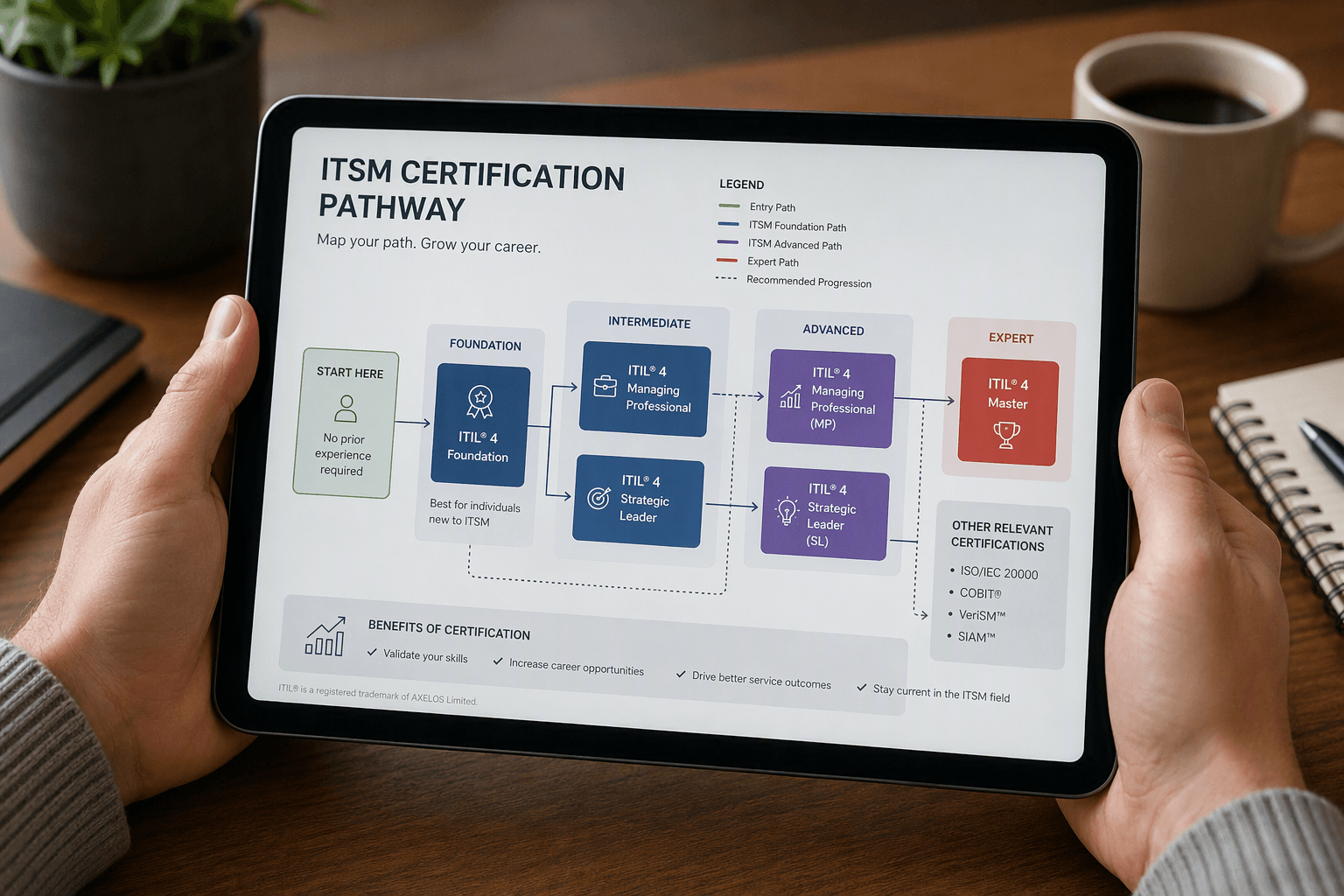
Not every certification path serves the same purpose. Some framework certifications build broad IT service management knowledge, while others fit a narrower career path or next job.
The best approach is to map your career goals to the level of responsibility you want. That may mean ITIL Foundation first, then advanced certifications as your professional development and career growth continue.
Overview of Major ITSM Certification Frameworks (Including ITIL)
Employers value framework knowledge that applies to real-world service management. Top certifications include ITIL, ISO/IEC 20000, VeriSM, and Atlassian Jira Service Management.
| Framework | Focus | Best for |
| ITIL Foundation / v5 | Broad service management practices | Early to mid-career roles |
| ISO/IEC 20000 | Service standards and governance | Quality-focused roles |
| VeriSM | Flexible service management approach | Cross-functional teams |
| Atlassian Jira Service Management | Tool-based workflow support | Operational support roles |
ITIL is often the best starting point, supporting career growth in various roles. PRINCE2 certification is also valuable if your work links service improvement with project management.
How ITIL Training Levels Fit Distinct Career Stages
Here’s a concise answer for a featured snippet:
ITIL training levels align with job responsibilities. Foundation is for beginners; higher levels suit team leads, service managers, and strategic leaders.
- Foundation: entry-level, best practices
- Practitioner/Intermediate: process management, service improvement
- Expert: broader leadership
- Master: advanced, experience-based application
Choose your ITIL level based on your career stage—start with Foundation if you’re new; pursue advanced certifications if you lead teams or drive service improvement.
Practical Considerations: Time, Cost, and Preparation for ITSM Training

A good choice is not only about content. Time, cost, and preparation all affect whether ITSM Training fits your schedule and budget.
Think about your current experience, prior experience, and exam difficulty before you book anything. The best approach is to choose a format you can finish properly. Next, let us look at timings and entry requirements.
How Long Does ITSM Training Take From Start to Certification?
The time needed depends on format and your prior experience. For beginners, a foundation certification is usually the fastest route because the scope is clear and the exam difficulty is manageable with focused preparation.
Typical options include:
- self-paced learning spread over your own schedule
- instructor-led courses completed in a short block
- bootcamp formats for faster completion
- extra revision time if your current experience is limited
If your goal is quick career growth, choose the format you can realistically complete. A short course sounds appealing, but the best certification is the one you can study well and apply afterwards.
Do You Need Prior IT Experience to Begin ITSM Training?
You don’t need deep experience to start. Entry-level training works for many, as long as you understand basic IT support, service desk, or operations tasks.
Helpful background includes:
- handling simple incidents
- working with support teams
- understanding ticket flow
- observing best practices
Limited experience shouldn’t hold you back. Begin with a foundation certification aligned to your goals, then build confidence through daily work.
Conclusion
Choosing the right ITSM training is key to aligning your career goals with the skills needed to succeed in IT. Understanding ITSM and its certifications can shape your career path and prepare you for leadership roles. Define your goals, choose the right certification, and invest time in selecting quality training—it’s about more than just earning a certificate; it’s about setting yourself up for long-term success. Explore our tailored ITSM training options to take the next step.
Frequently Asked Questions
Are online ITSM training courses recognised by Australian employers?
Yes, online courses can support recognition if the ITSM certification is relevant and practical. Australian employers usually care about whether the training improves service delivery, supports career advancement, and comes from a credible specialist such as ITSM Hub or ITSM Hub UK.
What is the difference between ITIL and other ITSM certifications for career growth?
ITIL gives broad service management guidance, so it often suits a wide certification path and steady career growth. Other ITSM certifications may be more specialised. For many professionals, ITIL is the best certification to begin with, then branch out as roles change.


