
business resources
How to Compare Electricity Plans for Your Business in Australia
26 Oct 2026

Business electricity prices in Australia change, and the rules vary by state. A plan that was competitive when you signed may no longer suit your business.
Comparing plans annually, using your own usage data and the relevant government benchmarks, helps you judge the total cost rather than the advertised discount.
1. Confirm your market rules first
Your site's location and annual electricity use affect your options:
- Victoria: the Victorian Default Offer (VDO) sets standing-offer prices for eligible customers, including small businesses.
- NSW, south-east Queensland and SA: the Australian Energy Regulator's (AER) Default Market Offer (DMO) caps eligible small-business standing-offer bills and provides a reference price for comparing market offers.
- ACT and Tasmania: the DMO does not apply, but small businesses can compare generally available retail plans through the government comparison service.
- Regional Queensland: many small businesses pay regulated prices, and retailer choice is limited.
- WA and NT: in WA's South West Interconnected System, customers using no more than 50 MWh a year generally cannot choose their retailer. Retailer choice in the NT is also limited.
Small-business eligibility rules vary by jurisdiction. Where retailer choice is available, your meter and network rules may still limit tariff options.
In regulated regions, focus on the available tariffs and how you use electricity.
2. Gather the right data
Collect the last 12 months of bills for each site. Include your connection identifier, such as the National Metering Identifier (NMI) where used, meter type, current rates and contract end date.
Request time-of-day usage data if your meter records it.

3. Know your tariff structure
Business electricity plans commonly use these tariff structures:
- Single or flat rate: one usage price, in cents per kilowatt-hour (c/kWh), regardless of the time of day.
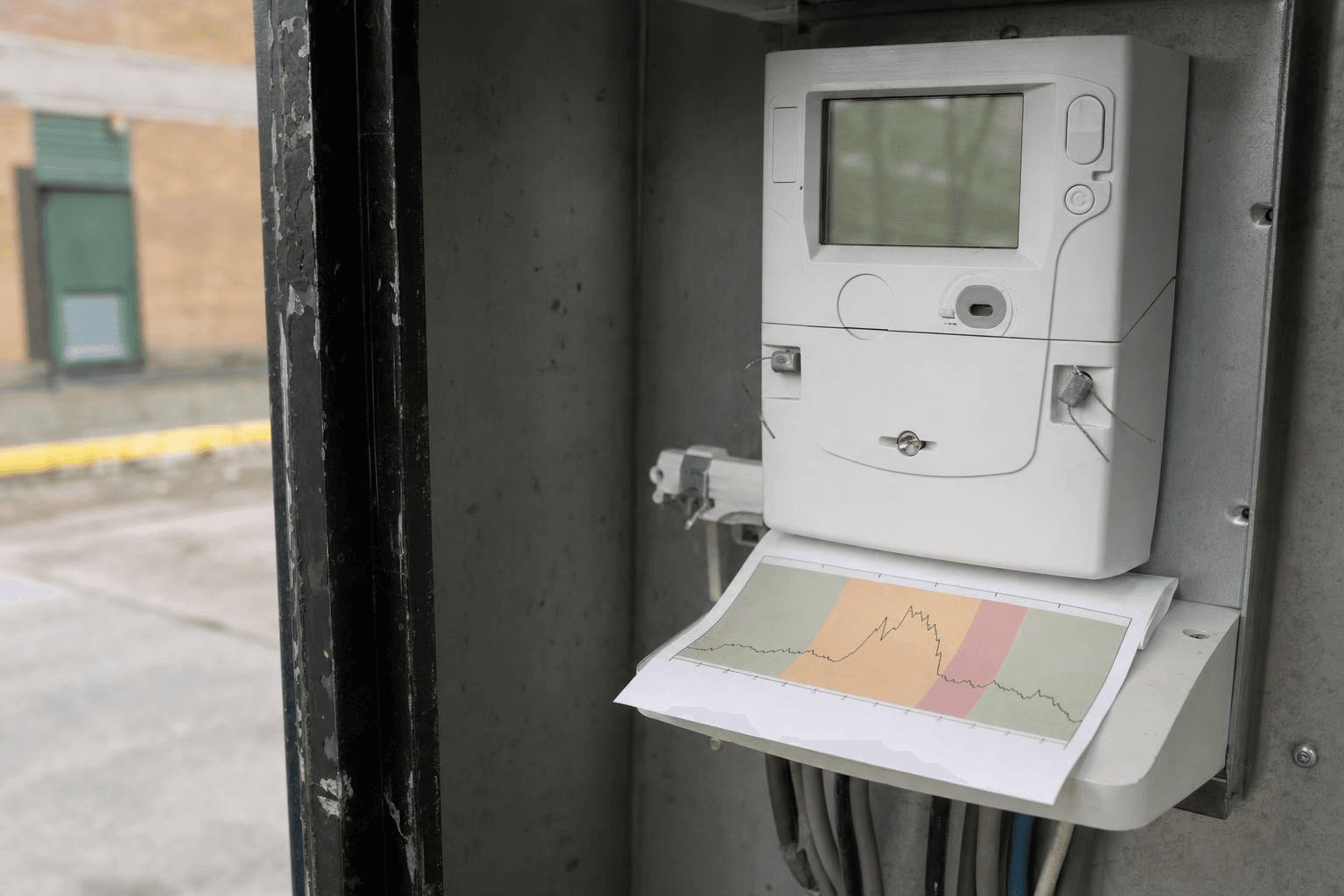
- Time-of-use (TOU): separate peak, shoulder and off-peak rates. This generally requires a meter that records usage by time period.
- Controlled load: a separate rate for eligible equipment, such as hot water systems, supplied during distributor-controlled periods.
- Demand: a charge based on your highest measured electricity demand within defined periods, on top of usage and supply charges. This requires suitable interval metering.
4. Benchmark against the government reference price
The DMO and VDO provide useful benchmarks where they apply.
Check the current financial year's benchmark for your location and tariff rather than relying on figures from an older bill or advertisement.
The AER's reference prices use standard consumption assumptions. Your business may use more electricity, less electricity or a different mix of peak and off-peak power.
An advertised percentage below the reference price is a starting point, not a prediction of your savings.
5. Use the government comparison tools
Energy Made Easy is the free, government-run comparison site for households and small businesses in NSW, the ACT, Queensland, SA and Tasmania.
It lists generally available plans that retailers are required to submit. Victoria uses the state-run Victorian Energy Compare.
Enter your bill figures and check that each estimate uses the same consumption period. Start with like-for-like tariffs, then assess alternatives against your time-of-day usage. Judge plans on estimated annual cost, not headline rates.
Businesses seeking broker assistance can explore electricity plans for business and then check which retailers and fees are included.
6. Check the line items that change your total
Read past the discount banner. These items affect the annual total:
- Daily supply charge: a low usage rate can be offset by a high fixed daily charge.
- Demand charges: confirm how demand is measured, which periods count and how long a recorded peak affects your bill.
- Fees and credits: include payment fees, late fees and any conditions attached to bill credits.
- GreenPower add-ons: check the extra cost if you choose an accredited renewable energy contribution.
- Solar feed-in tariffs: compare payments for exported electricity alongside the cost of electricity you buy. A higher feed-in rate does not necessarily mean a lower bill.
Guaranteed discounts apply without payment-related conditions. Conditional discounts may depend on paying on time or by direct debit.
Check what happens if you miss a condition, and whether the discount applies to usage charges or the whole bill.
Also check whether rates can change during the contract and when discounts or credits expire. A fixed contract term does not necessarily mean fixed prices.
7. Decide how to buy: direct quotes or broker-assisted
Direct comparison suits single-site businesses with straightforward usage and time to review offers.
A broker can help multi-site operators or businesses that need a closer assessment of demand charges and tariff options.
Choice Energy offers broker-assisted reviews, including usage comparisons and retailer negotiations.
It states that its service is provided at no cost to customers and that it receives a commission from the selected retailer.
Choice Energy also states that it compares offers from a panel of retailers.
A broker's panel may not cover the whole market. Ask which retailers it can approach, how it is paid and whether its annual cost estimates include all fees and conditions.
Results will depend on your usage, location and the offers available at the time.
8. Make the switch
Before accepting an offer, confirm the tariff matches your meter and check your current contract for exit fees or notice requirements.
Keep written confirmation of the new rates, start date, fees and discount conditions.
Check whether a cooling-off period applies and how to cancel within it.
Set reminders before the contract or benefit period ends, and review your first bill to confirm that the agreed rates have been applied.
Energy is one of several hidden costs worth reviewing regularly, alongside payment processing fees, maintenance and overtime, and renegotiating contracts before renewal can protect cash flow.
Keep the benchmark, keep the decision
Whether you compare directly through Energy Made Easy or ask a broker such as Choice Energy to assess offers, use the same method: confirm your market rules, understand your tariff, check the relevant benchmark and compare total annual costs.
Keep your usage data and written offer together so next year's review is easier.
FAQ
Do I have to accept a demand tariff?
That depends on your distributor, meter and available plans. Ask whether alternatives are available and request an estimate based on your recorded demand before choosing.
Share

Ricardo Tomaz
Ricardo Tomaz is VP of Finance & Operations at Ztudium, the 4IR technology company behind Businessabc, Citiesabc, and IntelligentHQ. He owns the group's finance and operations function, spanning financial strategy, budgeting, reporting, and multi-entity operations, and works directly with leadership to align commercial goals with data-driven insight.
Working at the core of a technology group operating across AI and blockchain, Ricardo writes on the practical intersection of finance and emerging technology: how automation and digital transformation are reshaping business operations, what data-driven decision-making looks like in practice, and the questions of governance and ethics that come with AI-led systems.


