
resources
Innovating the Future: Exploring New York's Smart City Initiatives
15 Nov 2025

New York City is truly demonstrating its commitment to becoming a leading smart city. This endeavor isn't merely about integrating advanced technology; rather, it's fundamentally about optimizing urban functions to enhance the quality of life for every resident. Consider, for a moment, how data can inform smarter infrastructure development, how the Internet of Things might streamline essential services, or even how artificial intelligence could proactively shape our future urban landscape. This comprehensive smart city initiative by New York is—at its core—dedicated to leveraging innovation to address significant urban challenges and improve daily living for all New Yorkers.
Key Takeaways
- Cities are extensively utilizing vast amounts of data to make more informed decisions regarding growth strategies and service delivery. This data-driven approach facilitates more judicious spending and ensures robust preparedness for future demands.
- Connecting everyday objects to the internet, such as public streetlights or parking meters, enables cities to operate with greater fluidity and cost-effectiveness.
- The application of artificial intelligence (AI) assists urban centers in predicting future trends—like population shifts or evolving transportation needs—thereby allowing for proactive planning in areas such as new construction or road development.
- Many cities are actively exploring green technologies to foster greater sustainability. This encompasses initiatives like solar power integration and enhanced strategies for climate resilience, ultimately benefiting both environmental health and public well-being.
- By constructing virtual counterparts of the city, known as digital twins, urban planners gain the invaluable ability to safely test proposed changes before implementing them in the physical environment, effectively mitigating potential issues related to traffic or emergency management.
New York's Smart City Vision
New York City is steadfastly charting a course toward a more connected, efficient, and ultimately more livable future. This vision extends far beyond simply adopting new gadgets; it represents a fundamental rethinking of how the city operates and how effectively it serves its diverse population. By wholeheartedly embracing technology and vast datasets, the city aims to address complex urban challenges head-on and significantly improve the daily experiences of millions. The core idea is to make New York smarter—not just in terms of technological prowess, but in its strategic planning, its governance models, and its dynamic interactions with its people.
Leveraging Data for Informed Urban Growth
In essence, cities are massive data-generating machines. From the intricate flow of traffic on our bustling streets to the precise energy consumption within our towering buildings, information is perpetually being produced. New York City is keen to harness this deluge of data to inform better decisions about how it expands and evolves. Instead of relying on educated guesses or historical precedents, city leaders can now utilize real-time information to accurately understand current needs and, crucially, to anticipate future ones. What does this mean in practice? It translates to more efficient allocation of public funds and the provision of services that are genuinely aligned with what residents truly require. For example, a thorough analysis of traffic patterns can prove instrumental in planning new transit routes or optimizing existing ones, thereby significantly reducing commute times and alleviating congestion. Indeed, this data-driven approach is invaluable for future planning, exemplified by the ongoing redevelopment of the Brooklyn Marine Terminal, which thoughtfully includes provisions for new housing and expansive public spaces [21d6].
Integrating Internet of Things Across City Services
The Internet of Things (IoT) seamlessly connects everyday objects to the internet, enabling them to both transmit and receive data autonomously. Within New York, this transformative capability means sensors can be strategically deployed across the urban landscape—on streetlights, within waste bins, integrated into public transport, and even throughout our cherished parks. Can you imagine streetlights that intelligently dim when no one is present, thereby conserving precious energy, or trash cans that automatically signal when they’re full, optimizing collection routes and saving resources? This profound interconnectedness facilitates real-time monitoring and precise control over essential city infrastructure. It’s truly about making city services far more responsive and considerably less wasteful. Consider Barcelona, for instance, which effectively uses IoT sensors to guide drivers directly to available parking spots—a wonderfully simple yet impactful idea that markedly reduces both traffic and urban pollution.
AI and Machine Learning for Predictive Urban Planning
Artificial intelligence (AI) and machine learning stand as exceptionally powerful tools for peering into the future. These advanced technologies possess the capacity to analyze vast, complex datasets, allowing them to accurately forecast critical trends such as population shifts, evolving transportation demands, or even potential environmental impacts. This foresight empowers city planners to proactively address challenges—often before they even materialize. For instance, AI can adeptly simulate the ripple effects of new building projects on traffic flow or public services, aiding in the design of neighborhoods that are inherently more resilient and functional. It's almost like possessing a crystal ball for urban development, helping us construct a city that can gracefully adapt to changing circumstances and continue to grow in a truly sustainable manner.
Enhancing Urban Mobility and Connectivity

Cities, by their very nature, are in constant motion, and making that movement smoother, cleaner, and more accessible constitutes a significant aspect of what defines them as "smart." New York is intently examining how technology can fundamentally transform the way people and goods navigate its vibrant landscape, striving for a future where getting from point A to point B is less cumbersome and demonstrably better for the environment.
Smart Mobility Solutions for Connected Transportation
Take a moment to consider your daily commute. What if it could be remarkably more predictable, significantly less crowded, and even noticeably greener? That's precisely the vision underpinning smart mobility. It’s an approach centered on employing digital tools and innovative modes of transport to simplify movement throughout the city. This encompassing concept includes initiatives such as:
- Real-time traffic management: Utilizing sophisticated sensors and data analytics to dynamically adjust traffic lights, reroute drivers around unforeseen accidents, and provide you with highly accurate estimated travel times.
- Integrated public transit apps: Intuitive applications that empower you to plan an entire journey seamlessly, combining subways, buses, ferries, and even bike shares—all within a single interface, complete with real-time updates on schedules and potential delays.
- Electric and autonomous vehicles: The strategic deployment of more electric buses and a thoughtful exploration into how self-driving shuttles could effectively connect neighborhoods or provide crucial last-mile transport solutions.
- Micro-mobility options: Actively supporting services like e-scooters and convenient bike rentals as practical and efficient ways to cover shorter distances across the urban fabric.
The overarching goal is to forge a transportation network that is not only highly efficient but also actively reduces pollution and is equitably available to everyone. It isn't just about achieving greater speed; it's about ensuring that people can reach their destinations precisely when they need to, without exacerbating congestion or contributing to air quality concerns.
The Role of 5G Networks in City Infrastructure
All these forward-thinking smart mobility concepts require an exceptionally robust foundation to function effectively—and that, indeed, is where 5G networks become indispensable. You might primarily associate 5G with faster internet speeds for your personal devices, but within a smart city context, its utility is far more expansive and critical. Think of it as constructing a super-fast, incredibly reliable digital highway expressly for data transmission.
- Speed and Capacity: 5G boasts the remarkable capability to manage an immense volume of data flowing simultaneously from countless sensors and devices, which is precisely the backbone a truly connected city demands.
- Low Latency: This crucial feature signifies an almost imperceptible delay between sending and receiving information. For critical applications like self-driving cars or urgent emergency response systems, this near-instantaneous communication is absolutely vital.
- Connecting Everything: From dynamic traffic signals and public transit vehicles to intelligent streetlights and sophisticated environmental sensors, 5G provides the essential infrastructure to link them all, allowing for seamless communication among themselves and with centralized city management systems.
Without advanced connectivity like 5G, many of the ambitious plans for smarter, more responsive city services simply wouldn't be possible. It's the invisible infrastructure that makes the visible changes happen.
By thoughtfully upgrading its digital infrastructure, New York is proactively preparing its streets and transit systems for a future where technology will play an increasingly integral role in keeping the city moving—and thriving.
Sustainable Development Through Green Technology
Cities are increasingly recognizing a fundamental truth: robust growth and environmental health need not be mutually exclusive. New York is diligently exploring how green technology can markedly improve urban living for everyone, not just in the immediate term, but for the long haul. This entails a comprehensive reevaluation of how we construct our buildings, how we power our lives, and, importantly, how we strategically prepare for an evolving climate.
Green Technology for Sustainable City Development
Sustainability constitutes a profoundly significant element within the broader smart city dialogue. At its core, it's about ensuring our urban environments can continue to flourish indefinitely without depleting our finite resources or causing irreparable harm to the planet. This imperative involves adopting cleaner methods for energy generation, such as harnessing solar and wind power, and concurrently making our power grids smarter so they can gracefully integrate and manage these new, renewable sources. It also crucially means designing and constructing infrastructure that is built to last and can adapt resiliently to diverse and changing weather conditions.
- Smart grids are instrumental in balancing electricity usage and facilitating the smoother incorporation of renewable energy sources.
- Green building designs are specifically engineered to minimize energy waste and significantly enhance air quality both indoors and throughout the urban environment.
- Waste management systems are undergoing crucial updates to maximize recycling efforts and substantially reduce landfill volume.
By diligently implementing these green technologies, cities can effectively reduce pollution and foster healthier living conditions for their inhabitants. The New York City Economic Development Corporation, for example, is already actively supporting companies at the forefront of developing these kinds of vital climate solutions.
Cities are not just places where people live; they are complex systems that consume resources and generate waste. Rethinking these systems through a green lens is key to long-term survival and prosperity.
Climate-Adaptive Infrastructure and Renewable Energy
Looking keenly toward the future inherently means preparing for the undeniable realities of climate change. This crucial preparation involves constructing infrastructure that is robust enough to withstand increasingly extreme weather events—be they more intense storms or prolonged heatwaves. It also necessitates a determined shift toward renewable energy sources to power our expansive city. Can you envision streets designed to manage heavy rainfall far more effectively, or buildings that autonomously generate their own electricity from the abundant energy of the sun? This comprehensive approach not only helps cities become markedly more resilient but also significantly reduces their dependence on fossil fuels, thereby contributing to a healthier planet and ensuring a more stable, secure energy supply for all residents.
- Developing infrastructure specifically engineered to handle increased flooding events.
- Strategically integrating renewable energy sources, such as solar panels, onto public buildings.
- Creating more expansive green spaces, which effectively help cool urban areas and manage water runoff.
Citizen-Centric Platforms and Public Engagement
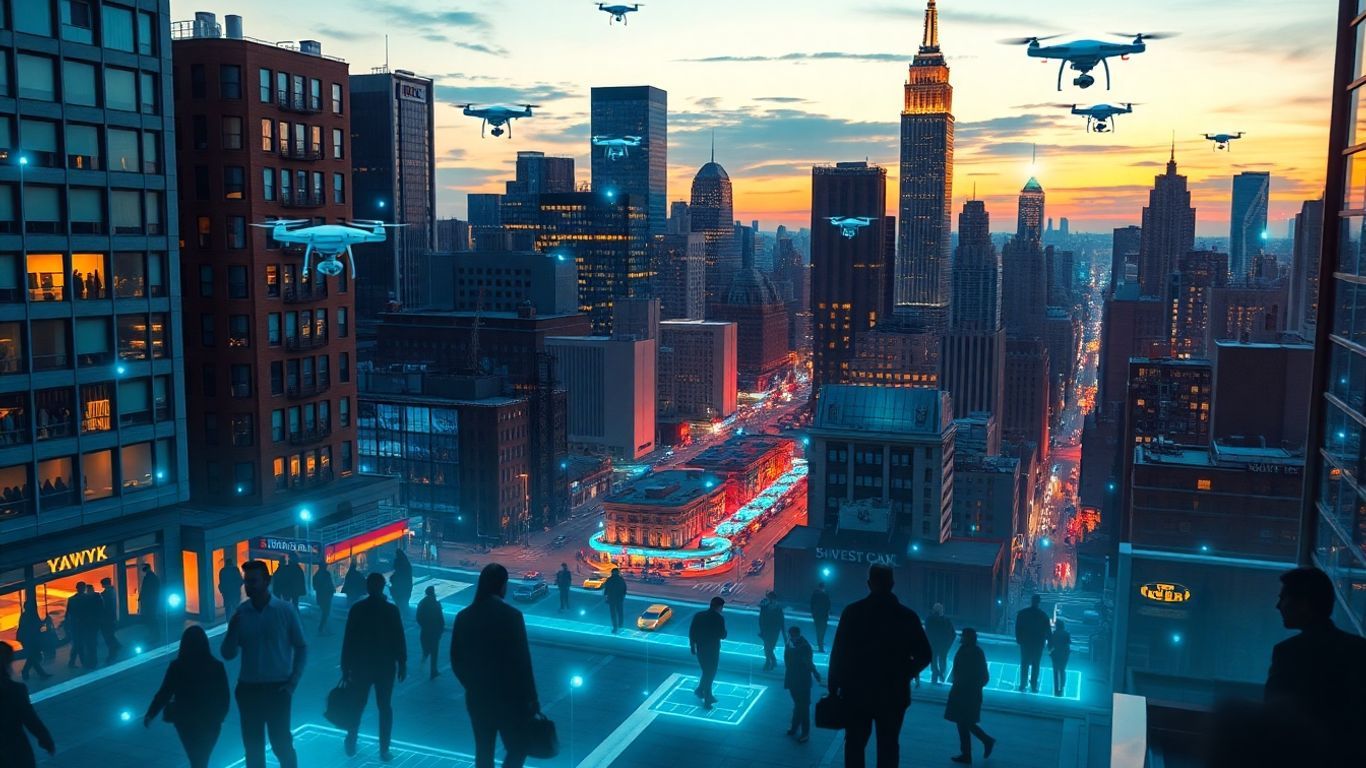
While often associated with advanced technological prowess, truly smart cities are, at their very core, profoundly about the people who inhabit them. Ensuring that every individual has a meaningful voice in how their city operates is paramount. This commitment translates into creating accessible avenues for residents to easily express their perspectives and, critically, for city leaders to genuinely listen and respond.
Citizen-Centric Platforms for Public Engagement
Consider these innovative platforms as modern-day digital town squares. They are meticulously designed to simplify the process for residents to connect with their local government and, conversely, for the government to gain a profound understanding of community needs. Such platforms can encompass a variety of tools, including:
- Open Data Portals: Websites where the city transparently shares the information it collects—like detailed traffic patterns or comprehensive budget figures—making it accessible for anyone to view and utilize.
- Online Consultation Tools: Interactive platforms where citizens can provide invaluable feedback on proposed projects or policies well before they are formally finalized, fostering a sense of co-creation.
- Mobile Feedback Apps: User-friendly applications that allow individuals to report common issues, such as a broken streetlight or a burgeoning pothole, directly to the appropriate city department for swift resolution.
The ultimate goal is to cultivate trust and ensure that city services function more effectively and equitably for everyone. When citizens feel their voices are heard and valued, they are naturally more inclined to participate actively and support vital city initiatives.
Building these platforms requires careful thought. It's not enough to just put information online; cities need to make sure the tools are easy to use for people of all ages and technical abilities. Accessibility is key to making sure these platforms truly serve the entire community.
Ensuring Inclusivity in Smart City Initiatives
There's an inherent risk that new technology could inadvertently marginalize certain segments of the population. Consequently, prioritizing inclusivity in all smart city projects is of immense importance. We must proactively work to avoid creating a 'two-tiered' city where some residents disproportionately benefit from new services while others are unfortunately left behind.
So, what does genuine inclusivity look like in a practical sense?
- Digital Literacy Programs: Offering comprehensive training to empower individuals with the skills needed to effectively utilize new technologies and navigate online services.
- Accessible Design: Meticulously ensuring that all websites, applications, and public terminals are intuitively easy to use, especially for people with disabilities or those who may not be highly tech-savvy.
- Broad Outreach: Actively seeking and incorporating input from diverse demographic groups, including seniors, low-income residents, and non-English speakers, to thoroughly understand their unique needs and perspectives.
Cities are conscientiously exploring various strategies to ensure that as they evolve to become 'smarter,' they simultaneously become fairer and more equitable for all their cherished residents. Ultimately, it’s about harnessing technology to bring people closer together, rather than allowing it to create divisions.
The Power of Digital Twins in Urban Design
Imagine, for a moment, having a living, breathing virtual replica of New York City right at your fingertips. That's essentially the profound concept behind a digital twin—a meticulously detailed, dynamic digital representation of our physical urban environment. It transcends a mere static 3D model; rather, it's a sophisticated system that mirrors real-world assets, ranging from individual buildings and traffic lights to entire neighborhoods and complex utility networks. This remarkable technology empowers city planners and engineers to thoroughly test out innovative ideas and precisely foresee their potential outcomes before any actual construction or modification takes place in the physical city.
Digital Twin Technology in City Design
The creation of a digital twin involves the meticulous gathering of vast quantities of data from an array of sources, including pervasive sensors, existing city records, and various other informational streams. This rich information is then expertly utilized to construct a virtual representation that can be updated in real-time, offering a continuously current reflection of the physical world. Think of it as an extraordinarily advanced video game simulation, but one specifically engineered for the intricate complexities of urban planning. With this tool, we can simulate, for example, how a proposed new subway line might influence traffic patterns, or what impact a newly planned park could have on localized air quality. This unparalleled ability to virtually test, refine, and optimize designs not only conserves immense time and resources but also significantly mitigates the risk of costly real-world mistakes. It profoundly enhances our capacity to visualize complex urban systems and comprehend their multifarious interactions in ways that were previously unimaginable.
Simulating Urban Systems for Optimization
Digital twins prove incredibly valuable for fine-tuning the operational efficiency of the city. Planners can conduct numerous simulations to identify the most effective strategies for managing traffic flow, orchestrating emergency responses, or even meticulously planning for future population growth. Consider, for instance, how a digital twin could pinpoint the most fuel-efficient routes for waste collection trucks, thereby reducing both consumption and emissions. This technology can also be instrumental in modeling the potential impact of extreme weather events, allowing the city to proactively prepare and adapt its infrastructure with greater foresight and efficacy.
Here’s a closer look at some key areas where digital twins can significantly aid simulation efforts:
- Traffic Flow: Rigorously testing new traffic light timings or alternative road layouts to demonstrably alleviate congestion.
- Energy Consumption: Accurately modeling how proposed new buildings or public transport systems will affect overall energy demand.
- Emergency Response: Realistically simulating evacuation routes and optimizing resource deployment during critical crises.
- Environmental Impact: Comprehensively assessing the effects of new urban developments on air quality and the integrity of green spaces.
The core idea behind using digital twins is to move from reactive problem-solving to proactive planning. By understanding potential outcomes in a virtual space, we can make smarter, more informed decisions that benefit everyone living and working in the city.
Collaboration and Innovation Ecosystems
Truly, cities do not forge the future in isolation. The creation of genuinely smart urban environments necessitates bringing together diverse groups to collaboratively share ideas and collectively work on solutions. Think of it much like a large-scale, complex project where every participant has a distinct and crucial role to play in its ultimate success.
Urban Innovation Ecosystems and Collaboration Models
No single city department or private company holds all the answers to urban challenges. That's precisely why New York is keenly focused on cultivating dynamic networks where innovators, researchers, businesses, and residents can seamlessly connect and interact. These vibrant "ecosystems" are designed to foster the rapid growth of new ideas and accelerate their implementation. It's fundamentally about establishing spaces, both physical and digital, where individuals can converge, articulate common challenges, and collectively develop novel approaches to urban problem-solving. This might involve initiatives such as:
- Innovation Hubs: Dedicated physical spaces where burgeoning startups and established city agencies can collaborate side-by-side, fostering cross-pollination of ideas.
- Open Data Challenges: Engaging competitions that actively encourage developers to utilize publicly available city data to create innovative and useful applications or services.
- University Partnerships: Strategic collaborations with local academic institutions to conduct cutting-edge research and rigorously test emerging technologies within a real-world context.
The overarching goal is to embed innovation as a continuous, iterative process, rather than treating it as a sporadic, one-time event.
Public-Private Partnerships in Smart City Development
Partnering with private companies constitutes a significant and essential component in transforming smart city initiatives into tangible realities. These strategic partnerships can introduce invaluable new technology, crucial funding, and specialized knowledge that city governments might not possess internally. For example, a private company could provide expertise in installing and managing a sophisticated network of smart streetlights, or a leading tech firm might collaborate with the city to develop a superior public transit application.
Here’s a detailed look at how these impactful partnerships can effectively function:
| Partnership Type | Description |
|---|---|
| Technology Provision | Companies supply essential hardware (such as advanced sensors) or cutting-edge software platforms. |
| Joint Development | The city and private partners collaboratively co-create innovative new solutions or enhanced services. |
| Service Outsourcing | A private company expertly manages a specific smart city service on behalf of the city administration. |
| Data Sharing Agreements | Structured and clear frameworks that enable the city and private companies to ethically share data for mutual benefit. |
These collaborations, of course, necessitate clear goals and robust agreements to ensure they unequivocally benefit the city and its residents, rather than solely serving the interests of private partners. It's about meticulously striking a balance where both sides gain, ultimately leading to superior services and a more efficient, responsive urban environment.
By actively fostering and encouraging these kinds of dynamic collaborations, New York aims to construct a city that is not only technologically advanced but also inherently adaptable and deeply responsive to the evolving needs of everyone who chooses to live and work within its bustling confines.
Looking Ahead: New York's Smart City Journey
New York City's ambitious exploration into smart city initiatives clearly underscores a profound commitment to constructing a more efficient, remarkably sustainable, and ultimately more livable urban environment. Through the strategic integration of advanced technology with genuine community needs, the city is meticulously laying the groundwork for significant future growth and enhanced resilience. The path forward, however, involves much more than simply adopting new tools; it also critically entails ensuring these technological advancements truly benefit all New Yorkers, fostering a city that genuinely works for everyone. Indeed, it's an ongoing, iterative process—one that demands continuous adaptation and an unwavering focus on what truly matters: enhancing the lives of the diverse individuals who proudly call this incredible city home.
Frequently Asked Questions
What is a smart city?
A smart city can be understood as an urban environment that leverages technology and data to optimize its functions and improve the quality of life for its inhabitants. Essentially, it employs intelligent tools to enhance various aspects like traffic management, energy consumption, and city services, making daily life both easier and more efficient for residents.
How does New York use data to get smarter?
New York City meticulously gathers extensive information, encompassing everything from traffic flow patterns to energy usage statistics. By thoroughly analyzing this rich dataset, city leaders are empowered to make more informed decisions regarding urban development, allocate public funds more judiciously, and proactively prepare for future needs, ensuring the city's growth is well-planned and sustainable.
What is the Internet of Things (IoT) and how does it help cities?
The Internet of Things, or IoT, involves connecting everyday objects to the internet, essentially giving them the ability to communicate. Sensors can be embedded in infrastructure like streetlights or trash cans to transmit vital information. This capability helps the city identify issues such as a malfunctioning light bulb or a full waste bin, leading to more streamlined city services and significant resource savings.
How does technology help make transportation better?
Smart cities are actively deploying innovative technologies to revolutionize transportation. This includes intuitive applications that assist in planning multi-modal journeys—combining buses, trains, or even e-scooters—all within a single interface. Such advancements contribute to reducing traffic congestion, improving air quality, and enhancing overall accessibility for everyone navigating the urban landscape.
What are digital twins in city planning?
A digital twin is a sophisticated virtual replica of a real-world city. Urban planners can utilize this dynamic digital copy to thoroughly test new concepts, such as altering traffic patterns or proposing new road layouts, without implementing any physical changes in the actual city. This powerful tool helps in identifying and refining optimal solutions before they are constructed in the real environment.
Why is it important for citizens to be involved in smart city plans?
Ensuring smart cities truly serve everyone necessitates active citizen involvement. Through online platforms and mobile applications, residents can easily share their insights and provide crucial feedback on urban development plans. This inclusive approach helps guarantee that new technologies and services are both useful and equitable for all residents, fostering a truly community-centric urban environment.


