
citiesabc, first_page
Jensen Huang and German Chancellor Friedrich Merz Outline Germany's Ambition to Lead Industrial AI
20 Oct 2026

NVIDIA CEO Jensen Huang and German Chancellor Friedrich Merz have outlined a new phase of cooperation to accelerate industrial AI, physical AI and digital manufacturing across Germany, supported by new startup investment plans and a wider European AI strategy.
Germany is accelerating its ambitions to become a global leader in industrial artificial intelligence as Chancellor Friedrich Merz and NVIDIA founder and CEO Jensen Huang outlined new plans to bring advanced AI technologies into the country's manufacturing and industrial sectors.
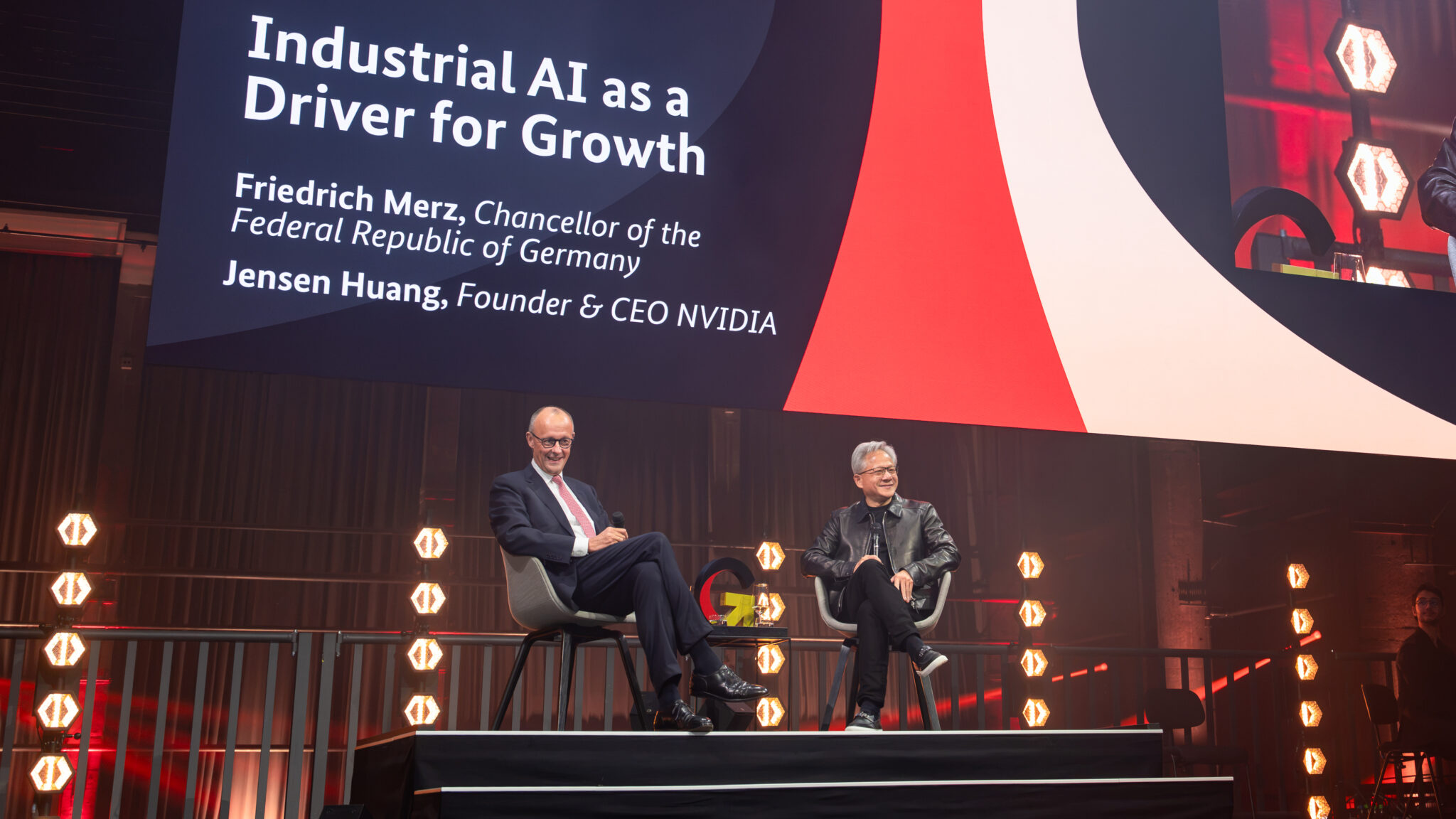
Meeting in Berlin on October 19, 2026, ahead of NVIDIA GTC Berlin, the two leaders discussed how Germany's engineering heritage, industrial expertise and manufacturing data could help the country compete in an increasingly AI-driven global economy.
During the Invest in Germany Summit, the German federal government and NVIDIA signed a Joint Declaration of Intent to advance cooperation on physical AI models and strengthen the adoption of artificial intelligence across German industry.
The agreement brings together NVIDIA and Germany's federal ministries responsible for economic affairs, energy, research, technology and space, extending collaboration with the country's Industry 4.0 Platform.
Germany seeks a leading position in industrial AI
Germany has long been one of Europe's most important industrial economies, with globally recognised expertise in automotive manufacturing, machinery, engineering and advanced production systems.
However, industrial competitiveness increasingly depends on access to computing infrastructure, high-quality data, robotics and the ability to introduce AI into operational systems.
At Berlin's Kraftwerk, a former power station transformed into an event venue, Merz and Huang discussed how these capabilities could reinforce Germany's existing industrial strengths.
The German government's objective is not simply to encourage more businesses to use generative AI, but to establish an advanced industrial AI ecosystem capable of supporting research, production and innovation across Europe.
Central to the strategy is physical AI, which refers to artificial intelligence systems developed for interactions with the physical world, including robotics, industrial equipment, autonomous vehicles and manufacturing environments.
Unlike purely digital applications, these technologies require AI to work with physical constraints, real-world sensor information and complex operational processes.
Germany's Mittelstand becomes central to AI adoption
A major focus of the discussion was Germany's Mittelstand, the network of small and medium-sized businesses that forms an essential part of the country's industrial economy.
Many of these companies possess decades of engineering knowledge, production experience and specialised operational data, but may lack the infrastructure or technical capabilities necessary to develop advanced AI systems independently.
Merz encouraged manufacturers to make better use of their existing industrial information to support AI adoption.
For companies involved in machinery, components, automotive supply chains and industrial services, the integration of AI could create opportunities to improve product design, equipment monitoring, production planning and resource efficiency.
However, the transition also introduces challenges involving cybersecurity, data governance, investment requirements and workforce development.
The German strategy recognises that advanced AI adoption will depend on making the technology accessible beyond a small group of multinational corporations.
NVIDIA announces plans to invest in four German startups
Alongside the government cooperation agreement, Huang announced planned investments in four German technology companies: Agile Robots, Avelios Medical, Mirelo and Reflex Aerospace.
The investments form part of NVIDIA's wider commitment of nearly $10 billion to support companies, universities and research institutions across Europe.
Agile Robots develops AI-powered robotics technologies for applications including manufacturing, healthcare and logistics. Its work includes industrial robotic systems and the Agile ONE humanoid robot.
Avelios Medical develops an AI-native hospital information system designed to integrate clinical and administrative workflows and support digital healthcare operations.
Mirelo works in AI-powered audio, while Reflex Aerospace develops satellite technology, extending the scope of NVIDIA's startup investment plans beyond traditional industrial production.
NVIDIA has also previously supported German companies including n8n, Neura Robotics and Black Forest Labs.
Together, the initiatives demonstrate the company's interest in supporting a broader European AI ecosystem spanning robotics, healthcare, creative technologies, space systems and enterprise automation.
From AI factories to industrial sovereignty
Germany's strategy is unfolding amid wider European concerns about technological sovereignty and dependence on infrastructure developed outside the continent.
AI applications increasingly rely on access to advanced processors, cloud computing, specialised software and large quantities of data. For European governments, this raises questions about infrastructure ownership, security, economic competitiveness and long-term resilience.
NVIDIA's growing presence in Germany connects to its existing collaboration with Deutsche Telekom to develop an industrial AI cloud for European manufacturers.
Announced in 2025, the initiative was designed around NVIDIA accelerated computing infrastructure and AI software, giving industrial companies access to computing resources for engineering, simulation, robotics and digital twins.
Germany's latest agreement with NVIDIA extends this direction by encouraging the development and adoption of physical AI models within the country's wider industrial ecosystem.
The distinction is important: AI sovereignty is not only about where computing infrastructure is located, but also about who controls industrial data, develops applications and captures the economic value of new technologies.
The implications for European cities and industrial regions
Industrial AI could have far-reaching implications for Europe's manufacturing centres, urban economies and regional innovation ecosystems.
Cities such as Munich, Stuttgart and Berlin already support substantial engineering, technology and research activity. Expanding industrial AI capabilities could deepen connections between manufacturing businesses, universities, startups and technology infrastructure providers.
Industrial regions may benefit from improved production capabilities and new opportunities for research and specialised employment.
At the same time, policymakers will need to address electricity demand, digital infrastructure, workforce reskilling and access to capital to ensure that AI adoption does not become concentrated among only the largest businesses.
Europe's ability to translate industrial knowledge into commercially useful AI will be a significant factor in its future economic competitiveness.
NVIDIA GTC Berlin 2026 and Europe's next industrial transformation
The announcement arrives as NVIDIA GTC Berlin 2026 brings together leaders from AI, automotive manufacturing, robotics, research and enterprise technology between October 20 and 22.
Jensen Huang's keynote on October 21 is expected to address AI infrastructure, accelerated computing and the technologies shaping the next generation of physical and industrial AI.
His analysis places industrial AI within a wider economic transformation in which computing capacity, verified AI capabilities and autonomous systems become increasingly important foundations for business and public infrastructure.
For Germany, the latest cooperation with NVIDIA signals an ambition to combine world-class industrial experience with advanced AI capabilities.
The challenge now lies in translating these agreements, investments and demonstrations into measurable productivity improvements across businesses of different sizes.
As Europe considers its future in the global AI economy, Germany is making a case for industrial expertise as one of its most valuable competitive advantages.
Sources
- NVIDIA — Germany Wants to Lead the World in Industrial AI. Here's How NVIDIA Will Help (19 October 2026) https://blogs.nvidia.com/blog/germany-wants-to-lead-the-world-in-industrial-ai-how-nvidia-will-help/
- Associated Press — Coverage of NVIDIA, Jensen Huang and Germany's Industrial AI Strategy https://apnews.com/article/f024c1e0d181677a19468657907a9025
- NVIDIA — GTC Berlin 2026 News and Announcements https://blogs.nvidia.com/gtc-berlin-2026-news/
- Dinis Guarda — NVIDIA GTC Berlin 2026: The Rise of the Super AI Factory https://www.youtube.com/watch?v=GZIYpyrtwq8
Share

Sara Srifi
Sara is a Software Engineering and Business student with a passion for astronomy, cultural studies, and human-centered storytelling. She explores the quiet intersections between science, identity, and imagination, reflecting on how space, art, and society shape the way we understand ourselves and the world around us. Her writing draws on curiosity and lived experience to bridge disciplines and spark dialogue across cultures.


