
business resources
Key Video Marketing Insights from Zelios for 2026
23 Jun 2026

Not only is video marketing one of the most popular fields in recent years, it is also one of the most rapidly changing and evolving. That’s why it’s essential to stay immersed in video production processes to stay ahead of audience demands and competitors and keep your finger on the pulse of the market.
Of course, not everyone has this opportunity, so the insights of professionals who are constantly working on new projects are valuable for business owners and marketing specialists.
In this article, Vlad Abramov, founder of Zelios (an agency that specialises in producing animated explainer videos for mid-sized and enterprise-level tech companies), shares insights on video marketing that will help you better understand how to succeed in 2026.
Buyer Persona as the Unit of Video Architecture
A CFO evaluating a six-figure SaaS purchase needs a short, evidence-heavy ROI explainer; a practitioner needs a product walkthrough.
A video doesn't fail because of bad editing. It fails because it was built for nobody in particular.
Teams that define their buyer persona before scripting — not after — produce tighter, more effective content. In practice, that means:
- The problem framing in the opening 10 seconds matches a real frustration, not a product category
- The language reflects how that buyer actually describes their work
- The CTA maps to where they are in the funnel, not where you want them to be
A video built for a DevOps engineer won't land with a VP of Product. They have different problems, different vocabularies, different patience levels. Build the architecture around the buyer persona.
Video Accessibility Is Becoming More Important
Closed captions used to be a checkbox item. They're now an indexing and conversion factor.
Several things are driving this shift:
- LinkedIn and YouTube weight captioned content differently in search and recommendation
- WCAG compliance pressure is growing, especially in enterprise deals
- A significant share of global audiences watch in environments where audio simply isn't an option
There's also a B2B-specific factor that doesn't get enough attention: async review. When a buying committee watches your explainer video without sound, in a shared Notion doc, at 11 pm — your captions are doing the selling.
AI for Production Costs and Humans for Storytelling
This is the dividing line we've actually seen in production this year.
AI tools — motion assist, voiceover synthesis, automatic scene generation — have cut certain production stages by 30–50%. That's real. We use them.
What they haven't replaced:
Identifying the one specific insight that makes a script worth watching at all
Writing dialogue that sounds like a person, not a product page
Deciding what not to explain
The teams getting the most out of AI in production use it for speed and iteration volume. The humans are still responsible for the idea, the structure, and the call about when something is actually good enough to publish.
Silent Video Optimization Is a Conversion Lever
Roughly 85% of social video plays without sound. Most B2B teams know this. Most haven't built for it.
Silent optimization isn't just adding captions after the fact. It means the video was designed from the start for a viewer who can't hear it:
- Visual storytelling that works independently of the voiceover track
- Text overlays that carry the argument, not just repeat it
- Motion pacing calibrated for comprehension without audio cues
- A first frame that communicates the topic without a title card
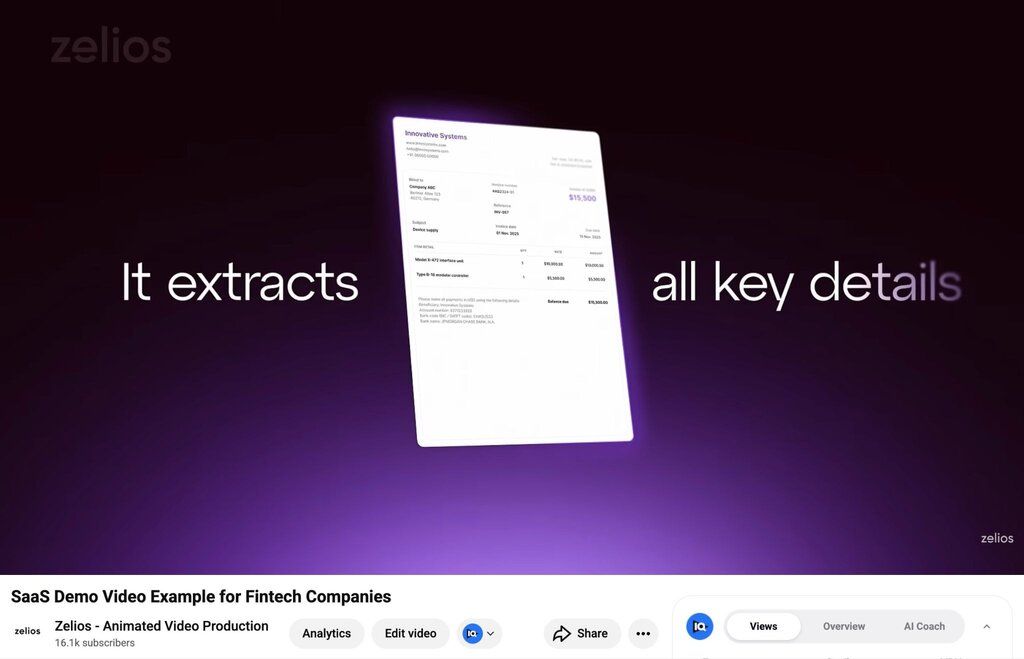
For SaaS explainers, this changes how you handle screen recordings, UI walkthroughs, and data visualizations. If the visual alone doesn't explain what's happening, you've built a video that works for half your audience and confuses the other half.
CTV as a B2B Pipeline Channel
Connected TV isn't just brand awareness anymore.
Targeting on platforms like LinkedIn CTV and programmatic CTV now supports account-based filtering — you can serve video ads to specific job titles at specific companies while they're watching streaming content at home. For ABM campaigns, that's a genuinely new touchpoint:
- Target by company and title
- Run 15–30 second awareness spots on streaming platforms
- Retarget those viewers with longer-form content on LinkedIn or YouTube
- Track lift in branded search and direct traffic as downstream pipeline signals
It's not cheap, and it's not the right move for every budget. But if you're running coordinated account campaigns and wondering where video fits above the funnel, this is where to look.
Video as an AI Search Signal
This one is less obvious, and the data is still messy — but it's worth paying attention to now.
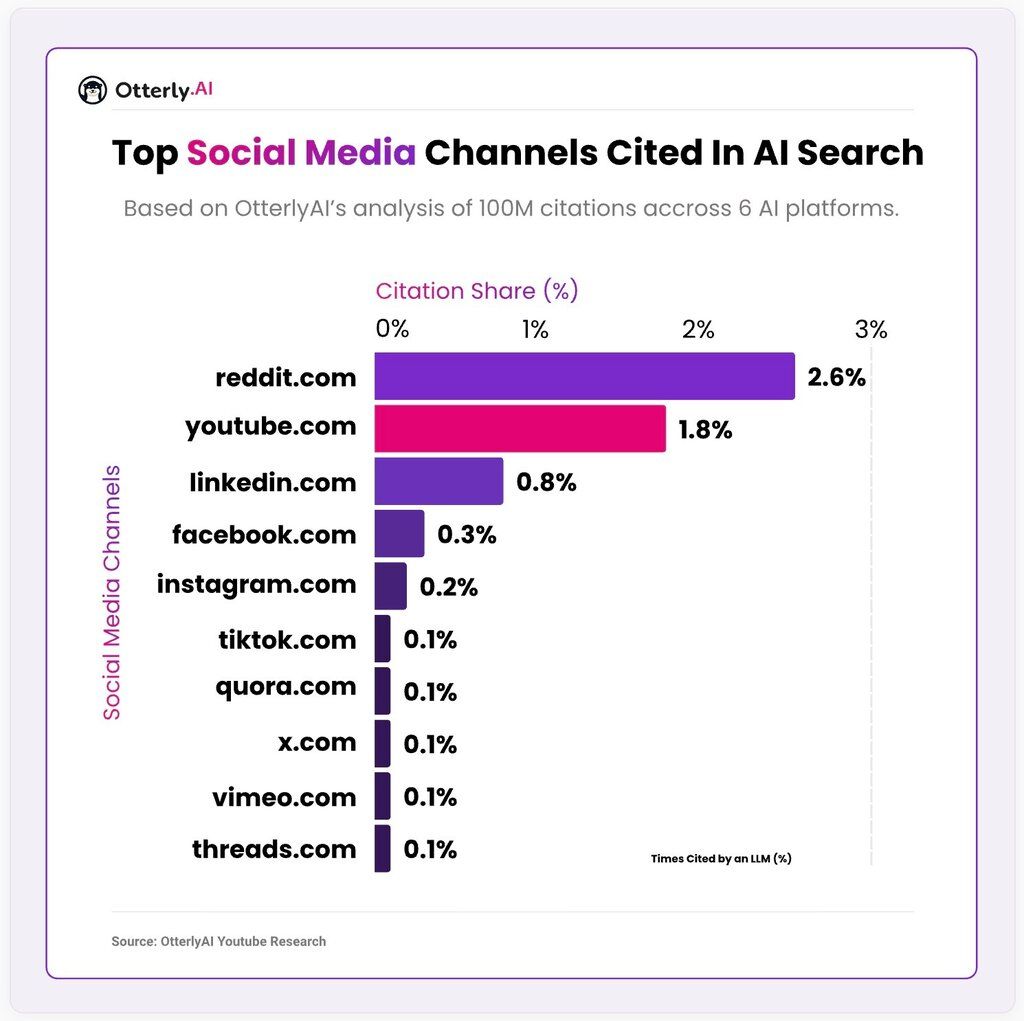
AI overviews in Google Search, AI-generated answers in Perplexity, and similar tools are increasingly surfacing video content — not just linking to it, but pulling from it as a source. From what we've observed:
- Videos with clean transcripts and closed captions show up in AI summaries more often
- Specific technical explainers outperform generic "what is X" content in AI-cited results
- Videos embedded on pages with clear structured data perform better than those dropped into cluttered layouts
Nobody has this fully figured out. But if you're producing technical explainer content for SaaS or AI products, treating your video transcript as indexable content — not an afterthought — is a low-effort change worth making now.
Repeatable Content Systems Over Viral One-offs
The most durable video programs we've seen in B2B aren't built around individual hero videos. They're built around systems.
A repeatable content system looks like this:
A defined format (60-second feature explainer, 90-second use case video, etc.)
A consistent production workflow with clear handoffs
A repurposing chain: long video → short clips → GIF → static asset
A publishing cadence that doesn't depend on inspiration
A team that publishes four solid, on-brief video explainers per month will outperform a team that produces one impressive video per quarter and then goes quiet — because distribution compounds. Forty indexed, captioned, structured videos generate more search surface area, more retargeting inventory, and more sales enablement options than any single high-production piece.
Final Words
These are the patterns that video marketing and production professionals actually see — in production decisions, distribution data, and client results.
The thread running through all seven of these: specificity matters more than scale, and a working system beats a great one-off every time. Build for a real buyer, design for how people actually watch, use AI where it saves time without losing quality, and treat your video library as marketing infrastructure.
Share

Ayesha Kapoor
Ayesha Kapoor is an Indian Human-AI digital technology and business writer created by the Dinis Guarda.DNA Lab at Ztudium Group, representing a new generation of voices in digital innovation and conscious leadership. Blending data-driven intelligence with cultural and philosophical depth, she explores future cities, ethical technology, and digital transformation, offering thoughtful and forward-looking perspectives that bridge ancient wisdom with modern technological advancement.


