
citiesabc, first_page
Living in the AI Singularity: How Artificial Intelligence Could Transform Everyday City Life
06 Aug 2026

Artificial intelligence is no longer confined to research laboratories or specialist technology companies. It is becoming part of how people work, shop, study, travel and interact with public services.
During an appearance on the Relentless podcast, OpenAI CEO Sam Altman described the present period as the beginning of the technological singularity.
“We are now, like, in the singularity,” he said, referring to an accelerating period in which AI capabilities and their social consequences are becoming increasingly difficult to predict.
Whether the world has technically reached a singularity remains disputed. The concept traditionally describes a hypothetical point at which technological development becomes uncontrollably fast or fundamentally unpredictable.
However, the practical question for urban residents is more immediate: what will everyday life look like as AI becomes embedded across cities?
AI Could Change the Rhythm of Work
One of the most visible effects of AI will be the changing pace of professional life.
Tasks that previously required hours of research, administration or production can increasingly be completed in minutes. Small teams may be able to operate with capabilities that once required much larger organisations.
This could create more flexible working lives. AI may reduce repetitive administrative tasks, support remote work and help people focus on creative, strategic or interpersonal responsibilities.
OECD research found that 80% of surveyed AI users believed the technology had improved their performance, while approximately 60% said it had increased their enjoyment of work.
The same technology could, however, increase pressure. When employees can produce more in less time, employers may respond by raising expectations rather than reducing workloads.
City life could consequently become even faster. The commute may decline for some knowledge workers, but the working day could extend across homes, cafés, co-working spaces and mobile devices.
The lifestyle benefit will depend on whether AI gives people greater control over their time or simply enables organisations to demand more from it.
Homes Will Become More Responsive
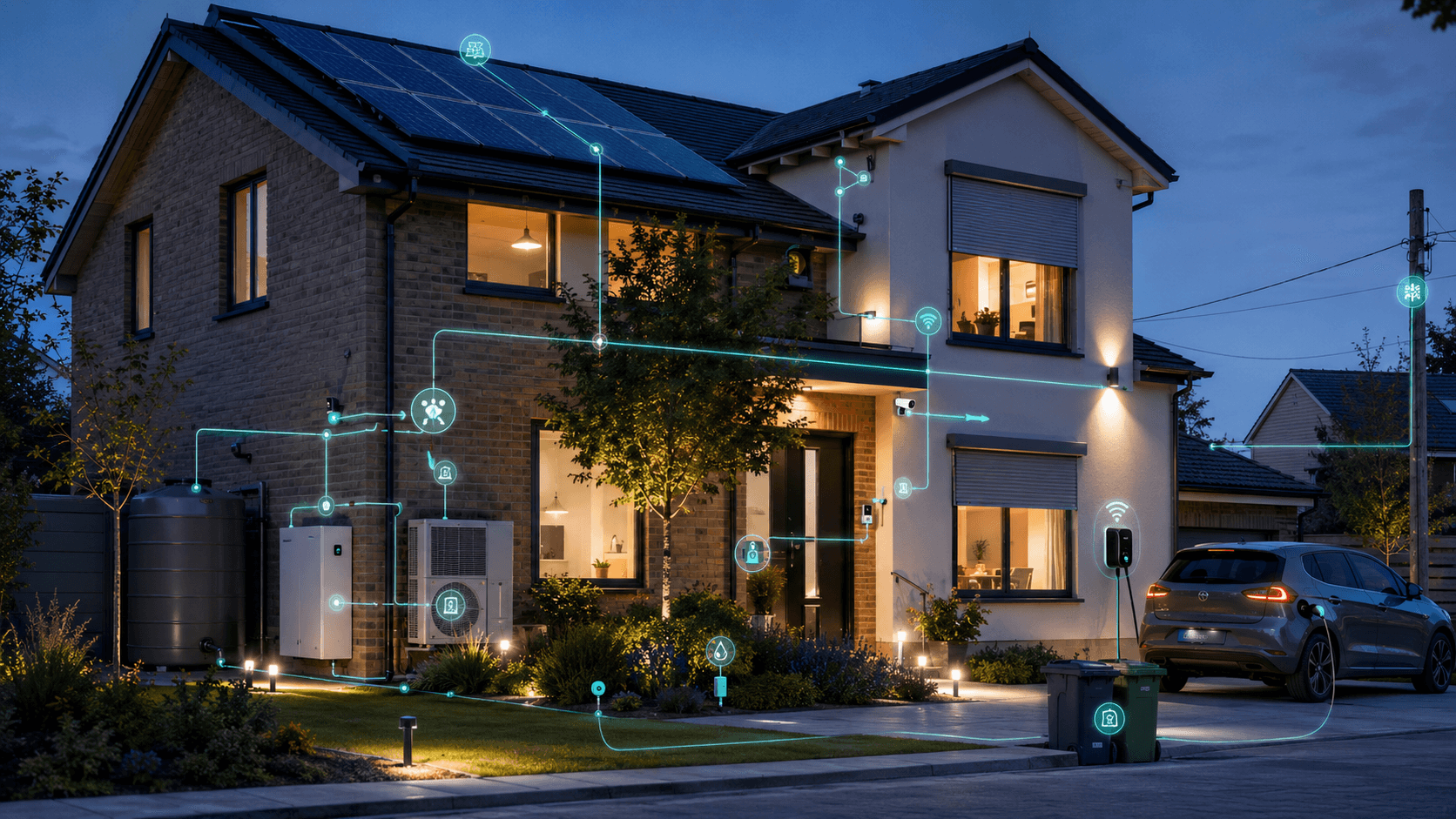
AI is likely to become a more active part of domestic life.
Connected systems already control lighting, heating, security and entertainment. Future household assistants could coordinate energy use, order essential products, organise schedules and identify maintenance problems before they become expensive emergencies.
For older residents and people with disabilities, AI-supported homes could offer greater independence through voice interfaces, personalised assistance and automated safety features.
These systems also create privacy concerns. A home that continuously learns from its occupants may collect detailed information about routines, preferences, conversations and behaviour.
The intelligent home could improve convenience, but residents will need clearer control over what information is collected, where it is stored and who can access it.
Urban Mobility Could Become More Predictive

AI is also expected to influence how people move through cities.
Transport authorities can use real-time information to predict congestion, adjust public transport services and manage road networks. Commuters could receive more personalised journey recommendations based on traffic, weather, accessibility needs and transport availability.
AI may also improve shared mobility, parking management and the coordination of electric-vehicle charging infrastructure.
The OECD’s work on smart cities identifies mobility, energy efficiency, public safety and urban planning as areas where AI can support more efficient and sustainable services.
However, predictive mobility must not become surveillance-based mobility. Systems designed to improve transport should not require residents to surrender unnecessary personal information or allow automated decisions to restrict their movement without explanation.
Public Services May Become More Personalised
For many residents, interacting with city government involves forms, waiting periods and navigating several disconnected departments.
AI could simplify this experience by helping people identify relevant services, complete applications, translate information and receive updates through a single digital interface.
Local authorities could use AI to forecast demand for housing, social care, waste collection and emergency services. Digital tools could also support better planning by analysing how neighbourhoods change over time.
These improvements could make local government more responsive, particularly for residents who struggle to navigate complex administrative systems.
The risk is that automated public services may exclude people who lack digital access or confidence. Residents must also be able to challenge decisions involving benefits, housing, employment or other essential services.
Efficiency cannot replace accountability. AI should help public officials make better decisions rather than remove human responsibility from those decisions.
Education Will Extend Beyond the Classroom
AI tutors and personalised learning platforms could make education more flexible and accessible across cities.
Students may receive explanations adapted to their learning styles, languages and levels of understanding. Adults could access continuous training as professions change, while workers could acquire new skills without returning to full-time education.
Libraries, community centres and other public institutions may become important local hubs for AI literacy and lifelong learning.
The challenge is to prevent assistance from becoming dependency. If AI produces every answer, structures every argument and makes every creative decision, learners may lose opportunities to develop independent judgement.
Future education will need to teach people how to work with AI while retaining the ability to question it. UNESCO’s work on AI and education emphasises creative agency and critical understanding rather than training students to become passive technology users.
Shopping and Leisure Will Become More Automated
AI agents are expected to take on a growing role in consumer decisions.
Instead of searching through hundreds of products, residents may ask an agent to compare prices, verify information and complete a purchase according to their preferences. Similar systems could organise holidays, book restaurants or plan an evening around a user’s budget and schedule.
This may save time, but it could also narrow discovery. When an algorithm decides what is relevant, people may encounter fewer unexpected products, places and experiences.
Cities depend on spontaneity: entering an unfamiliar shop, discovering a small restaurant or attending an event that was not predicted from previous behaviour.
Urban lifestyle platforms should therefore support exploration rather than reducing the city to a personalised list of commercially optimised recommendations.
The Digital Divide Could Become an AI Divide
The benefits of urban AI will not be distributed automatically.
People with reliable connectivity, modern devices and advanced digital skills may gain access to better work, education and services. Those without these resources could face another layer of exclusion.
Older residents, low-income households, migrants and small businesses may be particularly affected if essential services become digital by default.
An inclusive AI city must maintain accessible alternatives while investing in connectivity, training and public digital infrastructure. The OECD’s smart-cities programme argues that urban technology should improve citizens’ well-being and create better opportunities for residents rather than focusing on technology for its own sake.
A city cannot be considered intelligent if its systems work only for the most digitally confident people.
Public Space Will Become More Important
As more work, shopping and entertainment move through digital platforms, physical public space may become even more valuable.
Parks, libraries, markets, sports facilities and community centres provide experiences that algorithms cannot fully reproduce. They allow people to encounter neighbours, different generations and ideas outside their personalised digital environments.
The more individualised urban life becomes, the greater the need for spaces that support shared experience.
Future city planning should therefore combine digital intelligence with investment in physical community infrastructure. A technologically advanced city still needs benches, trees, playgrounds, affordable cultural venues and safe places where people can gather without being required to purchase anything.
A Faster City Is Not Necessarily a Better City
Altman’s wider message is that people and organisations should plan for technological capabilities to continue advancing.
For businesses, this may mean experimenting with tools that reduce cost and development time. For residents, it may mean developing the skills needed to work alongside AI. For city authorities, it means preparing governance systems before automated technologies become deeply embedded.
But acceleration should not become the only measure of progress.
A city that processes applications faster but excludes vulnerable residents is not more intelligent. A workplace that produces more while increasing stress has not necessarily improved. A home that automates every activity but compromises privacy may not offer a better quality of life.
The real test of the AI singularity will be experienced through ordinary routines: whether people have more time, greater agency, better services and stronger communities.
The future of AI in cities should not be measured only by what technology can do. It should be measured by whether urban life becomes more accessible, humane and worth living.


