
resources
Los Angeles Smart City 2028: Paving the Way for a Connected Future
01 Jan 2026

Los Angeles is poised for a significant transformation, actively developing what's known as the Los Angeles Smart City 2028 Plan. At its core, this ambitious initiative leverages cutting-edge technology to enhance urban living for everyone. Envision a future where daily life is smoother, environmental health is bolstered, and inclusive participation is paramount. This plan stands to fundamentally reshape how people experience LA, simultaneously setting an inspiring precedent for other cities globally.
Key Takeaways
- The Los Angeles Smart City 2028 Plan seeks to streamline urban mobility through superior public transportation networks and intelligent traffic management systems.
- The city is diligently focusing on innovative approaches to urban design, integrating smart housing solutions and expanding vital green spaces.
- Advanced technologies, notably AI and sophisticated sensors, form the essential backbone, ensuring the efficient and secure operation of the Los Angeles Smart City 2028.
- The plan is strategically designed to stimulate economic growth and cultivate new business prospects by fostering a thriving tech industry and promoting robust public-private partnerships.
- Dedicated efforts are underway to significantly improve the urban environment, emphasizing energy-efficient building standards and a marked enhancement in air quality.
Transforming Mobility for Los Angeles 2028
Los Angeles is earnestly endeavoring to reimagine urban mobility. Far beyond merely expanding freeway lanes, the city is committed to forging a mobility paradigm that is truly sustainable, remarkably efficient, and universally accessible. It’s exploring a diverse spectrum of solutions, ranging from comprehensive public transit expansion to the strategic embrace of emergent technologies. While undoubtedly a formidable undertaking, it also presents an immense opportunity to elevate L.A. into an even better place to call home.
Upgrading Public Transportation Systems
LA’s public transportation infrastructure is undergoing a comprehensive revitalization. The ultimate goal? To establish it as a genuinely compelling alternative to private vehicle reliance. Key efforts are underway to expand the metro network, increase bus frequency, and significantly enhance station facilities. The underlying idea is to transform public transit into an attractive and preferred mode of travel for residents. The city’s urban development plan, therefore, includes:
- Extending metro lines to serve a broader array of neighborhoods.
- Deploying additional buses and substantially increasing their operational frequency.
- Enhancing station safety and accessibility for all users, notably including individuals with disabilities.
The city plans to transition its entire bus fleet to electric by 2030—a strategic pivot perfectly aligning with its ambitious, broader zero-emission goals, showcasing a palpable commitment to a greener future.
The Role of Autonomous Vehicles
Autonomous vehicles, or AVs, constitute a significant component of this ambitious initiative. Imagine a scenario where self-driving cars and shuttles seamlessly pick you up, transporting you to your destination without the need for a human operator. This technology holds the promise of mitigating traffic congestion and streamlining urban transit. LA is actively collaborating with industry stakeholders and regulatory bodies to ensure the secure integration of these vehicles onto city streets. While still in its nascent stages, the transformative potential of AVs in reshaping our collective transit experience is truly immense.
The future of mobility in Los Angeles is about choice, sustainability, and accessibility for everyone. It's about providing diverse, reliable ways to navigate the city.
Enhancing Connectivity for All Residents
Ensuring that everyone can navigate the city with ease is a paramount consideration. A critical aspect involves addressing how people with disabilities can effectively utilize public transport, alongside ensuring that novel transit solutions are deployed equitably across all districts, extending beyond affluent enclaves. It’s fundamentally about constructing a transportation network that serves each and every resident living in Los Angeles, irrespective of their geographical location or individual requirements. This encompasses forging better interconnections between various modes of transport—such as trains, buses, and bike lanes—thereby facilitating seamless intermodal transfers.
Sustainability at the Core of Smart City LA 2028
Los Angeles is emphatically prioritizing the creation of a greener, healthier city for all its inhabitants. This endeavor far transcends mere technological adoption; it’s about ensuring the city can accommodate future growth without detriment to its ecological footprint. This encompasses a holistic review of elements ranging from the air we breathe to our energy consumption patterns and waste management strategies. The overarching goal, unequivocally, is to build a city that thrives today and for generations to come.
Green Spaces and Energy-Efficient Infrastructure
Envision an urban landscape rich with expanded parks and increased tree canopy, alongside buildings designed to consume substantially less power. LA is planning to significantly augment its green areas, a crucial step that helps naturally cool the city and contributes to a more inviting and pleasant environment. Concurrently, new constructions will be meticulously designed to be exceedingly energy-efficient, utilizing reduced quantities of electricity and water. Older buildings, too, are undergoing retrofits to meet these progressive standards. This concerted approach promises to significantly reduce the city's overall energy consumption.
- Expanding urban forests and parks to enhance biodiversity and public well-being.
- Implementing rigorous green building codes for all new constructions.
- Retrofitting existing structures for markedly better energy performance.
Zero Emission Road Map Initiatives
A cornerstone of this plan involves the robust pursuit of emission reduction. This necessitates a decisive shift from fossil-fuel-powered vehicles towards cleaner, sustainable alternatives. The city is actively championing the adoption of electric vehicles, both for public transport and personal use. Indeed, the proliferation of charging infrastructure is evident, accompanied by a concerted push to electrify the entire public transit system. This initiative is absolutely key to diminishing the city's carbon footprint and markedly improving air quality. While undeniably a challenging journey, the city's unwavering commitment to this zero-emission future remains steadfast.
Improving Urban Air Quality
Air quality has historically presented a significant challenge in Los Angeles, and Smart City LA 2028 is designating it a paramount concern. Beyond mitigating vehicle emissions, the city is meticulously examining additional sources of pollution. This includes collaborating with industrial sectors to curtail their environmental footprint and foster more sustainable operational practices. There’s also a pronounced focus on monitoring air quality in real-time—providing residents with timely data on pollution levels, enabling informed decisions. Wondering how real-time monitoring benefits you? This crucial information empowers individuals to make healthier choices and propels the city towards continuous improvements.
Making the air cleaner isn't just about meeting regulatory targets; it's profoundly about safeguarding the health and well-being of every person living and working in Los Angeles. It means fewer respiratory problems and a distinctly more pleasant environment for engaging in outdoor activities.
Here's a look at some of the decisive actions being taken:
- Vehicle Emission Reduction: Actively encouraging widespread electric vehicle adoption and substantially improving public transit efficiency.
- Industrial Standards: Implementing stricter, more comprehensive regulations for industrial emissions.
- Green Infrastructure: Continuously increasing green spaces and vigorously promoting sustainable urban design principles.
- Monitoring and Alerts: Deploying an advanced network of sensors for real-time air quality tracking and issuing timely public alerts.
Technology Driving the Smart City Vision
AI and Data-Driven Urban Management
Los Angeles 2028 is turning its focus towards artificial intelligence (AI) and the vast troves of data collected from city operations to inform smarter, more agile decisions. Think of it like having a highly intelligent, city-wide operational assistant. AI can analyze traffic patterns in real-time, anticipate potential issues before they escalate, and empower city managers to respond with greater alacrity. This translates into the promise of streamlined commutes, expedited emergency responses, and optimized utilization of municipal resources. By understanding how the city functions on a granular level, we can make proactive adjustments, often before issues even manifest as significant challenges.
Smart Sensors for Enhanced Safety and Efficiency
Scattered throughout the urban expanse, an intricate network of smart sensors will be diligently operating in the background. Far from rudimentary sensors, these are sophisticated devices capable of monitoring a comprehensive array of metrics, ranging from air quality and noise levels to traffic dynamics and the operational status of public utilities. For instance, smart streetlights can adjust their brightness dynamically, based on pedestrian or vehicular presence—saving energy and concomitantly reducing light pollution. In public spaces, these sensors can aid in detecting unusual activity, thereby contributing to a safer environment. Crucially, they also furnish the raw data that AI systems require to operate effectively and intelligently.
The Role of IoT in City Operations
The Internet of Things (IoT) serves as the indispensable backbone unifying this intricate web of smart devices. It's a paradigm where ubiquitous objects—from waste receptacles to traffic signals—are imbued with sensors and software for seamless data collection and exchange. This profound interconnectedness allows for a more synergistic and coordinated approach to managing city services. Picture, if you will, waste bins autonomously signaling their fullness to optimize collection routes, or water pipes instantaneously reporting leaks for rapid intervention. This level of integration means less waste, more efficient service delivery, and a municipality that operates with unparalleled smoothness for all its inhabitants.
The integration of AI, sensors, and IoT creates a powerful feedback loop. Data is collected, analyzed, and then used to make immediate improvements, which in turn generates more data for further refinement. This continuous cycle is what makes a city truly 'smart' and adaptable.
Here's a look at how these technologies can profoundly impact daily life:
- Traffic Management: Real-time data derived from sensors and connected vehicles facilitates the dynamic adjustment of traffic signals, reroutes traffic around incidents, and furnishes drivers with up-to-the-minute information, all potentially reducing travel times.
- Public Safety: AI-powered surveillance and sensor networks can assist in identifying potential threats or emergencies with greater speed, allowing for quicker deployment of first responders and enhanced safety.
- Resource Management: Smart meters and sensors possess the capability to meticulously monitor energy and water usage, pinpointing inefficiencies and helping to conserve precious resources, ultimately leading to significant cost savings and a more sustainable city.
- Infrastructure Monitoring: Sensors can detect emerging issues with critical infrastructure like bridges, roads, or utility lines proactively, often before they escalate into critical failures, enabling timely and preventative maintenance.
Community Engagement and Equitable Access
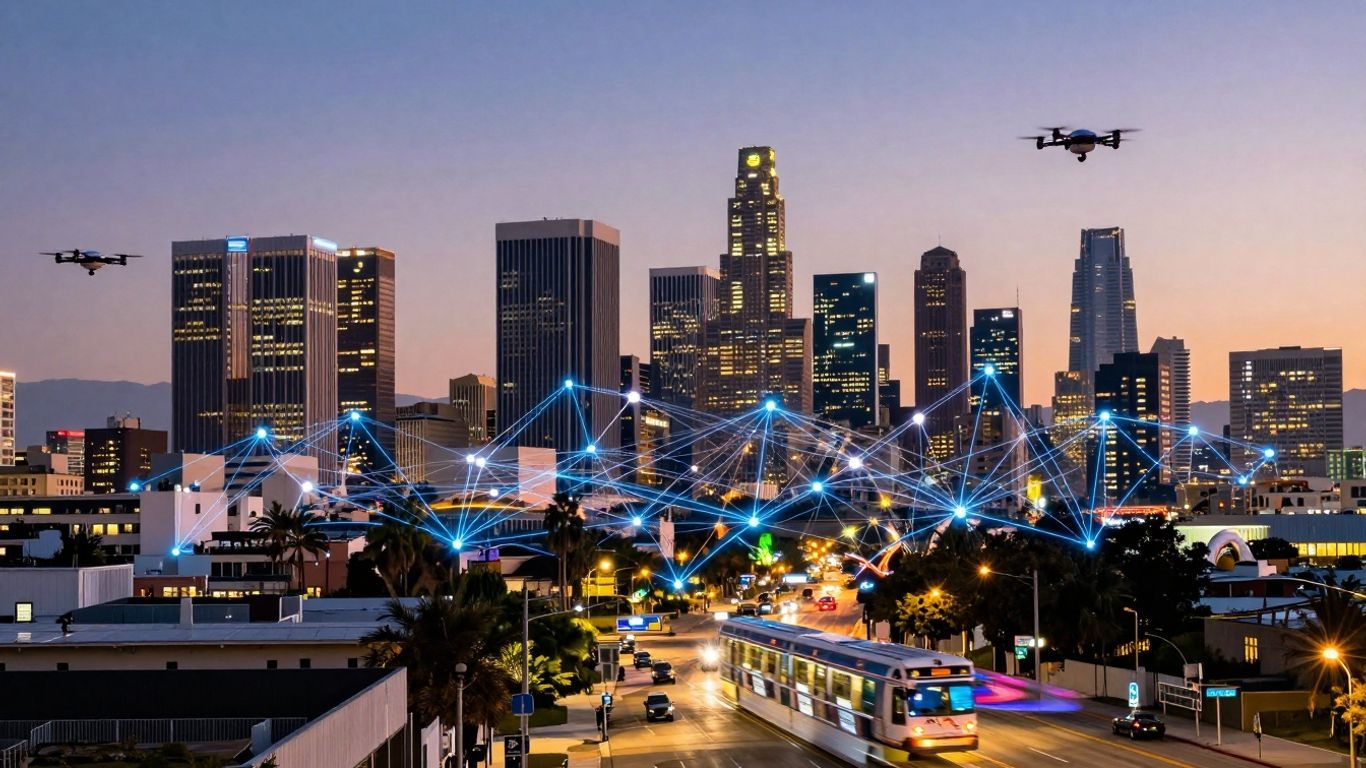
Building a smart city for 2028 means ensuring every resident of Los Angeles is a vital participant in its development. This endeavor extends far beyond mere technological sophistication; it’s about making certain these advancements genuinely benefit all residents, ensuring no segment of the population is marginalized. This necessitates diligently soliciting and integrating resident input regarding their evolving needs and aspirations, and then ensuring the technology and infrastructure equitably serve all communities, rather than exclusively benefiting a select few.
Incorporating Community Input in Planning
Getting people involved from the very outset is a paramount consideration. Los Angeles is actively cultivating diverse avenues for residents to share their insights on city projects. This approach transcends the limitations of conventional town hall meetings. Envision online platforms facilitating direct commentary on proposals, user-friendly digital surveys that are easy to fill out, and engaging virtual Q&A sessions. The city is also collaborating with local community organizations to engage with historically underrepresented neighborhoods, ensuring their perspectives are heard. This kind of collaborative urban development—much like in Bhubaneswar, India, which excelled in its national smart city challenge partly due to its focus on extensive public consultation—is key to constructing a city that genuinely works for everyone.
Ensuring Equitable Access to Technology
It's a well-acknowledged reality that disparate levels of access to the internet or the latest gadgets persist across society. For Los Angeles to truly fulfill its promise as a smart city, it must strategically bridge this digital divide. This involves enhancing the affordability and accessibility of internet services, particularly for lower-income families. It also means providing comprehensive training initiatives to foster digital fluency, ensuring people feel comfortable and confident utilizing new technologies. Without this crucial step, the manifold benefits of a smart city risk exacerbating existing disparities, primarily benefiting those already possessing ample resources.
Here are some concrete steps being taken:
- Offering more affordable internet plans for eligible households.
- Establishing free computer literacy classes at local libraries and community centers.
- Working collaboratively with organizations to distribute devices to families in need.
Addressing Digital Divide Challenges
The digital divide extends beyond mere hardware acquisition; it encompasses knowing how to effectively use technology and recognizing its inherent value and utility. A significant portion of the populace may remain unaware of technology's potential to facilitate employment opportunities, enhance healthcare access, or foster social connections. That's precisely why digital literacy programs are so important. These vital programs aim to:
- Impart foundational computer and internet proficiencies.
- Illustrate practical applications of technology for daily life enhancement.
- Offer multilingual support to maximize outreach and inclusivity.
Protecting residents’ data is more than just a technical task—it’s about building and keeping the public’s trust in the smart city initiatives. Without that foundational trust, even the most innovative technology won't achieve widespread adoption.
Making sure everyone can participate means the city becomes demonstrably stronger. Indeed, when a broader spectrum of people can contribute their unique ideas and perspectives, we all collectively benefit from a more innovative and inclusive Los Angeles.
Economic Growth and Innovation Hub
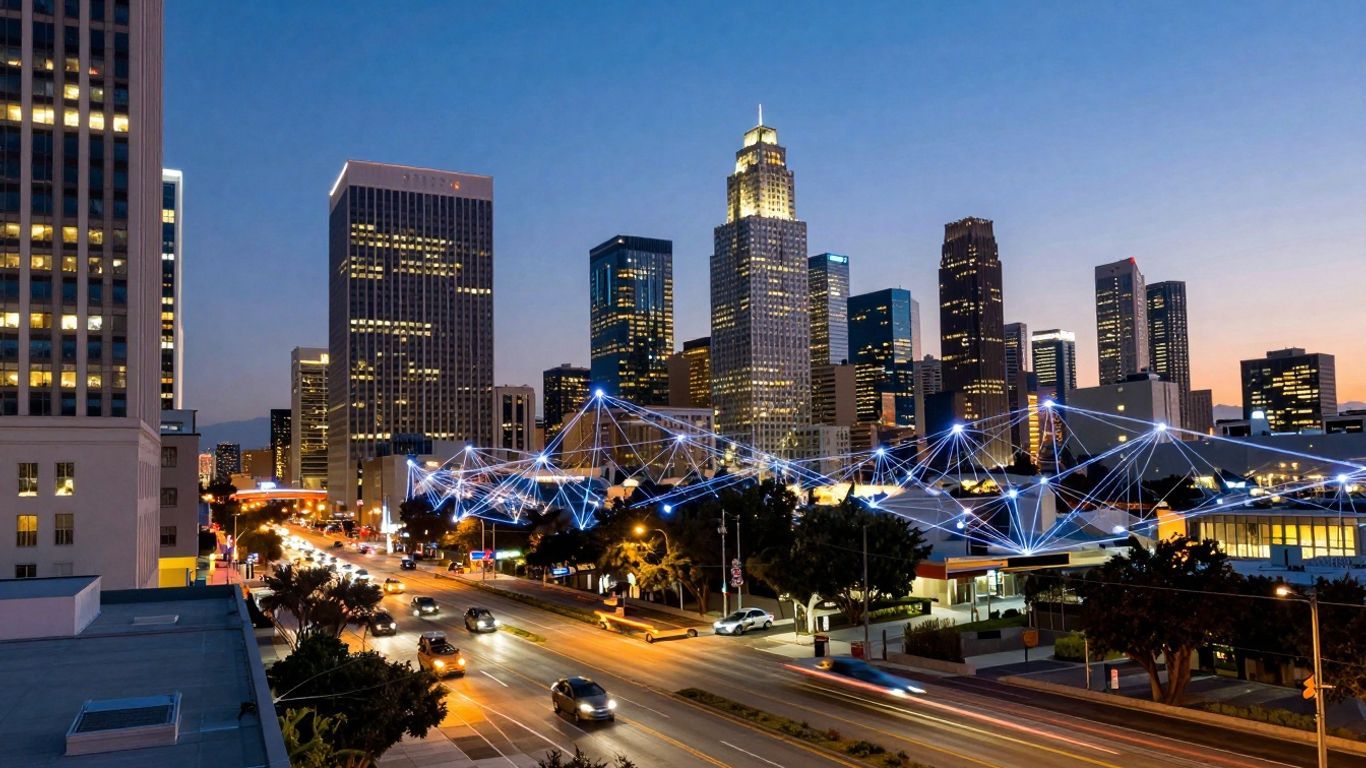
Smart City Los Angeles 2028 transcends the objective of merely streamlining urban operations; it’s a strategic imperative for fostering robust economic growth and cultivating novel employment sectors. The city unequivocally aspires to transform into a compelling magnet for new businesses, burgeoning tech startups, and skilled professionals from across the globe. It’s fundamentally about building an environment where groundbreaking ideas can effectively take root and demonstrably flourish.
Cultivating a Thriving Tech Ecosystem
LA is dedicating substantial efforts to nurturing a dynamic tech ecosystem. This entails fostering environments conducive to startup incubation—where entrepreneurs can network, exchange concepts, and secure the requisite support for successful launch. Consider it, perhaps, a vibrant greenhouse for innovation. The city is also vigorously backing programs designed to help residents acquire essential digital skills, thereby ensuring the local workforce is adequately prepared for the burgeoning opportunities within these evolving sectors. This commitment includes initiatives like expedited coding bootcamps and collaborative efforts with local educational institutions for curriculum development.
Public-Private Partnerships for Development
Los Angeles recognizes the indispensable need for collaborative efforts to realize this intelligent future. That's precisely why it's proactively seeking alliances with private sector entities. These collaborations contribute invaluable expertise, critical resources, and essential capital, thereby accelerating the development of key smart city projects. It’s a mutually beneficial synergy: the city gains the crucial assistance it requires, while companies get to be an integral part of a transformative endeavor. These strategic team-ups are pivotal in translating smart city concepts into tangible realities. Wondering how these partnerships truly benefit the city? They bridge resource gaps and foster innovation.
Job Creation in Smart City Sectors
One of the most compelling advantages of Smart City Los Angeles is its profound potential for job creation. As the city directs investment into nascent technologies and robust infrastructure, it is poised to unlock a wealth of opportunities across several burgeoning areas:
- Technology development, driving innovation and new solutions.
- Engineering and design, shaping the city's future infrastructure.
- Construction and infrastructure, building the physical foundations of the smart city.
- Data analysis and management, interpreting the vast data streams for smarter decisions.
- Urban planning with tech integration, designing livable and efficient urban spaces.
The global smart cities market is expected to grow substantially, reaching over $100 billion by 2024 and continuing its upward trend. This expansion points to a significant economic opportunity for cities that embrace smart technologies, potentially boosting local economies by 2-5%.
Preparing for the 2028 Olympic Games
The 2028 Olympic Games in Los Angeles transcend a mere athletic spectacle; they represent a powerful impetus for the city's future-readiness. Consider it a strategic deadline that effectively galvanizes and accelerates numerous large-scale projects. It's an unparalleled opportunity to showcase Los Angeles's capabilities on a global platform, but more importantly, it’s about fundamentally enhancing the urban experience for all residents, long after the athletes have departed.
Leveraging the Olympics as a Catalyst
The Olympics provide a unique opportunity to fast-track improvements—initiatives that might otherwise necessitate years, or even decades, for realization. This critically includes comprehensive infrastructure upgrades, streamlining transportation networks, and creating a greater abundance of public spaces. It effectively functions as a supercharger, propelling the city toward becoming a more connected and efficient urban center.
- Accelerated Infrastructure Development: Projects like expanding public transit lines and improving road networks receive a significant, often unprecedented, push.
- Enhanced Public Spaces: The creation of more parks, pedestrian zones, and universally accessible community areas is prioritized.
- Technological Integration: The Games provide an ideal testbed for implementing and refining new smart city technologies in real-world, high-stakes scenarios.
The focus is on using the global spotlight of the Games to comprehensively address existing urban challenges and build a robust foundation for lasting positive change.
Showcasing Innovation on a Global Stage
Los Angeles will undeniably command global attention in 2028. This means the city is compelled to present its optimal state, highlighting its pioneering advancements in technology, environmental sustainability, and progressive urban planning. It's a unique opportunity to illustrate how a sprawling, diverse metropolis can effectively adopt intelligent solutions to markedly improve the lives of its residents and enrich the experience of visitors.
Creating a Lasting Legacy for Urban Improvement
Far beyond the ephemeral two-week duration of the Games, the overarching objective is to bequeath a city demonstrably enhanced for the long term. This signifies sustained investments in public transport networks that consistently benefit commuters, verdant spaces providing vital recreation, and intelligent systems that incrementally simplify and safeguard daily life. The ultimate aim is to build a more livable, sustainable, and equitable Los Angeles for generations to come.
Looking Ahead: A Connected LA for 2028 and Beyond
Indeed, what does this ambitious vision truly portend for the multifaceted metropolis of Los Angeles? Well, the Smart City plan for 2028 is unequivocally a monumental undertaking. It’s fundamentally about optimizing urban functionality for the collective benefit of all its inhabitants. Efforts are intensely focused on mitigating traffic congestion, championing environmental sustainability, and leveraging technology for societal upliftment. While undoubtedly a prodigious undertaking—and one that will, invariably, encounter its share of challenges—the potential rewards are substantial. If successfully realized, Los Angeles could well serve as an exemplary model for urban development globally. It transcends mere preparations for the Olympic Games; it’s fundamentally about forging a future-proof urban landscape. Ultimately, it’s a chance to solidify Los Angeles as an exceptionally desirable and enduringly livable city for generations to come.
Frequently Asked Questions
What is the main idea behind the Los Angeles 2028 Smart City plan?
The primary impetus behind the Los Angeles 2028 Smart City plan is to elevate Los Angeles into a more desirable living environment through the strategic integration of advanced technology. This encompasses enhanced mobility, robust environmental stewardship, and ensuring equitable access to and benefit from these advancements. It's ultimately aimed at fostering a more interconnected and highly efficient urban center for the future, especially with the anticipation of the 2028 Olympic Games.
How will Los Angeles improve transportation for the Smart City plan?
The city plans to significantly enhance public transportation by expanding metro lines and bus services, while also upgrading station facilities to be more user-friendly and safe. Additionally, Los Angeles is exploring the integration of autonomous vehicles and implementing smart traffic management systems to alleviate congestion and expedite travel times for everyone.
What does 'sustainability' mean for Los Angeles in this plan?
In the context of LA's Smart City plan, sustainability refers to a comprehensive commitment to environmental protection and enhancement. This involves creating more green spaces, promoting energy-efficient buildings and technologies, and diligently working to improve air quality. The overarching objective is to reduce pollution and cultivate a healthier urban environment for both its residents and natural ecosystems.
How will technology help run Los Angeles better?
Advanced technologies, such as artificial intelligence (AI) and smart sensors, are pivotal to running Los Angeles more smoothly. AI will facilitate smarter decision-making regarding traffic flow and energy consumption, while sensors will enable real-time monitoring of crucial metrics like air quality and public safety. This integrated approach allows the city to respond proactively to issues and operate with greater overall efficiency.
How will the city make sure everyone benefits from the Smart City plan?
The plan places a strong emphasis on ensuring universal access to new technologies and equitable benefits from urban improvements. This entails actively working to bridge the 'digital divide' by providing enhanced internet access across all neighborhoods and offering comprehensive digital literacy training. The city's aim is to ensure that no segment of the population is left behind in this technological evolution.
What role do the 2028 Olympics play in the Smart City vision?
The 2028 Olympic Games serve as a significant catalyst for Los Angeles's Smart City vision. They provide a strategic deadline and a global platform to accelerate advancements in transportation, technology, and sustainability initiatives. The city intends to leverage the Games to showcase its innovations and to establish a lasting legacy of urban improvements that will benefit residents long after the event concludes.


