


first_page, citiesabc
Mayor Sadiq Khan Announces £12m AI Support Package to Help Small Businesses Compete
12 Jun 2026

- Mayor Sadiq Khan unveils a £12 million programme at The London Tech Week to help small and medium-sized enterprises (SMEs) adopt artificial intelligence technologies.
- The initiative is developed by the Mayor’s growth agency London & Partners and in consultation with the Mayor’s AI and Jobs Taskforce.
According to the AI Adoption Research by the Government of the UK, while nearly two-thirds of SMEs believe AI will be critical to their competitiveness over the next five years, only 16 per cent currently use AI technologies in their operations.
Many businesses report barriers including lack of expertise, uncertainty around implementation and concerns about cost.
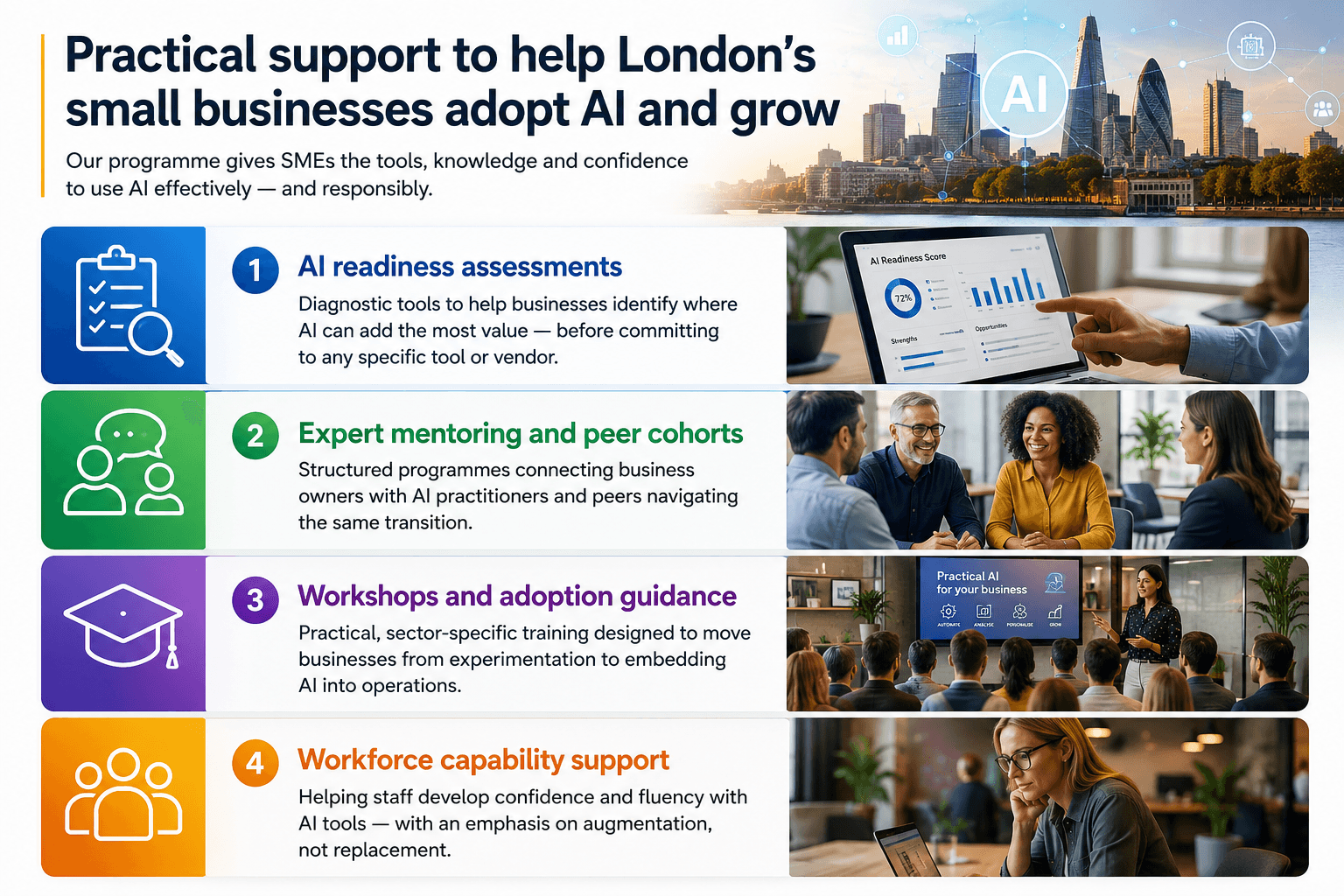
The new programme, developed by London’s growth agency London & Partners in consultation with the Mayor’s new AI and Jobs Taskforce, will provide practical support to help SMEs identify how AI can improve operations, support staff and unlock growth opportunities.
We want every business to benefit from the opportunities AI can unlock. This investment will help thousands of SMEs adopt new technologies, boost productivity, create better jobs and drive growth across the capital.
By backing businesses to innovate and equipping Londoners with the skills they need for the future, we can help build a fairer, more prosperous city for everyone.
- Sadiq Khan, The Mayor of London
The Adoption Gap
Small businesses account for more than half of London's workforce, making them central to the capital's economic performance. According to research cited by the Mayor's office, SMEs that successfully adopt AI report productivity gains exceeding 35% within the first year.

For policymakers facing sluggish productivity growth across the UK economy, such figures are difficult to ignore.
Businesses know AI matters,
said Anthony Impey, Chief Executive of Be the Business.
The challenge is finding the time, capacity and practical support to turn opportunity into action.
Aligning with The London Business Support Strategy, the initiative is aimed at what economists increasingly describe as the "last mile" of digital transformation.
Rather than subsidising software purchases directly, the programme will provide AI readiness assessments, expert mentoring, workshops and tailored implementation guidance. The goal is to help business owners understand where AI can deliver value, how to deploy it responsibly and how to prepare their workforce for change.
This comes after various concerns voiced by many SME leaders who say they are overwhelmed by a rapidly expanding marketplace of AI products, vendors and competing claims.
We've been intentional: AI should amplify what our people do, not replace them. Our biggest barrier has been knowing who to trust. The market feels like a gold rush right now.
- Tacita Small, founder of The Small HR Company
The strategy seeks to create a more integrated support ecosystem for businesses at every stage of growth. Alongside AI adoption, it includes initiatives focused on access to finance, cybersecurity, business resilience, talent attraction and support for underrepresented entrepreneurs.
A new finance navigation hub will complement the existing Grow London Local programme, which has already supported more than 40,000 entrepreneurs across the capital.
The broader objective is to reduce fragmentation in business support and ensure smaller firms can access expertise on emerging challenges before they become barriers to growth.
A Global Competition for AI Leadership
In April, Khan was invited to become a founding member of the Mayors International AI Forum, established by Bloomberg Philanthropies and Johns Hopkins University. The initiative brings together city leaders to examine how AI will reshape urban economies, public services and labor markets.
For London, the challenge is no longer attracting AI companies. The city already enjoys a strong position as Europe's primary destination for technology investment.
The next phase is ensuring that the gains from AI extend beyond large corporations and venture-funded startups.
AI has the potential to help entrepreneurs spend more time growing their businesses and the economy. But many entrepreneurs feel they don't have information they can trust, a peer group to talk to, or the confidence to get going with AI.
- Laura Citron, Chief Executive of London & Partners
The Real Test
The £12 million commitment is modest compared with the billions flowing into AI infrastructure and foundation-model development globally. Yet if it succeeds in helping thousands of small businesses integrate AI into customer service, administration, marketing, logistics and operations, its economic impact could be disproportionate.
The programme also arrives amid broader concerns about how AI will affect employment.
City Hall has sought to strike a careful balance, emphasising workforce capability and responsible adoption rather than automation for its own sake. The Mayor's AI and Jobs Taskforce, chaired by technology entrepreneur Baroness Martha Lane-Fox, is expected to play a central role in shaping that approach.
For now, London is ensuring that the future of AI-driven growth will not be determined solely by breakthrough technologies, but by whether ordinary businesses can put those technologies to work.
If that bet pays off, the capital's next wave of productivity gains may emerge not from the laboratories of AI giants, but from the thousands of small businesses that form the backbone of London's economy.


