
resources
Memorize 28 States and Capitals Name: A Quick Guide
16 Mar 2026

Have you ever found yourself recalling those elementary school lessons on U.S. states and their capitals? While it might seem like a distant memory, possessing a strong grasp of the 28 state capitals, or indeed, even more, proves remarkably advantageous. Whether for competitive trivia, meticulous road trip planning, or simply maintaining an informed perspective on current events, this knowledge is a valuable asset. The task of committing them all to memory might appear daunting initially, yet with a few clever strategies, it's entirely achievable. Let's delve into some effective techniques to streamline your learning process.
Key Takeaways
- A solid grasp of state capitals significantly aids in comprehending U.S. history and current events.
- The act of memorizing these capitals can markedly enhance one's general knowledge and cognitive recall abilities.
- Strategically grouping states by geographical region often simplifies the learning process.
- Employing mnemonic devices, such as association or rhymes, can be instrumental in recalling capital names.
- Time-tested study methods, including consistent repetition and the use of flashcards, remain highly effective.
1. Montgomery
To commence our exploration, we turn our attention to Montgomery, Alabama's state capital. This city possesses a profound connection to American history, particularly regarding the indelible Civil Rights Movement. Many will recall its pivotal role as the launching point for the historic Selma to Montgomery marches.
Consider these essential facets of Montgomery:
- First Capital of the Confederacy: Montgomery briefly held this designation in 1861.
- Civil Rights Hub: It served as a central locus for numerous pivotal events throughout the Civil Rights era, notably the Montgomery Bus Boycott.
- Economic Activity: Presently, the city's economic landscape encompasses robust sectors in government, manufacturing, and services.
Indeed, Montgomery stands as a crucible where significant historical moments unfolded, profoundly shaping the trajectory of the nation.
The city's historical significance is, without question, undeniable—offering an invaluable window into crucial periods of American development and struggle. It remains a place continuously studied and visited, precisely for its transformative role in shaping modern society.
2. Juneau
Next on our comprehensive tour of state capitals is Juneau, Alaska. This particular capital presents a rather unique characteristic: it is the sole state capital in the United States utterly inaccessible by road. Yes, you read that correctly; reaching Juneau necessitates travel by air or ferry. This inherent isolation, many would argue, significantly contributes to Juneau's distinctive character.
Alaska itself is, of course, a truly massive state—the largest in the U.S. by land area. Juneau, its capital, is strategically positioned within the Alaska Panhandle, a lengthy, narrow strip of land in the southeast. Surrounded by majestic mountains and the serene Gastineau Channel, the city boasts some truly dramatic and awe-inspiring scenery.
What truly distinguishes Juneau?
- It stands as the second-largest capital city by area in the U.S., surpassed only by Oklahoma City. That's an expansive amount of territory!
- It serves as a prominent cruise ship destination. Indeed, countless visitors flock to Juneau annually to witness its magnificent glaciers and the untamed Alaskan wilderness.
- The state government is a substantial employer. Much like many capitals, a considerable portion of the local workforce is engaged in state administration.
When envisioning Juneau, one should picture a locale where nature unequivocally takes center stage. It isn't your archetypal bustling urban center, yet it possesses a rugged charm entirely its own. It remains a capital city that feels intrinsically connected to the wild Alaskan wilderness—a true testament to its surroundings.
3. Phoenix
Turning our focus now to Phoenix, the capital of Arizona. For those who have experienced it firsthand, you'll know this is a city that truly embraces its desert environment and the accompanying heat. As one of the fastest-growing urban centers in the U.S., its appeal is undeniable, largely driven by abundant sunshine and, let's be candid, a generally more approachable cost of living compared to many other major metropolitan hubs.
Phoenix holds a rather distinctive position, not merely as a city, but as the very heart of a far larger metropolitan expanse—affectionately known as the Valley of the Sun. One might conceptualize it as the central protagonist in a sprawling desert narrative. Here, modern skyscrapers seamlessly blend with older, historically significant neighborhoods. The city itself is vast, covering substantial acreage, and is gracefully encircled by neighboring municipalities that function almost as its urban siblings, including Scottsdale, Tempe, and Mesa.
What's particularly compelling about Phoenix is its remarkable growth trajectory within such an arid landscape. Its residents and planners have, notably, achieved considerable prowess in water management—a truly commendable feat. Furthermore, the natural landscape is simply breathtaking: think striking red rocks, towering saguaro cacti, and those truly incredible sunsets that compel one to pause and marvel.
Phoenix is a city in perpetual evolution, skillfully balancing its deep desert roots with an ambitious, forward-looking approach to growth and infrastructural development. It undeniably demands a certain resilience from its inhabitants, yet it generously offers an unparalleled lifestyle in return.
Allow us to highlight some defining characteristics that make Phoenix truly remarkable:
- The Heat: Its formidable summer temperatures are legendary, regularly exceeding 100 degrees Fahrenheit. Consequently, an appreciation for air conditioning is quickly cultivated.
- Outdoor Activities: Notwithstanding the intense heat, outdoor pursuits remain immensely popular. Hiking in iconic locations like Camelback Mountain or the McDowell Sonoran Preserve is favored, particularly during the cooler months. One will also discover an abundance of pristine golf courses.
- Culture and Arts: Phoenix boasts an expanding arts scene, featuring esteemed institutions such as the Phoenix Art Museum, alongside a vibrant downtown area that regularly hosts engaging events and festivals.
Thus, when you contemplate Phoenix, envision a sprawling desert metropolis—a place simultaneously challenging and rewarding—that has definitively carved out its own unique identity within the American Southwest.
4. Little Rock
When contemplating Arkansas, the capital city that invariably comes to mind is Little Rock. Far more than merely a name on a map, it is a locale with a profoundly significant history, especially concerning civil rights in the United States. Indeed, the courageous integration of Little Rock Central High School in 1957 stands as a landmark event, frequently studied in educational institutions nationwide. This pivotal moment galvanized national attention on the state and underscored the persistent struggle for equality.
Beyond its undeniable historical resonance, Little Rock enjoys a strategic position in the geographic heart of Arkansas, thereby functioning as a central hub for both state government and commerce. The scenic Arkansas River gracefully meanders through the city, further enriching its natural landscape. It is, undeniably, an integral component of the broader cultural and economic tapestry of the South.
Allow us to delineate a few distinctive attributes of Little Rock:
- A Rich Past: The city played a crucial role in the Civil Rights Movement, with the events at Central High School remaining particularly renowned.
- Government Center: As the state capital, it naturally accommodates the seat of Arkansas's government, prominently featuring the State Capitol Building.
- Cultural Attractions: Visitors have the opportunity to explore esteemed institutions such as the William J. Clinton Presidential Center and the engaging Museum of Discovery.
Little Rock's identity is intrinsically linked to its indelible role in American history, particularly its contribution to the imperative push for desegregation. The unwavering courage demonstrated by the Little Rock Nine endures as a powerful, resonant reminder of the ongoing fight for civil rights.
While it may not rank among the nation's largest cities, Little Rock nevertheless occupies a distinctive place in the grand narrative of the United States, offering invaluable insights into both historical struggles and the contemporary realities of life in Arkansas.
5. Sacramento
Let us now direct our attention to Sacramento, the official capital city of California. Interestingly, it is often not the first city that comes to mind when one considers the Golden State—that distinction typically falls to Los Angeles or San Francisco, wouldn't you agree? Yet, Sacramento proudly bears the official title.
Strategically situated in the northern reaches of the state, precisely at the confluence of the Sacramento and American Rivers, this location proved historically significant, especially during the pivotal Gold Rush era. Indeed, one might consider it the primary gateway to the fervent gold-seeking activities of that bygone period.
Here’s a concise overview:
- State: California
- Capital: Sacramento
- Key Historical Event: Served as a central hub throughout the California Gold Rush.
- Location: Northern California, at the confluence of the Sacramento and American Rivers.
It is particularly noteworthy that Sacramento ranks among California's oldest incorporated cities, having been established way back in 1849. Its rapid growth was directly fueled by the Gold Rush, quickly transforming it into a major center for trade and transportation. Even in contemporary times, it remains a significant political and cultural nexus for the state, housing the state government and numerous historical sites.
While it may not command the global renown of some other California cities, Sacramento undeniably possesses a profound history and fulfills a vital role in the state's ongoing operations. It is a unique locale where a substantial portion of California's past and present coalesce.
6. Denver
Let's now delve into Denver, Colorado's capital city. Affectionately known as the "Mile High City," it is indeed situated at an elevation of precisely one mile above sea level—a rather remarkable geographical distinction, wouldn't you agree?
Denver has earned a well-deserved reputation as a primary gateway to the majestic Rocky Mountains, a designation that perfectly aligns with its strategic location. Many travelers, naturally, traverse this vibrant city en route to exhilarating skiing or hiking excursions. However, Denver itself transcends being merely a transit point. It boasts a burgeoning downtown area, characterized by significant new developments, an emerging and diverse culinary landscape, and a surprisingly dynamic arts and culture scene.
What distinguishes Denver from other capitals?
- The Elevation: Seriously, the "mile-high" designation is not to be underestimated. New arrivals, particularly those unaccustomed to thinner air, may certainly feel its effects. Adequate hydration, therefore, is paramount!
- Proximity to the Rockies: This remains an immense draw. Within a comparatively short timeframe, one can transition from the urban core to the mountains for a refreshing hike or an invigorating ski trip.
- Craft Beer Scene: Denver possesses a truly expansive craft beer culture. For those eager to sample an array of distinct brews, the city offers an abundance of breweries awaiting exploration.
- Red Rocks Amphitheatre: Just beyond the city limits lies this world-renowned outdoor concert venue. Its acoustics and breathtaking natural setting are, quite simply, incredible.
Denver's historical trajectory is deeply intertwined with the gold rush and the advent of the railroad, both of which profoundly shaped its nascent development. It rapidly transformed from a modest mining settlement into a major transportation and commercial nexus for the entire Rocky Mountain region. Traces of these historical influences are still evident in the city's urban planning and architectural nuances.
Thus, while widely celebrated for its status as Colorado's capital and its notable high elevation, Denver truly offers a wealth of additional attractions for those willing to explore beyond its most famous attributes.
7. Hartford
Hartford, Connecticut, stands as a city steeped in extensive history, proudly serving as the state capital. Its advantageous location directly on the Connecticut River has proven instrumental in the region's development throughout the centuries. One might, in fact, consider it a nexus where significant early American events unfolded, particularly those pertaining to nascent law and governance.
Hartford is frequently lauded as the "Insurance Capital of the World"—a moniker not merely decorative. A substantial number of prominent insurance corporations maintain their headquarters here, solidifying its status as a major economic hub for the industry.
What, then, makes Hartford particularly notable?
- Historical Significance: It functioned as a pivotal city during the colonial era and played a discernible role in the American Revolution. Numerous historical sites remain, eloquently narrating these profound stories.
- Cultural Institutions: The city is home to an array of esteemed museums and theaters, collectively offering a rich tapestry of arts and culture. The Wadsworth Atheneum Museum of Art, for example, holds the distinction of being the oldest continuously operating public art museum in the United States.
- Literary Connections: Hartford boasts significant ties to renowned literary figures. Mark Twain resided here for many years, his former home now a popular attraction; similarly, Harriet Beecher Stowe, the celebrated author of Uncle Tom's Cabin, also called Hartford home.
While Hartford may not rival the sheer size of some other state capitals, its profound historical depth and its crucial role in the insurance sector grant it a distinctive place within American geography and economy. It is a city that has witnessed considerable transformation yet steadfastly retains its foundational past.
Therefore, when you contemplate Connecticut, remember Hartford. It transcends being merely a geographical pinpoint; it is a place rich with historical strata and a robust economic identity, especially within the global insurance landscape.
8. Dover
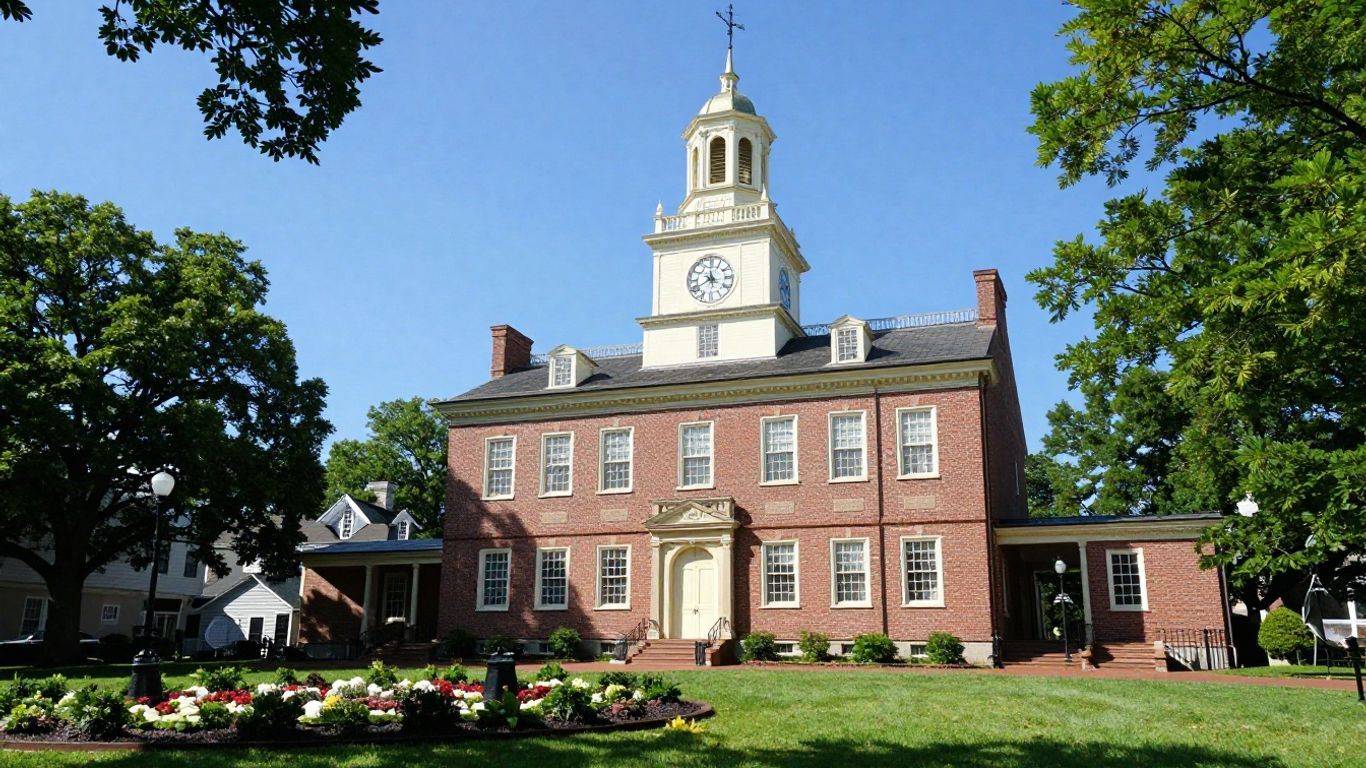
Dover serves as the capital city of Delaware, a state that, despite its significant historical contributions, is occasionally overlooked. It is strategically situated in Kent County, near the geographical center of the state.
Notably, Dover holds the distinction of being one of the oldest cities in the United States, having been founded as early as 1683. It proudly served as Delaware's initial colonial capital and has steadfastly maintained that crucial role ever since. While one might recall Delaware from history lessons—perhaps the iconic painting depicting George Washington crossing the Delaware River—it's important to note that that particular event transpired further north, not directly within Dover itself.
What are some key aspects of Dover worth remembering?
- Dover Air Force Base: This installation functions as a major employer and a vital component of the local economy, recognized as one of the world's busiest military airfields.
- Dover International Speedway: Affectionately dubbed 'The Monster Mile,' this venue is a popular destination for NASCAR racing, consistently drawing enthusiastic crowds from diverse regions.
- First State Heritage Park: This innovative urban park, Delaware's first, seamlessly links several historical sites within downtown Dover, including the venerable Old State House.
While it may not command the flashy reputation of certain other state capitals, Dover unequivocally holds its own as a locale deeply rooted in American history, boasting a surprisingly active modern scene, especially when it comes to racing and aviation.
9. Tallahassee
Allow us to introduce Tallahassee, the capital of Florida. This is a city that, regrettably, often finds itself overlooked when individuals contemplate the Sunshine State, whose imagery typically gravitates towards its renowned beaches or theme parks. Nevertheless, Tallahassee possesses a distinctive character, gracefully positioned within the Florida Panhandle.
Indeed, it ranks among Florida's oldest cities, boasting a history that extends back centuries before its designation as the state capital. This profound historical foundation imparts a markedly different ambiance compared to the more contemporary, rapidly developing urban centers located further south.
What, then, are the distinguishing features of Tallahassee?
- Government Hub: As the state capital, it naturally functions as the epicenter of Florida's government. Here, one will find the prominent Florida State Capitol building, an unmistakable landmark, alongside various state agencies.
- University Town: Tallahassee proudly hosts both Florida State University (FSU) and Florida A&M University (FAMU). These esteemed institutions infuse the city with youthful vigor and contribute significantly to a rich calendar of cultural events.
- Natural Beauty: Despite its status as a capital city, Tallahassee is enveloped by picturesque rolling hills, lush forests, and natural springs. It thus offers an excellent environment for outdoor pursuits such as hiking and exploration.
While many tend to associate Florida with a particular brand of sensational news, Tallahassee itself is primarily defined by its governmental functions and its crucial role as a significant educational center. It is a unique locale where state business seamlessly intersects with academic life, all set against a backdrop of natural landscapes that diverge quite distinctly from the archetypal Florida image.
Therefore, the next time Florida comes to mind, remember Tallahassee. It is considerably more than a mere geographical point; it is a city imbued with a rich past and a vibrant present.
10. Atlanta
Atlanta, the dynamic capital of Georgia, is an urban center that truly excels at leaving a lasting impression. It serves as a preeminent hub for both business and culture across the Southeast, boasting a history that is simultaneously profound and continuously evolving.
Consider this historical fact: Atlanta underwent an almost complete rebuilding in the aftermath of the Civil War. That inherent resilience, arguably, remains a foundational element of its identity even today. It is a city where one can palpably sense the past and the future harmoniously, yet distinctly, intersecting.
What are some of Atlanta's most notable attributes?
- Coca-Cola's World Headquarters: Indeed, the global beverage behemoth proudly calls Atlanta home. Visitors even have the opportunity to explore the World of Coca-Cola, delving into its fascinating history.
- Martin Luther King Jr. National Historical Park: This immensely significant site meticulously preserves the birthplace, spiritual home (church), and final resting place of the esteemed civil rights leader. It offers a profoundly moving visitation experience.
- Hartsfield-Jackson Atlanta International Airport: Consistently ranked among the busiest airports globally, it serves as a critical nexus, connecting travelers from every corner of the world.
Atlanta is a city in perpetual motion, always striving forward, yet it judiciously maintains a profound connection to its origins. It is a vibrant confluence of innovation, pivotal civil rights history, and quintessential Southern charm—all seamlessly interwoven.
11. Honolulu
Aloha! Our next destination is Honolulu, the captivating capital of Hawaii. This is a place that frequently evokes vivid images of sun-drenched beaches and a vibrant cultural tapestry—and for compelling reasons. However, Honolulu is far more than merely picturesque; it serves as a significant epicenter for both culture and commerce across the vast Pacific.
Notably, Honolulu holds the distinctive status as the sole U.S. state capital that concurrently functions as an incorporated city.
This truly unique island capital is gracefully situated on the island of Oahu. It is a locale where the boundless Pacific Ocean converges with a rich Polynesian heritage, forging a distinct atmosphere that is truly unparalleled. The city itself is a harmonious amalgamation of contemporary urban living and enduring traditional Hawaiian charm.
What truly sets Honolulu apart?
- Cultural Richness: Honolulu is a genuine melting pot of diverse cultures, showcasing profound influences from Native Hawaiian, Asian, and Western traditions. This vibrant blend is eloquently reflected in its culinary offerings, musical expressions, and festive celebrations.
- Natural Beauty: Beyond the iconic Waikiki Beach, the city is enveloped by truly stunning natural landscapes, including dramatic volcanic craters like Diamond Head, which afford breathtaking panoramic views.
- Economic Importance: By virtue of its status as both the capital and a major port, Honolulu acts as a pivotal economic center for Hawaii and a crucial gateway to the wider Pacific region.
While countless individuals primarily associate Hawaii with leisure and vacation, its capital city is, in fact, a dynamic urban center characterized by a profound history and an unequivocally forward-looking perspective. It is a place that meticulously balances its governmental role as a state capital with its unique identity as a distinct Pacific metropolis.
Therefore, when you next contemplate Honolulu, remember that it is considerably more than just a tropical paradise; it is a capital city with a rich, multifaceted story all its own.
12. Boise
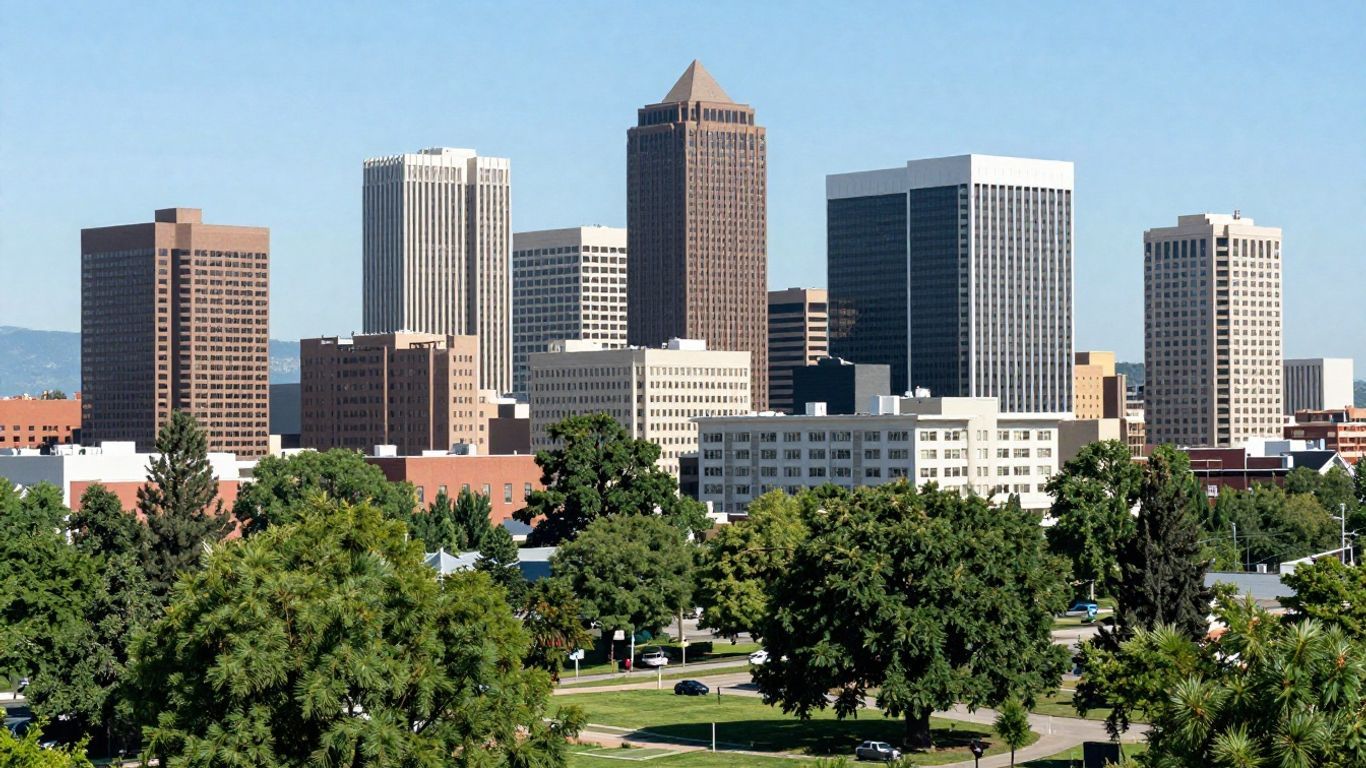
Boise, Idaho's capital, is gracefully positioned in the southwestern region of the state. It's an urban center that frequently delights visitors with its harmonious blend of exhilarating outdoor adventure and a burgeoning urban vibrancy. Indeed, one might envision it as a place where trading hiking boots for an elegant dinner out is an effortlessly natural transition.
Boise is particularly renowned for its extensive park system, a feature that has deservedly earned it the endearing nickname, 'City of Trees.'
What, then, are some key distinguishing factors of Boise?
- Outdoor Recreation: Nestled advantageously near the Boise Mountains, the city provides unparalleled access to a wealth of activities, including hiking, biking, skiing, and diverse river sports. The Boise River Greenbelt, a widely enjoyed paved pathway, meanders gracefully through the city, offering an ideal setting for a leisurely stroll or an invigorating bike ride.
- Cultural Hub: Despite its moderate size, Boise fosters a remarkably vibrant arts and culture scene. Here, one can discover the esteemed Boise Art Museum, the informative Idaho State Historical Museum, and a lively performing arts community.
- Food and Drink: The city's culinary landscape is impressively expanding, featuring an array of local breweries, wineries, and restaurants that present everything from sophisticated farm-to-table dishes to authentic international cuisine.
Boise possesses a truly unique character, intrinsically shaped by its stunning natural surroundings and a community that thoughtfully values both its rich heritage and its promising future. It is a place that feels both deeply grounded and unequivocally forward-looking.
When you envision Boise, picture a city that is confidently comfortable in its own skin, generously offering a diverse array of experiences for those who appreciate both nature and a welcoming atmosphere.
13. Springfield
Let us now discuss Springfield, Illinois. This is far from just any city; it proudly serves as the capital of the Prairie State. Springfield occupies a truly unique position in American history, largely attributable to its profound connection with Abraham Lincoln. Countless visitors are drawn here annually to explore the venerable Lincoln Home National Historic Site, the very residence where the 16th U.S. President lived prior to his move to the White House. Furthermore, one can immerse themselves in the Lincoln Presidential Library and Museum, an institution replete with invaluable artifacts and compelling narratives from his extraordinary life and era.
Beyond its indelible Lincoln legacy, Springfield offers several other noteworthy attractions. It is, in essence, a city that gracefully embraces its rich past while simultaneously looking towards the future. Here, you'll discover a harmonious blend of historical sites and contemporary amenities.
What are some essential facts about Springfield?
- Abraham Lincoln Presidential Library and Museum: An indispensable visit for anyone with an interest in Lincoln's life and the pivotal Civil War era.
- Lincoln Home National Historic Site: An opportunity to walk the same streets Lincoln once trod and observe the only home he ever genuinely owned.
- Old State Capitol State Historic Site: This is the historic locale where Lincoln served as a legislator and presented many of his most renowned legal arguments.
- Illinois State Capitol Building: A magnificent architectural structure that functions as the unequivocal center of state government.
Springfield transcends being merely a compilation of historical markers; it stands as a living testament to a truly pivotal figure in American history. The city diligently strives to preserve its rich heritage, thereby establishing itself as a unique destination for both profound learning and quiet reflection.
Consequently, when you contemplate Illinois, remember Springfield. It is a city that narrates a grand, sweeping story—most notably, the enduring legacy of one of America's most revered presidents.
14. Indianapolis
Let's turn our attention now to Indianapolis, the capital of Indiana. Should you be familiar with the iconic Indy 500, you've already established a significant connection to this city. Indeed, Indianapolis is virtually synonymous with that renowned automobile race, an annual spectacle held at the Indianapolis Motor Speedway—an event of immense scale that draws enthusiastic crowds from across the globe.
Yet, Indianapolis's identity extends far beyond racing. It boasts a robust downtown area featuring ample green spaces, such as the picturesque Canal Walk, an ideal location for a leisurely stroll or a refreshing bike ride. The majestic Soldiers and Sailors Monument, centrally located, is also quite a sight to behold—a memorial that, surprisingly, stands taller than the Statue of Liberty's torch itself.
From a cultural perspective, Indianapolis offers several compelling attractions:
- The Indianapolis Museum of Art: This institution houses a remarkably impressive collection amidst beautifully maintained grounds.
- White River State Park: A substantial urban park, it encompasses various museums, a reputable zoo, and dynamic performance venues.
- The Children's Museum of Indianapolis: This is, quite genuinely, one of the largest children's museums worldwide.
Indianapolis's history is inextricably linked to transportation and industry, having evolved from a modest settlement into a pivotal Midwestern hub. Its sustained growth was significantly propelled by its central geographical location and its crucial role as a burgeoning railway center.
Therefore, while the Indy 500 may undeniably be its most celebrated export, there is a considerable wealth of experiences to explore in Indianapolis well beyond the racetrack. It is, ultimately, a city that possesses its own distinct rhythm and a substantial history awaiting discovery.
15. Des Moines
Let us now consider Des Moines, the capital of Iowa. This is a city that, though occasionally overlooked, maintains a formidable and significant presence within the Midwest.
Des Moines undeniably serves as Iowa's political and economic nexus. Its nomenclature derives from the nearby Des Moines River. The city has experienced consistent growth over the years, successfully attracting both businesses and new residents.
What are some noteworthy aspects that distinguish Des Moines?
- The State Capitol Building: This edifice is indeed a rather impressive structure, crowned by a distinctive gold dome. It functions as a prominent landmark, visible from numerous vantage points throughout the city.
- Economic Diversity: While agriculture undeniably remains a cornerstone of Iowa's economy, Des Moines boasts a robust financial services sector, complemented by thriving insurance and publishing industries.
- Cultural Scene: Here, one can discover a commendable arts scene, featuring institutions such as the Des Moines Art Center and the Pappajohn Sculpture Park—a truly engaging space for a leisurely promenade.
While it is tempting to primarily associate Iowa with its extensive agricultural landscape, Des Moines stands as a city actively cultivating a more diverse economic foundation. It embodies that quintessential Midwestern spirit—approachable and grounded—yet it also possesses clear aspirations for future development.
Thus, when you envision Iowa, you might naturally picture cornfields, which, to be sure, constitute a significant portion of the state. However, Des Moines is where the state's governmental and economic activities genuinely converge. It is a locale that has forged its own distinct identity, thoughtfully apart from the surrounding rural landscape.
16. Topeka
Next on our informative tour of U.S. state capitals is Topeka, the capital of Kansas. While it may not be the immediate urban center that first springs to mind when contemplating major American cities, Topeka nonetheless firmly holds its own as the esteemed seat of government for the Sunflower State.
Established in 1854, Topeka was deliberately founded by abolitionists, whose ambition was to forge a free-state bastion within Kansas. The city played a profoundly significant role throughout the turbulent pre-Civil War era. Later, it gained enduring national recognition for its association with the landmark Supreme Court case, Brown v. Board of Education of Topeka, which famously declared state-sponsored segregation in public schools unconstitutional.
Topeka's rich history is, without question, deeply intertwined with the critical fight for civil rights in America, thereby imbuing it with considerable historical importance far beyond its fundamental role as a state capital.
Though not a sprawling metropolis, Topeka provides a genuine glimpse into the heartland of America. It is a city uniquely characterized by both its past and its present, diligently serving its state while perpetually commemorating its enduring contributions to the nation's grand narrative. As you endeavor to memorize state capitals, remember Topeka for Kansas – a city that unequivocally transcends being merely a geographical coordinate.
17. Frankfort
Continuing our journey through the nation's state capitals, we arrive at Frankfort, the capital of Kentucky. While it may not be the largest urban center in the Commonwealth, it nonetheless fulfills the crucial role of serving as the state's governmental core. One might consider it the very locus where all significant policy decisions for Kentucky are deliberated and enacted.
Frankfort is gracefully situated along the Kentucky River, a waterway whose historical significance has undeniably shaped the city's development. It's a place characterized by intriguing architecture and a palpable connection to the state's celebrated bourbon heritage—a cornerstone of Kentucky culture, to be sure.
Here are a few concise facts regarding Frankfort:
- It holds the esteemed title of Kentucky's capital, consequently housing the state legislature and the Governor's office.
- The Kentucky State Capitol building itself is quite a sight, notably featuring a grand, imposing dome.
- Geographically, it is located within Franklin County.
Frankfort may not enjoy the widespread recognition of certain other state capitals, yet it remains an absolutely key component of Kentucky's intrinsic identity and sophisticated governance. It is, in essence, a place where profound history and the intricate affairs of state seamlessly converge.
18. Baton Rouge
Proceeding to Louisiana, we discover its capital, Baton Rouge. This is a city imbued with a rich and complex history, gracefully situated directly on the iconic Mississippi River. While New Orleans frequently garners the lion's share of attention for its vibrant music and renowned culinary scene, Baton Rouge possesses its own distinctive charm and undeniable significance.
The city's evocative name, meaning 'Red Stick' in French, originates from a significant cypress pole that historically delineated the boundary between two distinct Native American tribal hunting grounds. This early historical marker subtly underscores the deep indigenous roots of the area, predating European settlement by a considerable margin.
Baton Rouge functions as a prominent industrial center and a crucial hub for the state's governmental operations. It is a place where one can readily observe the seamless amalgamation of quintessential Southern culture with a profound French influence—a recurring motif throughout the entirety of Louisiana.
What, then, makes Baton Rouge particularly noteworthy?
- Louisiana State Capitol: This impressive skyscraper holds the distinction of being the tallest state capitol building in the United States, offering breathtaking panoramic views from its accessible observation deck.
-
**USS Kidd Veterans Museum:** A meticulously preserved World War II destroyer, available for touring, providing a compelling glimpse into pivotal naval history. - Old State Capitol: A beautifully constructed Gothic-style building that now operates as an illuminating museum of political history.
The intricate blend of history, industry, and culture collectively renders Baton Rouge a truly fascinating destination. It is a city that thoughtfully bears the weight of its past while resolutely looking towards the future, all unfolding along the majestic banks of the mighty Mississippi.
19. Augusta
Our focus now shifts to Augusta, Maine. This is the capital of the venerable Pine Tree State, and while it may not be the most ostentatious of cities, it undeniably maintains its unique character and significance. Augusta is gracefully positioned on the Kennebec River, a waterway that has historically played a rather crucial role in the region's development, particularly concerning trade and commerce.
Remarkably, it holds the distinction of being the third oldest capital city in the United States. That's a rather compelling fact to retain, especially when endeavoring to accurately locate it on a map.
What, then, makes Augusta particularly noteworthy?
- The Maine State Museum: This institution offers an excellent opportunity to gain a comprehensive understanding of the state's rich history, spanning from its abundant natural resources to its industrious past.
- The Blaine House: Serving as the official residence of the Governor of Maine, this is a beautifully preserved historic building, often accessible for public tours.
- Kennebec Arsenal: This historic site played a discernible role in military history and presently accommodates various state offices.
Augusta is one of those capitals that, perhaps, doesn't always command the national spotlight, yet it possesses a robust foundation in history and an understated charm that is truly worth appreciating. It is a locale where one can observe the intricate tapestry of how Maine has evolved and transformed over the centuries.
20. Annapolis
Continuing our journey through the various state capitals, we now arrive at Annapolis, Maryland. This is a city imbued with a profound sense of history, particularly concerning the U.S. Navy. Indeed, the esteemed United States Naval Academy is proudly situated here—a matter of considerable national significance.
Annapolis additionally serves as Maryland's state capital, and its location directly on the picturesque Chesapeake Bay has long established it as an important port city. One can truly sense the weight of history palpable in the air when traversing its charming, older districts.
Allow us to provide a few concise facts about Annapolis:
- It hosts the prestigious U.S. Naval Academy. This institution is a pivotal center for training future officers of the Navy and Marine Corps.
- It is Maryland's state capital. The Maryland State House, located here, holds the remarkable distinction of being the oldest state capitol in continuous legislative use.
- It functions as a historic seaport. Annapolis boasts an extensive maritime history, a legacy clearly discernible in its distinctive architecture and urban design.
Annapolis exudes a truly unique charm, masterfully blending its rich maritime heritage with its vital roles as a center for naval education and state governance. The city's waterfront remains a consistently popular destination, offering serene views of the bay and a perceptibly lively atmosphere.
Therefore, when you next contemplate Annapolis, remember its intrinsic connection to the sea and its undeniable significance within American history, particularly through the enduring legacy of the Naval Academy and its pivotal role as Maryland's capital.
21. Boston
Ah, Boston. This venerable city serves as the capital of Massachusetts, a place that, without question, wears its illustrious history on its sleeve. As one of the oldest urban centers in the U.S., it boasts an evocative landscape of cobblestone streets and antique buildings that transport visitors back through time, offering a truly immersive historical experience.
Boston is unequivocally a major hub for both education and innovation. It proudly hosts some of the world's most distinguished universities, such as Harvard and MIT, institutions that profoundly shape the city's intellectual and cultural milieu. Consequently, one often encounters a high concentration of brilliant minds, fueling a constant, invigorating buzz of novel ideas.
What, then, are some of Boston's most compelling features?
- The Freedom Trail: This is an absolutely essential experience—a meticulously marked 2.5-mile path that gracefully winds through the city, connecting 16 historically significant sites. It offers a tangible opportunity to literally walk through American history.
- Fenway Park: Even for those not keenly following baseball, witnessing a Red Sox game at America's oldest ballpark is an unforgettable experience. The atmosphere, to put it simply, is electric.
- Food Scene: From quintessential clam chowder to delectable lobster rolls, Boston presents a wealth of classic New England culinary delights. Furthermore, owing to its numerous universities, the city also cultivates a surprisingly diverse and exciting food scene that extends well beyond traditional fare.
Boston is a city that masterfully balances its profound historical roots with an ambitious, forward-thinking approach, particularly in cutting-edge fields such as technology and biotechnology. It is a unique place where one can engage with the past while simultaneously being enveloped by the innovations of the future.
Moreover, it is a notably compact city, which proves quite advantageous for navigation. One can traverse its charming streets with ease, whether by walking, utilizing the efficient "T" (the local subway system), or even cycling. Just be prepared for its distinctive weather patterns—winters can indeed be quite cold, but the summers are, typically, quite delightful.
22. Lansing
Continuing our exploration of state capitals, we arrive at Lansing, Michigan. While it may not be the largest urban center in the state—that distinction, of course, belongs to Detroit—Lansing nonetheless firmly asserts its role as the pivotal seat of government. One might consider it the very locus where all crucial policy decisions for the state are meticulously crafted and implemented.
Lansing, in fact, possesses a rather compelling history. It was selected as the capital in 1847, partly due to its more centrally located position relative to Detroit at that time. Previously, the capital resided in Detroit, but strategic considerations favored a more inland location to ensure broader accessibility for all citizens of the state.
What defines contemporary Lansing? It is, fundamentally, a multifaceted urban environment. Naturally, one finds numerous government buildings, but also a prominent university (Michigan State University, situated nearby in East Lansing, which functions almost as its conjoined twin city) and a significant industrial presence. While it may not possess the ostentatious glamour of some other capitals, it undeniably fulfills its essential functions with efficacy.
Here are a few pertinent facts to recall regarding Lansing:
- It holds the esteemed title of Michigan's capital.
- It is situated in the southern region of the state.
- It is not the most populous city within Michigan.
Lansing serves as the indispensable governmental hub for Michigan, a state renowned for its rich industrial past, particularly its foundational role in automotive manufacturing. While Detroit frequently commands the spotlight for its historical significance in car production, Lansing plays an equally vital, albeit administrative, role in the state's day-to-day operations and broader development.
Consequently, when you next contemplate Michigan, remember Lansing. It may not be the immediate city that springs to mind, but it is unequivocally where the state's crucial administrative work unfolds.
23. Saint Paul
Our next focus is Saint Paul, the capital city of Minnesota, gracefully situated directly on the Mississippi River. It forms an integral component of the renowned "Twin Cities" metropolitan area, with Minneapolis serving as its immediate, close neighbor.
Saint Paul is widely celebrated for its distinguished historic architecture and its remarkably vibrant arts scene. Throughout the city, particularly in its downtown core, one will discover a plethora of beautifully preserved older buildings. Furthermore, the city regularly hosts a diverse array of museums and theaters, ensuring a continuous calendar of cultural engagement.
What truly sets Saint Paul apart?
- Landmark: The Minnesota State Capitol building stands as a truly impressive structure, meticulously designed by the esteemed architect Cass Gilbert. It is, undeniably, well worth a visit for anyone with an appreciation for grand architecture.
- Culture: The Science Museum of Minnesota is a significant attraction, complemented by numerous art galleries and dynamic performance spaces.
- Parks: Despite its urban classification, Saint Paul boasts a commendable number of parks and verdant green spaces, providing serene retreats to relax and enjoy the natural environment.
It might be tempting to view Saint Paul merely as another Midwestern city, but it possesses an intrinsically unique character, profoundly shaped by its rich history and its diverse populace. The harmonious blend of historical heritage and contemporary dynamism, combined with its picturesque natural setting, imparts a truly distinct ambiance.
For mnemonic purposes, consider Saint Paul as the quintessential "twin" to Minneapolis, perhaps envisioning a benevolent, saintly figure overseeing the majestic Mississippi River.
24. Jackson
Proceeding on our list, we arrive at Jackson, the capital of Mississippi. This is a city with a rich and complex history, notably significant within the context of the Civil Rights Movement. Here, one will discover numerous poignant landmarks that eloquently narrate the profound story of that transformative era.
Jackson proudly stands as the most populous city in Mississippi, concurrently serving as its vital state capital.
What are some key aspects to understand about Jackson?
- Civil Rights History: Jackson was a pivotal epicenter for the Civil Rights Movement. Institutions such as the Mississippi Civil Rights Museum and the Museum of Mississippi History provide invaluable deep dives into this immensely important period.
- Cultural Hub: The city exhibits a vibrant arts scene, featuring esteemed venues like the Jackson State University Museum of Art and the Mississippi Museum of Art.
- Economic Role: It functions as the primary economic and industrial heartland for Mississippi, concentrating on robust sectors such as manufacturing and healthcare.
Jackson's trajectory of development is intimately linked to the state's broader history, thereby establishing it as a place where comprehending the past is essential for explaining the present. It is, ultimately, a city that has undergone considerable transformation and continues its journey of evolution.
Therefore, when contemplating Jackson, remember its crucial dual role: as a profound historical touchstone and a dynamic modern economic engine for Mississippi.
25. Jefferson City and more
We have certainly covered a substantial amount of ground, and indeed, we are nearing the completion of our detailed list! Missouri's capital is Jefferson City, a locale with a rich history intrinsically linked to the state's developmental trajectory, gracefully situated directly on the Missouri River.
As we conclude this segment, it's essential to recall that the United States comprises 50 distinct states, each possessing its own unique capital. These range dramatically in size, from expansive metropolises to considerably smaller urban centers.
For a comprehensive overview, here is a concise look at the remaining states and their respective capitals, thereby completing our exhaustive list:
- Montana: Helena
- Nebraska: Lincoln
- Nevada: Carson City
- New Hampshire: Concord
- New Jersey: Trenton
- New Mexico: Santa Fe
- New York: Albany
- North Carolina: Raleigh
- North Dakota: Bismarck
- Ohio: Columbus
- Oklahoma: Oklahoma City
- Oregon: Salem
- Pennsylvania: Harrisburg
- Rhode Island: Providence
- South Carolina: Columbia
- South Dakota: Pierre
- Tennessee: Nashville
- Texas: Austin
- Utah: Salt Lake City
- Vermont: Montpelier
- Virginia: Richmond
- Washington: Olympia
- West Virginia: Charleston
- Wisconsin: Madison
- Wyoming: Cheyenne
Grasping these names extends far beyond mere rote memorization; it is fundamentally about forging a deeper connection with the rich geography and intricate history of the United States. Each individual capital city, in its own right, possesses a unique narrative, collectively contributing to the rich and multifaceted tapestry of the nation.
Wrapping Up Your Geography Journey
And so, our insightful exploration concludes. We have now traversed a significant portion of the U.S. states and their respective capitals. While the sheer volume of information might initially appear substantial, remember that attaining perfection on the initial attempt is not the immediate objective. Consider this comprehensive guide as an invaluable starting point. Whether you opt for the structured approach of flashcards, the mnemonic aid of a song, or simply consistent self-quizzing, the fundamental key to mastery lies in persistent practice. Acquiring this knowledge transcends mere preparation for trivia nights or academic examinations; it is, at its core, about cultivating a more profound understanding of the nation we inhabit. Keep this guide readily accessible, revisit it whenever a refresher is required, and before long, you will undoubtedly be confidently recalling state capitals like a seasoned expert. Happy learning!
Frequently Asked Questions
Why should I learn state capitals?
Even in an age dominated by GPS technology, a foundational understanding of state capitals significantly enhances one's grasp of U.S. history and current events. Furthermore, it serves as an excellent means to bolster both memory recall and general knowledge—remarkably advantageous for general knowledge competitions, such as trivia nights.
What's the easiest way to remember state capitals?
A highly effective strategy involves grouping them by geographical region; consider, for instance, learning all the Northeast states together. Additionally, crafting memorable stories or mnemonic devices, perhaps even playful rhymes, can forge strong connections between a state and its capital. Consistent repetition, often through interactive quizzes, also proves particularly beneficial.
Are there any tricky state capitals to watch out for?
Indeed. It is a common misconception that the most populous city in a state is invariably its capital. For example, Sacramento serves as the capital of California, not, as many might assume, Los Angeles. Moreover, be particularly mindful of capitals whose names bear phonetic similarity to other cities in adjacent states.
How many state capitals are there in the U.S.?
There are precisely 50 state capitals, with one designated for each individual state. It is important to note that Washington D.C. is the nation's capital, but it does not belong to any specific state.
What's the largest state capital by population?
Phoenix, Arizona, holds the distinction of being the largest state capital by population, boasting a populace exceeding 1.6 million residents.
What's the smallest state capital by population?
Montpelier, Vermont, is the smallest state capital by population. With approximately 8,000 inhabitants, it stands as the least populous capital in the nation.


