
business resources
Microsoft Capex Push Highlights Growing Doubts Over AI Returns
15 Apr 2026

Rising investment in artificial intelligence is increasingly accompanied by heightened stock market volatility, as expectations of future returns begin to diverge from current financial results. Microsoft is a primary example of this trend. Despite growth in revenue and operating profit, the company's shares declined by 25% during the quarter amid plans to increase capital expenditures on AI infrastructure to $146 billion. The key pressure factor is not the investment volume itself, but the uncertainty of payback period, especially given the weak conversion of the Copilot user base, where only about 3.3% of users remain paying subscribers.
The situation is aggravated by a changing competitive landscape. The rapid development of AI solutions by OpenAI and Anthropic poses the risk of a structural shift in which corporate clients can bypass traditional software vendors by interacting directly with model developers. As a result, the market begins to question the sustainability of existing business models, casting doubt not only on current indicators but also the likelihood of a redistribution of demand toward these new players.
Additional pressure on the sector is being exerted by the dynamics of related markets, primarily memory. Micron Technology shares have lost about 30% since mid-March, and more than 15% in the last week of March alone, despite strong financial performance and continued supply shortages. Investor sentiment reflects a growing sensitivity to any signals of a demand slowdown, including Google's recent initiatives aimed at optimizing memory usage in AI models. At the same time, manufacturers acknowledge the need to further increase capital expenditures to meet demand, which heightens the industry’s cyclical nature and increases risks to margins.
These processes coincided with a broader market decline. The Nasdaq index futures fell by 3.23% in the same last week of March, marking the worst performance in nearly a year, amid geopolitical tensions and rising energy prices. The largest technology companies are under pressure: Alphabet lost about 9%, Microsoft almost 7%, and both Nvidia and Amazon declined by about 3%. Legal risks have added to the volatility, most notably in the case of Meta, whose shares dropped by more than 11% after a series of unfavorable rulings. Despite this general decline, interest in large-scale placements remains. The anticipated SpaceX IPO could be the largest in history, reflecting continued investor appetite for transformative technology stories.
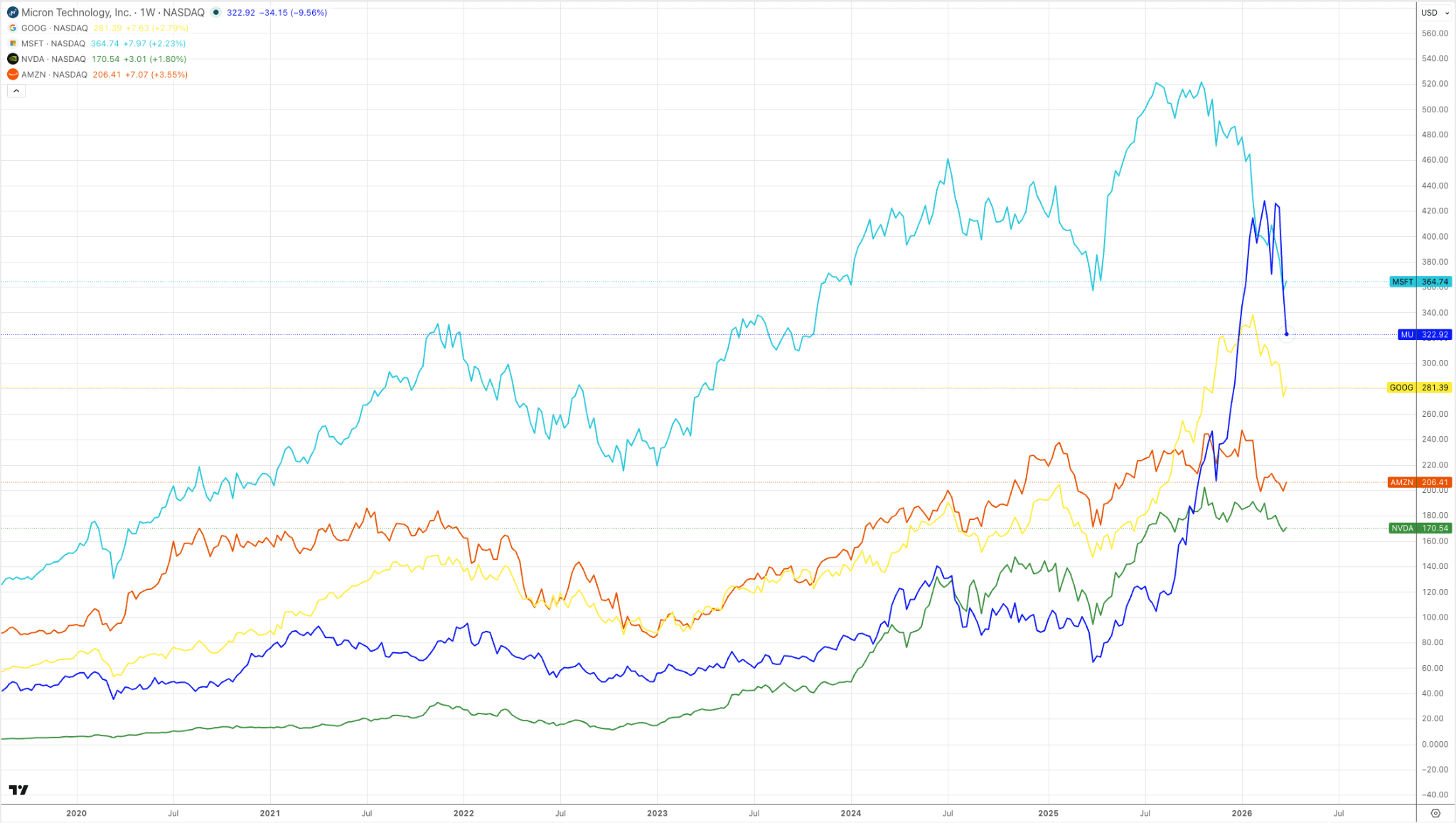
In these conditions, a new investment reality is emerging, in which the growth of the AI sector is no longer perceived as an unambiguous market driver. While demand for computing power and infrastructure remains high — supporting the industry's long-term potential — the risks associated with capital efficiency, technological disruption, and macroeconomic instability are rising. This means moving toward a more selective strategy, where key metrics are no longer just growth rates, but a company's ability to convert investments into sustainable revenue, control costs, and adapt to a rapidly evolving AI market structure.
Share

Peyman Khosravani
Industry Expert & Contributor
Peyman Khosravani is a global blockchain and digital transformation expert with a passion for marketing, futuristic ideas, analytics insights, startup businesses, and effective communications. He has extensive experience in blockchain and DeFi projects and is committed to using technology to bring justice and fairness to society and promote freedom. Peyman has worked with international organisations to improve digital transformation strategies and data-gathering strategies that help identify customer touchpoints and sources of data that tell the story of what is happening. With his expertise in blockchain, digital transformation, marketing, analytics insights, startup businesses, and effective communications, Peyman is dedicated to helping businesses succeed in the digital age. He believes that technology can be used as a tool for positive change in the world.


