


business resources
Modern Strategies Transforming Inventory Management
15 May 2026

As businesses navigate an increasingly complex global market, effective inventory management has become more critical than ever. Organizations across industries are realizing that their ability to respond quickly to shifts in demand, supply chain disruptions, or sudden growth opportunities often hinges on the robustness and sophistication of their inventory strategies. Emerging technologies and evolving strategies are reshaping how companies handle their stock. Companies of all sizes must now draw on a combination of efficiency, agility, and data-driven insight to stay competitive. As the landscape changes, aligning practical inventory practices with market realities helps businesses remain profitable and resilient. Modern inventory management systems are designed to be both scalable and adaptive, allowing stakeholders to immediately identify issues, automate routine tasks, and reduce unnecessary waste. The integration of artificial intelligence, advanced analytics, and sustainability goals is revolutionizing traditional stock management methods. These changes extend beyond profit margins and operational logistics, shaping industry best practices and future-proofing supply chains on a global scale, as noted by McKinsey & Company supply chain experts.
AI and Automation in Inventory Management
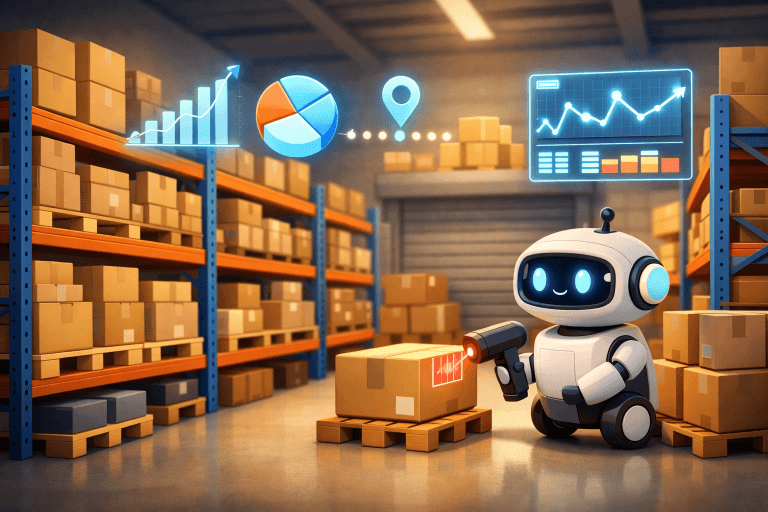
The integration of AI and automation is transforming inventory management by reducing human errors and enhancing operational efficiency. Automated systems now perform tasks such as order processing, stock replenishment, and real-time tracking, freeing up valuable resources and enabling companies to respond rapidly to demand fluctuations or supply disruptions. Businesses deploying AI-driven solutions see significant improvements in unifying inventory planning and replenishment processes. These technologies analyze past sales trends, seasonal variations, and current market data, resulting in better decision-making and optimized supply chains. A notable example is how major retailers use AI-powered platforms to maintain optimal stock levels without relying on guesswork or manual interventions, creating a more resilient business model. Robotics and automation also reduce costly manual mistakes in warehouses and fulfillment centers. This not only accelerates order processing but also improves overall accuracy, as algorithms track thousands of SKUs in real time. According to Harvard Business Review, companies that have adopted AI in their supply chain operations report better inventory turns and higher customer satisfaction.
Furthermore, the democratization of AI has made advanced inventory tools more accessible to small and medium-sized enterprises. Previously, only large corporations could afford such sophisticated systems, but cloud-based platforms now enable businesses of all sizes to leverage automation and AI-powered inventory optimization. This shift is not only leveling the playing field but also encouraging innovation as more organizations experiment with predictive technology, robotic picking, and autonomous stock management. As machine learning algorithms continuously improve, businesses can identify subtle patterns and anomalies that may not be apparent to human analysts. This insight leads to smarter decision-making, faster response times, and ultimately, a more agile and proactive approach to inventory control. The future promises even greater integration as AI becomes more deeply embedded within other business systems, from procurement to customer service, driving holistic improvements in the overall supply chain.
Real-Time Data Analytics
Real-time data analytics is becoming the backbone of modern inventory management. By leveraging dashboards and analytical tools, organizations can receive instant feedback on their inventory levels, product performance, and demand forecasts. This constant flow of information is crucial for anticipating stock shortages, preventing overstock, and adapting to evolving market trends. Accurate demand forecasting is no longer a luxury but a necessity. A recent report found that more than half of distributors plan to overhaul their demand forecasting by embracing real-time analytics. These data-driven advancements help businesses align procurement with expected sales, shortening lead times and slashing the risk of costly stockouts. Integrating real-time data with supply chain management also helps companies identify bottlenecks, manage vendor relationships, and react proactively to external threats or sudden opportunities. Such agility is what sets leaders apart in a market that prizes both speed and precision. For organizations intent on scaling efficiently, investing in data-driven solutions enhances visibility and control throughout the supply chain, ensuring products are in the right place at the right time. In addition, the widespread adoption of Internet of Things (IoT) devices, such as smart shelves and RFID tagging, is further bolstering real-time data capture and analysis. With granular insights into inventory movement, companies can monitor temperature-sensitive goods, minimize shrinkage, and even predict maintenance needs for warehouse equipment. The synchronization of data across platforms also enables collaboration among suppliers, manufacturers, and distributors, breaking down silos and enabling more coordinated responses to market fluctuations. As technology continues to evolve, organizations that invest in robust analytics platforms can gain a deeper understanding of customer buying behavior across channels, thereby personalizing their inventory planning and replenishment strategies. This reshapes how businesses view inventory, not simply as a stored asset, but as a dynamic resource tightly linked to customer satisfaction and revenue growth.
Sustainability in Inventory Management
Sustainability is moving from a buzzword to a core pillar of effective inventory management. As environmental awareness becomes integral to consumer identity, businesses must prioritize practices that minimize waste, reduce carbon footprint, and use resources more responsibly. Optimizing transportation routes, leveraging recyclable packaging, and adopting circular supply chain models are just a few of the strategies organizations are embracing. For many leading brands, implementing eco-friendly processes is more than just an ethical choice. It provides tangible benefits, including enhanced reputation, increased customer loyalty, and compliance with evolving regulatory requirements. Technologies that automatically track expiration dates, optimize storage space, and analyze return rates help companies make more informed decisions about purchasing and distributing stock. This prevents inventory obsolescence and supports a shift towards zero-waste targets. Responsible inventory management is fast becoming an industry standard, driven by both regulatory pressure and shifting consumer expectations. Organizations are also increasingly adopting closed-loop systems, where returned products and surplus inventory are refurbished, reused, or recycled rather than disposed of. This not only reduces landfill waste but also adds value by recovering materials and extending the product life cycle. Collaborations with green logistics providers, investment in renewable energy for warehousing, and support for fair-trade suppliers are additional ways that inventory management is evolving to support broader sustainability goals. The integration of Environmental, Social, and Governance (ESG) metrics into inventory management dashboards allows companies to track their sustainability performance alongside financial metrics, promoting a balanced approach to growth. Consumers and investors alike are demanding greater transparency into the impact of corporate supply chains, urging organizations to publish sustainability reports and demonstrate measurable year-over-year progress.
Conclusion
Staying ahead in inventory management today requires companies to embrace technological advances, foster a data-driven culture, and embed sustainability into operational strategies. The most successful businesses are those that recognize these trends and take proactive steps to innovate and improve. By integrating AI and automation, leveraging real-time analytics, and adopting responsible practices, organizations can enhance efficiency, strengthen supply chains, and secure a lasting competitive advantage. As organizations continue to adapt, regularly evaluating and updating inventory policies ensures that systems remain aligned with business objectives and industry benchmarks. Continuous improvement is essential as the regulatory landscape shifts and new technologies emerge, further optimizing every stage of the inventory process. Embracing a culture of innovation, where best practices are reevaluated and refined, will help businesses unlock hidden efficiencies, delight customers, and meet the challenges of tomorrow’s market head-on. Ultimately, the future of inventory management lies in the seamless collaboration between people, processes, and technology. Those prepared to embrace change, upskill their teams, and stay abreast of global trends will thrive in an increasingly unpredictable world.


