


business resources
Monetization Strategies for Subscription-Based Wellness and Mental Health Apps
17 Sept 2026

Subscription models are a natural fit for wellness and mental health products. Meditation, sleep support, mindfulness, and stress management are rarely one-time activities. Their value develops through repeated use, which creates an opportunity for recurring revenue.
But putting most content behind a paywall is not enough to build a sustainable subscription business. If you plan to build a meditation app, monetization should be connected to how users discover value, develop habits, and continue finding reasons to return.
Give Users Value Before Asking Them to Subscribe
A freemium model can lower the barrier to entry. Instead of requiring payment immediately, users can experience a limited selection of meditations, breathing exercises, or sleep content before deciding whether premium access is worthwhile.
The free tier should be useful without making the paid version unnecessary. Premium access can then unlock:
- complete meditation and sleep libraries;
- structured multi-day programs;
- personalized recommendations;
- offline listening;
- advanced progress tracking;
- exclusive sessions or instructors.
The objective is not simply restricting content. It is demonstrating enough value that upgrading feels like a natural next step.
Use Trials to Demonstrate the Full Experience
Free trials give users temporary access to premium features and can work particularly well for products where benefits become clearer after several sessions.
However, trial design matters. Users should quickly encounter the strongest parts of the product rather than spending the trial period navigating an overwhelming content library.
Good onboarding can ask about goals such as sleep, stress, focus, or mindfulness and immediately recommend an appropriate starting program.
Make Annual Plans Attractive
Monthly subscriptions offer flexibility, while annual plans can improve revenue predictability and encourage longer engagement.
Instead of relying only on a lower annual price, wellness products can strengthen these plans with additional value, such as exclusive programs or expanded functionality.
A simple subscription journey might look like:
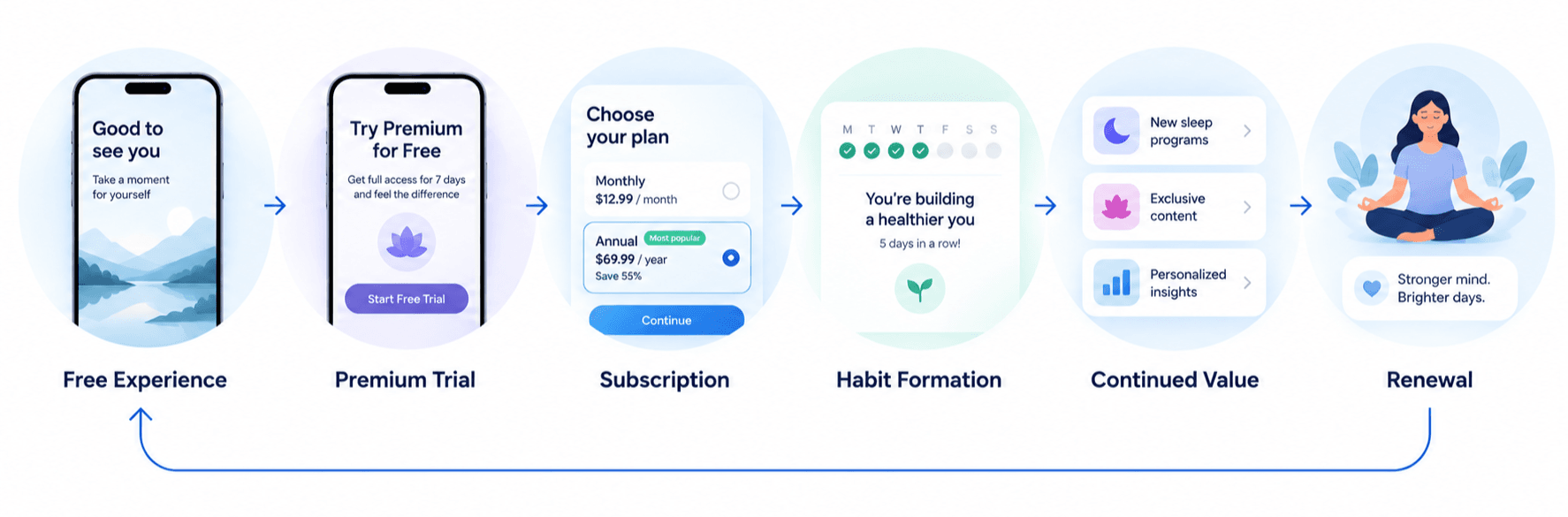
The important part is what happens after subscription. Acquisition generates the first payment, but retention determines whether the model works long term.
Add Revenue Streams Beyond Individual Subscriptions
Consumer subscriptions do not have to be the only source of revenue. Depending on the product, businesses can also explore corporate wellness packages, premium course purchases, live sessions, coaching, or specialized content.
B2B programs can be particularly relevant for mental wellness platforms, allowing employers to provide access as part of employee benefits.
Diversification also reduces dependence on a single consumer acquisition channel.
Connect Monetization to Retention
Subscription growth ultimately depends on whether users continue receiving value.
Fresh content, structured programs, personalized recommendations, progress tracking, and relevant reminders can give users reasons to return. Analytics should therefore look beyond downloads and trial conversions to metrics such as engagement, program completion, retention, cancellations, and renewals.
The strongest monetization strategy is not the one that puts the most features behind a paywall. It is the one that aligns recurring payment with recurring value.
For wellness and mental health apps, that means designing the subscription model as part of the product experience itself, from the first free session through long-term habit formation.


